How to grow a Climbing Euonymus bonsai? Even a small potted plant involves considerable knowledge
Introduction: Climbing Euonymus (Euonymus fortunei) is an excellent landscaping plant, often used for vertical greening or as ground cover. When made into a bonsai, its roots are gnarled and vigorous, its trunk elegant and antique; in spring, summer and early autumn its leaves are deep green, and in late autumn after frost the whole tree turns red and does not fade for a long time. It is a very popular bonsai species in the north. Although it is an easy plant to keep alive, making and caring for a Climbing Euonymus bonsai also involves considerable knowledge; only with attentive care and careful tending can you have a potted bonsai full of life.
1. Growing conditions
Climbing Euonymus likes a shady, moist growing environment and mostly grows in hillside thickets. For potting, leaf mold and garden soil mixed with sandy soil can be used to prepare the potting soil. It likes warmth and is fairly cold-tolerant; the optimum growing temperature is 15-25 degrees, and in winter potted seedlings should be moved to a windowsill indoors.
2. Placement
Climbing Euonymus has a delicate, small plant form, its winter leaves turn red, and it is fairly cold-tolerant, making it quite suitable for home display. It can be arranged as a climbing plant, or placed as a potted plant on a flower stand, or grown as a hanging plant and allowed to trail down.
3. Four-season management
(1) In spring it is suitable for placement on east-, south- and west-facing balconies. In early spring, Climbing Euonymus can be placed in a spot with light for growing, keeping the potting soil moist, and taking care to spray water on the leaf surfaces and surroundings to raise air humidity. Repot in March-April, planting 5-6 plants together in one pot. Climbing Euonymus is highly adaptable and not demanding about soil; the potting soil is best if rich in humus. Spring is the peak growing season, so attention should be paid to fertilizing; when the soil is poor, the leaves easily turn yellow-green.
(2) In summer it is suitable for placement on east-, south- and north-facing balconies. Climbing Euonymus tolerates high temperatures but fears scorching sun. Strong light easily causes leaf edges to scorch and curl, so it should be placed in a spot with not-too-strong light, keeping the potting soil moist, and every day the leaf surfaces and surroundings should be misted and sprinkled several times to raise air humidity.
(3) In autumn it is suitable for placement on east-, south- and west-facing balconies. Before the autumn temperature drops, gradually move it to a spot with light for growing. The water supply can be gradually reduced. After the temperature drops, it should be allowed to experience frost outdoors, so that the leaf color takes on variegated hues because of the frost.
(4) In winter it is suitable for placement on east-, south- and west-facing balconies. Climbing Euonymus can overwinter outdoors in areas south of the Qinling Mountains. North of the Qinling Mountains it is better grown in pots, moved into a cold room to overwinter in winter. After the Climbing Euonymus changes color, it can be moved inside onto a balcony for viewing; when the indoor temperature is relatively low, the potting soil can be kept on the dry side. When the indoor temperature is kept above 10°C, the potting soil should be kept moist.
4. Pruning
Potted seedlings can be pinched back 2-3 times to let them branch out into several side shoots, and then pruned according to your own shaping requirements. For hanging cultivation, pinching back can be stopped and the plant allowed to trail and grow. If not grown as a hanging plant, pinching back should continue several times to encourage more branching and form a full pot.
Plants and flowers also have a spirit, just like people: if you care for them attentively and tend them carefully, they will be full of vitality; if you are careless and neglect their care, they will be listless. As we can see, the Climbing Euonymus bonsai is very sensitive to temperature, light and water, and throughout the year attention must be paid to changes in all these factors. Climbing Euonymus grows quickly and has strong sprouting ability; before spring budding, carry out one pruning and shaping of the plant, and in early summer also prune the new shoots of the current year once, to keep the bonsai beautiful.
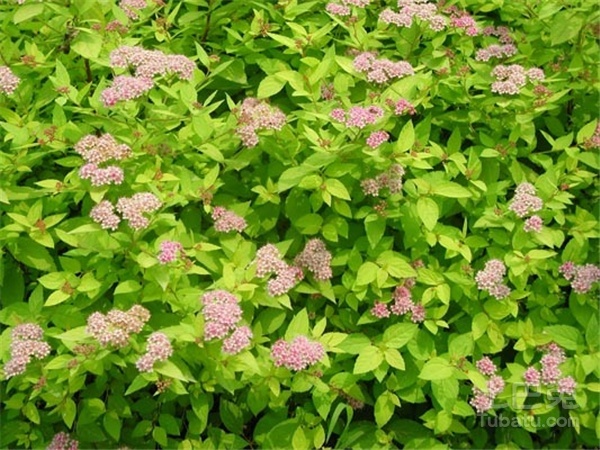
A small potted plant involves great knowledge: how to grow a Climbing Euonymus bonsai
Introduction: Climbing Euonymus (Euonymus fortunei) is an excellent landscaping plant, often used for vertical greening or as ground cover. When made into a bonsai, its roots are gnarled and vigorous, its trunk elegant and antique; in spring, summer and early autumn its leaves are deep green, and in late autumn after frost the whole tree turns red and does not fade for a long time. It is a very popular bonsai species in the north. Although it is an easy plant to keep alive, making and caring for a Climbing Euonymus bonsai also involves considerable knowledge; only with attentive care and careful tending can you have a potted bonsai full of life.
1. Growing conditions
Climbing Euonymus likes a shady, moist growing environment and mostly grows in hillside thickets. For potting, leaf mold and garden soil mixed with sandy soil can be used to prepare the potting soil. It likes warmth and is fairly cold-tolerant; the optimum growing temperature is 15-25 degrees, and in winter potted seedlings should be moved to a windowsill indoors.
2. Placement
Climbing Euonymus has a delicate, small plant form, its winter leaves turn red, and it is fairly cold-tolerant, making it quite suitable for home display. It can be arranged as a climbing plant, or placed as a potted plant on a flower stand, or grown as a hanging plant and allowed to trail down.
3. Four-season management
(1) In spring it is suitable for placement on east-, south- and west-facing balconies. In early spring, Climbing Euonymus can be placed in a spot with light for growing, keeping the potting soil moist, and taking care to spray water on the leaf surfaces and surroundings to raise air humidity. Repot in March-April, planting 5-6 plants together in one pot. Climbing Euonymus is highly adaptable and not demanding about soil; the potting soil is best if rich in humus. Spring is the peak growing season, so attention should be paid to fertilizing; when the soil is poor, the leaves easily turn yellow-green.
(2) In summer it is suitable for placement on east-, south- and north-facing balconies. Climbing Euonymus tolerates high temperatures but fears scorching sun. Strong light easily causes leaf edges to scorch and curl, so it should be placed in a spot with not-too-strong light, keeping the potting soil moist, and every day the leaf surfaces and surroundings should be misted and sprinkled several times to raise air humidity.
(3) In autumn it is suitable for placement on east-, south- and west-facing balconies. Before the autumn temperature drops, gradually move it to a spot with light for growing. The water supply can be gradually reduced. After the temperature drops, it should be allowed to experience frost outdoors, so that the leaf color takes on variegated hues because of the frost.
(4) In winter it is suitable for placement on east-, south- and west-facing balconies. Climbing Euonymus can overwinter outdoors in areas south of the Qinling Mountains. North of the Qinling Mountains it is better grown in pots, moved into a cold room to overwinter in winter. After the Climbing Euonymus changes color, it can be moved inside onto a balcony for viewing; when the indoor temperature is relatively low, the potting soil can be kept on the dry side. When the indoor temperature is kept above 10°C, the potting soil should be kept moist.
4. Pruning
Potted seedlings can be pinched back 2-3 times to let them branch out into several side shoots, and then pruned according to your own shaping requirements. For hanging cultivation, pinching back can be stopped and the plant allowed to trail and grow. If not grown as a hanging plant, pinching back should continue several times to encourage more branching and form a full pot.
Plants and flowers also have a spirit, just like people: if you care for them attentively and tend them carefully, they will be full of vitality; if you are careless and neglect their care, they will be listless. As we can see, the Climbing Euonymus bonsai is very sensitive to temperature, light and water, and throughout the year attention must be paid to changes in all these factors. Climbing Euonymus grows quickly and has strong sprouting ability; before spring budding, carry out one pruning and shaping of the plant, and in early summer also prune the new shoots of the current year once, to keep the bonsai beautiful.
Shaping and care of Climbing Euonymus bonsai
1, Plant sources. Climbing Euonymus is commonly propagated by sowing, cuttings, layering and other methods, all of which root easily.You can also dig up old stumps from the mountains that have grown for many years, with thick, large, antique and gnarled heads, to make bonsai.
2, Shaping. When made into a bonsai, Climbing Euonymus has gnarled and vigorous roots, an elegant and antique trunk, deep green leaves in spring, summer and early autumn, and in late autumn after frost the whole tree turns red and does not fade for a long time; it has very high ornamental value and is a bonsai species with considerable development potential. Climbing Euonymus can be shaped into many bonsai styles according to the form of the stump, such as straight-trunk style, slanted-trunk style, curved-trunk style, double-trunk style, waterside style, water-and-land style and others. Because of its well-developed root system, it is best suited to rock-clinging or wood-clinging bonsai. The crown can be trained into a triangle or steamed-bun shape with appropriate density, or into clearly layered cloud-pad shapes. Shaping commonly uses a combination of pruning and wire training, supplemented by pulling and other means, to give the branches a reasonable arrangement. For artificially propagated Climbing Euonymus, since the trunk is not thick enough and lacks an ancient, antique air, it can be attached to a suitably shaped and sized scholar's rock or dead tree stump to improve its ornamental value. A finished Climbing Euonymus bonsai can be moved into a viewing pot in spring, and as needed, moss can be laid on the pot surface, scholar's rocks dotted about, and accessories placed, to give the bonsai a more profound artistic conception.
3, Care. Climbing Euonymus likes a warm, humid environment with plenty of sunlight, tolerates semi-shade, and has a certain cold tolerance.A finished bonsai can be placed outdoors in a spot with plenty of light for care. In the high heat of midsummer, it can be appropriately shaded to avoid scorching sun exposure, otherwise the leaves will turn yellow; during the growing season, watering should follow the rule of not watering until dry, and watering thoroughly when you do; when the air is dry, spray the plant frequently to increase air humidity and prevent the leaf edges from scorching. Ordinarily, do not fertilize too much, to prevent the leaves from becoming larger and spoiling the display; applying decomposed cake fertilizer water once a month is enough. In autumn, pay attention to applying extra phosphorus and potassium fertilizer to help the frosted leaves turn bright red and to prolong the viewing period. In winter, overwinter in a cold room or outdoors in a sheltered spot, stop fertilizing, control watering, and just keep the potting soil from becoming too dry. The overwintering temperature can be around 0 to 5°C. Depending on the size of the bonsai, repot once every 1 to 2 years, generally in spring; when repotting, remove most of the soil, cut off dead and rotten roots and overly long old roots, and replant in new growing medium. The potting soil should be a loose, fertile sandy soil with good drainage and aeration. Climbing Euonymus grows quickly and has strong sprouting ability; before spring budding, carry out one pruning and shaping of the plant, and in early summer also prune the new shoots of the current year once. During the growing season, at any time cut off useless leggy shoots or other branches that affect the tree's form, and take care to pinch out the growing tips to encourage new side shoots, making the crown dense and compact and keeping the bonsai beautiful. The main pests and diseases of Climbing Euonymus include anthracnose, stem blight, aphids, noctuid moths and others. For anthracnose, in the early stage of the disease spray 70% carbendazim-formulated anthracnose fungicide and 75% chlorothalonil at 500-600 times dilution, spraying once every 7-8 days, 2-3 times in succession; the chemicals can be used alternately or mixed. For stem blight, spray the whole plant with 70% thiophanate-methyl and 50% thiram at 800 times dilution. For aphids, spray 10% imidacloprid or acetamiprid at 2000 times dilution; for noctuid larvae, promptly spray BT formulation at 500-800 times dilution, or 2.5% deltamethrin emulsifiable concentrate at 3000-5000 times dilution; all can achieve good control results.
Climbing Euonymus grows quickly and has strong sprouting ability; before spring budding, carry out one pruning and shaping of the plant, and in early summer also prune the new shoots of the current year once. During the growing season, at any time cut off useless leggy shoots or other branches that affect the tree's form, and take care to pinch out the growing tips to encourage new side shoots, making the crown dense and compact and keeping the bonsai beautiful.