How to grow fuchsia? Seven great tips to help you grow a beautiful potted plant
Fuchsia is a flower that is very prone to pests and diseases, so special attention must be paid to pest and disease prevention and control during care. So if you want to grow a lush fuchsia, how do you care for fuchsia? Next, let the editor of Together Decoration Network briefly introduce it to everyone!
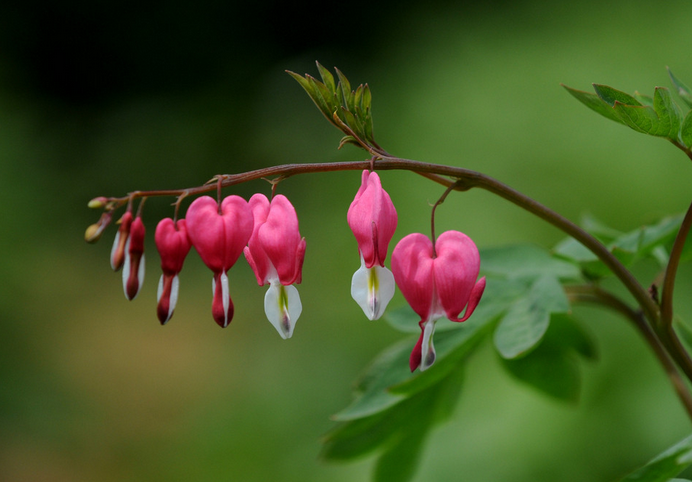
Seven great tips for caring for fuchsia to grow a beautiful potted plant
1. Gray mold
Gray mold occurs during continuous rainy weather, or when too much nitrogen fertilizer is applied, or when light is insufficient. It mainly harms stems, leaves, and flowers, causing water-soaked spots on the affected parts. If not controlled in time, they will gradually expand and become rotten, covered with gray hairy mycelium, and in severe cases the plant will die.
Solution: In the early stage of the disease, promptly spray 65% zineb at 500 times dilution or 50% carbendazim or other new pesticides, once every 7~10 days, for 3~4 consecutive sprays. Usually pay attention to ventilation and light so the plant grows well and its disease resistance is improved. After the disease occurs, promptly prune and dispose of diseased branches and leaves to reduce the source of infection.
2. Powdery mildew
Powdery mildew mainly harms stems, leaves, and flower buds. After infection, there is a layer of white powder on the surface, and in severe cases the leaves shrink and the flowers become smaller.
Solution: Pay attention to ventilation and light, apply more phosphorus and potassium fertilizer, and improve the plant's disease resistance. After the disease occurs, promptly spray 70% thiophanate at 800 times dilution or triadimefon at 2500 times dilution or other suitable pesticides, once every 10 days, for 2~3 consecutive sprays.
3. Root rot
Root rot is a physiological disease, often occurring when watering is excessive or during continuous rainy days and hot summer weather, causing oxygen deficiency, which leads to the roots turning black and rotting. In mild cases the branches and leaves yellow and wilt, and in severe cases the whole plant dies.
Solution: After the disease occurs, promptly drench the root-zone soil with 50% amobam at 300 times dilution. At the same time, in summer pay attention to ventilation and cooling, and do not water the potting soil too much.
4. Fusarium wilt
Solution: Apply 10% antibacterial agent 401 liquid at 1000 times dilution into the soil for control.
5. Rust disease
Solution: Spray with 20% dinocap emulsifiable concentrate at 400 times dilution for control.
6. Whitefly
Whitefly mainly harms the young leaves of fuchsia, sucking the leaf sap; after hatching, the nymphs fix themselves on the underside of leaves and pierce and suck, causing leaves to curl and even dry up. In addition, after the honeydew secreted by whitefly contaminates the leaves, it very easily causes sooty mold.
Solution: When pests are found, promptly spray 40% omethoate at 1000 times dilution or 20% fenvalerate at 2000 times dilution. Spray once every 7 days, for 3~4 consecutive sprays. When spraying, be sure to spray both the front and back sides of the leaves.
7. Aphids, red spider mites
Pests such as aphids and red spider mites mainly suck the sap of leaves, buds, and flowers, affecting normal growth and development, and in severe cases causing the whole plant to wither and die.
Solution: Spray with dimethoate solution at 1:1000 dilution, 10% deltamethrin solution, or 50% menazon at 2000 times dilution.
Seven great tips for caring for fuchsia to grow a beautiful potted plant
How to grow fuchsia well? Fuchsia cultivation methods and care tutorial
Fuchsia is also called lantern flower and hanging bell crabapple. It is 50∽200 cm tall. The petal colors vary, including purple-red, red, pink, and white. The flowering period is relatively long, from April∽December. The flowers of fuchsia open facing downward, with a peculiar flower shape, and it is suitable for potted cultivation. It is often used to decorate balconies, living rooms, studies, etc., and can also be hung up for care and viewing. Below, the editor will tell you about the cultivation methods and care points of fuchsia.
Environment
Fuchsia likes a cool, humid environment. It is slightly cold-tolerant but not cold-resistant, afraid of high temperatures and direct strong light in summer, and avoids extreme summer heat, stuffiness, rain, and sun exposure.
Soil
Fuchsia likes loose, fertile, well-drained, humus-rich, slightly acidic soil. For potting, peat soil, leaf mold, and river sand can be mixed.
Light
Fuchsia likes a semi-shaded environment, so different light is required according to the season. In winter, early spring, and late autumn it needs full sun; in early summer and early autumn it needs half-day sun; in the hot summer it needs shading, and water can be sprayed on the leaves and ground. Spraying water on the ground lowers the temperature and increases air humidity.
Water and fertilizer
Fuchsia grows quickly, blooms many times, and has a long flowering period. During the growing season, apply diluted cake fertilizer or compound fertilizer once every half month. Before fertilizing, the potting soil should be on the dry side; after fertilizing, spray water once with a fine nozzle to prevent fertilizer water from sticking to the leaf surface and causing rot. Keep the potting soil moist when watering. In summer, avoid waterlogging, which can cause root rot, and in winter control watering.
Temperature
The growing temperature for fuchsia is 10∽28 degrees. In summer it requires dry, cool, and semi-shaded conditions and maintained air humidity. When the temperature reaches 30 degrees, growth slows, and at 35 degrees many plants will wither and die, so pay attention to cooling and prevention. In winter it requires warmth and humidity, sufficient sunlight, and air circulation; when the temperature is lower than 5 degrees, pay attention to keeping it warm and prevent freezing damage.
The above are the care points for fuchsia compiled by the editor of Huinong Network. Finally, the editor also reminds all flower lovers that when growing fuchsia, be sure to pay attention to ventilation. Poor ventilation easily leads to disease!
Key care points for fuchsia in the four seasons
Fuchsia, also known as hanging bell crabapple, lantern crabapple, hanging bell plum, etc., is an evergreen subshrub of the genus Fuchsia in the evening primrose family. Potted plants are 25~45 cm tall. Leaves are opposite or in whorls of three. Flowers are solitary at the stem tips and leaf axils, with long drooping stalks. There are extremely many horticultural varieties, and the plant height, calyx, petals, and other types vary greatly. Flower colors include white, pink, red, etc. Petal colors are abundant, including white, pink, pink-red, rose red, purple, blue, etc., and there are single-petaled and double-petaled types. Common ones include Fuchsia corymbiflora, Fuchsia fulgens, and white-calyx fuchsia. When in bloom, the flowers hang one after another, like suspended colorful lanterns, graceful and lovely, and it is a small flower and plant deeply welcomed by the public.
Fuchsia is native to Peru, Chile, and other places. It likes cool, humid, and semi-shaded conditions. In summer it avoids high temperatures and extreme heat, and is afraid of scorching sun exposure. The most suitable temperature for growth is 10~25 degrees. When the temperature exceeds 30 degrees, it is extremely unfavorable for growth and enters a semi-dormant state. In winter it can tolerate a low temperature of 5 degrees. It is suitable for fertile sandy loam rich in humus and with good drainage.
Fuchsia is mainly propagated by cuttings. Spring cuttings have strong vitality and are not likely to die during summer. Keep the cutting temperature at 15~20 degrees. The cuttings are about 10 cm long. After cutting, place them in a shaded place, and they can take root in about half a month.
The key care points for fuchsia in the four seasons are:
1. Spring: transplant rooted cuttings into small flower pots about 10~12 cm in diameter. For the pot and soil, mix 5 parts leaf mold, 3 parts garden soil, and 2 parts river sand evenly, and add a little decomposed cake fertilizer powder as base fertilizer. After potting, water thoroughly and place in a more shaded place to recover. After about a week, gradually expose to light. In early spring, give it sufficient light, and in late spring shade it around noon. Watering should alternate between dry and wet. After potting, apply diluted liquid fertilizer twice within 5~10 days. When the seedlings grow to 10 cm tall, pinch them. After the branches grow to 3~4 nodes, pinch again. Keep 5~7 branches per plant, so the plant shape is full and it blooms more.