Five Growing Methods for the Variegated Spider Plant to Help You Create a Fresh, Simple Home
The variegated spider plant (Chlorophytum comosum 'Vittatum') is an evergreen perennial herb with rhizomes underground, slender linear-lanceolate leaves, a yellow-white longitudinal stripe down the center, clasping stems at the base, and a bright green color. Many people now grow variegated spider plants at home, so what are the methods for growing them? Next, let the editor of Yiqizhuangxiu.com give everyone a brief introduction!
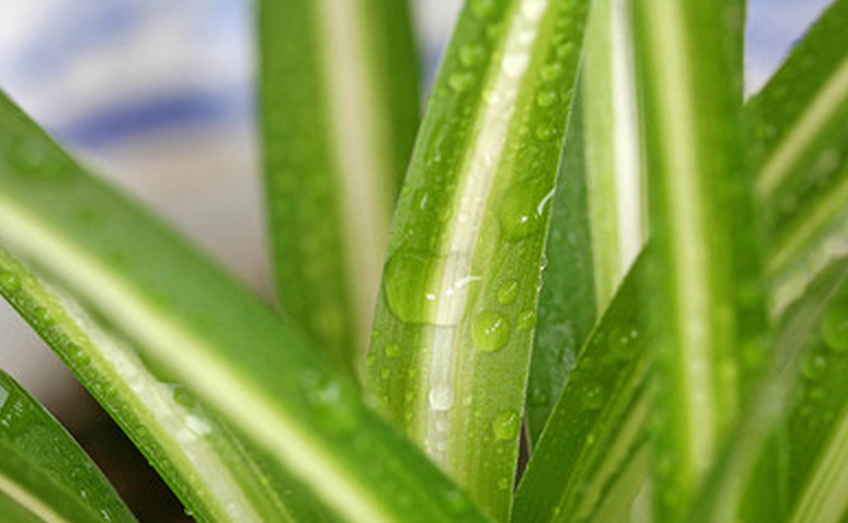
Five Growing Methods You Must Know for Arranging a Fresh, Simple Home with Variegated Spider Plants
1. Soil
The variegated spider plant has low soil requirements; generally, loose, fertile, well-drained sandy soil will do.
2. Watering
The variegated spider plant grows better under consistently moist conditions, so watering should alternate between dry and wet. In spring and autumn, water once every two to three days; in summer, generally water once a day; in winter, when the plant grows slowly, reduce the amount of water appropriately. A dry environment with too-low air humidity often causes the leaf tips to dry up, affecting growth and ornamental effect, so spraying water regularly to raise air humidity is more beneficial for growth.
3. Sunlight
Spider plants prefer a semi-shaded environment. In spring and autumn, avoid direct exposure to strong sunlight; in summer, when sunlight is especially intense, they should only receive some slanting light in the morning and evening, and 50%-70% of sunlight should be shaded during the day, otherwise the leaf tips will dry up. Variegated varieties especially fear strong sunlight; the variegated spider plant (Chlorophytum comosum 'Variegatum') grows more beautifully in weak light, with its yellow edges more distinct and its leaves more glossy. But in winter, it should receive more sunlight to keep the leaves tender and fresh green. Household potted spider plants should be placed in front of a south-facing window, otherwise the leaves will lose their luster or even wither.
4. Temperature
The variegated spider plant likes a warm, moist and semi-shaded environment. Its vigorous growth period is about from March to September, and in winter, as long as the temperature is not lower than 7°C, it can grow normally.
5. Fertilizing
Spider plants are foliage plants that are relatively tolerant of fertilizer. If fertilizer and water are insufficient, they easily become scorched and aged, with yellowing leaves, losing their ornamental value. From late spring to early autumn, apply 1 application of organic fertilizer liquid every 7-10 days, but for variegated varieties such as 'Variegatum' and 'Vittatum', less nitrogen fertilizer should be applied, so as not to cause the variegation color to fade or even disappear, affecting appearance. Organic fertilizer made by composting bone meal, eggshells and the like can be applied appropriately; after full fermentation, take an appropriate amount of diluted liquid and apply it once every 10-15 days to make the variegation bright and vivid.
Arranging a Fresh, Simple Home with Variegated Spider Plants: Five Growing Methods You Must Know
Household Plants Also Follow Feng Shui
Grow fewer plants that contain toxins; such as: Alocasia macrorrhizos, Euphorbia milii, night-blooming jasmine (Cestrum nocturnum), oleander (Nerium oleander), Araceae plants such as Rohdea japonica, Lantana camara, poinsettia (Euphorbia pulcherrima), oleander, Daphne odora, Impatiens balsamina, Chinese rose (Rosa chinensis), African jasmine (Murraya paniculata), etc.; these plants should not be grown in large numbers.
Plants are divided into yin and yang and the five elements, possessing the natural law of mutual generation and mutual overcoming and the principle of yin and yang;
Plants belonging to the metal element in the five elements, such as: orange, spider plant, orange jasmine (Murraya paniculata), Daphne odora, narcissus, silver osmanthus, white lilac, Yulan magnolia, night-blooming jasmine, Michelia chapensis.
Plants belonging to the wood element in the five elements: Araucaria cunninghamii, orchid grass, cedar, Cinnamomum burmannii, pine and cypress, lucky bamboo (Dracaena sanderiana), rubber fig (Ficus elastica), dragon bone (Euphorbia trigona), lychee, bamboo (Bambusa multiplex),
Cryptomeria japonica, holly (Ilex), boxwood (Buxus), longan, cypress, Brazilian ironwood (Caesalpinia ferrea), cactus.
Plants belonging to the water element in the five elements: lotus, water lily, Phoenix canariensis, Areca triandra, Canna indica, Bischofia polycarpa, banyan tree, Fujian tea (Carmona retusa), Podocarpus macrophyllus, Syzygium hainanense, Caryota mitis, clivia, Podocarpus nagi, Rhapis excelsa, Sabina chinensis, Rohdea japonica, dragon bone, etc.
Plants belonging to the fire element in the five elements: red ironwood, dragon's blood tree (Dracaena cinnabari), kapok (Bombax ceiba), flame tree (Delonix regia), red mulberry, pomegranate, plum, peach blossom, red apricot, firethorn (Pyracantha), flame bottle tree (Spathodea campanulata), red chrysanthemum, wisteria, red Bauhinia, hibiscus, Bougainvillea, red pear, crape myrtle, red ironwood, red osmanthus, cherry blossom, red maple.
Plants belonging to the earth element in the five elements: yellow locust (Sophora japonica), Senna siamea, golden shower tree (Cassia fistula), Dillenia indica, yellow chrysanthemum, daylily, Nandina domestica, Buddha belly bamboo, Aglaia odorata, yellow oleander (Thevetia peruviana), Sophora japonica 'Pendula', yellow jasmine (Jasminum humile), Croton variegatum, Forsythia, variegated spider plant, Phellodendron amurense, golden osmanthus, Michelia figo, Coptis chinensis, Saraca dives, Scutellaria baicalensis.
Toxic Plants
Botanists have determined that plants to be used with caution include flowers and trees that promote cancer, cause allergies, or are toxic; Araceae plants such as Dieffenbachia picta, golden pothos (Epipremnum aureum), white candle (also called peace lily, Spathiphyllum), Buddleja lindleyana, dragon bone, Euphorbia milii, oleander, African jasmine, plants of the Strychnos family, Strophanthus, Derris, Antiaris toxicaria, Rhododendron molle, Melia toosendan, Toxicodendron vernicifluum, Datura, Aristolochia.
The growth of plants according to yin-yang and the five elements has fixed laws; for example: wheat and rice have five-element magnetic fields of one yin and one yang, with opposite growth laws. Wheat's five-element magnetic field is yang, with right-handed ears growing upward, growing during the day, and is warm in nature; rice is yin, left-handed, flowering from top to bottom, with ears drooping downward, growing at night, and is cold in nature.
For another example:
Mutually overcoming plants: grape and elm, pine (grapes planted under a pine tree bear very little fruit, and grown beside an elm tree the fruit tastes sour) are mutually overcoming, rice and bamboo are mutually overcoming, narcissus and lily of the valley are mutually overcoming.
Mutually generating plants: sandalwood and olive are mutually generating, mung bean and rice are mutually generating, Microstegium vimineum and fir trees are mutually generating.
Between people and plants there also exists the Yi principle phenomenon of mutual generation and mutual overcoming. Plants differ in five elements, yin-yang and color, and also produce different regulating and therapeutic effects on human health.
Placement of plants by five elements:
Metal-nature plants should be placed in the west, suitable for benefiting the lungs.
Wood-nature plants: planted in the east, beneficial to the liver.
Fire-nature plants: cultivated in the south, beneficial to heart health.
Earth-nature plants: according to the acquired trigram principle, mostly planted in the center, able to nourish the stomach and strengthen the spleen.
Water-nature plants: grown in the north, able to tonify the kidneys and treat the intestines.
Sun-loving plants should be placed near windows, while shade-loving plants should be cultivated in cool, ventilated places.
Therefore, growing plants and flowers at home must be done scientifically. If the household flower varieties introduced above, which are commonly grown at home, are placed improperly for a long time, they will cause great harm to the human body, leading to some strange and peculiar pathological changes; bringing unnecessary losses to oneself and the family in body, spirit, economy and career. As early as 2003, the Chinese Academy of Preventive Medicine pointed out in a research project that 52 species of plants have been found to have cancer-promoting effects on the human body. Among common plants are: Euphorbia milii, poinsettia, Impatiens balsamina, Euphorbia marginata, Excoecaria cochinchinensis, Euphorbia antiquorum, Rohdea japonica (Araceae), Euphorbia milii, dragon bone, Croton variegatum, etc. These plants have been verified in the formation of esophageal cancer, and have an even greater disease-promoting rate in inducing nasopharyngeal cancer. Household flowers must be kept away from toxic plants.
Scientific planting will create a perfect living space for people's residential environment; first: it makes people physically healthy, energetic and vigorous, improves dedication to work and career, and keeps them away from illness, injury and disaster; it makes families happy and auspicious, couples loving and harmonious, and people able to tolerate, accommodate, respect and love one another; second: it makes people full of hope for life, strengthens career ambition and sense of responsibility, and makes greater contributions to social development, stability and harmony.
Home Landscape Greening
All things in heaven and earth are divided into yin and yang, and plants must also follow this constant law. According to their growth characteristics, suitable regions, natural environment, and seasonal differences, combined with their own yin-yang attributes, an appropriate orientation should be chosen for cultivation; in terms of growing environment, yang-nature plants such as white orchid (Michelia alba), rose, jasmine, plum blossom, peony and other yang plants, if planted in a damp, shaded environment, will grow poorly or fail to bloom, fail to bear fruit, or even die. Yin-nature plants such as asparagus fern (Asparagus setaceus), Aspidistra elatior, and Rohdea japonica are also unsuitable for cultivation in places with ample sunlight.
Home landscape greening should be built according to people's magnetic fields:
White gardens belong to metal, and are greatly beneficial to those whose destiny favors metal:
According to theoretical research in the I Ching and traditional Chinese medicine, plants such as white-leafed silver flower, eucalyptus, citrus of the Magnoliaceae and Rutaceae families, and others with white flowers, white bark, white leaves, white wood, or white sap belong to metal, and have a pungent, spicy taste; they expel turbid qi, can enter the lung meridian, and are beneficial to people's large intestine, lungs and nose, while their fragrant essence can nourish the original spirit. Smokers are suited to living in this kind of energy field.
Green gardens belong to wood, and are greatly beneficial to those whose destiny favors wood:
Wood connects to the liver, and its sour nature can calm the spirit, cultivate ambition, delight the emotions and benefit the intellect, and broaden one's horizons. It is greatly beneficial to people with AB blood type, making the residential atmosphere harmonious; because the liver is also the mother of the eyes, it can protect the eyes and brighten vision. Living in this wood energy field helps reduce psychological pressure, develop wisdom, and promote harmony.
Blue gardens belong to water, and are greatly beneficial to those whose destiny favors water:
Blue gardens can make one's essence and spirit calm and solid, strengthen the sinews and body, and prolong life. This energy field has the effect of treating and tonifying the kidneys. It can also correct the rash character flaws of violent and impulsive people.
Red gardens belong to fire, and are greatly beneficial to those whose destiny favors fire:
Red gardens belong to fire, and are greatly beneficial to people with B blood type. They can treat diseases of the triple burner, small intestine and other aspects, and have a remarkable effect on low blood pressure and sweating. They are good for correcting the timid, closed and introverted personality of AB-type people in youth, and increase ambition. If placed in a red garden, they can make people laugh and stimulate passion.
Yellow gardens belong to earth, and are greatly beneficial to those whose destiny favors earth:
When arranged appropriately, yellow gardens are especially beneficial to people with O blood type. They can make people walk quickly after eating their fill, help the stomach function digest quickly, and reduce the consumption of calories.
Therefore, the greening of home gardens should be scientifically laid out according to the plants' five elements, direction, yin-yang classification, and growth laws, in combination with people's magnetic fields and the size of the courtyard space, with suitable matching of plant heights, thereby transforming an unfavorable home environment and achieving the goal of personal health.
Plants Can Also Change Corporate and Home Feng Shui
[B]Plants Can Also Change Corporate and Home Feng Shui[B]The Influence of Plants in Chinese Traditional Culture, the I Ching, and Corporate Feng Shui
The I Ching is the crystallization of the wisdom of China's ancient people and the general source of Chinese philosophy. Since ancient times it has been the first of all classics, the classic among classics, the philosophy among philosophies, and the science among sciences. Since ancient times there has been the saying that one cannot be an imperial physician without reading the Yi, and one cannot be a general or minister without reading the Yi, so its role is described as: cultivating oneself, regulating the family, governing the state, and bringing peace to the world.
Abroad, the I Ching and the Bible are together called the world's two great extraordinary books, enjoying the fine names of "the algebra of the universe" and "the pearl on the crown of science." Therefore, Mr. Cheng Zhongying, chairman of the International I Ching Society, said: "The I Ching is not only China's but also the East's, and even more the world's; it is not only ancient but also modern, and even more the future. The I Ching is a study of prediction and a study of decision-making."
Laozi's "Heaven gives birth to all things from being, and being is born from non-being" means: tangible things are governed by intangible things, so corporate feng shui also determines part of a company's success or failure. For example, where a pot of flowers is placed...
In modern society, in this era of fast pace and high efficiency along with increasingly serious pollution, plants and flowers in corporate offices and homes are an indispensable part of people's lives.
In enterprises and residential courtyards, more or less a few pots of plants and flowers will be placed. But in cities, plants and flowers are mostly cultivated indoors; with city buildings standing in clusters, people mostly live in sealed, enclosed spaces, and many buildings have poor lighting and air intake conditions and are airtight. Living under such environmental conditions makes people feel very stuffy, and gorgeous decorated doors and windows lose their proper functional significance; especially in private office spaces with doors but no windows, the result can be air and microbial pollution. Staff working within enclosed chemical zones and residents near enterprises will also suffer biological, chemical and physical pollution. At this time, placing a few pots of beneficial plants and flowers in appropriate indoor positions to absorb carbides in the air while releasing oxygen and energy beneficial to human health can resolve the syndrome of architectural defects. This achieves both visual beauty and the effect of greening the living space environment. The height and size of the cultivated plants should be determined according to the room space and building height, as long as it gives people a pleasant feeling, and the proportions must not be unbalanced. They should be placed and grown in places with good ventilation, air intake and lighting; at the same time, one should also master some basic knowledge of growing flowers and plants and the yin-yang and five-element attributes of the plants being grown in order to lay out the space and adjust feng shui. Only then can one pursue good fortune and avoid misfortune...
[B]Plants Suitable for Daily Life
Nowadays people generally grow some species suited to the growth laws, such as: clivia, spider plant, narcissus, money tree (Pachira aquatica), Manjusri plant, jasmine, citrus, lacebark pine (Pinus bungeana), aloe, citrus, spider plant, chrysanthemum, cactus ball, cactus, agave, snake plant, English ivy, golden osmanthus, Michelia figo, Aglaia odorata, turmeric, gardenia, bamboo (Bambusa multiplex), clivia, water lily, lucky bamboo, orchid grass, parlor palm (Chamaedorea elegans), Melaleuca leucadendra, orange jasmine, Daphne odora, Magnolia grandiflora, Michelia chapensis, silver osmanthus, white lilac, night-blooming jasmine, Yulan magnolia, Elaeocarpus, Tabernaemontana divaricata, white gardenia, ginkgo, white chrysanthemum, plane tree, cedar, Araucaria cunninghamii, boxwood, jackfruit. Phoenix canariensis, Areca triandra, Bischofia polycarpa, banyan tree, privet (Ligustrum), sapodilla (Manilkara zapota), Fujian tea, Podocarpus macrophyllus, water lily, lotus, Caryota mitis, royal palm (Roystonea regia), Rhodoleia, Hibiscus tiliaceus, Rohdea japonica, Canna indica...
[B]The Most Basic Principle Is to Place Plants That Are Beneficial to People's Health
Plants are living objects, and the life fields and properties of hundreds of kinds of plants are all different, broadly divided into two categories: toxic and non-toxic. Non-toxic plants are beneficial to human health, while toxic objects will cause mild or severe harm to human health, and this unfavorable factor is the kind of harm our eyes cannot see. Therefore, when choosing plants and flowers to grow, we should mostly focus on plants beneficial to health:
For example, beneficial plants: aloe, citrus, spider plant, chrysanthemum, cactus ball, cactus, agave, snake plant, English ivy, golden osmanthus, Michelia figo, Aglaia odorata, turmeric, gardenia, bamboo, clivia, water lily, lucky bamboo, and the orchid grass series of plants, which play a beneficial role in residential life.
For example, if aloe and parlor palm are placed in favorable positions in the office of the development department, they will make the staff work actively, with clear minds and agile thinking, and easily develop good new products. This is even more conducive to the enterprise standing invincible in the market.
For example, if aloe and parlor palm are placed in a student's bedroom, it will guide him (her) to study hard, keep improving, have keen thinking, a strong physique, and an even better appetite, etc.
Grow fewer plants that contain toxins; such as: Alocasia macrorrhizos, Euphorbia milii, night-blooming jasmine, oleander, Araceae plants such as Rohdea japonica, Lantana camara, poinsettia, oleander, Daphne odora, Impatiens balsamina, Chinese rose, African jasmine, etc.; these plants should not be grown in large numbers. Because plants themselves all have an energy field and magnetic field, and these energy fields are easily received by the human body. Through the flow of the atmosphere, they transform the energy field and magnetic field into an information energy field and transmit and conduct it to people. The quality of their information energy will directly affect people's health conditions.
For example, if Alocasia macrorrhizos is placed in the kan position in the office of a company's boss, it is unfavorable to the growth of the company's business, and also affects the development of seed business and the company's talent reserve.
For example, if Alocasia macrorrhizos is placed in the kan position in the home, it is unfavorable to the health of family members. For example: kidneys and intestines.
The south is suitable for growing yang, warm-nature, high-temperature-tolerant, low-moisture plants; the north is suitable for cultivating yin-nature, low-temperature, moisture-tolerant, cold-tolerant plants, etc.
Growing flowers indoors requires attention to the yin-yang and five-element classification of plants. Research and practice on plants and the five elements both show that plants can match the five elements and obey the laws of the five elements, and therefore can correspond to people's five elements. Using the correspondence between people and plants in the five elements, one can cultivate the mind and nature and treat many diseases.
The magnetic field information of people and the magnetic field information of plants can reach a resonance point. Human life is limited by innate factors, that is, the spatiotemporal positioning at the time of birth determines the fate of the five elements. Plants likewise possess these conditions. The five elements of plants and the five elements of people are also closely related in mutual generation and mutual overcoming.
For example, if a certain enterprise is very prosperous and a certain department is managed in a very coordinated way, it is advised not to change the leader. If one wants to change the leader, then one must see whether the magnetic field of this new leader matches the magnetic field of this place. If a certain person's magnetic field belongs to metal, while the room grows many plants whose magnetic fields belong to fire, living in this energy field will cause unfavorable effects on the person's health; leading to poor thinking performance, low and unstable mood, feeling unhappy, irritability, lethargy, decreased appetite, meridian pain, restlessness at work and inability to improve efficiency. If a certain life magnetic field belongs to wood, living in the magnetic field of water-nature plants and wood-nature plants will be beneficial to health, inspiring, motivating, studious, polite and civilized; pleasing to the eye, regulating the heart and delighting the emotions, eliminating static electricity, purifying the air, reducing noise, absorbing toxins, and elevating life and the soul.
Therefore, the magnetic field of indoor flowers should mutually generate and assist the magnetic field of people, and should not mutually overcome it. If there is a sense of stagnation indoors or the energy field flows poorly, plants can also play a softening and activating function, prompting areas lacking energy to be full of vitality and become active. Therefore, plants are also a kind of vigorous, uplifting energy.
[B]The Influence of Plant Placement by Five Elements on Corporate Prospects and Personal Health
Plants are divided into yin and yang and the five elements, possessing the natural law of mutual generation and mutual overcoming and the principle of yin and yang;
Metal-nature plants should be placed in the west, benefiting corporate sales and the lungs. Plants belonging to the metal element in the five elements: orange, spider plant, orange jasmine, Daphne odora, narcissus, silver osmanthus, white lilac, Yulan magnolia, night-blooming jasmine, Michelia chapensis.
Wood-nature plants: planted in the east, benefiting middle and senior managers and the enterprise's execution power, and benefiting the liver. Plants belonging to the wood element in the five elements: Araucaria cunninghamii, orchid grass, cedar, Cinnamomum burmannii, pine and cypress, lucky bamboo, rubber fig, dragon bone, lychee, bamboo, Cryptomeria japonica, holly, boxwood, longan, cypress, Brazilian ironwood, cactus.
Water-nature plants: grown in the north, benefiting the enterprise's business growth, seed business and corporate talent reserve, and able to tonify the kidneys and treat the intestines. Plants belonging to the water element in the five elements: lotus, water lily, Phoenix canariensis, Areca triandra, Canna indica, Bischofia polycarpa, banyan tree, Fujian tea, Podocarpus macrophyllus, Syzygium hainanense, Caryota mitis, clivia, Podocarpus nagi, Rhapis excelsa, Sabina chinensis, Rohdea japonica, dragon bone, etc.
Fire-nature plants: cultivated in the south, benefiting the enterprise's brand and intangible assets. Beneficial to heart health. Plants belonging to the fire element in the five elements: red ironwood, dragon's blood tree, kapok, flame tree, red mulberry, pomegranate, plum, peach blossom, red apricot, firethorn, flame bottle tree, red chrysanthemum, wisteria, red Bauhinia, hibiscus, Bougainvillea, red pear, crape myrtle, red ironwood, red osmanthus, cherry blossom, red maple.
Earth-nature plants: according to the acquired trigram principle, mostly planted in the southwest, benefiting the enterprise's market and blank markets. Able to nourish the stomach and strengthen the spleen. Plants belonging to the earth element in the five elements: yellow locust, Senna siamea, golden shower tree, Dillenia indica, yellow chrysanthemum, daylily, Nandina domestica, Buddha belly bamboo, Aglaia odorata, yellow oleander, Sophora japonica 'Pendula', yellow jasmine, Croton variegatum, Forsythia, variegated spider plant, Phellodendron amurense, golden osmanthus, Michelia figo, Coptis chinensis, Saraca dives, Scutellaria baicalensis.
All things in heaven and earth are divided into yin and yang, and plants must also follow this constant law. Yang-nature plants should be placed near windows, while yin-nature plants should be cultivated in cool, ventilated places. In terms of growing environment, yang-nature plants such as white orchid, rose, jasmine, plum blossom, peony and other yang plants, if planted in a damp, shaded environment, will grow poorly or fail to bloom, fail to bear fruit, or even die. Yin-nature plants such as asparagus fern, Aspidistra elatior, and Rohdea japonica are also unsuitable for cultivation in places with ample sunlight.
[B]Enterprises, families, and landscape greening should be built according to people's magnetic fields:
White gardens: belong to metal
According to theoretical research in the I Ching and traditional Chinese medicine, plants such as white-leafed silver flower, eucalyptus, citrus of the Magnoliaceae and Rutaceae families, and others with white flowers, white bark, white leaves, white wood, or white sap belong to metal, and have a pungent, spicy taste; they expel turbid qi, can enter the lung meridian, and are beneficial to people's large intestine, lungs and nose, while their fragrant essence can nourish the original spirit. Smokers are suited to living in this kind of energy field.
Green gardens: belong to wood
Wood connects to the liver, and its sour nature can calm the spirit, cultivate ambition, delight the emotions and benefit the intellect, and broaden one's horizons. It is greatly beneficial to people with AB blood type, making the residential atmosphere harmonious; because the liver is also the mother of the eyes, it can protect the eyes and brighten vision. Living in this wood energy field helps reduce psychological pressure, develop wisdom, and promote harmony.
Blue gardens: belong to water
Blue gardens can make one's essence and spirit calm and solid, strengthen the sinews and body, and prolong life. This energy field has the effect of treating and tonifying the kidneys. It can also correct the rash character flaws of violent and impulsive people.
Red gardens: belong to fire
Red gardens belong to fire, and are greatly beneficial to people with B blood type. They can treat diseases of the triple burner, small intestine and other aspects, and have a remarkable effect on low blood pressure and sweating. They are good for correcting the timid, closed and introverted personality of AB-type people in youth, and increase ambition. If placed in a red garden, they can make people laugh and stimulate passion.
Yellow gardens (belong to earth)
When arranged appropriately, yellow gardens are especially beneficial to people with O blood type. They can make people walk quickly after eating their fill, help the stomach function digest quickly, and reduce the consumption of calories.
Therefore, the greening of enterprise and home gardens should be scientifically laid out according to the plants' five elements, direction, yin-yang classification, and growth laws, in combination with people's magnetic fields and the size of the courtyard space, with suitable matching of plant heights, thereby transforming an unfavorable corporate office environment and home environment and achieving the goal of enterprise prosperity and better personal health.
After discarding the dross and absorbing the essence, traditional feng shui theory occupies a rare place in today's social life and home market, and is increasingly recognized and applied by Chinese people, and integrated into real life. The current trend is even more promising; people are also increasingly inseparable from traditional culture and modern high-tech cultural life. This is a necessary law of natural law and social development. For us researchers of Yi studies, it is our responsibility to better carry forward and pass on the traditional ancient culture. Before construction, we should first consider the planning and reasonable arrangement of the corporate environment and residential environment. Under the impetus of an era demanding high standards in career development, medical care, diet, daily life, daily necessities, culture and entertainment, and based on the beliefs of the people, we should use both the Chinese folk culture inherited to this day and modern science, so that enterprises can have a virtuous cycle and, in order to promote the rapid and healthy development of society, create a harmonious living environment and build an overall harmonious and prosperous society.
2008-2-15 (reposted from the BLOG of feng shui expert Li Ruchao)