How to grow pothos and spider plants, easily adding a touch of green to your home
Pothos and spider plants are shade-loving plants, mostly grown in pots as climbing foliage flowers. They like warm, humid environments and require loose, fertile, well-drained soil. So what are the growing methods for pothos and spider plants? Next, let the editors of Together Decoration Network briefly introduce them to you!
In spring, summer and autumn, pothos can be placed near an east- or north-facing windowsill, while in winter it can be placed at a south-facing window
If it is kept for a long time in an environment with overly dim light, it will not only cause the trailing stems to grow excessively, with longer internodes and a sparse, scattered plant shape, but the yellow-white striped markings on the leaves will also become smaller and paler, and may even disappear completely and fade to green. If grown outdoors, pay attention to shading, and especially in summer take care to prevent direct strong light, otherwise new leaves will become smaller, the leaf color will be dull, and the leaf edges will easily be scorched. The suitable temperature for pothos growth is 20°C-30°C, and in winter the room temperature should not be lower than 15°C.
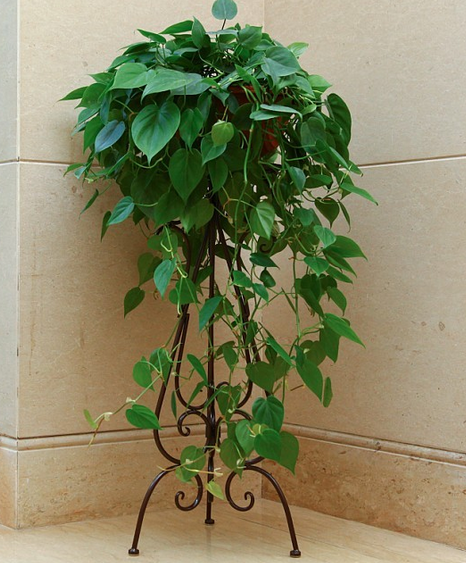
How to grow pothos and spider plants: add a touch of green to your home
Pothos likes moisture
During the growing season, watering should keep the potting soil moist most of the time. Never let the potting soil dry out, otherwise it can easily cause yellow leaves and a poor plant shape. If too much water causes waterlogging in the potting soil, it can easily cause root rot and dead leaves, and especially when winter room temperatures are low, watering should be controlled even more carefully. In summer, while watering thoroughly, also pay attention to regularly spraying water on the leaf surfaces. In winter, when the climate is dry, the leaves also need to be sprayed and washed once every 4-5 days with warm water to wash away dust on the leaf surfaces, which helps keep the leaves glossy and emerald green.
For potted pothos, choose fertile, loose, well-drained leaf mold soil
Slightly acidic soil is preferable. Pothos is extremely shade-tolerant and can be placed in a sunny spot indoors in all four seasons. In dimmer indoor areas, it should be moved every half month to a brighter environment to recover for a period, otherwise the internodes will lengthen and the leaves will become smaller. Pothos likes hot and humid environments. The overwintering temperature should not be lower than 15°C, the potting soil should remain moist, and the leaf surfaces should be sprayed often to increase air humidity, which benefits the growth of aerial roots. Pothos is usually propagated by layering and stem burial. In late spring and early summer, select vigorous pothos vines, cut 15 cm to 30 cm stems, remove the leaves from 1 to 2 nodes at the base, being careful not to damage the aerial roots, then insert them into plain sand or coal cinders to a depth of 1/3 of the cutting, water thoroughly, and place in a shaded spot. Spray the leaf surfaces with water every day or cover with plastic film to retain moisture. As long as the environment is kept no lower than 20°C, the survival rate is above 90%.
How to grow pothos and spider plants: growing methods and precautions for pothos and spider plants
Pothos is usually grown in pots indoors and placed in study rooms, living rooms and offices. It can bring a pleasant visual effect and help purify the environment. Among large climbing plants, pothos, spider plants and ivy are all the same in having a powerful air-purifying effect.
Pothos and spider plants are shade-loving plants, mostly grown in pots as climbing foliage flowers. They like warm, humid environments and require loose, fertile, well-drained soil. Because pothos can absorb benzene, formaldehyde and other substances from the air, it is widely grown indoors.
In spring, summer and autumn, pothos can be placed near an east- or north-facing windowsill, while in winter it can be placed at a south-facing window
If it is kept for a long time in an environment with overly dim light, it will not only cause the trailing stems to grow excessively, with longer internodes and a sparse, scattered plant shape, but the yellow-white striped markings on the leaves will also become smaller and paler, and may even disappear completely and fade to green. If grown outdoors, pay attention to shading, and especially in summer take care to prevent direct strong light, otherwise new leaves will become smaller, the leaf color will be dull, and the leaf edges will easily be scorched. The suitable temperature for pothos growth is 20°C-30°C, and in winter the room temperature should not be lower than 15°C.
Pothos likes moisture
During the growing season, watering should keep the potting soil moist most of the time. Never let the potting soil dry out, otherwise it can easily cause yellow leaves and a poor plant shape. If too much water causes waterlogging in the potting soil, it can easily cause root rot and dead leaves, and especially when winter room temperatures are low, watering should be controlled even more carefully. In summer, while watering thoroughly, also pay attention to regularly spraying water on the leaf surfaces. In winter, when the climate is dry, the leaves also need to be sprayed and washed once every 4-5 days with warm water to wash away dust on the leaf surfaces, which helps keep the leaves glossy and emerald green.
For potted pothos, choose fertile, loose, well-drained leaf mold soil
Slightly acidic soil is preferable. Pothos is extremely shade-tolerant and can be placed in a sunny spot indoors in all four seasons. In dimmer indoor areas, it should be moved every half month to a brighter environment to recover for a period, otherwise the internodes will lengthen and the leaves will become smaller. Pothos likes hot and humid environments. The overwintering temperature should not be lower than 15°C, the potting soil should remain moist, and the leaf surfaces should be sprayed often to increase air humidity, which benefits the growth of aerial roots. Pothos is usually propagated by layering and stem burial. In late spring and early summer, select vigorous pothos vines, cut 15 cm to 30 cm stems, remove the leaves from 1 to 2 nodes at the base, being careful not to damage the aerial roots, then insert them into plain sand or coal cinders to a depth of 1/3 of the cutting, water thoroughly, and place in a shaded spot. Spray the leaf surfaces with water every day or cover with plastic film to retain moisture. As long as the environment is kept no lower than 20°C, the survival rate is above 90%.
Precautions for growing pothos and spider plants
Temperature
In winter, pothos can overwinter safely above 10°C, and generally grows normally above 20°C. Therefore, the general home environment is quite suitable for pothos growth. The original growing conditions of pothos are in forests shaded by towering trees, so its tendency toward light is not strong. But in the autumn and winter of the north, to supplement the lack of temperature and photosynthesis, its light exposure should be increased. The method is to place pothos in the brightest spot indoors, or move it to a sealed balcony in the midday sun. At the same time, when temperatures are low, open windows as little as possible, because the leaves may be frostbitten in a very short time.
Light
Pothos does not have a strong tendency toward light, so when growing it, place it in a spot indoors with good light, and at midday it can be put in the sun for a while. In the north, with a room temperature above 10°C, pothos can overwinter safely, and with a room temperature above 20°C, pothos can grow normally. Generally, households have little problem reaching this temperature, but note that excessive temperature differences should be avoided, and also take care that the leaves do not get close to heating equipment.
Water
When growing pothos, do not water too much. You can spray water at the rooting area, which can reduce the rate of water evaporation. Water daily to keep the soil moist, but do not let water accumulate and breed mosquitoes. In autumn and winter, the amount of watering should be strictly controlled according to room temperature. Before heating begins, temperatures are lower, the soil of the plant evaporates more slowly, and watering should be reduced, with the amount controlled between 1/4 and 1/2 of the original. Even after heating begins, watering should not be too frequent. When watering, pour less into the pot and let water seep through the coir. In addition, water should also be sprayed at the places where aerial roots grow on the coir column, to reduce insufficient root water uptake caused by overly rapid evaporation. In winter, water that has been left to stand for a day is better for watering, as water that is too cold can easily damage the roots.
Fertilizer
For fertilizing pothos leaves, because ordinary inorganic fertilizers are difficult to absorb, a special fertilizer needs to be used. In the autumn and winter in the north, most plants grow slowly or even stop growing, so fertilization should be reduced. Before winter begins, mainly apply liquid inorganic fertilizer by watering or spraying, about once every 15 days. After winter begins, fertilization should mainly be foliar spraying, applied mainly through the stomata on the leaf surfaces, so that the fertilizer is absorbed through the stomata on the leaf surfaces and the fertilizer effect can act directly on the leaves. Foliar fertilizer should be a special fertilizer, as ordinary inorganic fertilizers are not easily absorbed by the leaves. The Beida Flower Guardian series and Japan's Hana Ichiban, among others, can all be used as foliar fertilizers.
After reading this, don't you find that pothos and spider plants are also very easy to keep alive? Get started right away and add some spring color to your home.
The living environment of pothos and the uses of pothos
Pothos belongs to the Araceae family and is a large evergreen climbing plant that grows in tropical regions, often climbing on rocks and tree trunks in rainforests. It has strong twining ability and well-developed aerial roots, and can be grown hydroponically. On mature branches, the petioles are thick and strong, 30-40 cm long, slightly enlarged at the base; the upper joint is 2.5-3 cm long, slightly thickened, with a broad groove on the ventral side; the leaf sheath is long; the leaf blade is thinly leathery, emerald green, usually, especially on the leaf surface, with many irregular pure yellow patches, entire, asymmetrical ovate or ovate-oblong, with a short acuminate apex and a deeply cordate base, slightly thick, with both sides slightly raised.
Pothos has strong twining ability, well-developed aerial roots, variegated leaf color, is evergreen all year round, and has long drooping branches. It is an excellent foliage plant. It can be allowed to climb on a coir-wrapped cylinder or tree trunk for greening, placed in an entrance hall or hotel, or trained into a hanging form and placed in a study, on a windowsill, on a wall or along a wall. It can also be used as ground cover under tree shade. It is a flower suitable for indoor placement. Why is pothos so popular? Next, let's take a look at the uses of pothos and its growing methods.
The living environment of pothos
It has a lovely appearance. Pothos is also known as golden pothos, devil's ivy, golden vine, etc. It is an evergreen perennial herbaceous plant in the Araceae family, genus Epipremnum. The stems and vines of pothos are thick and strong and can reach several meters long, with aerial roots at the nodes. Young leaves are ovate-cordate. Newly propagated seedlings have smaller and paler leaves. As the plant ages, mature leaves become long-ovate, about 15 cm long and about 10 cm wide. The deep green leaf surface is inlaid with irregular yellow-white spots or stripes. Due to differences in fertilizer and water conditions, the leaf size varies. Pothos has luxuriant branches and leaves, good shade tolerance, is evergreen all year round, and is glossy. In winter, outdoor plants wither and fade, while indoor pothos remains lush, so it is an excellent indoor foliage plant. Because the stems and vines of pothos grow quickly, people often grow it as a column-climbing form, that is, erect a support in the center of the flowerpot, wrap some coir on the support, with the support diameter reaching 10 cm to 12 cm, then plant 3 to 4 seedlings in the pot, letting their stems and vines climb around the column. Some also plant pothos in a flowerpot and place it on a flower stand, letting the stems and vines hang down like a green curtain, which has a distinctive charm.
Its life needs differ somewhat from those of other plants. Pothos is generally propagated by cuttings, and because it has aerial roots at the nodes, cuttings root very easily. The cutting time is from April to August. When taking cuttings, cut a 15 cm to 20 cm section of stem and vine as the cutting, remove the lower leaves, leaving only 1 to 2 leaves at the tip, insert it obliquely into a sand bed, then water thoroughly and keep it moist. Afterward, spray water on the leaf surfaces of the cuttings frequently, and roots can form in about ten days or so. Pothos can also be water-propagated from terminal buds. The method is to cut a tender, vigorous stem and vine section 20 cm to 30 cm long and insert it directly into a bottle filled with clean water, changing the water once every 2 to 3 days; it can root and survive in more than 10 days. Because potted pothos is limited by the potting soil, after being grown too long the plant tends to age, and the leaves become smaller and fall off. Therefore, after 2 to 3 years of cultivation, it must be repotted or pruned and renewed.
It is a child with character. It likes warm, humid environments and requires loose, fertile, well-drained soil. For potted pothos, choose fertile, loose, well-drained leaf mold soil, slightly acidic being preferable. Pothos is extremely shade-tolerant and can be placed in a sunny spot indoors in all four seasons. In dimmer indoor areas, it should be moved every half month to a brighter environment to recover for a period, otherwise the internodes will lengthen and the leaves will become smaller. Pothos likes hot and humid environments. The overwintering temperature should not be lower than 15°C, the potting soil should remain moist, and the leaf surfaces should be sprayed often to increase air humidity, which benefits the growth of aerial roots. During the vigorous growth period, apply liquid fertilizer once a month. For plants kept indoors for ornament for a long time, the leaves at the base of the stems easily fall off, reducing ornamental value. In May and June, when temperatures warm up, pruning and renewal can be carried out together with cuttings to encourage new buds to sprout from the basal stems.
Its hometown determines its character. Pothos is native to the Indonesian archipelago, and in tropical regions it often climbs and grows on rocks and tree trunks. It likes high temperature, high humidity and semi-shade environments, is not cold-tolerant, and its suitable growing temperature is 15°C to 25°C. Below 15°C it grows slowly, and the overwintering temperature should not be lower than 10°C. It is sensitive to temperature. In summer, avoid direct sunlight, as under strong light the leaves easily turn yellow and fall off, so outdoors in summer pay attention to shading. In winter, it can grow well under bright indirect light indoors, with sturdy nodes and brilliant leaf color. During the growth period, it has relatively high water requirements. In addition to normally replenishing water to the potting soil, the leaf surfaces should also be sprayed often, and for column-climbing cultivation, more water should also be sprayed on the coir column so that the coir fully absorbs water for the aerial roots winding around the stems to absorb. Apply a nitrogen-phosphorus-potassium compound fertilizer once every 2 weeks, or spray a 0.2% potassium dihydrogen phosphate solution weekly, to make the leaves emerald green and the markings more vivid.
Pothos is a shade-loving plant. It avoids direct sunlight, likes scattered light, and is relatively shade-tolerant. When grown indoors, it can be placed beside a window, but direct sunlight should be avoided. Too strong sunlight will scorch the leaves of pothos, while too much shade will make the beautiful markings on the leaf surface disappear. Generally, receiving four hours of scattered light gives the best growth and development for pothos.
The effect of pothos on the home environment
Pothos is a large evergreen climbing plant. Like spider plants and ivy, it has a very strong air-purifying ability. Pothos can absorb benzene, trichloroethylene, formaldehyde and other substances from the air, so placing pothos in a newly renovated home is simply perfect. According to environmental scientists, one pot of pothos in a room of 8-10 sq m is equivalent to an air purifier. It can be seen that the air-purifying ability of pothos is quite strong.
The feng shui role of pothos
In online discussions, some people may say that pothos is not a feng shui treasure and has no feng shui effect, but this is actually not the case. Take a look.
1. It eliminates many harms for us and gives home life a good start. When we have just moved into a new house, the smell inside may be very strong, to the point that we cannot live in it. Many people choose to place several or even more pothos plants indoors right after renovation is completed, letting them absorb harmful gases inside, and then move in after a period of time. From this perspective, pothos has actually taken on many toxic harms for us, and its role has already gone far beyond purely feng shui.
2. Pothos can attract air movement and make the room ventilated and breathable. Why say this? Plants themselves also breathe, absorbing carbon dioxide and exhaling oxygen. Pothos is generally placed by the window. When it is too windy outside, it blocks some of it, and if there is no wind, it itself also releases new oxygen. The oxygen enters the space where we live, making us more energetic and making the indoor air fresher.
On the surface, there seem to be only two major feng shui roles, but in fact, some plants have many small feng shui roles yet cannot help much, while pothos has a very large influence.
The role of pothos in matching home styles
Pothos is one of the plants most loved by ordinary families. Used for furniture decoration, it neither takes up space nor is difficult to care for.
1. Pothos is suitable for placement in places where family members come into contact most, and beside the living room TV or on the living room table are both very good choices. Pothos is one of the very excellent indoor decorative plants, a climbing foliage flower. Its vines are slender and soft, and its leaves are delicate and elegant. Place a nested pot high on top of a furniture cabinet and let its vines hang down calmly, or after the hanging vines grow too long, loop and hang them into a circle, just like an emerald relief. In this way, it fully uses space, purifies the air, and adds a lively-line, bright-colored green decoration to an otherwise dull cabinet surface, extremely full of vitality and adding harmonious charm to the room. Morphological characteristics: pothos vines grow several meters long, with aerial roots at the nodes. As the growing age increases, the stems thicken and the leaves also become larger and larger. Leaves are alternate, green, with a few leaves also slightly mottled with yellow, entire, and heart-shaped. Turning over these places fully reflects its ornamental value.
2. Place it in the kitchen, where there is the most cooking fumes. Placing it in the kitchen both achieves the goal of environmental protection and adds a bit of green to the kitchen, achieving two goals at once. Environmental scientists have found that one pot of pothos in a room of 8-10 sq m is equivalent to an air purifier, and can effectively absorb harmful gases in the air such as formaldehyde, benzene and trichloroethylene. Pothos not only has strong vitality, but when placed indoors, its air-purifying ability is no less than that of ivy and spider plants. Newly laid flooring very easily produces harmful substances. Because pothos can simultaneously purify benzene, trichloroethylene and formaldehyde in the air, it is very suitable for placement in newly renovated rooms.
3. The windowsill position is its patent. If we pay careful attention, we can find that the plants placed on the windowsills of ordinary homes are generally pothos, because its size is especially small and it fits perfectly on the windowsill. It neither crushes the windowsill nor blocks the beautiful scenery the owner sees beyond the windowsill.
This kind of matching can achieve the goals of environmental protection, adding vitality and decorating the home, and reflects a home style that combines home and nature.
Growing methods for pothos
Growing pothos requires attention to the following points:
(1) Temperature: In winter, pothos can overwinter safely above 10°C, and generally grows normally above 20°C. Therefore, the general home environment is quite suitable for pothos growth.
(2) Light: Pothos does not have a strong tendency toward light, so when growing it, place it in a spot indoors with good light, and at midday it can be put in the sun for a while.
(3) Water: When growing pothos, do not water too much. You can spray water at the rooting area, which can reduce the rate of water evaporation.
(4) Fertilizer: For fertilizing pothos leaves, because ordinary inorganic fertilizers are difficult to absorb, a special fertilizer needs to be used.
The above is the sharing of the uses and growing methods of pothos. For more home plants, please stay tuned.