What are the cultivation methods and precautions for Alocasia macrorrhizos (giant taro)
Many friends will place a pot of Alocasia macrorrhizos at home as an indoor green plant decoration. After buying Alocasia macrorrhizos and bringing it home, you will definitely need to consider its cultivation methods and cultivation precautions. Today, the editor will summarize the problems often encountered during the cultivation of Alocasia macrorrhizos. I believe flower lovers will have a comprehensive understanding of Alocasia macrorrhizos after reading this article, and will be able to cultivate it with ease!
How to grow Alocasia macrorrhizos
1. Soil
Although Alocasia macrorrhizos does not have very high requirements for soil, I have tried ordinary garden soil, nutrient soil, and pure sand, and found that Alocasia macrorrhizos grown in garden soil grows relatively slowly, is thin and weak, and appears malnourished; Alocasia macrorrhizos grown in pure sand grows well during the seedling stage, but the later effect is not good, and the Alocasia macrorrhizos is relatively short; Alocasia macrorrhizos grown in nutrient soil has strong plants, large leaves, and grows very fast. It took me about 6 months for my Alocasia macrorrhizos to go from the seedling stage to more than one meter tall.
Summary: Flower lovers who have the conditions should preferably choose better soil. It does not have to be nutrient soil; you can mix your own relatively fertile soil with good water permeability.
2. Choice of flower pot
The situation varies from household to household. Some flower lovers who grow Alocasia macrorrhizos like to use small pots, while others like to use large pots. It should be mentioned here that if a flower lover wants to grow a small potted plant, then there is no problem growing Alocasia macrorrhizos in a small pot, and because the roots are restricted, the Alocasia macrorrhizos will not grow very large. However, if a flower lover hopes for the Alocasia macrorrhizos to grow very large and be placed in the living room as a large green display, then a larger pot must be chosen. According to experience, the larger the pot, the stronger and better the Alocasia macrorrhizos grows.
3. Light and watering
Alocasia macrorrhizos likes a semi-shaded environment, although some flower lovers' Alocasia macrorrhizos also grows very well directly in the yard. Here it should be explained to flower lovers why it is said that other people's flowers can grow very well in a certain environment, while your own cannot. Plants themselves have a process of adapting to the external environment. Although Alocasia macrorrhizos likes a semi-shaded environment, in order to survive, it will also adapt to other environments, but this requires a process. That is why some flower lovers say that their flowers somehow will not die no matter how they are grown, because that pot of flowers has already adapted to the environment.
Now let's talk about watering. Most plants grow fastest in slightly moist soil. Some flower lovers very straightforwardly ask others how often to water, and if they follow what others say, the flowers will basically surely die. Why is that said? The reason watering is needed is that the soil has dried out and needs water. But why does the soil dry out? Because plants absorb water and natural evaporation occurs, with evaporation accounting for most of it. There are many conditions for evaporation, such as the breathability of the pot, air humidity, whether there is ventilation, and so on. So every household's situation is different! Flower lovers must water according to their own actual conditions.
So how should Alocasia macrorrhizos be watered? For small pots, water when the potting soil is dry, and make sure the water can leak out from the bottom of the pot. For large deep pots, when the surface of the potting soil is dry, you can dig up the surface soil to look at the color (there is no need to explain how to distinguish dry soil from wet soil). If the soil below is moist or damp, then there is no need to water. Generally speaking, that kind of deep pot can go half a month or even a month without watering after one watering.
4. Pests and diseases
The most common pests and diseases of Alocasia macrorrhizos are red spider mites and aphids. The symptoms are yellowing leaves, white spots on the surface, thin and weak plants, and webbing on the leaves. For treatment, you can use a mild soapy water cloth to clean the leaves, cleaning both the back and the front, then rinse with clean water. For large pots, you can use a spray to clean them, once every two or three days, continuously for a week, and the effect will be relatively obvious.
5. Propagation of Alocasia macrorrhizos
Many flower lovers have the idea of propagating their existing flowers and plants. After Alocasia macrorrhizos has been grown for a long time, it will produce small bulbs and sprout on its own. Flower lovers can simply transplant them out. In the early stage, they can be grown in pure sand, and when they are larger, transplant them into other pots.
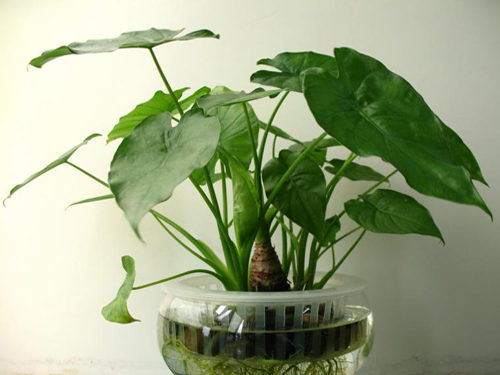
How to grow Alocasia macrorrhizos? What needs attention in the cultivation of Alocasia macrorrhizos?
Cultivation techniques for Alocasia macrorrhizos
I. Pot cultivation
1. Substrate preparation
Cultivate with a nutrient soil prepared by mixing loose domestic peat with good drainage and aeration, 2:2:1 pond mud, peat soil, and coarse sand mixed soil plus a small amount of thoroughly composted cake fertilizer. Add water to the peat and mix well (standard for adding water: after adding water and mixing well, tightly squeeze a handful of peat, and water seeps out from between the fingers). Wait until it is put into cups for planting.
2. Potting
For old pots that are reused, they must be soaked in a 2000-fold potassium permanganate solution for more than half an hour, then rinsed with clean water, and air-dried for later use. Large potted plants are generally planted in pots of 20 cm specification. When planting, first place about 4 cm of substrate at the bottom of the cup, then move the screened seedlings into the cup. Small seedlings should not be planted too deep; it is suitable to keep them level with the base of the plant. The substrate should be moderately firm and filled to 8/10 of the cup, 2-3 plants per pot.
3. Spraying water
Alocasia macrorrhizos especially likes moisture. During the growing season, not only is moist potting soil required, but the air humidity is also required to be no less than 60%. During high summer temperatures, spraying water should be strengthened to create a relatively cool and moist environment for it. For those placed in an indoor air-conditioned hall, it is necessary both to keep the potting soil moist and to spray the leaf surfaces from time to time. If the indoor temperature in winter cannot reach 15°C, watering should be controlled, otherwise it is easy to cause root rot in the plant. Under normal circumstances, spraying warm water once a week can maintain its dark green leaf color.
4. Fertilizing
Alocasia macrorrhizos relatively likes fertilizer. From March to October, a liquid fertilizer should be applied once every half month, and the proportion of nitrogen can be appropriately increased. If a little ferrous sulfate can be added, so much the better. In this way, the leaves will grow as large as lotus leaves and be smooth and pleasing. Fertilizing should be stopped when the temperature is below 15°C.
5. Pruning
Because Alocasia macrorrhizos is a foliage plant, when planting and care are improper, the largest leaves may appear yellow and withered. At this time, they should be cut off together with the stem using a knife, otherwise it will affect the growth and ornamental value of the other leaves.
6. Repotting
It can be cultivated with a nutrient soil prepared by mixing leaf mold, peat soil, river sand, and a small amount of thoroughly composted cake fertilizer. Alternatively, it can also be hydroponically grown, but attention should be paid to preventing root rot and adding nutrient solution. Usually repot once every spring, and loosen the soil once a month to keep the potting soil in a well-aerated state.
II. Hydroponics
For hydroponic Alocasia macrorrhizos, the root-washing method can be used to change soil-grown plants into hydroponic plants. When washing the roots, they should be cleaned carefully, and try not to damage the tubers and root system. At the same time, rotten roots and already aged roots should be cut off. If the tuber has no roots, it should first be placed in a shaded place to dry for 2-3 days. After the wound is dry, immerse it in water, and after 2-3 days new roots can be seen emerging.
In the early stage of hydroponics, the water should be changed once every 2-3 days, and the water depth should be suitable for submerging 2/3 of the root system. After a week, new roots can grow. After 3 weeks, once the hydroponic plant has adapted to the hydroponic environment, switch to nutrient solution culture. After that, change the nutrient solution about once a month.
How to grow Alocasia macrorrhizos? What needs attention in the cultivation of Alocasia macrorrhizos?
What needs attention in the cultivation of Alocasia macrorrhizos?
Because the stem tissue of Alocasia macrorrhizos is relatively loose, if the water quality is poor, it is prone to contamination and causes root rot and stem rot. Therefore, the water in the bottle should be kept clean. At the same time, when changing the water or nutrient solution, the mucus on the tubers and roots should also be cleaned, and rotten roots should be cut off.
Alocasia macrorrhizos is a very common home-grown green potted plant, but because it is a tropical plant, it generally does not bloom in the north. However, if the temperature and other conditions at home are suitable, it will also bloom.
It does not have high requirements for soil, but it grows best in sandy loam or humus loam with good drainage and organic matter. Because Alocasia macrorrhizos is fond of warm, humid, and semi-shaded environments by nature and is not cold-tolerant, the potting soil must be kept moist during the growing season. But it can also tolerate a little drought, so do not mistreat it too much.
In summer, the flower pot should be placed in a semi-shaded and ventilated place, and water should often be sprayed around it and on the leaf surfaces to increase air humidity, lower leaf temperature, and keep the leaves clean.
Because Alocasia macrorrhizos grows very fast, it relatively likes fertilizer. Apply a nitrogen, phosphorus, and potassium compound fertilizer 1-2 times a month (the proportion of nitrogen can be appropriately higher). If a little ferrous sulfate can be applied, the leaves will become larger and greener. Long-term fertilizer deficiency easily causes the lower part of the Alocasia macrorrhizos stem to become bare and empty, affecting its ornamental value. When the temperature drops and it enters the dormant period, fertilizing can be reduced or stopped.
If you want the indoor Alocasia macrorrhizos you grow to be small and delicate, then simply wait until its seedlings grow to about one chi and are suitable for home display, then immediately spray the whole plant with a 2% paclobutrazol solution. After that, the stems and leaves that grow again will be no more than 40 cm tall, and the leaves will be thick and fleshy, with high ornamental value. Spraying once about every half a year can produce a good height-control effect. The sap in the leaves of Alocasia macrorrhizos can cause skin itching after human contact, so be careful when touching it.
Temperature: Alocasia macrorrhizos can only grow well in an environment not lower than 18°C. If the temperature is lower than 18°C, Alocasia macrorrhizos will enter a dormant state and stop growing. Special attention should be paid to indoor ornamental cultivation.
Fertilizing: Alocasia macrorrhizos likes fertilizer, and it should be fertilized every month.
Watering: Alocasia macrorrhizos should be watered more in summer, but not excessively. It is suitable for alternating dry and wet periods, and there should be no standing water in the soil, otherwise the tubers will rot. In winter it should be dormant, so water less and stop fertilizing.
Sunlight: Alocasia macrorrhizos likes shade, so do not let direct sunlight hit it. If Alocasia macrorrhizos becomes "wilted", it is mainly because fertilizing is insufficient, so pay attention to additional fertilizing.
How to grow Alocasia macrorrhizos and what to pay attention to in its cultivation
Alocasia macrorrhizos is a very common home-grown green potted plant. Many people have it at home. It can not only beautify the environment but also freshen the air. Below let us see how to grow Alocasia macrorrhizos and what to pay attention to in its cultivation.
I. How to cultivate Alocasia macrorrhizos
Flowers and plants are not easy to care for, which is a problem people often encounter. This is because the growth of all kinds of plants follows their own habits. So what habits does Alocasia macrorrhizos have? Alocasia macrorrhizos likes warmth and semi-shade, grows relatively quickly, and relatively likes fertilizer. Therefore, during its growing period, it is necessary to maintain a suitable temperature (20-30°C), choose a shaded and ventilated place for placement, and at the same time apply a nitrogen, phosphorus, and potassium compound fertilizer 1-2 times a month to ensure nutrients for its growth.
There are many cultivation methods for Alocasia macrorrhizos, mainly because it is suitable for propagation methods such as sowing, cuttings, and division, and is easy to grow. Generally speaking, keep its potting soil moist, control air humidity at 60%, and during high summer temperatures, pay attention to creating a cool and moist growing environment. In winter, ensure the indoor temperature is above 15°C; if not, control watering. Generally, spraying warm water once a week is enough.
II. Precautions for cultivating Alocasia macrorrhizos
Because the white sap in its stem is toxic, and the water dripping from it is also toxic, accidental contact with or accidental ingestion of its sap will cause discomfort. If the stems and leaves are eaten by mistake, it will cause symptoms such as nausea and pain, and in severe cases lead to suffocation, cardiac paralysis, and death. Therefore, try not to touch Alocasia macrorrhizos, and it is best not to place it at home if there are children.
The above is the relevant introduction in this article. I believe that after reading it, you will also have a simple understanding of it. If necessary, you can continue to follow No.1 Home Network to learn more information.
How to grow Alocasia macrorrhizos: cultivation methods for Alocasia macrorrhizos
How to grow Alocasia macrorrhizos: cultivation methods for Alocasia macrorrhizos. A netizen asked how to grow Alocasia macrorrhizos. Alocasia macrorrhizos is an indoor foliage plant. The leaves of foliage plants are relatively large, so transpiration is also relatively strong. With a large amount of transpiration, more water is released into the air. Dry weather puts everything in a state of water shortage, so growing a pot of Alocasia macrorrhizos at home in this season means you can breathe moist air when you get home. However, its sap is toxic, so prevent it from dripping into the eyes or being taken by mistake, which can cause throat swelling or eye inflammation.
The suitable growth temperature for Alocasia macrorrhizos is 20-25°C. It likes warm, humid, and semi-shaded environments by nature, so during the growing season place it in a shaded area on a balcony or in a courtyard (avoid direct sunlight in summer), often keep the potting soil moist, and apply a dilute liquid fertilizer mainly of nitrogen fertilizer mixed with phosphorus and potassium fertilizer 1-2 times a month (stop fertilizing in winter and control watering).
Alocasia macrorrhizos likes a lot of water and a lot of fertilizer, likes loose leaf mold or sandy loam, and likes sufficient light. Apart from appropriate shading during the hot midsummer, it is best to give it all-day light in other seasons. In addition, Alocasia macrorrhizos especially likes high-temperature and high-humidity climates. At noon every day in midsummer, spray water on the leaves to increase air humidity. Only in this way can the leaves of Alocasia macrorrhizos be both large and thick. If it is too shaded, the leaves will enlarge but become thinner, and the petioles will also be brittle. The petioles being too long and breaking is due to lack of light. Alocasia macrorrhizos should be placed in a bright indoor area, such as by a window, and needs at least 3 to 5 hours of light every day. Bright light is good; it cannot be exposed to the sun. Alocasia macrorrhizos likes water. If the leaves become soft, it should be watered. Regularly applying a little ferrous sulfate can make the leaves greener, larger, and thicker.
Cultivation methods for Alocasia macrorrhizos:
1. Temperature. Alocasia macrorrhizos can only grow well in an environment not lower than 18°C. If the temperature is lower than 18°C, Alocasia macrorrhizos will enter a dormant state and stop growing.
2. Fertilizing. Alocasia macrorrhizos likes fertilizer, and it should be fertilized every month.
3. Watering. Alocasia macrorrhizos should be watered more in summer, but not excessively. It is suitable for alternating dry and wet periods, and there should be no standing water in the soil, otherwise the tubers will rot. In winter it should be dormant, so water less and stop fertilizing.
4. Sunlight. Alocasia macrorrhizos likes shade, so do not let direct sunlight hit it. If Alocasia macrorrhizos becomes "wilted", it is mainly because fertilizing is insufficient, so pay attention to additional fertilizing.