Tips for Transplanting, Making and Caring for a Water Wax (Ligustrum) Bonsai
Potted landscapes: every household has a few plants, and the water wax tree (Ligustrum) is one of the indoor bonsai varieties. The water wax tree has strong adaptability, likes light and water, and has few special requirements for soil, so it is widely planted in both the south and the north of our country. What is more, the water wax tree has excellent qualities known as bonsai traits: it tolerates pruning and is easy to shape. The water wax tree has now become an excellent material for bonsai enthusiasts to make bonsai. There are many ways to make a water wax bonsai, including grafting and direct transplanting. Below we mainly explore the transplanting, making and care of a water wax bonsai. Let us find out how a water wax bonsai should be made, and how it should be cared for after it is made. Let us take a look together!
The process of making a water wax bonsai
Making a water wax bonsai is relatively simple, and is divided into three major steps: digging up the water wax, trimming the blank, and styling. Because the water wax is evergreen, has strong adaptability and has no special requirements for soil, the water wax can be dug up at any time of the year; we only need to protect the main root and the fibrous roots of the water wax before potting it. When trimming the water wax blank, two points should also be noted: leave a little room, and apply healing agent. That is, when making the first cut, leave some room, and after the water wax branches grow thicker, make a second cut. In addition, because the water wax has poor self-healing ability, remember to apply healing agent to the cut, otherwise the cut will easily be invaded by pests and diseases, affecting the healthy growth of the water wax. Finally, the water wax can be styled according to the styling methods for miscellaneous broadleaf trees. That is, in the early styling stage, wire the branches to set their direction; in the later stage, prune to adjust the tree's form. Prune 2-3 times a year.
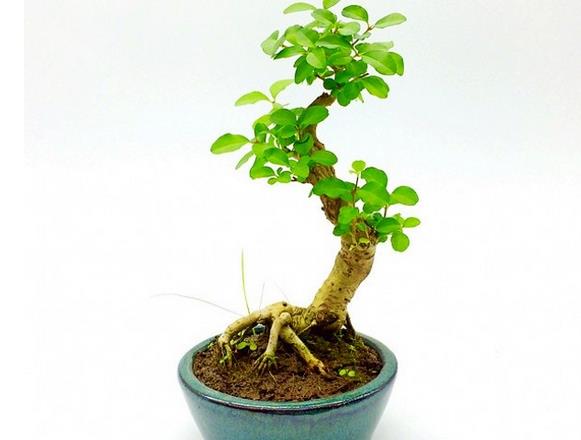
Tips for Transplanting, Making and Caring for a Water Wax Bonsai
Water wax bonsai care techniques
The care of a bonsai is the key to the lasting healthy growth of any bonsai plant, and the water wax bonsai is no exception. First, the water wax likes light and water, so when caring for it we must ensure that the water wax bonsai has enough water and light, and it is best to place it in a ventilated, sunny spot indoors. Second, change the soil in time, preferably once a year; when changing the soil, prune away 2/3 of the fibrous roots, and also eliminate pests on the water wax root pad. Finally, pay attention to fertilizing and preventing harm. For fertilizing, it is best to use a compound fertilizer balanced in nitrogen, phosphorus and potassium. For preventing harm, the best approach is to regularly spray the water wax bonsai with a certain concentration of medicine to prevent the occurrence of pests and diseases.
Tips for Transplanting, Making and Caring for a Water Wax Bonsai
The water wax tree is an evergreen deciduous shrub of the Oleaceae family. Because it has strong adaptability, likes light and water, and has few special requirements for soil, it is widely planted in both the south and the north of our country. What is more, the water wax tree has excellent qualities known as bonsai traits: it tolerates pruning and is easy to shape. The water wax tree has now become an excellent material for bonsai enthusiasts to make bonsai.
There are many ways to make a water wax bonsai, including grafting and direct transplanting. Below we mainly explore the transplanting, making and care of a water wax bonsai. Let us find out how a water wax bonsai should be made, and how it should be cared for after it is made.
How should a water wax bonsai be made?
Making a water wax bonsai is relatively simple, and is divided into three major steps: digging up the water wax, trimming the blank, and styling. Because the water wax is evergreen, has strong adaptability and has no special requirements for soil, the water wax can be dug up at any time of the year; we only need to protect the main root and the fibrous roots of the water wax before potting it. When trimming the water wax blank, two points should also be noted: leave a little room, and apply healing agent. That is, when making the first cut, leave some room, and after the water wax branches grow thicker, make a second cut. In addition, because the water wax has poor self-healing ability, remember to apply healing agent to the cut, otherwise the cut will easily be invaded by pests and diseases, affecting the healthy growth of the water wax. Finally, the water wax can be styled according to the styling methods for miscellaneous broadleaf trees. That is, in the early styling stage, wire the branches to set their direction; in the later stage, prune to adjust the tree's form. Prune 2-3 times a year.
How should a water wax bonsai be cared for?
The care of a bonsai is the key to the lasting healthy growth of any bonsai plant, and the water wax bonsai is no exception. First, the water wax likes light and water, so when caring for it we must ensure that the water wax bonsai has enough water and light, and it is best to place it in a ventilated, sunny spot indoors. Second, change the soil in time, preferably once a year; when changing the soil, prune away 2/3 of the fibrous roots, and also eliminate pests on the water wax root pad. Finally, pay attention to fertilizing and preventing harm. For fertilizing, it is best to use a compound fertilizer balanced in nitrogen, phosphorus and potassium. For preventing harm, the best approach is to regularly spray the water wax bonsai with a certain concentration of medicine to prevent the occurrence of pests and diseases.
The water wax bonsai is one of the bonsai that everyone likes. Having learned the tips for making and caring for a water wax bonsai, we can make the water wax bonsai we want with our own hands, adorn our homes through our own efforts, and bring that patch of green into our households.