Is the Dragon Bone Flower poisonous? Detailed guide to its cultivation methods
For newly renovated homes and office buildings, the Dragon Bone Flower is also an excellent air-purifying plant. Many people are asking what the cultivation methods for the Dragon Bone Flower are. Is the Dragon Bone Flower poisonous? Let's take a look below. I hope today's content will be helpful to everyone!
Is the Dragon Bone Flower poisonous?
In home applications, besides its role in feng shui protection, Dragon Bone also has excellent purifying effects. For newly renovated homes and office buildings, it has a strong adsorption effect on formaldehyde, benzene, radon, ammonia, and TVOC.
However, planting Dragon Bone indoors requires extra care, because the succulent stems have sharp thorns, and the white sap in the stems is toxic, especially harmful if it gets into the eyes. Therefore, when growing it at home, pay special attention to the placement location to avoid children and the elderly getting pricked or poisoned. Furthermore, the Dragon Bone Flower is drought-tolerant and sun-tolerant, suitable for places with abundant sunlight, and not suitable for relatively dark indoor spots. So for indoor ornamental Dragon Bone Flowers, place them near a window with daylight as much as possible.
The Dragon Bone's flowers are large and imposing, and Dragon Bone belongs to the Cactus family (Cactaceae). Cacti give the impression of plants with extremely strong vitality growing in deserts, so planting a pot of Dragon Bone at home adds a sense of boldness and also brings a lot of vitality to the home.
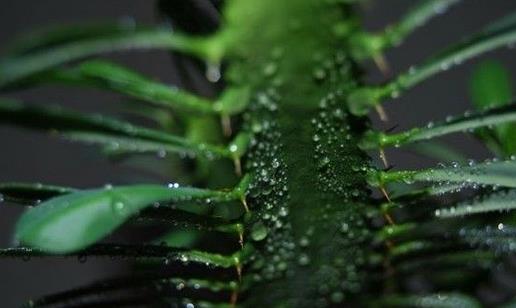
Is the Dragon Bone Flower poisonous? What are the cultivation methods for the Dragon Bone Flower?
What are the cultivation methods for the Dragon Bone Flower?
The Dragon Bone Flower is a very easy-to-care-for flower, belonging to the "lazy person's flower" category, meaning it is very easy to keep alive. The Dragon Bone Flower is a succulent plant of the genus Euphorbia in the family Euphorbiaceae, native to Namibia. Also called Triangular Spurge, Rainbow Cloud, and Dragon Bone Pillar, the Dragon Bone Flower grows robustly, reaching heights of 2 m to 3 m. The plant is shrub-like, with many dense branches, tender and succulent, and leaves 2 cm to 4 cm long. At the base there is a short main stem, with branches whorling around the main stem, 3-4 ribs, with serrated rib edges and hard short thorns, growing vertically upward.
The Dragon Bone Flower is drought-tolerant and sun-tolerant, and watering should be moderate. If the potting soil stays too wet for a long time, it will cause root rot. During the winter dormant period, watering once every 1-2 months will not cause it to dry out and die. The Dragon Bone Flower is not cold-tolerant, and the overwintering temperature should be kept at around 10 degrees. To prevent the Dragon Bone Flower from rotting in winter, place it in a sunny spot to get plenty of sunlight, and rotate the pot at regular intervals. The Dragon Bone Flower is not demanding about soil; ordinary potting soil will allow it to grow well. Although the Dragon Bone Flower is sun-tolerant, it is not grown mainly for its flowers, so in summer provide appropriate shade to benefit its growth. For indoor ornamental Dragon Bone Flowers, place them near a window with daylight as much as possible to let them get more sunlight. To promote good growth, apply a diluted fertilizer once every 15-20 days during the growing period. Granular compound fertilizer or homemade alum fertilizer water can both be used. However, the fertilizer must not be too concentrated, to avoid fertilizer burn that leads to root rot.
When a newly planted Dragon Bone Flower grows to 10-15 cm, cut off the top. Of the new branches that emerge, keep only the three vigorous branches at the top of each corner, and remove the rest. When the new branches grow to 20-25 cm, pinch the top again. After that, each time a branch grows, pinch the top at 10 cm more than the previous retained branch length. The Dragon Bone Flower grown this way has a full, plump shape with good ornamental effect. However, pay special attention that the direction of each retained branch must take the viewing angle into consideration.
The Dragon Bone Flower is generally propagated by cuttings. Cut a branch of more than 10 cm, wash off the flowing sap, dip it in plant ash, let it dry, then insert it into slightly dry coarse sandy soil. After a week, when the cutting begins to lose water and wilt, water lightly. Keep the sandy soil on the dry side rather than wet, to prevent the cut end from rotting. Place it in partial shade, and rooting is easy.
Dragon Bone Flower cultivation methods - Is the Dragon Bone Flower poisonous?
The Dragon Bone Flower is a relatively common flower in households. Growing it indoors helps purify the air. The Dragon Bone Flower itself can absorb formaldehyde, ether, and other toxic and harmful gases produced by renovation. It is also relatively easy to propagate and manage, with a unique shape, and is deeply loved by people. Next, I will introduce the Dragon Bone Flower cultivation methods and whether the Dragon Bone Flower is poisonous.
Dragon Bone Flower cultivation methods
1. Soil requirements
The Dragon Bone Flower likes fertile, loose soil. When potting, mix 1 part leaf mold and 1 part coarse sand, then add a small amount of potting soil blended with chicken manure or cow manure.
2. Temperature conditions
In summer, it needs to be kept in a semi-shaded environment. In winter, light must be sufficient; place it in a sunny spot indoors and keep the temperature above 12°C. Below 12°C, frost damage is very likely to occur.
3. Light conditions
In summer, the Dragon Bone Flower needs to be shaded, which is more beneficial for growth. For indoor Dragon Bone Flowers, it is best to place them near a window with daylight to absorb more sunlight.
4. Watering method
In spring, do not water too much. Water once every half a month, but spray the plant every day to increase air humidity. In summer, it is best to water once every morning or evening.
5. Fertilizing method
During the growing period, the Dragon Bone Flower should be fertilized once every 15 days. Granular compound fertilizer or homemade alum fertilizer water can both be used. However, do not fertilize too much, to avoid fertilizer burn that leads to root rot.
6. Pruning and shaping
To prevent the Dragon Bone Flower plant from aging too early, prune it promptly. Cut off some branches that do not bloom, so that new buds can fully develop and extend.
Is the Dragon Bone Flower poisonous?
Besides providing feng shui protection, the Dragon Bone Flower also has excellent purifying effects. For newly renovated homes, it has a strong adsorption effect on formaldehyde, benzene, ammonia, and TVOC. However, when planting the Dragon Bone Flower indoors, be careful, because the succulent stems have sharp thorns and the white sap in the stems is toxic, especially harmful if it gets into the eyes. Therefore, when growing it at home, pay special attention to the placement location to avoid children and the elderly getting pricked or poisoned.
That is all for the Dragon Bone Flower cultivation methods and whether the Dragon Bone Flower is poisonous. I hope it is helpful to everyone.
Dragon Bone Flower cultivation methods - Is the Dragon Bone Flower poisonous?
For newly renovated homes and office buildings,the Dragon Bone Floweris also an excellent air-purifying plant. Many people are asking what the cultivation methods for the Dragon Bone Flower are. Is the Dragon Bone Flower poisonous? Let's take a look below.
I. Dragon Bone Flower cultivation methods
The Dragon Bone Flower is a very easy-to-care-for flower, belonging to the "lazy person's flower" category, meaning it is very easy to keep alive. The Dragon Bone Flower is a succulent plant of the genus Euphorbia in the family Euphorbiaceae, native to Namibia. Also called Triangular Spurge, Rainbow Cloud, and Dragon Bone Pillar, the Dragon Bone Flower grows robustly, reaching heights of 2 m to 3 m. The plant is shrub-like, with many dense branches, tender and succulent, and leaves 2 cm to 4 cm long. At the base there is a short main stem, with branches whorling around the main stem, 3-4 ribs, with serrated rib edges and hard short thorns, growing vertically upward.
The Dragon Bone Flower is drought-tolerant and sun-tolerant, and watering should be moderate. If the potting soil stays too wet for a long time, it will cause root rot. During the winter dormant period, watering once every 1-2 months will not cause it to dry out and die. The Dragon Bone Flower is not cold-tolerant, and the overwintering temperature should be kept at around 10 degrees. To prevent the Dragon Bone Flower from rotting in winter, place it in a sunny spot to get plenty of sunlight, and rotate the pot at regular intervals. The Dragon Bone Flower is not demanding about soil; ordinary potting soil will allow it to grow well. Although the Dragon Bone Flower is sun-tolerant, it is not grown mainly for its flowers, so in summer provide appropriate shade to benefit its growth. For indoor ornamental Dragon Bone Flowers, place them near a window with daylight as much as possible to let them get more sunlight. To promote good growth, apply a diluted fertilizer once every 15-20 days during the growing period. Granular compound fertilizer or homemade alum fertilizer water can both be used. However, the fertilizer must not be too concentrated, to avoid fertilizer burn that leads to root rot.
When a newly planted Dragon Bone Flower grows to 10-15 cm, cut off the top. Of the new branches that emerge, keep only the three vigorous branches at the top of each corner, and remove the rest. When the new branches grow to 20-25 cm, pinch the top again. After that, each time a branch grows, pinch the top at 10 cm more than the previous retained branch length. The Dragon Bone Flower grown this way has a full, plump shape with good ornamental effect. However, pay special attention that the direction of each retained branch must take the viewing angle into consideration.
The Dragon Bone Flower is generally propagated by cuttings. Cut a branch of more than 10 cm, wash off the flowing sap, dip it in plant ash, let it dry, then insert it into slightly dry coarse sandy soil. After a week, when the cutting begins to lose water and wilt, water lightly. Keep the sandy soil on the dry side rather than wet, to prevent the cut end from rotting. Place it in partial shade, and rooting is easy.
II. Is the Dragon Bone Flower poisonous?
In home applications, besides its role in feng shui protection, the Dragon Bone Flower also has excellent purifying effects. For newly renovated homes and office buildings, it has a strong adsorption effect on formaldehyde, benzene, radon, ammonia, and TVOC. During the renovation process, we should also reduce residual formaldehyde by choosing compliant building materials, compliant renovation workmanship, and reliable renovation companies. I suggest everyone apply for Tubatu renovation protection. Renovation protection provides professional supervisors to help us identify whether renovation materials are genuine, and free on-site renovation construction quality inspections, comprehensively safeguarding our renovation quality!<<<点此免费申请装修保,免费专业质检>>>
However, planting Dragon Bone indoors requires extra care, because the succulent stems have sharp thorns, and the white sap in the stems is toxic, especially harmful if it gets into the eyes. Therefore, when growing it at home, pay special attention to the placement location to avoid children and the elderly getting pricked or poisoned. Furthermore, the Dragon Bone Flower is drought-tolerant and sun-tolerant, suitable for places with abundant sunlight, and not suitable for relatively dark indoor spots. So for indoor ornamental Dragon Bone Flowers, place them near a window with daylight as much as possible.
The Dragon Bone's flowers are large and imposing, and Dragon Bone belongs to the Cactus family (Cactaceae). Cacti give the impression of plants with extremely strong vitality growing in deserts, so planting a pot of Dragon Bone at home adds a sense of boldness and also brings a lot of vitality to the home.
What to do if the Dragon Bone Flower's leaves turn yellow?
The Dragon Bone Flower sheds its leaves in winter. If it is during the leaf-shedding period, then yellowing leaves are a natural thing and there is no need to worry too much. If it is not due to its own metabolism, then you need to pay attention.
The causes and solutions are as follows:
1. Too much water: too much water causes root rot and the leaves turn yellow. Solution: stop watering.
2. Lack of fertilizer: pay attention to fertilizing. Solution: it is best to use slow-release fertilizer.
3. Pathogen infection: the plant looks withered and about to die. Solution: you can use carbendazim and pour it at the plant's roots.