Is Ginger Lily Poisonous? A Complete Guide to Growing It
Ginger lily (Hedychium coronarium) prefers a hot, humid, semi-shaded environment and cannot tolerate drought or frost. Ginger lily is sometimes grown by people as a potted plant for ornamental enjoyment. Its flowers are fresh and elegant, with a pleasant, fragrant scent. Besides being suitable for garden beautification and waterside planting for viewing, it is also an excellent cut flower material. Today let's learn about how ginger lily is grown, and also address the question of whether ginger lily is poisonous.
How Is Ginger Lily Grown?
When keeping ginger lily as a cut flower, you must use plenty of water, filling nearly the entire vase, because ginger lily absorbs water very readily. With enough water, the buds will bloom one after another, and the fragrance will be even stronger.
Ginger lily likes to settle in a warm, humid environment, so if growing it in soil, cut about 5-10 cm off the bottom of the stem at planting time to enhance water absorption, and avoid overwatering to prevent the cut end of the rhizome from rotting. During the growing season, keep the soil consistently moist, place it in sunlight in the morning and in shade in the afternoon, and sprinkle water on the flowers at night. During the summer flowering period, provide appropriate shade to extend the blooming period. In winter, cut back the stems and branches so that new shoots can sprout the following year. In cold regions, dig up the rhizomes in winter and store them indoors.
Some flower vendors on the market today, in order to delay ginger lily from opening early, often soak the buds in salt water. When unsuspecting buyers take them home, the cell tissues of the ginger lily have been damaged and the flowers no longer open, becoming "blind flowers." So after buying the flowers, it is best to turn the stems upside down and soak them in clean water for about 1 hour to remove the salt, and then there is hope the ginger lilies will bloom profusely.
Ginger lily leaves are pliable and tough, the flowers are strongly fragrant, and the flower color is pure white. Whether viewed from afar or appreciated up close, it gives people a fresh and refreshing feeling. When used in flower arrangements, the wafts of fragrance it releases can also add a touch of romance to the work.
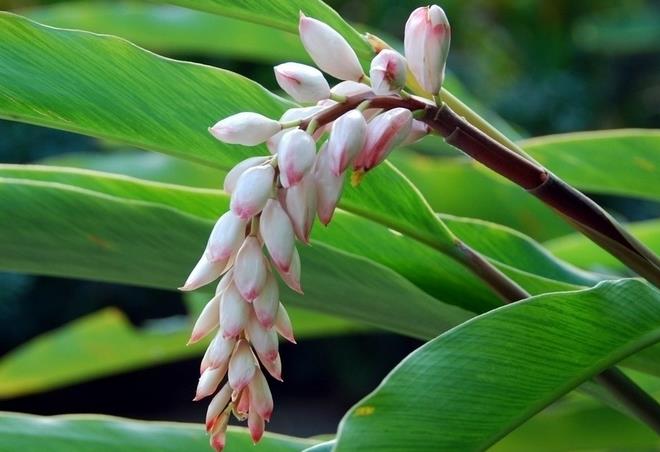
How Is Ginger Lily Grown? Is Ginger Lily Poisonous?
Is Ginger Lily Poisonous?
Ginger lily is a freshwater herbaceous plant of the genus Hedychium in the ginger family (Zingiberaceae), growing 1-2 m tall, with a spicate inflorescence, rounded color tones, and generally white flowers. From the perspective of medicinal plants, ginger lily does contain a certain degree of medicinal toxicity, but for ordinary household cultivation, it generally does not hinder our enjoyment of it. However, there are also certain allergic individuals who may experience symptoms such as dizziness and nausea because of its presence.
If you are not an allergy-prone person, it is recommended that you buy a bunch and put it in your home; you are sure to fall in love with it. Just one bunch of ginger lily is enough to fill your whole room with fragrance for more than a week. The good thing about it is that it is fragrant yet not overpowering; its faint, delicate scent is truly refreshing and uplifting. Ginger lily can absorb harmful chemical gases in the air and filter dirty air, making home air clean and fresh. The soft ginger lily petals are rich in volatile essential oils. Wash fresh petals clean, then add them directly to clean water and simmer them into a tea; a cup of ginger lily-scented tea that greets the nose can help people ward off wind-cold.
It prefers a hot, humid, slightly shaded environment and grows well in slightly acidic, fertile sandy loam. When the winter temperature drops below 10°C, the aboveground parts wither, and the underground ginger tubers go dormant to overwinter.
Is Ginger Lily Poisonous? Can Ginger Lily Be Kept Indoors? Is Ginger Lily Harmful to Cats? Non-toxic and Harmless
When growing plants indoors, the first thing we should consider is whether they are poisonous, and only then should we consider their benefits and advantages. This is exactly the case when growing ginger lily, so is ginger lily poisonous? Can ginger lily be kept indoors? Is ginger lily harmful to cats? Below, the editor will answer these one by one.
Is Ginger Lily Poisonous?
1. Rhizomes and leaves / Non-toxic
Ginger lily has rhizomes, and both its roots and leaves are non-toxic. Not only are they non-toxic, but the roots can also be used as medicine to treat constipation, dark yellow urine, blood in the urine, lower back pain, and so on. So when people come into contact with its leaves and branches, there is no need to worry about poisoning symptoms.
2. Ginger Lily's Scent / Non-toxic
Is ginger lily poisonous in terms of its scent? The answer is also that it is non-toxic. Its scent is very fragrant; even if kept on a balcony, it can still be smelled in the living room. Moreover, its fresh fragrance is a natural air freshener that can make people feel relaxed and happy and reduce stress.
3. Ginger Lily's Flowers / Edible
The flowers of ginger lily are edible. They contain volatile essential oils and can be made into ginger tea, which after drinking has the effect of warding off wind-cold. After the petals are washed clean, they can be stir-fried plainly, or added to clean water and boiled into tea, which has the effect of strengthening the stomach and aiding digestion.
Can Ginger Lily Be Kept Indoors?
Since ginger lily is a non-toxic plant, it can absolutely be kept indoors. However, due to its growth habits, when placed indoors, you need to ensure sufficient light, water, and nutrients, make sure it receives a certain amount of sunlight every day, keep the soil moist but not waterlogged, and also pay attention to replenishing fertilizer in a timely manner.
Is Ginger Lily Harmful to Cats?
Some flower enthusiasts keep pets at home, such as cats and dogs. If we also grow a few pots of ginger lily at home, is it harmful to cats? The answer is that it is harmless. The fragrance and plant of ginger lily have no irritating effect on cats. However, when growing it, you also need to keep the environment ventilated, which can reduce the scent and prevent allergic individuals from experiencing discomfort.
How Is Ginger Lily Planted?
1. Soil: The soil for growing ginger lily should meet as many of these conditions as possible: fertile, loose, well-draining, and slightly acidic. Commonly used soils include garden soil, leaf mold, peat soil, and so on. In addition, some fine sand and organic fertilizer can be added to ensure fertility and air permeability.
2. Temperature: In summer, its growth is relatively vigorous. When planting, flower enthusiasts should ensure the temperature is above 10°C; otherwise, its aboveground parts will quickly wither, and the underground parts will also enter a dormant state.
3. Watering: Try to keep the soil moist but not waterlogged. Do not water frequently while the soil is already moist, to avoid hindering root growth due to excessive moisture. When summer temperatures are high, you can sprinkle some water on the leaves; otherwise, ginger lily will turn yellow because it cannot tolerate drought.
4. Fertilizing: Throughout the entire ginger lily growing method, fertilizing mainly consists of two types: base fertilizer and top dressing. Base fertilizer is applied when potting, dividing, or transplanting, while top dressing is applied flexibly according to growth conditions.
Is Ginger Lily Poisonous? Ginger Lily's Benefits? Ginger Lily's Flower Language
Ginger lily flowers are pure white and fragrant. They can be given to others as bouquets and can also be grown in pots to decorate the home. The flowers of ginger lily have a pleasant, fragrant scent. So, is ginger lily poisonous? Can ginger lily be placed indoors? What are the benefits of ginger lily? What is the flower language of ginger lily? Although everyone often sees ginger lily, they do not know it very well. Below, the Groundhog editor will share with everyone information such as whether ginger lily is poisonous, the benefits of ginger lily, and the flower language of ginger lily.[Editor's Picks] Why Anthurium Leaves Turn Yellow What Is Good to Plant in a Villa Courtyard How Often to Change Water When Keeping Fish in Hydroponic Plants Is the Peace Lily Poisonous
Is Ginger Lily Poisonous?Is Ginger Lily Poisonous?
Although ginger lily has a rich fragrance, ginger lily is not poisonous, and its floral scent is not poisonous either. Moreover, the floral scent of ginger lily has the effects of relieving tension, eliminating fatigue, and refreshing the mind. So ginger lily is very suitable for placing at home. Ginger lily not only has pure white, beautiful flowers, but also has a pleasant floral fragrance. You can keep a pot of ginger lily at home; you can both admire its beautiful flowers and relieve fatigue and refresh your mind.
Ginger Lily's Benefits
Ginger Lily's Ornamental Value
Ginger lily's flowers are pure white and elegant, with a pleasant, fragrant scent. Besides being suitable for garden beautification and waterside planting for viewing, it can also be grown in pots at home as an ornamental flower, and it is also an excellent cut flower material. Having a ginger lily at home can fill your home with fragrance and make you feel relaxed and happy.
Ginger Lily's Air-Purifying Effect
Ginger lily can absorb harmful chemical gases in the air and filter dirty air, making home air clean and fresh.Ginger Lily's Benefits
Ginger Lily's Edible Value
Ginger lily's petals are rich in volatile essential oils. Wash fresh petals clean, then add them directly to clean water and simmer into tea, and you can get a cup of aromatic ginger lily-scented tea. Ginger lily tea has the effect of warding off wind-cold.
Ginger Lily's Medicinal Value
The rhizomes and fruits of ginger lily are used as medicine. The rhizome is known in Chinese medicine as Lùbiān Jiāng, pungent in flavor and warm in nature. Ginger lily has the effects of warming the middle and strengthening the stomach, releasing the exterior, dispelling wind and dispersing cold, warming the meridians and relieving pain, and dispersing cold. It mainly treats wind-cold exterior patterns, wind-warm arthralgia pain, externally contracted headache, body pain, rheumatic pain, cold pain in the epigastrium and abdomen, and traumatic injuries.
Ginger Lily's Flower Language
Ginger lily's flower language: trust, noble and elegant purity, keeping memories in summer forever.Ginger lily is often regarded as the guardian flower of Cancer, bringing the fortunate element of home life and providing a comfortable living space. Ginger lily resembles a butterfly and has a lifespan of only one day, floating with a refreshing fragrance, like a noble, elegant scholar far removed from the mundane world. Ginger lily symbolizes simplicity. A single stem stands upright, and one bud opens five or six pure white, faintly yellow flowers, each with three petals, just like dancing butterflies gathered on emerald branches, giving off fragrance from morning to dusk.Ginger Lily Pictures
Summary: That concludes the introduction to whether ginger lily is poisonous, ginger lily's benefits, and ginger lily's flower language. After reading this article, everyone must have gained a certain understanding of ginger lily. Friends who like ginger lily can place a ginger lily at home; you can both admire the beautiful flowers and relieve fatigue.
00 Favorite Share