Causes of Deformed Chrysanthemums and a Detailed Explanation of Various Propagation Methods
What are the causes of deformed chrysanthemums?
① When chrysanthemums form buds, the side buds should be removed promptly, and initially 2 terminal buds should be kept; when they grow larger than a bean, only 1 well-formed bud should be retained. Never bruise the retained bud or pinch it with your fingers; buds that have been damaged or pinched with fingers will not open into round, complete flowers.
② The retained buds must be protected from gnawing by grasshoppers and feeding by other pests, such as aphids and corn borers. Regular spraying can prevent pest damage.
③ During flowering, avoid rain exposure, and do not water onto the flowers when watering, so as to prevent the center from rotting.
Willow-leaf head, also called willow-bud head, is an abnormal phenomenon that often appears in chrysanthemum cultivation. In spring and summer, if chrysanthemums are allowed to grow naturally without considering physiological changes, when the leaves have grown to about 30, natural light and temperature have not yet met the conditions for bud formation, and willow-leaf-shaped leaves often appear at the top, namely willow-leaf head. Once willow-leaf head occurs, the stems and leaves naturally age, the top leaves become dense, and the leaf shape becomes abnormal, narrow and thin, pointed and curved, with slow growth, no flower buds or flower bud elongation, and the flower head does not become full and well formed. The causes of willow-leaf head are, first, improper selection of foot shoots; second, external environmental conditions cannot meet the chrysanthemum's own growth and development needs, failing to reach the conditions of low night temperature and short-day photoperiod.
The measures to prevent willow-leaf head are as follows:
① When selecting foot shoots, care should be taken not to choose foot shoots from the stem base of the mother plant or emerging from the shallow layer of potting soil; do not choose foot shoots with plump buds, overly short internodes, and fat leaves with a retracted bud center resembling a feather duster, nor foot shoots with sparse internodes and conical buds.
② In June, when the new plant grows to 10 cm tall, perform one topping and pinching from the base at 3-4 leaves, keeping only one new shoot at the top as the main branch to grow upward, and promptly remove the branches produced in the lower leaf axils, so the willow-leaf head phenomenon will not appear.
③ For chrysanthemums that have developed "willow-leaf head," after timely manual renewal of branches and pinching, according to the physiological characteristics of chrysanthemums and with timely cultivation and management, they will still bloom beautifully in autumn.
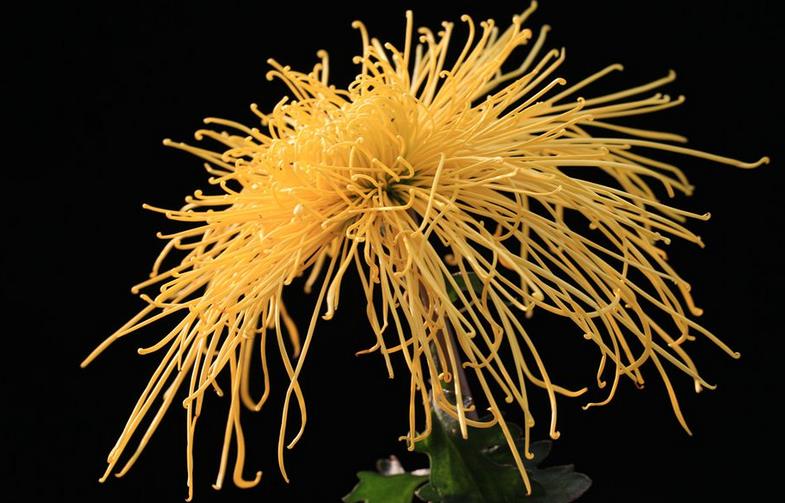
What are the causes of deformed chrysanthemums? What are the various propagation methods of chrysanthemums?
What are the various propagation methods of chrysanthemums?
Chrysanthemums are generally propagated by methods such as cuttings, division, grafting, and tissue culture. Among these, cuttings are the most commonly used. We will explain each propagation method one by one:
(1) Cuttings can be divided into bud cuttings, softwood cuttings, and leaf-bud cuttings. For bud cuttings, cut foot shoots from the plant in autumn and winter for rooting. The standard for selecting shoots is that they are relatively far from the plant and the bud head is plump. Remove the lower leaves, insert them at a plant spacing of 3-4 cm and a row spacing of 4-5 cm into flowerpots or cutting beds in a greenhouse or plastic tunnel, maintain a room temperature of 7-8°C, and plant outdoors after spring warms.
Softwood cuttings, this method is the most widely used, mostly carried out in April-May. Cut soft shoots 8-10 cm long as cuttings; at a temperature of 18-21°C, they root in about 3 weeks and can be planted out in about 4 weeks. For open-field cutting beds, the medium is preferably plain sand, and the bed should be shaded. Full-light mist cutting beds do not need shading. Leaf-bud cuttings: cut a leaf with an axillary bud from a branch and insert it for rooting; this method is only used to propagate rare varieties.
(2) Division generally around Qingming, dig out the plant, separate it with roots according to the natural form of the roots, and plant separately in pots.
(3) Grafting To make chrysanthemums grow robustly, to create "Shixiangjin" or large standard chrysanthemums, use yellow mugwort or green mugwort as rootstock for grafting. Sow mugwort seeds in late autumn, sow in a greenhouse in winter, or raise seedlings in a hotbed in March; in late April, when the seedlings are 3-4 cm tall, move them into pots or plant them in the field; in May-June, perform cleft grafting on sunny days.
(4) Tissue culture Using tissue culture technology to propagate chrysanthemums has the advantages of rapid propagation, large number of plantlets, virus elimination, and maintaining varietal characteristics. The basic medium is MS, with an appropriate amount of plant hormones added, pH 5.8. Use chrysanthemum shoot tips, tender stems, or flower buds as explants, cut into 0.5 cm small segments and inoculate. The culture room temperature is 25°C+1°C. Light for 8 hours daily, with a light intensity of 3000-4000 lux. After 1-2 months of culture, plantlets can be induced.
Symptoms and Control Methods of Chrysanthemum Viral Diseases
Symptoms: Chrysanthemum viral diseases include chrysanthemum aspermy virus disease, chrysanthemum mosaic disease, chrysanthemum deformation disease, etc.The pathogen of chrysanthemum aspermy virus disease is Tomato aspermy virus. On chrysanthemums it shows symptoms of twisted leaves, abnormal flower color, and stunted plants, and it is transmitted by green peach aphids and other aphids.
Chrysanthemum mosaic disease shows mild mosaic mottling or no symptoms on chrysanthemums, while on susceptible varieties it forms mosaic or necrotic spots, and in severe cases produces brown dead spots. The virus can be transmitted through sap and cuttings, and green peach aphids and potato aphids can also transmit the virus. Soil and seeds do not transmit this virus.
Chrysanthemum deformation disease makes chrysanthemums shorter, narrower, and curved inward. Sometimes the number of inflorescences decreases, or the inflorescences become shorter and spread flat. The virus is transmitted by grafting and cannot be transmitted by mechanical friction. Control methods:
(1) Control should be based on the source and transmission mode of the pathogen. Where aphids are the main transmission vector, aphids must be carefully controlled. Aphids can be controlled with 1000 times 1.2% nicotine anabasine or absinthin, disulfine, and other agents.
(2) Select healthy, disease-free mother plants as propagation material, or use tissue culture to propagate virus-free plantlets for planting. Be cautious when introducing plants, strictly select them, and prevent the introduction of virus-infected plants. During production, pay attention to disinfecting tools and hands.
(3) Remove infected plants promptly when found, and clear weeds around the chrysanthemums. Heat treatment can restore infected plants to health; for example, placing plants infected with chrysanthemum aspermy virus at 36°C for 3-4 weeks of constant temperature treatment can eliminate the virus in the plants.
Chrysanthemum Dendranthema morifolium (Ramat.) Tzvel. Chrysanthemum Illustrated Guide: How to Grow Chrysanthemums / How to Propagate Chrysanthemums
Chrysanthemum ProfileChrysanthemum Dendranthema morifolium (Ramat.) Tzvel.
Chrysanthemum Cultivation Methods and Precautions, Introduction to Chrysanthemum
Chrysanthemum plant height 20-200 cm, usually 30-90 cm. Stem color light green or brown, mostly upright and branched except for cliff chrysanthemums, base semi-lignified. Leaves simple, alternate, ovate to oblong, with incisions and serrations at the margins. Capitulum terminal or axillary, solitary or several clustered. Ray florets are female flowers, and tubular florets are bisexual flowers. Ray florets are divided into four types: lower, spoon, tube, and abnormal, with rich colors including red, yellow, white, ink, purple, green, orange, pink, brown, snow blue, pale green, etc. Tubular florets have developed into "tuogui petals" of various colors; flower colors include red, yellow, white, purple, green, pink, bicolor, intermediate colors, and other color series. Inflorescence size and shape vary: single-petaled or double-petaled; flat or spherical; long fringes, short fringes, flat fringes, and curled fringes; hollow-centered and solid-centered; upright and drooping, with many styles and complex varieties.
Chrysanthemum is a perennial herbaceous plant, with an upright stem, branched or unbranched, covered with soft hairs. Leaves ovate to lanceolate, 5-15 cm long, pinnately lobed or half-lobed, with short petioles, the lower surface covered with white short soft hairs; capitulum diameter 2.5-20 cm, varying in size. Involucral bracts in multiple layers, the outer layer covered with soft hairs outside. Ray florets of various colors. Tubular florets are yellow.
It can be affirmed that the origin of chrysanthemums is multifaceted, with multiple rather than single origins. Chrysanthemum is a cross-pollinated plant. In the long course of practice, people have used interspecific, even intergeneric hybridization to obtain new chrysanthemum traits, and through sexual processes such as backcrossing and reciprocal crossing to obtain segregation of new traits. Through such repeated genetic recombination and trait segregation, new traits become more and more numerous. In this process, conscious artificial hybridization and random natural selection can occur simultaneously or alternately. However, the artificial selection process of eliminating the inferior and selecting the superior always plays a leading role. The chromosomes of chrysanthemum are extremely limited. It has only been recorded that chrysanthemum is hexaploid, 2n=54. Another possible pathway for the emergence of new chrysanthemum varieties is somatic mutation (bud sport); new varieties can be obtained by fixing bud sports.
Place of origin: China
Symbolic meaning: purity, noble integrity, remembrance, success, longevity
Toxicity: non-toxic
Special uses: ornamental value, garden plant
Flowering period: autumn chrysanthemums September-October, summer chrysanthemums April-June
Medicinal value: clearing heat and detoxifying
Edible value: used in wine, porridge, and tea
General plant height: 60-120 cm tall
Soil: rich in humus, loose and fertile, well-drained
Temperature: 18-21°C
Water: drought-tolerant, most averse to waterlogging
Sunlight: prefers cool conditions, relatively cold-tolerant
Life form: perennial herb
Ecological habit: terrestrial plant
Environmental distribution: hilly areas
Distribution area: China, Japan
Morphological Characteristics of Chrysanthemum
Chrysanthemum is a perennial herb, 60-150 cm tall. Stem upright, branched or unbranched, covered with soft hairs. Leaves alternate, with short petioles; leaf blades ovate to lanceolate, 5-15 cm long, pinnately lobed or half-lobed, base cuneate, lower surface covered with white short soft hairs, margins with coarse large serrations or deeply lobed, base cuneate, petiolate. Capitula solitary or several gathered at the tips of stems and branches, diameter 2.5-20 cm, varying in size, single or several gathered at the tips of stems and branches; differing greatly by variety. Involucral bracts in multiple layers, outer layer green, linear, margin membranous, outside covered with soft hairs; ray florets white, red, purple, or yellow. Flower colors include red, yellow, white, orange, purple, pink, dark red, and other colors. There are extremely many cultivated varieties, and the capitula vary greatly, with different shapes and colors. Shapes vary by variety and include single-petaled, flat-petaled, spoon-petaled, and many other types, with tubular florets in the center, often all specialized into various forms of ray florets; flowering period September-November. Stamens, pistils, and fruits are mostly undeveloped.
Young chrysanthemum stems are light green or brownish, covered with gray soft hairs or down. After flowering, most stems die. In the following spring, adventitious buds emerge from underground stems. Chrysanthemum leaves are simple and alternate, petiole 1-2 cm long, with stipules or reduced stipules on both sides below the petiole; leaves ovate to oblong, margins with incisions and serrations.
Leaf morphology varies by variety and can be divided into 8 types: upright leaf, deeply cut upright leaf, long leaf, deeply cut long leaf, round leaf, sunflower leaf, fluffy leaf, and boat leaf. The chrysanthemum flower (capitulum) is borne at the branch tip, about 2-30 cm in diameter, and the inflorescence is surrounded outside by green bracts forming the flower bud.
Two forms of flowers are borne on the inflorescence: one is the tubular flower, commonly called the "flower center," with the corolla fused into a tube, bisexual, with one pistil in the center, stigma 2-lobed, ovary inferior, 1-loculed, surrounding the flower are 5 syngenesious stamens; the other is the ray floret, borne at the edge of the inflorescence, commonly called the "petal," in which the stamens are degenerated and there is 1 pistil. Ray florets are mostly large and brightly colored, and in shape are divided into 5 types: flat, spoon, tube, gui, and abnormal. The achene (generally called "seed") is 1-3 mm long, 0.9-1.2 mm wide, slightly pointed at the upper end, flat and wedge-shaped, with longitudinal ridge lines on the surface, brown, containing one seed without endosperm; the fruit matures in January-February of the following year, and the 1000-seed weight is about 1 gram.
Chrysanthemum varieties possess extremely great diversity, and taxonomists have explored the ancestry of chrysanthemums. Some consider wild chrysanthemum to be the primitive ancestor of chrysanthemum, some consider sweet chrysanthemum to be the ancestor, some consider its ancestor to be small red chrysanthemum, or they propose a series of possible ancestral lists. Some Chinese scientists have also conducted intergeneric hybridization experiments and done some speculative and experimental work in exploring the true origin of chrysanthemums. Whether speculation or experiment, all attempt to place the origin of chrysanthemums on one or two species of the genus, and attempt to point out which variety among these vast numbers of varieties is the most primitive, that is, to find the most primitive chrysanthemum variety.
Chrysanthemum capitula are terminal or axillary, solitary or several clustered. Ray florets are female flowers, and tubular florets are bisexual flowers. Ray florets are divided into four types: lower, spoon, tube, and abnormal, with rich colors including red, yellow, white, ink, purple, green, orange, pink, brown, snow blue, pale green, etc. Tubular florets have developed into "tuogui petals" of various colors; flower colors include red, yellow, white, purple, green, pink, bicolor, intermediate colors, and other color series.
Inflorescence size and shape vary: single-petaled or double-petaled; flat or spherical; long fringes, short fringes, flat fringes, and curled fringes; hollow-centered and solid-centered; upright and drooping, with many styles and complex varieties.
Achene (generally called "seed") 1-3 mm long, 0.9-1.2 mm wide, slightly pointed at the upper end, flat and wedge-shaped, with longitudinal ridge lines on the surface, brown, containing one seed without endosperm; the fruit matures in January-February of the following year, and the 1000-seed weight is about 1 gram. Autumn chrysanthemums September-October, summer chrysanthemums April-June.
Ecological Habits of Chrysanthemum
Chrysanthemum has strong adaptability, prefers cool conditions, and is relatively cold-tolerant. The suitable growth temperature is 18-21°C, the maximum is 32°C, and the minimum is 10°C. The low-temperature limit for underground rhizomes is generally -10°C. The minimum night temperature during the flowering period is 17°C, and during the middle and late flowering stages it can drop to 15-13°C. It prefers ample sunlight but is also slightly shade-tolerant. It is relatively drought-tolerant and most averse to waterlogging. It prefers high, dry terrain and deep soil rich in humus, loose, fertile, and well-drained sandy loam. It can grow in soils from slightly acidic to neutral, with pH 6.2-6.7 being better. Avoid continuous cropping.
Autumn chrysanthemum is a long-night, short-day plant. Under long-day conditions of 14.5 hours per day, it undergoes vegetative growth of stems and leaves; darkness of more than 12 hours per day and a night temperature of 10°C are suitable for flower bud development. However, different varieties respond differently to daylength.
Chrysanthemum has strong adaptability, prefers cool conditions, and is relatively cold-tolerant. The suitable growth temperature is 18-21°C, the maximum growth temperature is 32°C, and the minimum is 10°C. The low-temperature limit for underground rhizomes is generally -10°C. It grows in loose, fertile, well-drained sandy loam and can grow from slightly acidic to neutral soils. Avoid continuous cropping. Chrysanthemum is a short-day flower and has a certain resistance to toxic gases such as sulfur dioxide and chlorine.
Chrysanthemum is a short-day plant and can bloom earlier under short-day conditions. It prefers sunlight, avoids shade, is relatively drought-tolerant, and fears waterlogging. It prefers a warm, humid climate but can also tolerate cold; in severe winter, the rhizomes can overwinter underground. The flowers can withstand light frost, but the seedling growth and branching bud stages require relatively high temperatures. The optimum growth temperature is about 20°C.
Chrysanthemum has strong adaptability, prefers cool conditions, and is relatively cold-tolerant. The suitable growth temperature is 18-21°C, the maximum is 32°C, and the minimum is 10°C. The low-temperature limit for underground rhizomes is generally -10°C. The minimum night temperature during the flowering period is 17°C, and during the middle and late flowering stages it can drop to 15-13°C. It prefers ample sunlight but is also slightly shade-tolerant. It is relatively drought-tolerant and most averse to waterlogging. It prefers high, dry terrain and deep soil rich in humus, loose, fertile, and well-drained sandy loam. It can grow in soils from slightly acidic to neutral, with pH 6.2-6.7 being better. Avoid continuous cropping. Autumn chrysanthemum is a long-night plant. Under long-day conditions of 14.5 hours per day, it undergoes vegetative growth of stems and leaves; darkness of more than 12 hours per day and a night temperature of 100°C are suitable for flower bud development. However, different varieties respond differently to daylength.
Chrysanthemum Cultivation Techniques and Cultivation Methods
According to cultivation methods, chrysanthemums can be divided into four major categories: potted chrysanthemums, ground-cover chrysanthemums, cut chrysanthemums, and shaped chrysanthemums (artistic chrysanthemums).
Single-stem chrysanthemum (variety chrysanthemum, specimen chrysanthemum): cultivated from large chrysanthemums, one plant per pot, bearing one flower, a single plant standing alone. It best fully reflects the characteristics of the variety. In addition to ornamental use, it can be used for variety identification, hence it is also called variety chrysanthemum or specimen chrysanthemum.
Multi-stem chrysanthemum (multi-head chrysanthemum, multi-head variety chrysanthemum): cultivated from large-flowered chrysanthemums, one plant per pot with multiple stems, bearing several to dozens of flowers. Used for display and appreciation in courtyards, meeting halls, etc.
Desk chrysanthemum: large chrysanthemums planted in small pots, one plant per pot, one flower per plant, with upright branches and elegant leaves, skirt leaves covering the pot, small plant with large flowers, less than a foot tall, suitable for placing on tables and desks, and can decorate halls, bedrooms, and studies.
Tile-tube chrysanthemum: chrysanthemum seedlings are collected and planted in tile tubes. After budding, remove the tile tube and move them into pots for appreciation.
Pot-in-pot chrysanthemum: chrysanthemum seedlings are first planted in the ground; when the chrysanthemum plant grows to a certain size, insert it through the pot hole into a clay pot for cultivation; after color appears, cut off the roots at the bottom of the pot and lift the pot for appreciation.
Ground-cover chrysanthemum: ground-cover chrysanthemum refers to a specific group of small chrysanthemum varieties mainly cultivated as open-ground ground cover. Ground-cover chrysanthemums have the characteristic of macro-group beauty and can be used for garden green space cultivation, and can also be planted in clumps, bands, patches, flowerbeds, and potted flower displays to arrange scenic spots.
Cut chrysanthemum: cut chrysanthemum is a cultivation method in which fresh flowers are cut with stems and leaves from cultivated chrysanthemum plants for use. Produced by field cultivation, according to variety they can be divided into large-flowered, medium-flowered, and multi-branched. According to cultivation method, they can be divided into single-stem and multi-stem.
Shaped chrysanthemum: shaped chrysanthemum uses different chrysanthemum varieties, through artistic treatment, to cultivate chrysanthemum plants into a specific form for appreciation.
Large standard chrysanthemum (standard chrysanthemum): on a single chrysanthemum plant, hundreds to thousands of flowers of the same size and neatly arranged are borne. After hanging and shaping, it forms a round flat shape or hemispherical shape. The flower ring diameter can reach 3-4 m, and some are also shaped into patterns. Large standard chrysanthemums are mainly used for festivals and chrysanthemum exhibitions to show magnificence and enhance the atmosphere.
Cliff chrysanthemum: cultivated from small chrysanthemums, with a very long main stem, numerous branches, dense flowers, wide at the back and narrow at the front, symmetrical from head to tail, long and drooping in shape; small ones are about 1 m long, and large ones can reach 4-5 m. This chrysanthemum is used for environmental decoration, placed in halls or beside rockeries in courtyards, adding wild charm.
Pagoda chrysanthemum: a chrysanthemum plant artificially cultivated to form an upright main stem, distinct layers, and even and harmonious flower colors, like a pagoda. This chrysanthemum can be composed of several layers or more than a dozen layers, up to 3-4 m tall. Placed in a courtyard standing among clustered flowers, it stands out like a crane among chickens and is spectacular.
Shaped chrysanthemum (tied chrysanthemum): use Gypsy small chrysanthemums, either in pots or removed from pots and wrapped in small cattail bags, tied onto flower frames made of bamboo or wire, etc., in the forms of pavilions, terraces, towers, chambers, and various animals, to add to the garden landscape.
Bonsai chrysanthemum: mostly uses small chrysanthemums as material, applying bonsai techniques, through pruning, shaping, and processing into various postures such as ancient trees and cliffs, or artistic bonsai with a certain theme. Bonsai chrysanthemums include the stump chrysanthemum type: own-root, grafted, epiphytic; and the landscape chrysanthemum type: forest style, chrysanthemum-stone style, water-and-dry style. In addition, there are classifications based on flower-embrace forms, that is, classified by the posture changes of the arrangement of the ray florets of chrysanthemums, including inward embrace, chasing embrace, folded embrace, natural embrace, exposed-center embrace, and chaotic embrace, etc. There are classifications based on plant height, divided into tall, medium, and short; and classifications based on plant growth vigor, including strong, medium, and weak. Although there are many classification methods, the more commonly applied classification method is based on petals and flower types.
Potted Cultivation Management(Potted chrysanthemums can broadly be summarized into three methods.)
One-stage root system cultivation method
This method is mostly used in the Yangtze River, Pearl River basins, and the Southwest region. That is, cuttings in May, potting in June, stopping pinching in early August, strengthening fertilizer and water management in September to promote growth, and flowering in October-November. The methods of potted chrysanthemum cultivation vary by region, mainly including the following five: potting immediately after cutting, the advantage of this method is less root damage, true flower color, and long flowering period, but it is relatively labor-intensive; tile-tube field planting then potting, cutting seedlings are planted in tile tubes formed by three tiles for cultivation, and when the flower buds color, dig them up and pot them. This method saves labor compared with the former, but roots are easily damaged when digging seedlings, and flowering period and flower quality are inferior to the former; field planting with pot-in-pot method, cutting seedlings are planted on high ridges, in early July large-hole pots are placed over them, letting the seedlings extend out through the pot holes, adding soil in stages, and cutting the underground roots when color appears; potting after grafting, sow mugwort seeds in March to raise seedlings, graft chrysanthemums onto the mugwort seedlings in May, and thereafter manage as in the cutting-and-potting method. Propagation by this method gives robust plants, large flowers, and earlier flowering, but it is relatively labor-intensive; field planting, grafting, and pot-in-pot method, plant the raised green mugwort seedlings in ridges in March, graft in May, and move them into pots when the flower buds color. Its advantages are convenient management, robust plants, and large flowers. The disadvantage is more severe root damage.
Two-stage root system cultivation method
This method is commonly used in Northeast China and is also applied in Jiangxi, Hunan, and other places. Cuttings are taken in May-June; after the seedlings survive, they are potted, with soil added to 1/3-1/2 of the pot depth. Pinching stops from late July to early August. After side branches grow beyond the pot rim, use the branch-coiling method to adjust plant height, fix the branches to distribute them evenly, and cover the upper part; soon roots emerge from the coiled and pressed branches. When the branches grow to a certain height, they can be coiled and adjusted once more, and then sufficient fertile soil is added. By applying this method, chrysanthemums have a neat and beautiful appearance, shorter plants, full leaves, robust branches, large flowers, and a long flowering period. Because roots also form on the coiled branches, it is called the two-stage root system cultivation method.
Three-stage root system cultivation method
A cultivation method commonly used in North China. From winter cuttings to flowering in November of the following year, it takes 1 year. Famous Beijing chrysanthemum artists have summarized the following 4 stages: winter storage, in late autumn and early winter select robust foot shoots for cuttings to grow seedlings; spring planting, in mid-April divide seedlings and pot them, using ordinary leaf mold soil on the pot without adding fertilizer; summer setting, use pinching to promote foot shoot growth, and in mid-July when the emerged foot shoots grow to about 10 cm, select seedlings with sound development and plump bud heads for repotting and final planting; autumn cultivation, in early to mid-July move the selected strong seedlings into pots 20-24 cm in diameter, using ordinary potting soil plus 0.5% superphosphate. Pour out the chrysanthemum seedlings in the small pots together with the soil ball, plant with the new shoot as the center, cut off excess tiller buds, add soil to the original seedling depth, and press firmly. After repotting, the new plant and mother plant grow simultaneously; after the new plant has developed robustly, cut off the old plant level with the soil surface. After cutting off the mother plant, loosen the soil, fill in ordinary potting soil, and add 20%-30% decomposed compost. At this time the pot is already 80% full of fertile soil. One week later, the third-stage new roots emerge, and the new, middle, and old three stages form a strong root system. In the entire cultivation process, repot once, fill soil twice, and the plant roots three times.
Chrysanthemum Cultivation Methods and Growth Management
Potted chrysanthemums are best when the plant shape is short and sturdy, the flowers are large and brightly colored, and the basal leaves do not fall off. If the plant is too tall, it affects the ornamental effect.
To dwarf chrysanthemums, the following measures can be taken:
1. Newly turned soil, water thoroughly, apply sufficient fertilizer, and spray the soil surface with 600-800 times New High Lipid Membrane solution, which can preserve fertilizer and moisture on the ground, prevent water evaporation, protect against sun and drought, preserve heat and prevent freezing, prevent soil compaction, and suffocate and isolate sources of disease and pests.
2. Shallow insertion and shallow planting: shallow insertion can avoid the effects of high temperature and dryness, improve the cutting survival rate, and also reduce chrysanthemum height. One month after cutting, the first transplanting can be carried out. When transplanting, plant shallowly to prevent excessive water and nutrients from causing leggy growth. After transplanting seedlings, spray New High Lipid Membrane, which can effectively prevent aboveground water from evaporating, prevent seedling water from transpiring, isolate diseases and pests, shorten the seedling revival period, quickly adapt to the new environment, and grow healthily.
3. Control water and fertilizer: to cultivate chrysanthemums with short plants and large flowers, water and fertilizer management must follow the principle of "restrain first, promote later," that is, restrict water and fertilizer during the vegetative growth period to prevent leggy growth and achieve the goal of dwarfing the plant.
4. In the late vegetative growth period and the bud-forming and flowering period, increase watering, fertilizing, and weeding, and spray Flower Thickening Spirit, which can promote plump and strong flower buds, thick and large petals, bright flower color, rich fragrance, and extended flowering period.
Propagation Methods of Chrysanthemum
Chrysanthemums are propagated by methods such as cuttings, division, grafting, and tissue culture.
1. Cuttings can be divided into bud cuttings, softwood cuttings, and leaf-bud cuttings. For bud cuttings, cut foot shoots from the plant in autumn and winter for rooting.
The standard for selecting shoots is that they are relatively far from the plant and the bud head is plump. Remove the lower leaves, insert them at a plant spacing of 3-4 cm and a row spacing of 4-5 cm into flowerpots or cutting beds in a greenhouse or plastic tunnel, maintain a room temperature of 7-8°C, and plant outdoors after spring warms. Softwood cuttings, this method is the most widely used, mostly carried out in April-May. Cut soft shoots 8-10 cm long as cuttings; at a temperature of 18-21°C, they root in about 3 weeks and can be planted out in about 4 weeks. For open-field cutting beds, the medium is preferably plain sand, and the bed should be shaded. Full-light mist cutting beds do not need shading. Leaf-bud cuttings: cut a leaf with an axillary bud from a branch and insert it for rooting; this method is only used to propagate rare varieties.
2. Division
Generally around Qingming, dig out the chrysanthemum plant, separate it with roots according to the natural form of the roots, and plant separately in pots.
3. Grafting
To make chrysanthemums grow robustly, to create "Shixiangjin" or large standard chrysanthemums, use yellow mugwort or green mugwort as rootstock for grafting. Sow mugwort seeds in late autumn, sow in a greenhouse in winter, or raise seedlings in a hotbed in March; in late April, when the seedlings are 3-4 cm tall, move them into pots or plant them in the field; in May-June, perform cleft grafting on sunny days.
4. Tissue culture
Using tissue culture technology to propagate chrysanthemums has the advantages of rapid propagation, large number of plantlets, virus elimination, and maintaining varietal characteristics. The basic medium is MS, with an appropriate amount of plant hormones added, pH 5.8. Use chrysanthemum shoot tips, tender stems, or flower buds as explants, cut into 0.5 cm small segments and inoculate. The culture room temperature is 25°C 1°C. Light for 8 hours daily, with a light intensity of 3000-4000 lux. After 1-2 months of culture, plantlets can be induced.
Disease Control of Chrysanthemum
Common chrysanthemum diseases include brown spot, black spot, powdery mildew, and root rot. The pathogens of the above diseases all belong to fungi, all caused by excessively high soil moisture and poor drainage, ventilation, and light transmission.
Therefore, it is advisable to cultivate in places with good ecological conditions, and attention must be paid to drainage, removal of diseased plants and diseased leaves, and burning of residual roots.
Potting soil should be disinfected with 1:8 formalin solution, and during the growth period, Bordeaux mixture, 80% wettable zineb solution, or 50% wettable thiophanate solution can be sprayed for control.
Pests include aphids, red spiders, inchworms, chrysanthemum longhorn beetles, white grubs, leaf miner larvae, etc., which can be controlled by manual capture and spraying.
Variety Classification of Chrysanthemum
The genus Chrysanthemum has more than 30 species, 17 of which are native to China, mainly including: wild chrysanthemum, white chrysanthemum, Hairy Chrysanthemum, sweet chrysanthemum, small red chrysanthemum, purple-flowered wild chrysanthemum, chrysanthemum nappe, etc. It is a perennial herbaceous plant. It prefers cool conditions and is relatively cold-tolerant. The suitable growth temperature is 18-21°C. Underground rhizomes are drought-tolerant and most averse to waterlogging. It prefers high terrain, deep soil, rich in humus, loose and fertile, well-drained loam. It can grow in soils from slightly acidic to slightly alkaline. pH 6.2-6.7 is best. It is a short-day plant, undergoing vegetative growth under long-day conditions of 14.5 hours per day; darkness of more than 12 hours per day and a night temperature of 10°C are suitable for flower bud development.
According to cultivation form, it is divided into cultivation types such as multi-head chrysanthemum, single-stem chrysanthemum, large standard chrysanthemum, cliff chrysanthemum, artistic chrysanthemum, and desk chrysanthemum; according to the external morphology of petals, it is divided into cultivation types such as round embrace, retreating embrace, reverse embrace, chaotic embrace, exposed-center embrace, and flying-dance embrace, etc. Chrysanthemums within different types are also named with various variety names.
Chrysanthemum is the third of China's ten famous flowers, one of the four gentlemen among flowers (plum, orchid, bamboo, chrysanthemum), and also one of the world's four major cut flowers (chrysanthemum, rose, carnation, gladiolus), with production ranking first. Because chrysanthemum has the character of enduring cold and defying snow, Tao Yuanming wrote the famous line "Picking chrysanthemums by the eastern hedge, leisurely I see the southern mountain." Chinese people have the custom of viewing chrysanthemums and drinking chrysanthemum wine on the Double Ninth Festival. Tang dynasty poet Meng Haoran's "Visiting an Old Friend's Farm": "When the Double Ninth Festival comes, I will come again for the chrysanthemums." In ancient myths and legends, chrysanthemum has also been given the meaning of auspiciousness and longevity.
Chrysanthemum is a precious ornamental flower cultivated through long-term artificial selection. Around the 8th century AD, chrysanthemums as ornamentals were introduced from China to Japan. At the end of the 17th century, Dutch merchants introduced Chinese chrysanthemums to Europe, in the 18th century they were introduced to France, and in the mid-19th century to North America. After that, Chinese chrysanthemums spread throughout the world.
Flowering Period
Summer chrysanthemum: also known as Wujiu chrysanthemum. It flowers once each in the 5th and 9th months of the lunar calendar every year. Nowadays, using protected cultivation facilities, it can flower once each in May and October of the Gregorian calendar.
Autumn chrysanthemum: the flowering period is divided into early and late. Early chrysanthemums flower in mid-to-late September and are medium-sized chrysanthemums. Late chrysanthemums flower in October-November and are large-sized chrysanthemums; these are the most commonly cultivated autumn chrysanthemums.
Cold chrysanthemum: also called winter chrysanthemum. The flowering period is from December to January of the following year.
Flower diameter
Large chrysanthemum: the flower diameter is over 10 cm, mostly cultivated as multi-stem chrysanthemums and specimen chrysanthemums.
Medium chrysanthemum: the flower diameter is 6-10 cm, often cultivated as flowerbed chrysanthemums and large trellised chrysanthemums.
Small chrysanthemum: the flower diameter is under 6 cm, belonging to the baby's breath type, and can be used as pot chrysanthemums, cliff chrysanthemums, tied chrysanthemums, bonsai chrysanthemums and so on, for decorating gardens or displays.
Color
Single color: single color means one flower has one color, including yellow, white, purple, red, pink, green, ink, mud gold, snow blue and so on. In addition to the basic color series, each color series can also be divided into multiple tones. This is relatively difficult to describe and accurately grasp.
Complex color: complex color means one flower has more than two colors, and the color changes are also relatively rich. There are flowers with two colors in one bloom, such as "Er Qiao", which is half red and half yellow, and "Yuanyang He", which is red and yellow; there are those with two colors on the back and front, such as "Jin Bei Da Hong", which is yellow on the back and red on the front; there are those in which the petals have one color as the base color and other colored stripes or spots on top, such as "Meihua Lu", which has a pink-purple base color with white spots; there are those in which the base of the petal is one color and the tip is another, such as "Chi Xian Jin Zhu", which has red tube petals and yellow tips; and there are those in which the center flower is one color and the outer flowers are another color, but with little contrast, such as "Chu Feng" and "Lu Shui".
Petal shape
Flat petal: the ligulate flower extends in a flat plane. According to the width and narrowness of the petal, it is divided into broad petal (the widest part of the petal is over 2 cm), such as "Shuai Qi"; medium petal (the widest part of the petal is 1-2 cm), such as "Mo He"; and narrow petal (the widest part of the petal is under 1 cm), such as "Li Xiang Ju".
Spoon petal: the ligulate flower is an intermediate type between flat petals and tube petals. The united part at the base of the corolla is longer than that of flat petals, and the tip of the petal opens like a spoon, called a "spoon blade". Spoon petals are further divided by the length of the spoon blade into long spoon petals, medium spoon petals and short spoon petals. By shape, they are also divided into straight-extending, inward-curving and backward-rolling.
Tube petal: the ligulate flower extends in a tube shape. According to whether the tip of the tube is open or closed, they are divided into open tubes and closed tubes. According to the thickness of the tube, they are divided into thick tubes (the diameter of the middle part of the tube is over 0.6 cm), medium tubes (the diameter of the middle part of the tube is 0.3-0.6 cm) and thin tubes (the diameter of the middle part of the tube is under 0.3 cm).
Osmanthus petal: the ligulate flowers are flat petals, spoon petals or tube petals in 1-3 whorls. The tubular flowers become osmanthus-petal-shaped (also called star-tube-shaped).
Malformed petal: the petals are peculiar and can be divided into bur petal, dragon-claw petal and cut-velvet petal.
Leaf shape
The leaf morphology of chrysanthemums varies relatively little and is often used as one of the important bases for identifying chrysanthemum cultivars. According to their morphology, they can be divided into the following types.
Standard leaf: the leaf shape is regular, with moderate length and width, size and thickness. The main veins, branch veins and notches are all relatively neat.
Deeply lobed standard leaf: the leaf shape is similar to the standard leaf, the notches are deeper than those of the standard leaf, and the tip is sharp.
Long leaf: the leaf shape is narrower and longer than the standard leaf, and the notches are deeper. The five lobes are neat.
Deeply lobed long leaf: the leaf shape is narrow and long, the notches are deeper than those of the long leaf, and the tip is sharp.
Round leaf: the leaf length and width are similar, slightly round, the leaf flesh is relatively thick, and the serrations are shallow and blunt.
Sunflower leaf: the leaf area is large, with shallow lobes shaped like sunflower leaves.
Artemisia leaf: the leaf shape is thin and long, deeply divided into 5 narrow long pinnate lobes. It is shaped like an artemisia leaf.
Reversed leaf: the leaf margin is reversed, the leaf surface is raised, like an overturned boat, and the notches are relatively shallow or irregular.
Stipitate leaf: leaf flesh or stipules are attached at the base of the petiole.
Ornamental chrysanthemum
The chrysanthemum is one of the important flowers in garden applications, widely used in flowerbeds, ground cover, potted flowers and cut flowers. It has been made the city flower of Taiyuan City, Shanxi Province. Besides its ornamental value, the chrysanthemum is also a practical plant. Practical chrysanthemums include edible chrysanthemums, tea chrysanthemums and medicinal chrysanthemums.
Edible chrysanthemum
The main cultivars include La Huang, Xi Huang, Xi Chi Bai, Guangzhou Hong and so on, with Guangdong as the main producing area. These edible chrysanthemums are mainly used as precious ingredients for banquet soups and hot pot, and are popular and sell well in Hong Kong, China and Macao, China. Chrysanthemum greens are a vegetable loved by ordinary people in the Nanjing area of Jiangsu, usually used in soup or stir-fried, and have the effect of clearing heat and improving eyesight.
Tea chrysanthemum
The main ones are Zhejiang Hangju, Henan Huaiju, Anhui Chuju and Boju. After scenting, tea chrysanthemums can be mixed with tea leaves or drunk alone. The tea brewed from tea chrysanthemums not only has the unique delicate fragrance of chrysanthemums, but can also reduce internal heat and nourish the liver and improve eyesight.
Medicinal chrysanthemum
The main ones are yellow chrysanthemum and white chrysanthemum, as well as Gongju from Shexian, Anhui, Luju from Hebei, Chuanju from Sichuan and so on. The tea chrysanthemums mentioned above can also be included in the medicinal category. Medicinal chrysanthemums have antibacterial, anti-inflammatory, blood pressure-lowering and coronary heart disease-preventing effects.
Wild chrysanthemum also has medicinal value. Wild chrysanthemum is also known as wild yellow chrysanthemum, Ku Yi, mountain chrysanthemum and sweet chrysanthemum.
Classification by morphology
According to the shape and size of the dried capitulum and the length of the ligulate flowers, medicinal chrysanthemums can be divided into 4 major categories, namely white chrysanthemum, daisy chrysanthemum, Gongju chrysanthemum and Hangju chrysanthemum. Within each category, they are named according to the place of origin. In the white chrysanthemum category, the Boju produced in Bozhou, Anhui, has the best medicinal quality (slightly yellowish is the genuine product), followed by Huaiju from Wuzhi, Henan, Chuanju from Zhongjiang, Sichuan, Qiju from Anguo, Hebei, Deju from Deqing, Zhejiang, and so on.
Classification by flowering period
According to how early or late the flowering period is, there are early chrysanthemums (blooming in September), autumn chrysanthemums (October to November) and late chrysanthemums (December to January). But through the hard cultivation of horticulturists and by changing light conditions, there are also May chrysanthemums that bloom in May, July chrysanthemums that bloom in July, and August chrysanthemums that bloom in August. According to flower diameter, those with a flower diameter over 10 cm are called large chrysanthemums, those with a flower diameter of 10-6 cm are medium chrysanthemums, and those with a flower diameter under 6 cm are small chrysanthemums. According to petal type, they can be divided into flat petals, tube petals and spoon petals, three categories and more than ten types.
The people of our country have shown great attention and interest in chrysanthemums, and at first this was not only because of their unique ornamental quality, but mainly because of their medicinal value. In the Spring and Autumn and Warring States periods, Qu Yuan's Li Sao already had the line "in the evening I eat the fallen petals of autumn chrysanthemums", which shows that at that time chrysanthemum flowers were already used as vegetables. However, by the Han and Tang dynasties, great attention was paid to the medicinal value of chrysanthemums. The chrysanthemum flower is a cooling medicine: cold in nature, sweet and bitter, it disperses wind and clears heat, improves eyesight and pacifies the liver. This is called medicinal chrysanthemum. According to the size and color quality of the capitulum, medicinal chrysanthemums also have their own classification method.
By species type
Classification is made according to the order of cultivar evolution and cultivation and application.
The specific classification is as follows:
(1) Small chrysanthemum series (flower diameter less than 6 cm under normal cultivation conditions): small-wheel type, small-ball type, small-star type, small-osmanthus type.
(2) Medium and large chrysanthemum series (flower diameter greater than 6 cm under natural cultivation conditions):
1. Petal flower category (ligulate flowers mainly flat petals): single-petal type, double-petal type, lotus-seat type, rolled-back type, ball type, rolled-scattered type, hanging-ribbon type.
2. Tube flower category (ligulate flowers are tube petals): tube-ball type, tube-disk type, spreading type, pine-needle type, dancing-ring type, bead-tube type.
3. Osmanthus petal flower category (tubular flowers are osmanthus-shaped): osmanthus-supporting type.
4. Malformed flower category (small flowers densely covered with bur hairs and tips split like dragon claws, etc.): bur type, dragon-claw type.
Classification
Tea chrysanthemum
The main ones are Zhejiang Hangju, Henan Huaiju, Anhui Chuju and Boju. After scenting, tea chrysanthemums can be mixed with tea leaves or drunk alone. The tea brewed from tea chrysanthemums not only has the unique delicate fragrance of chrysanthemums, but can also reduce internal heat and nourish the liver and improve eyesight.
Medicinal chrysanthemum
The main ones are yellow chrysanthemum and white chrysanthemum, as well as Gongju from Shexian, Anhui, Luju from Hebei, Chuanju from Sichuan and so on. The tea chrysanthemums mentioned above can also be included in the medicinal category. Medicinal chrysanthemums have antibacterial, anti-inflammatory, blood pressure-lowering and coronary heart disease-preventing effects.
Wild chrysanthemum also has medicinal value. Wild chrysanthemum is also known as wild yellow chrysanthemum, Ku Yi, mountain chrysanthemum and sweet chrysanthemum.
Ornamental chrysanthemum
The chrysanthemum is one of the important flowers in garden applications, widely used in flowerbeds, ground cover, potted flowers and cut flowers. It has been made the city flower of Taiyuan City, Shanxi Province. Besides its ornamental value, the chrysanthemum is also a practical plant. Practical chrysanthemums include edible chrysanthemums, tea chrysanthemums and medicinal chrysanthemums.
Edible chrysanthemum
The main cultivars include La Huang, Xi Huang, Xi Chi Bai, Guangzhou Hong and so on, with Guangdong as the main producing area. These edible chrysanthemums are mainly used as precious ingredients for banquet soups and hot pot, and are popular and sell well in Hong Kong, China and Macao, China. Chrysanthemum greens are a vegetable loved by ordinary people in the Nanjing area of Jiangsu, usually used in soup or stir-fried, and have the effect of clearing heat and improving eyesight.
Wild chrysanthemum (original species): perennial herb, 0.25-1 m tall, with long or short underground stolons. Stems and branches sparsely hairy, with slightly more or more hairs on the upper parts and inflorescence branches. Basal leaves and lower leaves falling during the flowering period. Middle stem leaves ovate, long-ovate or elliptic-ovate, pinnately parted, shallowly lobed, or not obviously divided but with shallow serrations along the margin. Petiole base without auricles or with divided leaf auricles. Both surfaces the same color or nearly the same color, light green. Capitula 1.5-2.5 cm in diameter, mostly arranged at the tips of stems and branches in loose corymbose panicles, or a few arranged at the stem tip in corymbs. Involucral bracts about 5 layers; outer layer ovate or ovate-triangular, middle layer ovate, inner layer long-elliptic, 11 mm long. Margins of all bracts white or brown broadly membranous, apex obtuse or rounded. Ligulate flowers yellow, apex entire or 2-3-toothed. Achenes 1.5-1.8 mm long. Flowering period June-November.
Sweet chrysanthemum (original species): perennial herb, 0.3-1.5 m tall, with underground stolons. Stems erect, much branched from above the middle, or only the upper part with corymbose inflorescence branches. Basal and lower leaves falling during the flowering period. Middle stem leaves ovate, broadly ovate or elliptic-ovate. Twice pinnately divided. All leaves the same color or nearly the same color on both surfaces. Petiole base with divided leaf auricles or without auricles. Capitula usually numerous, arranged at the tips of stems and branches in loose or slightly dense compound corymbs. Involucre dish-shaped, involucral bracts about 5 layers. Middle and inner layers ovate, long-elliptic to oblanceolate, apex of all bracts rounded, margin white or light brown membranous. Ligulate flowers yellow, ligule elliptic, apex entire or with 2-3 inconspicuous teeth. Achenes 1.2-1.5 mm long. Flowering and fruiting period May-November. [7]
Small red chrysanthemum (original species): perennial herb, 15-60 cm tall, with underground creeping rhizomes. Stems erect or curved at the base, branched from the base or middle, but usually only with corymbose inflorescence branches at the stem tip. Middle stem leaves reniform, semicircular, nearly round or broadly ovate, usually 3-5 palmately or palmately pinnately shallowly lobed or parted, margins of all lobes blunt-toothed, sharp-toothed or awn-like sharp-toothed. Root leaves and lower stem leaves the same shape as the middle stem leaves, but smaller; capitula few (about 3) to many (about 12) arranged at the tips of stems and branches in loose corymbs, rarely capitula solitary at the stem tip. Involucre dish-shaped; involucral bracts 4-5 layers. Margins of all bracts white or brown membranous. Ligulate flowers white, pink or purple, ligule with 2-3 teeth at the tip. Achenes 2 mm long, apex obliquely truncate, narrowed below, with 4-6 ribbed veins. Flowering and fruiting period July-October.
Distribution areas of chrysanthemums
Chrysanthemums are found throughout China's towns and countryside, especially flourishing in Beijing, Nanjing, Shanghai, Hangzhou, Qingdao, Tianjin, Kaifeng, Wuhan, Chengdu, Changsha, Xiangtan, Xi'an, Shenyang, Guangzhou, Xiaolan Town of Zhongshan City and so on. Around the 8th century, ornamental chrysanthemums spread from China to Japan, where they were highly esteemed as the pattern of the Japanese national emblem. At the end of the 17th century, Dutch merchants introduced Chinese chrysanthemums to Europe, in the 18th century they were introduced to France, and in the mid-19th century to North America. Thereafter, Chinese chrysanthemums spread throughout the world.
It grows by roadsides, on hillsides and in open fields. It is distributed in most areas of the country. The chrysanthemum originated in our country and was continuously selected and bred by the ancients to become the Chinese cultivated chrysanthemum. Today's cultivated cultivars are highly hybridized horticultural cultivars.
The Japanese chrysanthemum was formed by crossing the Chinese cultivated chrysanthemum introduced to Japan with Japanese wild chrysanthemums; the Chinese cultivated chrysanthemum is also an important parent of Western chrysanthemums.
The chrysanthemum is a perennial herbaceous plant of the Asteraceae family, with petals in ligulate or tubular form. The chrysanthemum is a precious ornamental flower cultivated through long-term artificial selection, also called artistic chrysanthemum, with more than three thousand cultivars. The chrysanthemum is one of China's top ten famous flowers, with a cultivation history of more than three thousand years in China. Chinese chrysanthemums were introduced to Europe around the late Ming and early Qing dynasties.
Chinese people love chrysanthemums very much. Since the Song dynasty, there has been an annual chrysanthemum festival among the people. Poets and painters through the ages in China have composed many poems and paintings on the theme of chrysanthemums, and thus the large number of literary and artistic works praising chrysanthemums and the experience of cultivating chrysanthemums have left people many famous records and excellent works, and will be passed down for a long time.
The chrysanthemum stem is erect, branched or unbranched, covered with soft hairs. Leaves ovate to lanceolate, pinnately shallowly lobed or parted, with short petioles, the lower surface of the leaves covered with white short soft hairs. Capitula, varying in size. Involucral bracts in multiple layers, the outer layer covered with soft hairs on the outside. Ligulate flowers of various colors. Tubular flowers yellow. The chrysanthemum is a short-day plant and can bloom earlier under short-day conditions.
Among the more than 30 species of the genus Chrysanthemum, 17 are native to our country.
For example, wild yellow chrysanthemum is distributed throughout the country, purple wild chrysanthemum is distributed in East China, North China and Northeast China, Mao Hua Ju is distributed in Central China, sweet chrysanthemum is mostly distributed in Northeast and North China, small red chrysanthemum is mostly distributed in North China and Northeast China, and chrysanthemum greens are produced in Nanjing. Around the 8th century, ornamental chrysanthemums spread from our country to Japan, where they were highly esteemed as the pattern of the Japanese national emblem. At the end of the 17th century, Dutch merchants introduced our country's chrysanthemums to Europe, in the 18th century they were introduced to France, and in the mid-19th century to North America. Thereafter, our country's chrysanthemums spread throughout the world.
Chrysanthemum cultivation techniques were further improved, chrysanthemum cultivars increased, and chrysanthemum records also became more numerous. For example, Huang Xingzeng, Ma Bozhou, Zhou Lüchen, Gao Lian, Le Xiuyuan and others all wrote works, including "Chrysanthemum Talks". In Huang Xingzeng's "Chrysanthemum Records", 220 chrysanthemum cultivars were recorded. Li Shizhen's "Compendium of Materia Medica" (1580) and Wang Xiangjin's "Qun Fang Pu" (1630) both contain many records of chrysanthemums. "Qun Fang Pu" made a comprehensive study of chrysanthemum cultivars, recording 92 yellow cultivars, 73 white cultivars, 32 purple cultivars, 35 red cultivars, 22 pink cultivars and 17 unusual cultivars, totaling 6 categories and 271 cultivars; with at least 16 flower types.
The dietary therapy or medicinal value of chrysanthemums
The medical information and health dietary therapy information on Huhua Network is for reference only and cannot be used as a basis for diagnosis or medical treatment. Any health problem should be consulted with professional medical personnel, and the treatment of any disease should follow medical advice.
Ultimate flower-protecting task: love yourself, start from reality, and strictly follow medical advice. For illness, do not be careless, do not delay, do not give up hope, face it bravely, warm the silent world with love, and care for the flower field in your heart with your heart.
Nutritional effects
Chrysanthemum contains stachydrine, robinin, luteolin glycoside, cosmos glycoside, adenine, choline, glucoside and other components, and is especially rich in volatile oil, and the oil mainly contains substances such as chrysanthenone, borneol and bornyl acetate.
In terms of effects and functions, chrysanthemum has the effects of pacifying the liver and improving eyesight, dispersing wind and clearing heat, and relieving cough and pain, and has significant effects in treating headache and dizziness, red and swollen eyes with pain, wind-heat common cold, cough and other conditions.
Food preparation
Chrysanthemum porridge
[Ingredients]: chrysanthemum, rice, coix seed, lotus seeds, lily, goji berries, red dates.
[Steps]:
1. Soak the chrysanthemums in hot water. After half an hour, pour out the chrysanthemum water and set aside;
3. Wash the rice, coix seed and lotus seeds, and pour them into the pot together with the chrysanthemum water. After soaking for 1 hour, bring to a boil over high heat, skim off the foam, and continue to cook over low heat;
4. When it is 60% cooked, add the washed lily, goji berries, red dates and chrysanthemum petals, and continue to cook over low heat for 20 minutes.
Cassia seed chrysanthemum porridge
[Ingredients]: cassia seeds, chrysanthemum, glutinous rice or rice, rock sugar.
[Steps]: First decoct the cassia seeds and chrysanthemum to obtain the juice, then use the juice to cook the porridge, and add rock sugar according to taste.
[Effects]: clears heat and improves eyesight, detoxifies and beautifies the skin, and moistens dryness.
Chinese medicinal chrysanthemum tea
The flowering period of chrysanthemums is about 20 days. Generally, they bloom relatively concentratedly in early November. They should be harvested in batches, and the most suitable harvest time is when 2/3 of the flower center (tubular flowers) has opened. Fully opened flowers not only lose their fragrance, but also tend to scatter after processing, and their color is also poor. When harvesting, cut or snip off the flower together with the branch it is on from the fork, and tie them into small bundles to facilitate drying in the shade; or directly cut off the flower heads. Process immediately. Processing methods include shade drying, sun drying, oven drying and so on.
(1) Shade drying: In early November, when most flowers have entered the suitable harvest period, choose a sunny afternoon and cut them together with the flowering branches, completing the cutting in 2-3 batches, and hang them on prepared racks. (2) Raw sun drying: Place the harvested fresh flowers with branches on racks to dry in the shade for 1-2 months, cut off the flowers, spray 2-4 kg of clean water per 100 kg to make them evenly moist, then fumigate with sulfur for about 8 hours, using 2 kg of sulfur per 100 kg of chrysanthemums, to disinfect and bleach. After fumigation, dry them slightly in the sun and they are the finished product. The fresh flowers can also be fumigated with sulfur after harvest.
(3) Steaming and sun drying: Place the harvested fresh chrysanthemums in a steamer (spread to a thickness of about 3 cm) and steam for 4-5 minutes, then take them out and put them on bamboo curtains to sun-dry, without turning them. After 3 days of drying, they can be turned once; after 6-7 days of drying, pile them up to re-moisten for 1-2 days, then sun-dry for another 1-2 days. When the flower center has completely hardened, they are fully dry and can be the finished product. Hangju is a steamed and sun-dried product.
(4) Baking: Place the fresh chrysanthemums on bamboo curtains in a baking room (or spread them on baking screens placed on a heated kang), with a thickness of 3-5 cm, and bake at a temperature of about 60°C. Turn once when half dry, and when 90% dry, take them out and dry them slightly in the sun until fully dry, and they are the finished product. Gongju is a baked product. Among the above processing methods, the baking method is the best: it dries quickly, has good quality and a high dry yield. Generally, 5 kg of fresh flowers can be processed into 1 kg of dry goods. The dry yield of chrysanthemums is 100-150 kg per mu.
Chrysanthemum, snow pear and milk soup
[Ingredients] 500 mL milk, 4 white chrysanthemum flowers, 4 snow pears, 20 g ginkgo nuts. Appropriate amount of honey.
[Method]
1) Wash the white chrysanthemums and pick off the petals for later use; peel the snow pears, take the pear flesh and cut into pieces; remove the shells, skins and cores of the ginkgo nuts.
2) Put the ginkgo nuts and snow pear pieces into a clay pot, pour in an appropriate amount of clean water, bring to a boil over high heat, then turn to low heat and simmer until the ginkgo nuts are cooked.
3) Add the white chrysanthemum petals, bring the milk to a boil, turn off the heat and let it cool slightly, then add honey and mix well.
This soup is not suitable for long simmering at high temperature; in this way the protein in the milk will not turn into a gel state, the nutritional value is relatively high, and it has a smooth mouthfeel.
The effects and uses of chrysanthemum: medicinal use
The medicinal use of chrysanthemum refers to the dried capitulum of the Asteraceae plant chrysanthemum. It is a commonly used traditional Chinese medicine in China, with the effects of dispelling wind, clearing heat, improving eyesight and detoxifying. It mainly treats headache, dizziness, red eyes, chest and heart irritability, boils, swelling and toxic conditions and so on. Modern pharmacological studies show that chrysanthemum has various pharmacological activities such as treating coronary heart disease, lowering blood pressure, preventing high blood lipids, antibacterial, antiviral, anti-inflammatory and anti-aging effects. Chinese medicinal chrysanthemums have eight mainstream commodity sources on the market, namely Hangju, Boju, Gongju, Chuju, Qiju, Huaiju, Jiju and Huangju, while Part I of the "Chinese Pharmacopoeia" (2000 edition), according to differences in place of origin and processing method, includes four varieties: Boju, Chuju, Gongju and Hangju. Chrysanthemum is a plant used both as medicine and food, and there have been reports at home and abroad on its classification, identification, chemistry, clinical use, pharmacology and so on. Here only a summary is given of domestic and foreign research on the chemical components and pharmacological activities of chrysanthemum. Store in a cool, dry place, keep sealed, and protect from mold and insects.
Edible use
The main cultivars include La Huang, Xi Huang, Xi Chi Bai, Guangzhou Hong and so on, with Guangdong as the main producing area. These edible chrysanthemums are mainly used as precious ingredients for banquet soups and hot pot, and are popular and sell well in Hong Kong, China and Macao, China. Chrysanthemum greens are a vegetable loved by ordinary people in the Nanjing area of Jiangsu, usually used in soup or stir-fried, and have the effect of clearing heat and improving eyesight.
Health care
Cosmos chrysanthemums not only have ornamental value, but are also excellent for both medicine and food, with good health-care effects.
[Chrysanthemum wine]: made by fermenting chrysanthemums with glutinous rice and distiller's yeast. In ancient times it was called "longevity wine". Its taste is cool and sweet, and it has the effects of nourishing the liver, improving eyesight, strengthening the brain and delaying aging.
Contraindications
In the "List of Foods with Trace Fats" released by the World Health Organization at the end of 2008, tea fats were called the best trace fats in the world, and green tea, black tea and oolong tea were all included, but chrysanthemum tea, which is well known to Chinese people and often drunk, was not included.
Harm
French small chrysanthemum is one of the internationally famous top ten poisonous ornamental flowers. Improper consumption may cause symptoms such as diarrhea and vomiting, and as a plant, the chrysanthemum itself also has a certain toxicity in its leaves and so on. Direct consumption of its raw leaf stems or skin contact may cause symptoms such as itching, swelling and pain, and sore throat.
The cultural background of chrysanthemums: plant history
According to classic records, China has a history of cultivating chrysanthemums of more than 3000 years. The earliest records are seen in the "Zhou Guan" and "Bu Ya". The "Book of Rites, Monthly Ordinances": "In the month of late autumn, the chrysanthemum has yellow blossoms", which shows that chrysanthemums bloom in the autumn month, and at that time they were all wild species with yellow flowers. From the Zhou dynasty to the Spring and Autumn and Warring States periods, both the "Book of Songs" and Qu Yuan's "Li Sao" contain records of chrysanthemums. "Li Sao" has the line "In the morning I drink the fallen dew of magnolia, in the evening I eat the fallen petals of autumn chrysanthemums". This shows that chrysanthemums and the culture of the Chinese nation formed an indissoluble bond long ago. In Xianyang, the capital of the Qin dynasty, there once appeared a grand market for chrysanthemum displays and sales, which shows how flourishing chrysanthemum cultivation was at that time.
The Han dynasty "Shennong Bencao Jing" records: "Taken for a long time, chrysanthemum can lighten the body and prolong life". "Xijing Zaji": "When the chrysanthemums bloom, gather the stems and leaves as well, mix them with millet and brew them; they mature by the ninth day of the ninth month of the following year, and then are drunk, hence they are called chrysanthemum wine". "At that time, the empresses and concubines of the imperial palace all called it 'longevity wine', regarded it as a tonic medicine, and presented it to one another. This custom remained popular until the Three Kingdoms period. "The Shu people planted many chrysanthemums, because the seedlings could be used as vegetables and the flowers could be used as medicine; gardens were all planted with them, and in the countryside people gathered wild chrysanthemums to supply medicine shops". From these records, it can be seen that China's cultivation of chrysanthemums was initially for the purposes of food and medicine.
Tao Yuanming of the Jin dynasty (355-417) was addicted to chrysanthemums, and this was widely circulated. He wrote many poems praising chrysanthemums, such as "Picking chrysanthemums by the eastern fence, carefree I see the southern mountains"; "Autumn chrysanthemums have fine color, and with more dew I gather their petals" and other famous lines, which are still widely recited today. At that time, senior officials admired his noble character and also planted many chrysanthemums for their own enjoyment, and praised chrysanthemums as "fragrance perfuming a hundred herbs, color surpassing the assembled beauties".
Tao Hongjing of the Southern and Northern Dynasties (452-536) divided chrysanthemums into two types: "true chrysanthemum" and "bitter yi". Those with purple stems, fragrant odor and sweet taste, whose leaves can be used to make soup, are true chrysanthemums; those that are blue-purple and large, have an artemisia-like odor, and taste too bitter to eat are called bitter yi, and are not true chrysanthemums. This further advanced the understanding of chrysanthemums.
In the Tang dynasty (618-907), chrysanthemum cultivation was already very common, cultivation techniques were further improved, grafting was used to propagate chrysanthemums, and purple and white cultivars appeared. For example, Li Shangyin's poem: "Dimly, faintly purple, meltingly, brightly yellow". Bai Juyi's poem: "Throughout the garden the chrysanthemums are richly golden yellow, among them one solitary clump is colored like frost" and so on are clear evidence. At this time, chrysanthemums spread from China to Japan and won the admiration of the Japanese people. Afterwards they crossed chrysanthemums with several Japanese wild chrysanthemums, forming the Japanese cultivated chrysanthemum system.
In the Song dynasty, chrysanthemum cultivation flourished even more. With the improvement of cultivation and selection techniques, chrysanthemum cultivars also increased greatly. This was an important period when chrysanthemums shifted from medicinal use to garden ornament. The chrysanthemum records during this period classified the cultivated cultivars by flower color and also recorded flower shapes in relatively detailed terms. Liu Meng's "Chrysanthemum Records" (1104) is the earliest monograph recording ornamental chrysanthemums, with 26 chrysanthemum cultivars recorded. Fan Chengda's chrysanthemum records (1018) recorded 35 cultivars, among which "He Chan" and "Hong Er Se" are the earliest records of the appearance of tube petals. Afterwards, green "Lü Fu Rong" and black "Mo Ju" also appeared in flower color. In cultivation, further experience was gained in shaping and pinching chrysanthemums, maintenance and management, and the use of seed propagation to obtain new cultivars. "Zhi Fu Guang Ji Wu Ji" records: "In the gardens of Lin'an, every Double Ninth Festival, each brings out rare flowers to compete for superiority, which is called holding a chrysanthemum fair". "Hangzhou Fu Zhi" records: "Lin'an has a flower market, and when it is chrysanthemum season, flower towers are made". This shows that in the Southern Song dynasty the capital Lin'an had flower markets and flower fairs. The chrysanthemum fair that has been handed down to today began in Hangzhou in the Southern Song dynasty. At the end of the Song dynasty, Shi Zhu's "Bai Ju Ji Pu" recorded 131 chrysanthemum cultivars.
In the Ming dynasty, chrysanthemum cultivation techniques were further improved, chrysanthemum cultivars increased, and chrysanthemum records also became more numerous. For example, Huang Xingzeng, Ma Bozhou, Zhou Lüchen, Gao Lian, Le Xiuyuan and others all wrote works, including "Chrysanthemum Talks". In Huang Xingzeng's "Chrysanthemum Records", 220 chrysanthemum cultivars were recorded. Li Shizhen's "Compendium of Materia Medica" (1580) and Wang Xiangjin's "Qun Fang Pu" (1630) both contain many records of chrysanthemums. "Qun Fang Pu" made a comprehensive study of chrysanthemum cultivars, recording 92 yellow cultivars, 73 white cultivars, 32 purple cultivars, 35 red cultivars, 22 pink cultivars and 17 unusual cultivars, totaling 6 categories and 271 cultivars; with at least 16 flower types.
In the Qing dynasty there were even more monographs on chrysanthemums, including Chen Haozi's "Hua Jing", Liu Hao's "Guang Qun Fang Pu", Xu Zhaoxiong's "Dong Li Zhong Zheng", Lu Yancan's "Yi Ju Zhi", Min Yankai's "Yang Ju Fa", Xu Jing's "Yi Ju Jian Yi", Yan Lu's "Yi Ju Xu Zhi", Ji Nan's "Ju Shuo", Chen Moushan's "Yi Ju Suo Yan", Wu Yiyi's "Xu Yuan Qiu Hua Pu" and so on. The book "Hua Jing" records that at that time there were 54 yellow chrysanthemum cultivars, 32 white, 41 red and 27 purple, totaling 154 cultivars. Ji Nan's "Ju Shuo" contains 233 chrysanthemum cultivars, among which more than 100 were newly bred cultivars, and it also proposed methods for chrysanthemum breeding. In the Qing dynasty, chrysanthemum cultivars increased day by day. During the Qianlong period, some people even presented rare chrysanthemums of various colors to the Qing emperor, and Qianlong once summoned the flower painter Zou Yizhu to the palace to paint, and had the works bound into volumes. Among literati, painting chrysanthemums and inscribing poems also became a common practice. Chinese chrysanthemums began to be introduced to Europe around the late Ming and early Qing dynasties. In 1688, Dutch merchants introduced chrysanthemums from China to Europe for cultivation. In 1689, the Dutch writer Brini wrote a book "The Great Oriental Famous Flower - Chrysanthemum". In the mid-18th century, Louis Biltar of France brought Chinese large-flowered chrysanthemum cultivars to France. In the 19th century, the British botanist Fortune successively introduced chrysanthemum species from the Zhoushan Archipelago in Zhejiang Province, China, and from Japan, and carried out cross-breeding, forming the various color types of British chrysanthemums. Not long after, they were transmitted from Britain to the United States. From then on, this famous flower was planted all over the world. China's cultivated chrysanthemum thus also became an important parent of today's Western chrysanthemums.
Since the Republic of China period, large numbers of chrysanthemum cultivars were lost and scattered, and there are no formal documents to verify. After liberation, with the development of the horticultural cause, chrysanthemums also went through a tortuous course and grew stronger day by day. The cultivation history of chrysanthemums is part of the development of China's flower horticulture. In recent years, on the basis of inheriting the experience of predecessors, cultivation techniques have been improved, and new technologies such as cross-breeding, radiation mutation and tissue culture have been adopted, which not only improved the production quality of chrysanthemums, but also sharply increased the number of cultivars, reaching more than 7000 cultivars according to incomplete statistics. A single large trellised chrysanthemum can bear more than 5000 flowers. The development of desk chrysanthemums and bonsai chrysanthemums has further enhanced the ornamental value of chrysanthemums. Some provinces (cities) have also chosen the chrysanthemum as their provincial (city) flower, such as Beijing. National academic seminars have been held one after another, or chrysanthemum associations have been established, chrysanthemum books and periodicals have been published, and chrysanthemum exhibitions have been held every year, greatly popularizing chrysanthemum knowledge and exchanging the experience of cultivating chrysanthemums, opening up broad prospects for the cultivation and application of chrysanthemums in China.
Related poems
Jin Dynasty, Tao Yuanming, "Harmonizing with Guo the Chief Clerk":
Fragrant chrysanthemums bloom, brightening the woods; green pines crown the rocky ledges in rows. Cherishing this chaste and lovely bearing, they stand out as heroes beneath the frost.
Anonymous dynasty, Chen Zhisui, "Autumn Chrysanthemum"
At the valley bottom beneath the peach shade, a clump grows beside the rocks.
The blossoms open at Cold Dew, never relying on the east wind.
Tang Dynasty, Huang Chao, "Ode to the Chrysanthemum"
Wait until autumn comes, the eighth day of the ninth month; after my flowers bloom, all other flowers die. A soaring fragrance pierces through Chang'an, and the whole city is clad in golden armor.
Tang Dynasty, Emperor Taizong, "On the Fading Chrysanthemum":
The orchids by the steps congeal with summer frost, the chrysanthemums on the bank shine in the morning light. Heavy dew makes them scarce of dawn smiles, strong wind thins their lingering fragrance.
Fine leaves push forth light green, round flowers cluster in tender yellow. Still holding this year's color, they will again bear fragrance in years to come.
Tang Dynasty, Du Fu, "The Ninth Day at Yun'an":
The cold flowers have all finished blooming, only chrysanthemum stamens fill the branches. Those who picked them before have often changed, light fragrance briefly follows the wine.
Tang Dynasty, Bai Juyi, "Ode to the Chrysanthemum":
Overnight new frost settles lightly on the tiles, the banana leaves newly broken, the withered lotus toppled. Only the eastern fence chrysanthemums endure the cold, golden grains just opening, clearer still at dawn.
Tang Dynasty, Yuan Zhen, "Chrysanthemum"
Autumn clumps surround the house like Tao's home, I pace all around the fence as the sun slopes down. It is not that among flowers I favor the chrysanthemum alone, but when this flower finishes blooming there are no more flowers.
Tang Dynasty, Wu Lülei, "Chrysanthemum"
Bright and radiant golden skirt, gracefully slender white jade skin. Well I know the times favor the strange, yet it seems to share the cold of the year. Falling to the ground is truly hard to bear, holding to its branch it would rather wither alone.
Tang Dynasty, Li Shangyin, "Chrysanthemum":
Dim and pale purple, melting and brilliant yellow. The color by Tao's fence, the fragrance in Luo Han's house.
When will it be forbidden the heavy dew, truly it fears the setting sun. I wish to float a golden parrot cup, and raise it in your white jade hall.
Song Dynasty, Su Shi, "Zhao Chang's Cold Chrysanthemum":
Light flesh and frail bones scatter hidden blossoms, and further spread golden stamens floating in flowing clouds.
If you would know the medicine that reverses age and extends life, it is that which begins to flower when all grasses are destroyed.
Song Dynasty, Fan Chengda, "Chrysanthemum After the Double Ninth":
Lonely by the eastern fence wet with dew's splendor, as before the golden house shines upon mud and sand. The world's feelings and common women lack lofty elegance, they only look at the chrysanthemum on one day of the Double Ninth.
Song Dynasty, Lu You, "Picking Chrysanthemums on the Twelfth Day of the Ninth Month":
The yellow flowers so fragrant, peerless and rare in the world, on the Double Ninth they wrongly pair them with dogwood sprigs. Blooming late, all the more shows its frost-defying conduct, laughable that children say it is out of season.
Song Dynasty, Mei Yaochen, "Fading Chrysanthemum":
Scattered golden stamens, though withered they do not change their fragrance. Deep in the thicket hides a solitary bloom, still able to fill the clear wine cup.
Song Dynasty, Zhu Shuzhen, "Chrysanthemum":
The earth flower can be white and can be red, in late season still able to love this craft. Rather would it hold its fragrance and age on the branch, than dance in the autumn wind with yellow leaves.
Hu Bingyan, "Autumn Chrysanthemum"
A thousand postures and a hundred manners, beautiful as Ajiao; in strong wind and cold chill it fully blooms in dazzling charm. Adorning the late autumn scenery as it bursts into bloom, hidden fragrance draws weary butterflies to frolic.
Contemporary, Zuo Heshui, "Viewing Chrysanthemums at Shangjing Mountain, Xingzi County"
In Tao Yuanming's native place, wild chrysanthemum clumps, alone by the sparse fence, full of charm. Willingly it braves wind and frost and ages on the branch, refusing to follow withered leaves in the whirlwind.
Contemporary, Yu Yafei, "Wild Chrysanthemum"
On fieldsides, riverbanks and hillsides, wild chrysanthemums grow in clumps with yellow flowers; in the cold autumn season, they bloom proudly against the frost and give off a clear fragrance.
The Language of Chrysanthemums
Chrysanthemum symbolism: purity, noble integrity, remembrance, success, longevity.
Chrysanthemum flower meaning: purity, noble integrity, I love you, true feeling.
Flower Meanings of Various Chrysanthemums
Red chrysanthemum: I love
White chrysanthemum: truth
Yellow chrysanthemum: neglected love
Aster: remembrance, reliable love, please believe me
Spring chrysanthemum: divination for love
June chrysanthemum: parting
Winter chrysanthemum: parting
French small chrysanthemum: endurance
Cineraria: happiness
Cosmos: wild beauty
Large cosmos: maidenly pure affection
Marigold: friendship
Cornflower: delicate, elegant
Strawflower: eternal memory, engraved on the heart
Scaly chrysanthemum: forever love
Yellow chrysanthemum: rising to prosperity
White chrysanthemum: mourning, true candor
Red chrysanthemum: I love you
Aster: remembrance, reliable love, please believe me
Spring chrysanthemum: divination for love
Winter chrysanthemum: parting
Blanket flower: unity
Marigold: friendship
Calendula: sorrow and jealousy
Wealth chrysanthemum: wealth and honor, lush prosperity
Cornflower: delicate, elegant, the happiness of being single
Strawflower: eternal memory, engraved on the heart
Scaly chrysanthemum: forever love
Cineraria: happiness
June chrysanthemum: parting
Sun chrysanthemum: passion, vitality
Cosmos: wild beauty
Large cosmos: maidenly pure affection
French small chrysanthemum: endurance
Blue water chrysanthemum: fickle, stubborn, heartless you
Daisy (long-life chrysanthemum): joy, happiness, purity, innocence, peace, hope, beauty
African chrysanthemum (Gerbera): mystery, excitement, perseverance, strong adaptability
Red geranium: you linger in my mind
Pink geranium: glad to be by your side
Chrysanthemum pictures