What to Do When ZZ Plant Leaves Turn Yellow? Causes and Solutions
Causes and Solutions for Yellowing Leaves on ZZ Plants
1. Avoid drought.
For a newly purchased ZZ plant, because the soil is compacted, water it promptly so the soil can fully absorb water and become saturated; only then can normal root growth be promoted. Otherwise, a lack of water will cause the leaves to turn yellow.
2. Fertilize appropriately.
Pay attention to the soil and fertilizer for the ZZ plant, and fertilize appropriately to ensure sufficient nutrients in the soil. If the nutrients in the soil cannot keep up, the leaves will lack chlorophyll, which will also cause signs of yellowing leaves.
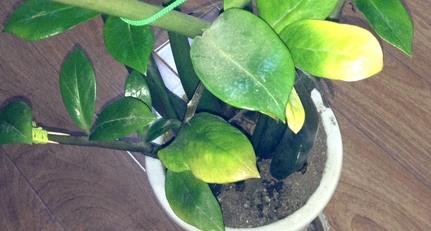
Causes and Solutions for Yellowing Leaves on ZZ Plants
3. Water sparingly.
If the soil already has sufficient water, do not continue watering, otherwise too much water will be difficult to absorb, causing the roots to slowly rot, and after the roots rot, the leaves will also turn yellow.
4. Suitable environment.
The growing environment for the ZZ plant is a place with plenty of light that at the same time is not exposed to strong light. Therefore, avoid direct strong light, and at the same time ensure the environment is ventilated and cool, otherwise the leaves will turn yellow.
5. Prevent pests.
Pay attention to regularly spraying the ZZ plant with a solution to prevent the occurrence of pests or diseases. If it suffers from pests or diseases, the leaves of the ZZ plant will also turn yellow.
Why Are ZZ Plant Leaves Turning Yellow? Causes and Clever Solutions for Yellowing ZZ Plant Leaves
The ZZ plant is one of many plants, and its name has a very good meaning, sounding quite wealth-attracting, so many people buy ZZ plants to place at home for viewing. But in daily cultivation, some flower lovers encounter yellowing leaves on ZZ plants. Why are ZZ plant leaves turning yellow? It not only affects the appearance, but if not solved in time, it will affect its lifespan. Below, the editor of Fuwo Decoration Network has summarized for everyone the causes and clever solutions for yellowing ZZ plant leaves, hoping to be of help to you.
Why Are ZZ Plant Leaves Turning Yellow? Causes and Clever Solutions for Yellowing ZZ Plant Leaves
Sudden environmental changes cause ZZ plant leaves to turn yellow:
If only the outermost ring of leaves has yellowed, that is normal physiological aging.
Solution: Just cut off the yellow leaves.
Overwatering causes ZZ plant leaves to turn yellow (water yellowing):
Too much water is difficult to absorb, causing the roots to slowly rot, and after the roots rot, the leaves will also turn yellow.
Solution: Stop watering.
Long-term lack of water causes ZZ plant leaves to turn yellow (drought yellowing):
For a newly purchased ZZ plant, because the soil is compacted, a lack of water will cause the leaves to turn yellow.
Solution: Water promptly so the soil can fully absorb water and become saturated; only then can normal root growth be promoted.
Insufficient sunlight causes ZZ plant leaves to turn yellow (light-deficiency yellowing):
Long-term lack of sunlight will cause the leaves to turn yellow.
Solution: Avoid direct strong light, and at the same time ensure the environment is ventilated and cool.
Long-term lack of fertilizer causes ZZ plant leaves to turn yellow (fertilizer-deficiency yellowing):
If the nutrients in the soil cannot keep up, the leaves will lack chlorophyll, which will also cause signs of yellowing leaves.
Solution: Pay attention to the soil and fertilizer for the ZZ plant, and fertilize appropriately to ensure sufficient nutrients in the soil.
Pests and diseases cause ZZ plant leaves to turn yellow:Suffering from pests or diseases will also cause the leaves of the ZZ plant to turn yellow.
Solution: Pay attention to regularly spraying the ZZ plant with a solution to prevent the occurrence of pests or diseases.
Why Are ZZ Plant Leaves Turning Yellow? Notes on Cultivating ZZ Plants
The ZZ plant likes light and is also tolerant of shade, so it is best to place it in a place with plenty of light but with some cover, which satisfies the light requirement and also avoids direct strong light causing the ZZ plant leaves to turn yellow.
20-32°C is the suitable growing temperature for the ZZ plant. When the summer temperature exceeds 35°C, growth slows down, and black shading should be used to lower the temperature; when the winter temperature is below 5°C, the ZZ plant may suffer frost damage, so it should be moved indoors promptly to keep warm.
The ZZ plant prefers a relatively dry soil environment, so the soil should be kept slightly dry. In summer, due to the large amount of water evaporation, water once a day; in autumn and winter, reduce the frequency of watering as much as possible, and mainly spray the ZZ plant leaves.
The ZZ plant is very greedy and likes the nourishment of fertilizer. It is best to apply fertilizer twice a month during its growing stage and when the temperature is above 15°C. The types of fertilizer are sold at flower markets. But when the temperature is below 15°C, fertilization should be stopped, otherwise the rhizomes will rot and the leaves will turn yellow.
Why Are ZZ Plant Leaves Turning Yellow? I believe everyone has understood through the above introduction of the causes and clever solutions for yellowing ZZ plant leaves. ZZ plants are rather delicate to cultivate, so everyone should pay extra attention to their care. When the seasons change, cooling or warming measures should be given according to the weather conditions, so that you can grow a beautiful, lush green ZZ plant.
What Causes ZZ Plant Leaves to Turn Yellow? What to Do When ZZ Plant Leaves Turn Yellow
The ZZ plant attracts much attention because of the good meaning of its name, and is therefore greatly loved by people. However, it is native to the relatively arid regions of Africa, tolerant of drought but not of waterlogging; too much water rots the roots, and exposure to the sun rots the leaves. With a little carelessness, the ZZ plant becomes a bare clump. Below, let us look specifically at what causes ZZ plant leaves to turn yellow, and what to do when ZZ plant leaves turn yellow.
Causes of yellowing ZZ plant leaves:
Overly wet watering
The leaves of the ZZ plant are fleshy and can store water, so it can tolerate drought, but it is averse to waterlogging. Overwatering often causes the plant roots to rot, thereby causing yellow leaves.
Air that is too dry
The ZZ plant likes a humid environment, and the suitable air humidity is about 85%. Too dry conditions will also cause the leaves to turn yellow.
What to do when ZZ plant leaves turn yellow:
The root system has already rotted: remove from the pot immediately.
The plant can be removed from the pot to check whether the root system is rotten. If it has rotted, the rotten roots and yellow leaves should be removed, and it should be replanted with sterilized culture soil, or its base can be buried in clean sand, kept in half shade, and watering controlled, only spraying the branches, leaves, and surroundings frequently, so that only after it re-sends new roots can routine care be resumed.
The root system is not rotten: move to a half-shaded place.
If the roots are not rotten, the plant should be placed in a half-shaded place. Because there are few leaves, it is not easy to dry after watering, so watering should be controlled, and the leaf surfaces should be sprayed frequently, letting it slowly recover to normal growth.
Editor's summary:
When caring for a potted ZZ plant, efforts should be made to create an environment with humid air and relatively dry potting soil. After the Mid-Autumn Festival, reduce watering, or replace watering with spraying, to help the newly sprouted tender leaves safely pass the winter. In winter, even more special attention should be paid to keeping the potting soil on the dry side, but still pay attention to spraying water on the leaf surfaces and the surrounding environment, so that the relative air humidity of the small environment reaches above 50%. Otherwise, under low-temperature conditions, it is easy to cause the plant's root system to rot, the leaf color to turn yellow, and even the whole plant to die.