What are the cultivation methods and precautions for the Brazil wood plant?
Brazil wood, also known as fragrant dracaena, is a large indoor potted foliage plant, and it can be seen especially in spacious places such as office lobbies or living rooms. Brazil wood is a world-famous new-generation indoor foliage plant with a graceful and neat plant shape. Below is an introduction to its cultivation methods and daily precautions.
Growth habits of Brazil wood
Brazil wood likes a hot and humid climate. It is highly adaptable to light and can grow in slight shade or under sunlight, but in spring, autumn and winter it should receive more sunlight, while in summer it should be shaded or placed indoors in a well-ventilated spot for cultivation. Brazil wood has strong vitality; it needs only sunlight, air and very little water, and can live well on its own stored energy. Brazil wood is drought-tolerant but not waterlogging-tolerant. During the growing season it can be watered thoroughly. Brazil wood is afraid of cold and freezing, so in winter it should be placed indoors in a spot with ample sunlight, and the temperature should be maintained at 5°C-10°C.
Soil selection for Brazil wood
The soil should be fertile and well-drained, making it suitable for indoor cultivation. For potting, a mix of leaf mold, culture soil and coarse sand is best. Brazil wood sold in the market is mostly potted in fine sandy soil, which is good for root development, but long-term use will be unfavorable to plant growth due to lack of fertilizer, so it must be replaced with the mixed soil formulated above. Repotting must be done every spring: new plants are repotted once a year, and older plants once every 2 years.
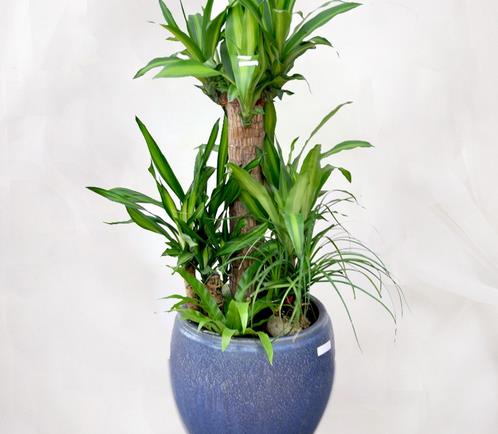
What are the cultivation methods and precautions for Brazil wood?
Pot selection for Brazil wood
For potted Brazil wood, a pot with a diameter of 12-20 cm is commonly used, and for 3 stems, a pot with a diameter of 25 cm is used.
Propagation methods for Brazil wood
Brazil wood is propagated by cuttings, and the cutting method is divided into two types: soil cuttings and water cuttings.
(1) Soil cuttings: For soil cuttings, cut the top branches and stems pruned from the old plant into 8-10 cm sections and insert them into clean river sand, keeping a certain humidity and they will take root.
(2) Water cuttings: Insert the cuttings 2-3 cm into water, frequently change the water to keep it clean, and they will take root in 1 month.
Daily care precautions for Brazil wood
1. Placement
Brazil wood needs bright light all year round, with at least 3 hours of direct sunlight every day.
2. Fertilization
Organic fertilizer can be buried at the base or edges, and after half a month apply a liquid organic and inorganic mixed fertilizer (urea or monopotassium phosphate solution). During the growing season, foliar feeding can also be done appropriately, spraying the leaves with nutrient solution diluted 100 times, once every half month. In winter, the amount of fertilizer can be halved or stopped. Nitrogen fertilizer should not be applied too much, otherwise the golden-yellow markings on the leaves will not be obvious, affecting the ornamental effect.
3. Watering
Brazil wood has a low water requirement, and watering is generally done about once every 10 days, keeping the potting soil half dry and half moist. Do not water too much, to prevent the trunk from rotting. In addition, when cultivated in the north, because the climate is dry, water should often be sprayed on the leaves and the surrounding ground to increase the surrounding air humidity, which is good for the growth of Brazil wood.
4. Temperature and light
The suitable growth temperature for Brazil wood is 20-30°C. In winter, it can survive the winter at above 10°C; when the temperature is too low, growth will stop, and yellow-brown spots will appear at the leaf tips and leaf margins. Brazil wood prefers partial shade and grows well in bright scattered light. In summer, avoid direct light and place it in a cool spot. In autumn and winter, placing it indoors in a spot with ample sunlight is enough. When light is too little, the leaves of Brazil wood will turn grayish green and the stripes will be unclear, and the basal leaves will turn yellow. In particular, variegated varieties kept under low light for a long time will have their colors become lighter or disappear, thus losing their ornamental value.
5. Pest and disease control
Brazil wood has few pests and diseases, but in recent years the incidence rate has been relatively high, mainly caused by moth pests hidden in the branches and stems that come from its place of origin. When eroded by pests and diseases, the plant will show phenomena such as loose and falling bark and falling leaves. You can first spray insecticide on the plant branches and stems, then cover them with plastic paper to suffocate the eggs or larvae. You can also peel open part of the bark, pick out the pests, and then spray medicine to prevent spread. Tobacco infusion can also be sprayed. In addition, attention should be paid to keeping the leaf surface clean and providing appropriate ventilation to improve the micro-environment.
What is Brazil wood? Cultivation methods and precautions for Brazil wood
If you think your study or yard is too monotonous, then you might as well plant a Brazil wood in the yard. Brazil wood is highly ornamental, and placing it on some important occasions can add a lot of color. So what are the cultivation methods and precautions for Brazil wood? Let us take a look together.
What is Brazil wood
Brazil wood has multiple names: Brazil iron tree, golden-edged fragrant dracaena, etc. It has a faint fragrance and belongs to the Liliaceae family as an evergreen tree. Its leaves cluster at the top of the stem, with a length of about 40 cm to 90 cm and a width of 6 cm to 10 cm. The leaves are curved and arch-shaped, bright green and glossy. Its flowers are relatively small and inconspicuous. It can adapt to shady environments. If the ambient temperature is lower than 13°C, Brazil wood will stop growing.
Cultivation methods and precautions for Brazil wood
1 Soil: Brazil wood is suitable for growing in a soil environment that is loose and well-drained. In particular, alkaline soil must not be used; soil rich in humus is better. If you plan to plant it indoors, it is best to use leaf mold or peat soil for planting, then add a small amount of river sand or perlite on top, not exceeding one third, and finally add a small amount of organic fertilizer. This is beneficial to the growth of Brazil wood.
2 Sunlight: Brazil wood has a relatively wide range of adaptability to sunlight, but note: Brazil wood is not strongly tolerant of intense sunlight. Especially from May to October, the strong light during this period is very unfavorable to the growth of Brazil wood. If Brazil wood is placed under such strong light, it will cause phenomena such as yellowing leaves and scorched leaf tips. Therefore, during this period, only a small amount of scattered light needs to be provided. At the same time, it must not be too shady.
3 Temperature: For Brazil wood, this evergreen tree of the Liliaceae family, the best growth temperature is 20°C to 28°C. If the temperature is too low, yellow-brown spots will appear on the leaves, and in serious cases Brazil wood will be frostbitten. Therefore, in winter, it is best to move Brazil wood indoors and maintain the temperature above 6°C.
4 Watering: In terms of watering, if it is a sunny day, it is best to water once every two days. The amount of water should not be too much; just make the soil slightly moist. Overwatering will cause the leaves of Brazil wood to scorch and even root rot. As for the leaves, they can be sprayed with water once a day.
5 Fertilization: If you want Brazil wood to grow better, you cannot avoid fertilizing it. If the soil nutrients for Brazil wood are not replenished in time, it will hinder the growth of Brazil wood. The best fertilization period is from May to October each year. Liquid fertilizer can be applied once every 15 days or 20 days. If it is a compound fertilizer, it can be increased to two times. The concentration of fertilizer should not be too high. If you are growing a variegated variety of Brazil wood, you need to reduce the proportion of ammonia nitrogen in the fertilizer; too high a proportion will cause the markings on the leaves to disappear.
The above is the introduction by the editor about the cultivation methods and precautions for Brazil wood, hoping to help you better understand the cultivation of Brazil wood.
Cultivation methods for Brazil wood. Cultivation methods and precautions for Brazil wood
Brazil wood is a plant that likes hot weather and a humid climate. If the temperature and humidity conditions are suitable, Brazil wood can grow all year round. Brazil wood has a strong ability to adapt to light and can grow in sunlight and in shady places. Brazil wood has strong vitality; sunlight, air and water are enough for it to grow healthily. Below, the editor will introduce the cultivation methods and some precautions for Brazil wood.
The first thing to note in the cultivation methods for Brazil wood is temperature and light. The temperature should be controlled at 20°C to 28°C. When the temperature is lower than 13°C, Brazil wood will enter a dormant state; and when the temperature is lower than 5°C, yellow-brown spots will appear at the leaf tips and leaf margins of Brazil wood, and in serious cases it will even lead to death. When Brazil wood is placed indoors, it should be placed in a spot with sunlight.
Second, the cultivation methods for Brazil wood also require attention to the control of water and humidity. Brazil wood does not need much water; it only has somewhat higher requirements for humidity. Therefore, we only need to keep the potting soil moist and often spray water on the leaves to increase the air humidity of the surrounding environment. It is worth noting that water must not accumulate in the potting soil, as water accumulation will cause the roots of Brazil wood to rot.
The third point in the cultivation methods for Brazil wood is that attention should be paid to soil and fertilizer. Brazil wood is suitable for growing in fertile, loose sandy river loam. In addition, Brazil wood should be repotted and have its soil changed once a year to keep sufficient nutrients in the soil. Fertilization is generally done by first applying organic fertilizer at the base or edges during the growing season, and then applying liquid fertilizer once every 15 days to 20 days, to ensure lush growth of branches and leaves.
The cultivation methods for Brazil wood also require attention to pest prevention, because sometimes Brazil wood will show phenomena such as scorched leaves, which are caused by drought, excessively low temperature, improper watering and fertilization, and so on. At this time, we should improve the cultivation management methods, pay more attention to controlling temperature and humidity, and also remove pests in time and apply some diluted insecticide.
Summary:The plant shape of Brazil wood is very graceful, and placing it in the living room immediately makes the living room look high-end, grand and classy. The fragrance of Brazil wood is relatively strong. If you are not quite comfortable with a strong fragrance, you only need to place it in a spacious and ventilated place. Brazil wood is a very stylish and elegant plant, carrying a charming southern exotic feel, and it is a fairly famous indoor foliage plant in the world. Have you learned the above cultivation methods for Brazil wood?
▽Latest information articles▽
◇ ▏Cultivation methods for gardenia▏European royal cross-stitch▏What to do when asparagus fern leaves turn yellow▏Modern abstract painting ▏◇
◇ ▏What plants absorb formaldehyde▏Wall art paint liquid wallpaper▏Indoor plant pictures and names▏Iris flower language ▏◇
◇ ▏Cultivation methods for narcissus▏Cross-stitch nian nian you yu▏What is the flower language of cornflower▏Chongqing carpet cleaning▏◇
◇ ▏Best cross-stitch brands▏What fabric is chiffon▏Which brand of down quilt is good▏Lithops ▏◇
◇ ▏Is liquid wallpaper good▏Cross-stitch brand rankings▏Bedroom hand-painted wall pictures▏Statice ▏◇