How to grow potted gardenia? Seven easy steps
Gardenia, also known as gardenia or yellow gardenia, is an evergreen shrub of the genus Gardenia in the family Rubiaceae, order Gentianales. It likes warm, humid and sunny environments, is relatively cold-tolerant, tolerates partial shade, fears waterlogging, and requires loose, fertile, acidic sandy loam. It is native to China. Gardenia has luxuriant branches and leaves, its foliage stays evergreen all year round, and its flowers are fragrant and elegantly simple, making it an important ornamental garden plant. Let's take a look at how to grow potted gardenia below.
How to grow potted gardenia?
1. Choose suitable potting soil
Choose suitable potting soil. Gardenia is an acid-loving flower, with a suitable pH of 5 to 6. If the soil acidity is not suitable, future care will achieve half the result with twice the effort. For the growing medium, you can choose leaf mold, peat soil, or composted sawdust mixed with half garden soil. Avoid old wall soil and coal cinders; using commercially available clivia soil is more convenient and practical.
2. Fertilize reasonably
Fertilize reasonably. Gardenia loves fertilizer. You can add 3% decomposed cake fertilizer to the potting soil as a base fertilizer. During the growing season, use alum fertilizer water made by composting cake fertilizer with ferrous sulfate and water it once a week, or use 0.1% humic acid complete-nutrient organic liquid fertilizer. During the bud stage, water once to twice with a 0.1% potassium dihydrogen phosphate aqueous solution, which can make the flowers larger and the fragrance richer. Stop fertilizing during the hot summer period when the temperature is above 35°C and in autumn when it is below 15°C.
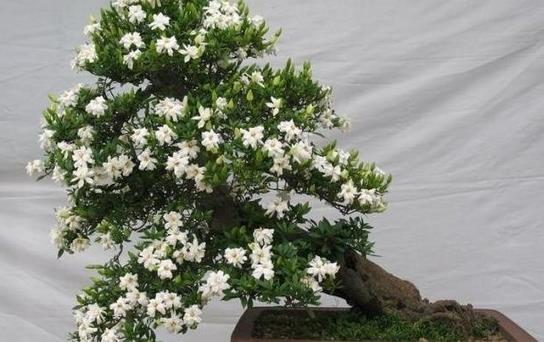
How to grow potted gardenia? Just seven steps and it's easy
3. Water scientifically
Water scientifically. Gardenia likes moist soil and relatively high air humidity. During the growing period from April to September, keep the potting soil moist. Water whenever the surface of the potting soil looks dry, and in the evening you can use a spray bottle to sprinkle water on the leaves. If it dries out completely and wilts, it will be detrimental to growth. For plants that grow too vigorously with longer internodes, do not water in the evening; water in the morning after the sun comes out. In northern areas with alkaline water, tap water should be left to stand for two days before use. Every three to five days, water thoroughly once with an aqueous solution containing 0.5 g citric acid and 1 g ferrous sulfate per liter, which can make the leaves glossy and emerald green.
4. Give plenty of sunlight
Give plenty of sunlight. Gardenia likes light. It can also grow in partial shade for a long time, but the flowering branches will be longer and the flowers fewer. Except for the need for shade during the strong midday light from July to August and during the winter dormant period, it generally needs to be kept in sunlight to produce abundant flowers and lush leaves.
5. A good winter dormancy
A good winter dormancy. Gardenia can overwinter outdoors in the Qinling area of China, but potted gardenia roots will be damaged after a severe winter, and recovery in spring will be slow. Overwintering indoors with heating avoids freezing damage, but with insufficient light the plant grows weak and spindly, most young buds formed in autumn drop off, and flowering is late the following year. A better approach is to place the potted plant in a cold room at around 5°C to let it go dormant, or wrap the flower pot well with foam plastic and other insulating materials to protect the root system, and place it in a wind-sheltered, sunny spot to overwinter, so it recovers quickly in spring and blooms early.
6. Prune appropriately
Prune appropriately. For young large-flowered gardenia plants, pinch off the growing tip at 20 cm up the main stem, keep 3 to 4 branches, and when the branches have 2 pairs of leaves, pinch off the growing tips again to encourage branching; after that, let them grow freely. Small-leaved gardenia does not need tip pinching. After flowering each year, prune lightly, cutting out inner branches and diseased or weak branches, and shortening any individual vigorous water shoots. When large-flowered gardenia has grown too wide after 4 to 5 years, you can prune heavily after flowering, generally leaving 2 pairs of leaves on the upper branches and cutting them back, and after buds sprout, remove the buds growing inward and the buds on the lower part of the main stem, and the plant shape will become more compact and attractive. Remember that gardenia must not be cut back at the branch tips in spring, otherwise it will not bloom that year.
7. Repot and change the soil at the right time
Repot and change the soil at the right time. Use a small pot for young plants and gradually move them into larger pots. When the crown width is 2 to 3 times the pot diameter, it is time to repot. It can be repotted at any time during the growing season. After turning the plant out of the pot, plant it with the root ball into the new pot; it is best if the new pot's diameter is about 5 cm larger than the original pot. For household potted plants, when the pot reaches about 28 cm, generally stop repotting and only change the potting soil. It is better to change the soil in March in spring. After turning the plant out of the pot, cut off some old roots, shake off half of the old soil, plant it into the pot with new soil, water thoroughly, place it in a warm, semi-shaded spot, and when new buds begin to sprout, move it into sunlight for care.
How to grow potted gardenia? Just seven steps and it's easy
How to grow large-leaved gardenia?
When growing large-leaved gardenia in the north, the climate, soil and other conditions are often unsuitable for its growth and development, causing the leaves of large-leaved gardenia to turn yellow and even the whole plant to die. For this reason, to grow large-leaved gardenia in the north, you must master the following points.
Large-leaved gardenia has relatively strict soil requirements. It grows well in acidic soil with a pH of 5-6, while northern soil is generally neutral or alkaline. In such soil, due to the hydrolysis of iron salts, water-insoluble ferric hydroxide forms, which cannot be absorbed by the plant, causing severe iron deficiency. Although iron is not a component of chlorophyll, it is a necessary condition for chlorophyll formation, so iron deficiency is equivalent to blocking chlorophyll synthesis, thereby preventing photosynthesis from proceeding normally, which is the main cause of plant starvation and death.
In addition, iron is also a component of certain oxidase enzymes and plays an important role in respiration. If iron is deficient, it will affect the plant's normal physiological activities. To solve iron deficiency, watering with "alum fertilizer water" can achieve good results. Besides this, you can also mix a small amount of black alum powder into the potting soil, using an amount equal to 0.5% of the potting soil weight. During the growing season, water once every 10-15 days with 0.5%-1.0% black alum water, which can also ensure the gardenia's iron requirements and allow it to grow and develop normally.
Northern soil is mostly neutral or slightly alkaline, resulting in a lack of iron elements available for plant use in the soil, which is one of the main causes of yellowing leaves. For this reason, to grow large-leaved gardenia, choose fertile acidic potting soil. Generally, it can be mixed with 4 parts leaf mold, 4 parts garden soil, and 2 parts sand. Then mix in 1-2 g sulfur powder per kilogram of potting soil. For watering large-leaved gardenia, it is best to use rainwater or fermented rice-washing water. During the growing period, water once every 10-15 days with 0.2% ferrous sulfate water or apply alum fertilizer water once every 10-15 days (the two can be alternated). This can both prevent the soil from becoming alkaline and promptly supplement iron elements to the soil, thereby preventing the leaves from turning yellow.
Gardenia likes moisture. In addition to frequently keeping the potting soil moist, you must also always pay attention to increasing air humidity. This is because the northern climate differs from the south: northern springs are dry and often bring dry winds, summers have high light intensity and hot weather, and winters are cold and dry. Therefore, in spring and summer, spray the leaves with clean water and sprinkle water on the nearby ground every morning and evening to increase air humidity. In winter, water less, but still spray and wash the branches and leaves frequently to keep the leaf surface clean.
Large-leaved gardenia likes light, but fears intense sunlight. If exposed to harsh sun, the leaves turn yellow, then white, and finally fall off. Therefore, in summer it must be placed under a shade awning or in a spot with scattered light for growing, letting it receive some sunlight in the morning and evening, so as to prevent the leaves from turning yellow.
Large-leaved gardenia is not cold-tolerant, so pay attention to bringing it indoors and taking it outdoors at the right time. Generally, bring it indoors in mid-October and place it in a sunny spot, keeping the room temperature at 10°C-12°C. The following spring, do not take it outdoors too early; usually late April is better. If you can do the above four points, large-leaved gardenia can not only settle in the north, but also have green leaves, abundant flowers and a rich fragrance.
How to grow potted gardenia? Just seven steps and it's easy
How to grow potted gardenia? Gardenia, also known as gardenia or yellow gardenia, is an evergreen shrub of the genus Gardenia in the family Rubiaceae, order Gentianales. It likes warm, humid and sunny environments, is relatively cold-tolerant, tolerates partial shade, fears waterlogging, and requires loose, fertile, acidic sandy loam. It is native to China. Gardenia has luxuriant branches and leaves, its foliage stays evergreen all year round, and its flowers are fragrant and elegantly simple, making it an important ornamental garden plant. Let's take a look at how to grow potted gardenia below.
How to grow potted gardenia
Step 1: Choose suitable potting soil
Choose suitable potting soil. Gardenia is an acid-loving flower, with a suitable pH of 5 to 6. If the soil acidity is not suitable, future care will achieve half the result with twice the effort. For the growing medium, you can choose leaf mold, peat soil, or composted sawdust mixed with half garden soil. Avoid old wall soil and coal cinders; using commercially available clivia soil is more convenient and practical.
Step 2: Fertilize reasonably
Fertilize reasonably. Gardenia loves fertilizer. You can add 3% decomposed cake fertilizer to the potting soil as a base fertilizer. During the growing season, use alum fertilizer water made by composting cake fertilizer with ferrous sulfate and water it once a week, or use 0.1% humic acid complete-nutrient organic liquid fertilizer. During the bud stage, water once to twice with a 0.1% potassium dihydrogen phosphate aqueous solution, which can make the flowers larger and the fragrance richer. Stop fertilizing during the hot summer period when the temperature is above 35°C and in autumn when it is below 15°C.
Step 3: Water scientifically
Water scientifically. Gardenia likes moist soil and relatively high air humidity. During the growing period from April to September, keep the potting soil moist. Water whenever the surface of the potting soil looks dry, and in the evening you can use a spray bottle to sprinkle water on the leaves. If it dries out completely and wilts, it will be detrimental to growth. For plants that grow too vigorously with longer internodes, do not water in the evening; water in the morning after the sun comes out. In northern areas with alkaline water, tap water should be left to stand for two days before use. Every three to five days, water thoroughly once with an aqueous solution containing 0.5 g citric acid and 1 g ferrous sulfate per liter, which can make the leaves glossy and emerald green.
Step 4: Give plenty of sunlight
Give plenty of sunlight. Gardenia likes light. It can also grow in partial shade for a long time, but the flowering branches will be longer and the flowers fewer. Except for the need for shade during the strong midday light from July to August and during the winter dormant period, it generally needs to be kept in sunlight to produce abundant flowers and lush leaves.
Step 5: A good winter dormancy
A good winter dormancy. Gardenia can overwinter outdoors in the Qinling area of China, but potted gardenia roots will be damaged after a severe winter, and recovery in spring will be slow. Overwintering indoors with heating avoids freezing damage, but with insufficient light the plant grows weak and spindly, most young buds formed in autumn drop off, and flowering is late the following year. A better approach is to place the potted plant in a cold room at around 5°C to let it go dormant, or wrap the flower pot well with foam plastic and other insulating materials to protect the root system, and place it in a wind-sheltered, sunny spot to overwinter, so it recovers quickly in spring and blooms early.
Step 6: Prune appropriately
Prune appropriately. For young large-flowered gardenia plants, pinch off the growing tip at 20 cm up the main stem, keep 3 to 4 branches, and when the branches have 2 pairs of leaves, pinch off the growing tips again to encourage branching; after that, let them grow freely. Small-leaved gardenia does not need tip pinching. After flowering each year, prune lightly, cutting out inner branches and diseased or weak branches, and shortening any individual vigorous water shoots. When large-flowered gardenia has grown too wide after 4 to 5 years, you can prune heavily after flowering, generally leaving 2 pairs of leaves on the upper branches and cutting them back, and after buds sprout, remove the buds growing inward and the buds on the lower part of the main stem, and the plant shape will become more compact and attractive. Remember that gardenia must not be cut back at the branch tips in spring, otherwise it will not bloom that year.
Step 7: Repot and change the soil at the right time
Repot and change the soil at the right time. Use a small pot for young plants and gradually move them into larger pots. When the crown width is 2 to 3 times the pot diameter, it is time to repot. It can be repotted at any time during the growing season. After turning the plant out of the pot, plant it with the root ball into the new pot; it is best if the new pot's diameter is about 5 cm larger than the original pot. For household potted plants, when the pot reaches about 28 cm, generally stop repotting and only change the potting soil. It is better to change the soil in March in spring. After turning the plant out of the pot, cut off some old roots, shake off half of the old soil, plant it into the pot with new soil, water thoroughly, place it in a warm, semi-shaded spot, and when new buds begin to sprout, move it into sunlight for care.
How to grow large-leaved gardenia
When growing large-leaved gardenia in the north, the climate, soil and other conditions are often unsuitable for its growth and development, causing the leaves of large-leaved gardenia to turn yellow and even the whole plant to die. For this reason, to grow large-leaved gardenia in the north, you must master the following points.
Large-leaved gardenia has relatively strict soil requirements. It grows well in acidic soil with a pH of 5-6, while northern soil is generally neutral or alkaline. In such soil, due to the hydrolysis of iron salts, water-insoluble ferric hydroxide forms, which cannot be absorbed by the plant, causing severe iron deficiency. Although iron is not a component of chlorophyll, it is a necessary condition for chlorophyll formation, so iron deficiency is equivalent to blocking chlorophyll synthesis, thereby preventing photosynthesis from proceeding normally, which is the main cause of plant starvation and death.
In addition, iron is also a component of certain oxidase enzymes and plays an important role in respiration. If iron is deficient, it will affect the plant's normal physiological activities. To solve iron deficiency, watering with "alum fertilizer water" can achieve good results. Besides this, you can also mix a small amount of black alum powder into the potting soil, using an amount equal to 0.5% of the potting soil weight. During the growing season, water once every 10-15 days with 0.5%-1.0% black alum water, which can also ensure the gardenia's iron requirements and allow it to grow and develop normally.
Northern soil is mostly neutral or slightly alkaline, resulting in a lack of iron elements available for plant use in the soil, which is one of the main causes of yellowing leaves. For this reason, to grow large-leaved gardenia, choose fertile acidic potting soil. Generally, it can be mixed with 4 parts leaf mold, 4 parts garden soil, and 2 parts sand. Then mix in 1-2 g sulfur powder per kilogram of potting soil. For watering large-leaved gardenia, it is best to use rainwater or fermented rice-washing water. During the growing period, water once every 10-15 days with 0.2% ferrous sulfate water or apply alum fertilizer water once every 10-15 days (the two can be alternated). This can both prevent the soil from becoming alkaline and promptly supplement iron elements to the soil, thereby preventing the leaves from turning yellow.
Gardenia likes moisture. In addition to frequently keeping the potting soil moist, you must also always pay attention to increasing air humidity. This is because the northern climate differs from the south: northern springs are dry and often bring dry winds, summers have high light intensity and hot weather, and winters are cold and dry. Therefore, in spring and summer, spray the leaves with clean water and sprinkle water on the nearby ground every morning and evening to increase air humidity. In winter, water less, but still spray and wash the branches and leaves frequently to keep the leaf surface clean.
Large-leaved gardenia likes light, but fears intense sunlight. If exposed to harsh sun, the leaves turn yellow, then white, and finally fall off. Therefore, in summer it must be placed under a shade awning or in a spot with scattered light for growing, letting it receive some sunlight in the morning and evening, so as to prevent the leaves from turning yellow.
Large-leaved gardenia is not cold-tolerant, so pay attention to bringing it indoors and taking it outdoors at the right time. Generally, bring it indoors in mid-October and place it in a sunny spot, keeping the room temperature at 10°C-12°C. The following spring, do not take it outdoors too early; usually late April is better. If you can do the above four points, large-leaved gardenia can not only settle in the north, but also have green leaves, abundant flowers and a rich fragrance.
The above is our introduction to how to grow potted gardenia, and we hope it can help you. If you want to learn more related information, please keep following us.
Potted gardenia can be placed indoors, and it can bring a touch of natural comfort to our home decor environment. To enhance the indoor home decor style, we can also achieve this through on-site measuring and design. Apply for Tubatu's free on-site measuring service, and a professional designer will come to your home for free on-site measuring and design. The designer can understand the owner's style preferences and, combined with the spatial characteristics of the house, provide multiple free design plans for the owner to choose from!