Detailed Guide to Growing and Caring for the Parlor Palm
1. Light: The parlor palm likes partial shade; in strong sunlight its leaves turn yellow and withered. If kept in a spot with insufficient light for a long time, the plant becomes leggy. So indoors it is best placed in a bright spot by a window.
2. Temperature: The parlor palm likes warmth; the optimum growing temperature is 18-24°C, and it enters dormancy at 13°C. In winter it is best not to let it drop below 10°C.
3. Water: The parlor palm likes water; during the growing period keep the soil moist, and during dormancy wait until two-thirds of the potting soil is dry before watering. In addition, the parlor palm likes high air humidity; if it is too dry, the leaf tips turn brown. So during dry periods, such as autumn, take measures such as regularly misting the leaves to raise the air humidity around the plant.
4. Fertilizing: During the growing season, apply a compound fertilizer to the plant once a month.
5. Potting soil: It is best grown in loamy soil that drains well and is loose and fertile.
6. Propagation: The parlor palm is generally propagated from seed.
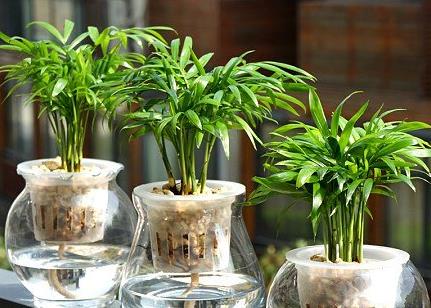
What are the growing methods and precautions for the parlor palm?
To grow the parlor palm well, you should also pay attention to the following technical points:
① Beware of scorched edges caused by too much light. Since the parlor palm likes a rather shady environment, indoors it should be placed near a north or east window or in another spot with bright indirect light; the parlor palm fears direct strong light most of all, and even a short period of exposure can cause the leaves to scorch and turn yellow. Conversely, if kept in a too dry and dark place for a long time, the leaf color will also fade and lose its luster.
② Suitable growing temperature. The optimum growing temperature is generally 20~30°C, the indoor temperature in winter should be between 12~14°C, and the lowest temperature must not fall below 10°C.
③ Maintain the surrounding air humidity. Mist the leaves frequently to increase air humidity.
④ Do not use acidic soil for the potting mix, and add a small amount of clay.
⑤ Repot once every 3 years.
⑥ During the seedling stage, apply 3~4 applications of dilute liquid fertilizer in spring and autumn.
How to grow the parlor palm fast, and its growing methods and precautions
The parlor palm is a plant native to northern Mexico. This plant is highly ornamental, and many people in our country grow it. However, there are many points to pay attention to if you want to grow it well, so how do you grow the parlor palm fast? What are the growing methods and precautions for the parlor palm? Below, the editor takes everyone through an introduction.
I. How to grow the parlor palm fast: understand its habits
If you want to know how to grow the parlor palm fast, we must first understand its growth habits; only by letting it grow in a suitable environment will it grow better and faster. It likes to grow in a high-humidity environment and is rather intolerant of strong light, so when the light is fairly strong it still needs shading. Besides this, watering, fertilizing and other aspects also need attention. The specific care details are below; let us continue reading.
II. Growing methods and precautions for the parlor palm
1. Potting soil selection: loose, fertile and well-draining
The choice of potting soil is very important for growing the parlor palm well. As for the pot, a plastic flowerpot is generally enough; for the soil, it is best to choose a fairly loose and fertile humus soil. This kind of soil has high drainage and air permeability, is relatively unlikely to become waterlogged, and also allows it to absorb nutrients better.
2. Fertilizing requirements: once a month during the growing season
Fertilizer is one of the main nutrients in the parlor palm's growth process; if you want it to grow faster, then sufficient nutrients are very important. Especially after it enters the growing season, its demand for nutrients is very high, and basically a compound fertilizer needs to be applied once a month so that it can grow vigorously. However, when fertilizing, everyone should note that the fertilizer needs to be diluted with water first, otherwise it can easily burn the plant; keep this point in mind.
3. Temperature management: suitable growing temperature 18-24°C
To grow the parlor palm well, temperature management is also very important. Its suitable growing environment temperature is 18-24°C; if the temperature is too high or too low, it is not very favorable for its growth. Especially after entering winter, temperature control must be done well; it is best not to let its growing temperature fall below 10°C, otherwise the plant can easily be frostbitten.
4. Watering requirements: keep the soil moist but not waterlogged
The parlor palm is a plant that likes water, so during the process of growing it, keep the soil moist, and also mist its leaves often to maintain air humidity. However, watering must also be moderate; do not water too much either, because if too much watering causes waterlogging, it can easily cause the roots to rot, so everyone needs to control this degree.
5. Light management: avoid strong light
The parlor palm is rather intolerant of strong light, so when growing it we should best place it in indirect sunlight and avoid direct sunlight. In summer, when the light is too strong, shading work must be done even more carefully, otherwise it can easily scorch the plant and cause the leaves to turn yellow and dry up, so everyone should pay attention to this point.
6. Pests and diseases: prevent and treat promptly, do not delay
During the parlor palm's growth process, if care is not careful enough, problems such as pests and diseases can easily take advantage of the situation and invade. Such problems are extremely harmful to the plant, and if not dealt with promptly they will cause the plant to wither and die. The specific treatment methods are described in detail in the article on pest and disease control for the parlor palm; interested friends can take a look.
Growing methods and precautions for the parlor palm: what to do when the leaves turn yellow
The parlor palm, as you can tell from its name, is a plant closely related to the coconut. What are the growing methods and precautions for the parlor palm? What should be done if the parlor palm's leaves turn yellow?
Growing methods and precautions for the parlor palm:
I. Introduction to the parlor palm
It is also called the dwarf coconut, parlor palm and dwarf palm. Its flowering period is spring, though potted plants basically never bloom. Its flowers have no particular features and are white-green. Its leaves are flat and spread out, and a mature plant is umbrella-shaped, which is quite elegant.
II. Introduction to its growth habits
It likes a warm, moist and semi-shady environment. The suitable growing temperature is 20~30°C; it enters dormancy at 13°C, and the lowest wintering temperature in winter is 3°C.
1. Soil selection
For the parlor palm's growing medium, a well-draining, moist and fertile loamy soil is best. For potting, you can generally use leaf mold and peat soil plus 1/4 river sand and a small amount of base fertilizer prepared as the medium.
It does not demand much from fertilizer; generally, during the growing season apply liquid fertilizer 1-2 times a month, and in late autumn and winter apply a little fertilizer or none at all. Repot once every 2-3 years in spring.
2. Watering and misting
When watering the parlor palm, the principle is to keep it moist rather than dry; just keep the potting soil consistently moist. In summer and autumn, when the air is dry, mist the plant frequently to raise the air humidity of the environment. This favors its growth and at the same time keeps the leaves dark green and glossy;
In winter, reduce the amount of watering appropriately to help it overwinter. The parlor palm likes semi-shady conditions and avoids direct sunlight in hot seasons.
Under the blazing sun its leaf color fades or turns yellow, and scorched leaves and black spots appear, losing its ornamental value.
3. Pests and diseases
In addition, under high temperature and high humidity, the parlor palm is prone to brown spot disease. If brown spot disease is found, promptly treat it with 800-1000 times diluted Topsin or Baijunlingqing.
When the air is dry and ventilation is poor, scale insects are also likely to appear. If scale insects are found, besides scraping them off by hand, you can also spray with 800-1000 times diluted omethoate for control.
III. Detailed introduction to daily care
The growing medium is peat, perlite, expanded clay pellets, etc.
After planting, the first watering with nutrient solution should be thorough, until seepage is seen in the saucer at the bottom of the pot. For regular nutrient topping-up, add it once every 10-15 days; replenish water in time according to the moisture condition of the medium, but do not add water on the day you add nutrient solution.
Before each water replenishment, first pour out the seepage from the saucer; if no disease occurs, it can be reused, otherwise it should be discarded.
When there is no seepage in the saucer, water promptly. For each nutrient or water addition, it is best to use a small spray pot for spray irrigation; for large-scale cultivation, spray irrigation facilities can be set up to spray nutrient mist directly. This not only rinses the medium but also increases the air humidity around the plant, favoring normal plant growth.
IV. Winter care
From October to February of the following year in winter, this is the parlor palm's relative dormancy period (night temperature 12-14°C). Control the amount of watering to prevent root rot, yellow leaves, necrosis and other symptoms caused by too low a temperature. During the winter heating period in northern regions, the room temperature can generally be kept at 15-20°C or 25°C. At this time the indoor air is dry, so attention should be paid to replenishing water; it is best to mist the leaves 1~2 times a day, and the flowerpot should not be placed near a stove, radiator or air conditioner, to prevent acute water loss from the leaves, causing dry tips, yellow leaves, or even death. In addition, in winter place the flowerpot in a sunny spot indoors to favor the plant's photosynthesis.
V. Introduction to nutrient solution hydroponics
Hydroponic parlor palm means growing it with a nutrient solution method. The parlor palm prefers a shady environment and should not be placed near a south window; it should be placed on a north, east or west windowsill, or a comparable spot.
In darker places the leaves grow dark green; under direct light the leaf color gradually turns yellow-green. Too much strong light can produce scorched leaves and black spots. The optimum growing temperature is between 20~30°C; it enters dormancy at 13°C, and in winter it must not go below 10°C.
For watering, grasp the principle of keeping it moist rather than dry, and keep the potting soil moist year-round. In winter reduce the amount of water appropriately, and it is best to water with cool boiled water. In summer, clean rainwater may as well be used. Mist the leaves and the surrounding ground frequently to maintain relatively high air humidity.
VI. Other care notes
After being brought outdoors in spring, place it in a shaded spot, avoiding direct sunlight; fairly bright light is enough. When the plant is fairly large, repot it in time. It has relatively high requirements for environmental humidity, and for watering you should grasp the principle of keeping it moist rather than dry, so as to keep the potting soil moist.
When the air is dry (especially in summer), mist the plant frequently to increase the air humidity of the environment. This plant does not demand much from fertilizer; from May to October, apply cake fertilizer water twice a month.
Hydroponic care:
1. Avoid direct sunlight, otherwise the leaves will turn scorched and yellow; but when it is too shady, the leaf color will also fade.
2. The parlor palm is most beautiful at a plant height of 30~50 cm. When the plant is too tall, the lower part becomes bare and its ornamental value is reduced; when growing it you can cultivate small plants below.
3. Obtaining hydroponic material: use the potted root-washing method. After washing with water, new roots will grow within a few days.
With the current nutrient solution formulations, most plants can be grown hydroponically, but they need careful care, otherwise the flowers can easily die from nutrient problems!
VI. To grow the parlor palm well, pay attention to:
① Beware of scorched edges caused by too much light
Since the parlor palm likes a rather shady environment, indoors it should be placed near a north or east window or in another spot with bright indirect light;
The parlor palm fears direct strong light most of all; even a short period of exposure can cause the leaves to scorch and turn yellow. Conversely, if kept in a too dry and dark place for a long time, the leaf color will also fade and lose its luster.
② Suitable growing temperature
The optimum growing temperature is generally 20~30°C, the indoor temperature in winter should be between 12~14°C, and the lowest temperature must not fall below 10°C.
③ Maintain the surrounding air humidity
Mist the leaves frequently to increase air humidity.
④ Do not use acidic soil for the potting mix, and add a small amount of clay.
⑤ Repot once every 3 years
Repot once every 2~3 years in spring to favor growth. Since the parlor palm is not easy to propagate by cuttings, it is mainly propagated by sowing.
⑥ During the seedling stage, apply 3~4 applications of dilute liquid fertilizer in spring and autumn.
The parlor palm's root system is relatively fine, so it is best to use a loose and fertile growing soil; using heavy clay soil easily causes root rot.
Because it likes a rather shady environment, indoors it should be placed near a north or east window or in another spot with bright indirect light.
The parlor palm fears direct strong light most of all; even a short period of exposure can cause the leaves to scorch and turn yellow. Conversely, if kept in a too dark place for a long time, the leaf color will also fade and its glossiness will weaken.
In summer, watering should be ample, and the leaves need to be misted frequently to increase air humidity. To meet the needs of indoor viewing, the plant height is best kept between 40 cm and 60 cm, so fertilizing should not be excessive.
Generally, during the seedling stage, apply 3—4 applications of dilute liquid fertilizer in spring and autumn. In the fertilizer, a nitrogen-to-phosphorus ratio of 1.5:1.2 is best. This ratio can both promote sturdy stems and improve the glossiness of the leaves.
What should be done if the parlor palm's leaves turn yellow?
If the parlor palm's leaves do turn yellow, then just take the parlor palm out to get some sun and stop watering it so much.
The introduction to the parlor palm's growing methods and how to deal with yellowing leaves ends here. Why not hurry up and grow one?