A detailed guide to growing Chinese roses (Rosa chinensis), easily adding colorful beauty to life
Chinese roses are splendid and beautiful, with diverse forms and colors, blooming in all four seasons, and are deeply loved by people. They are called the queen of flowers, and many people want to grow Chinese roses themselves. So when growing Chinese roses, what exactly should you do? Are there any methods and precautions? Below, let's take a detailed look with the editor of Yiqizhuangxiu.com.
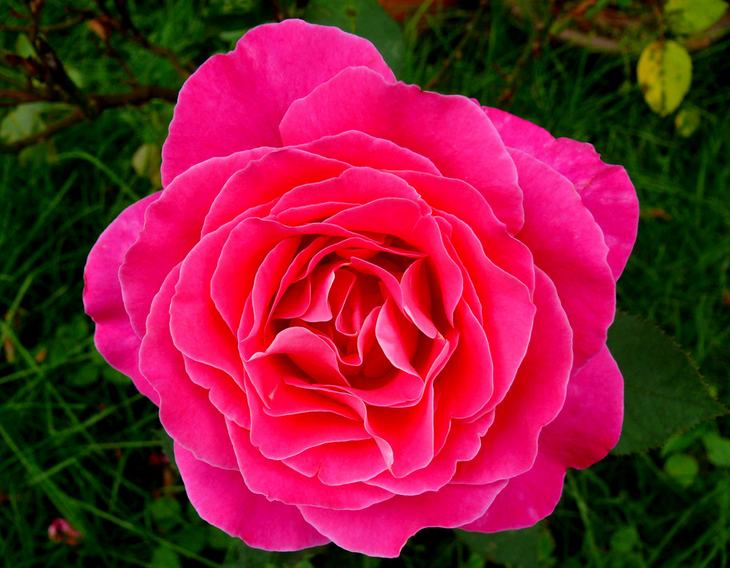
A full guide to Chinese rose growing methods, adding colorful beauty to life
Growing methods for Chinese roses
1. Temperature: They like warmth, fear intense heat, and are relatively cold-tolerant. The most suitable growing temperature for Chinese roses: 22-25°C. (PS: the optimal temperature is 15-26°C during the day and 10-15°C at night.)
2. Sunlight: Chinese roses like a sunny, airy, well-drained, and wind-sheltered environment. Dear, remember not to grow our Chinese roses in dark and damp places! We are about to enter midsummer now, so give the flowers some proper shade! Otherwise the blooming flowers can easily dry out.
3. Water: Our Chinese roses like moisture (relative air humidity should preferably be 75%-80%), and they can also tolerate a certain degree of drought. At a glance, they are clearly not hothouse flowers!
4. Soil: The soil for planting Chinese roses should be fertile, loose, and well-drained. When I was little and planting them, I often dug up spring soil to plant them, and it felt pretty good. In the city, it is not so easy to find. Here is a reminder for flower-loving friends: the soil you choose must not be the kind that clumps, because drainage is poor. You can choose slightly acidic soil rich in humus. Actually, Chinese roses are relatively broad in their range of soil adaptability.
5. Fertilizing: After May is the peak growing season for Chinese roses. Every 10 days, apply 1 topdressing. You can use fully decomposed and fermented fishy liquid or vegetable-leaf liquid, mixed and applied at a ratio of 3 parts fertilizer to 7 parts water. Stop fertilizing in November.
6. Watering: For watering Chinese roses, we first need to understand one thing: because everyone's chosen soil, light, temperature, humidity, and other growing conditions differ, when watering we can water according to how dry the potting soil is. My principle for watering the flowers is: do not water when not dry; water when dry; when watering, water thoroughly.
7. Pruning: The first post-bloom pruning is done in mid-to-late May. Remove spent flowers in time to avoid seed formation, so as to concentrate nutrients for sprouting new branches and make the second bloom large, beautiful, and on stronger branches. To properly inhibit its growth, prune lightly, keeping 4-5 buds; moderately developed branches should be pruned moderately, leaving 2-3 buds, with the upper part cut off; weaker-growing branches should be pruned hard, leaving only 1-2 buds, to encourage vigorous branch growth. In this way, because the degree of pruning on different new shoots varies, the plant shape will develop in a balanced way, avoiding uneven branches or leggy growth. When pruning, note that the cut should be 0.5 cm above a bud. Too high not only affects appearance but also delays bud sprouting.
8. Propagation: When I was in school, I often liked to use cuttings to grow Chinese roses. Chinese roses have extremely strong vitality. Back then, I would directly break off a branch of a Chinese rose and insert it into soil, and after a week it would grow successfully. Here is a more scientific method for you: cut the removed branches into 10-15 cm cuttings, insert them into nutrient pots or small flowerpots, place them in a place with weaker light, and keep the temperature at around 20°C. Once roots form and leaf buds grow into branches, you can repot and transplant them.
9. Loosening soil and weeding: Along with clearing weeds from the pot surface, you can use a fine wire rake to gently break up the surface layer around the flowerpot to enhance the looseness and aeration of the potting soil and promote normal root growth.
10. Pest and disease control: The area where flowerpots are placed should often be sprayed with 15% limewater or carbendazim or potassium permanganate aqueous solution for sterilization. The rainy-season high-temperature period from July to August is a high-incidence period for leaf spot and powdery mildew. You can spray with 0.3-0.5 degree Beaume lime-sulfur mixture once a week, for a total of 2-3 sprays. If longhorn beetle larvae are found causing damage from June to July, the branch tips should be cut off immediately. If other leaf-eating pests are found, immediately spray 800-times monocrotophos for control, which can kill eggs and larvae.
How to grow Chinese roses, growing methods for Chinese roses
Chinese roses belong to the Rosaceae family and have both ornamental value and medicinal uses. Chinese rose flowers are 4-5 cm in diameter, mostly double-petaled and a few single-petaled, with petals spreading from the inside outward. Chinese roses are not only beautiful in appearance, but also bloom in all four seasons, with many flower colors and different shades, mainly red, and occasionally white as well as yellow, purple, and many other colors. They are fragrant and widely used in horticultural cultivation and cut flowers.
I love Chinese roses more than other flowers. Her shyness and soft beauty cannot be compared with the proud peony, the aloof narcissus, or the flamboyant rose. She opens quietly, forming buds in early summer and blooming silently. Chinese roses can be used in garden arrangements for flowerbeds, flower borders, and courtyard floral materials, and can be made into Chinese rose bonsai, used as cut flowers, flower baskets, bouquets, and so on. The flowers can be used to extract fragrance. The roots, leaves, and flowers can all be used medicinally, with effects of promoting blood circulation and reducing swelling, and reducing inflammation and detoxifying. Having said so much, what are the growing methods and precautions for Chinese roses? Let's take a look together.
Temperature as a growing method for Chinese roses
Chinese roses like warmth, fear intense heat, and are relatively cold-tolerant. The most suitable growing temperature for Chinese roses: 22-25°C. Note here: the optimal temperature for Chinese roses is 15-26°C during the day and 10-15°C at night.
Sunlight as a growing method for Chinese roses
Chinese roses like a sunny, airy, well-drained, and wind-sheltered environment. Friends, remember not to grow our Chinese roses in dark and damp places! We are about to enter midsummer now, so give the flowers some proper shade! Otherwise the blooming flowers can easily dry out.
Water as a growing method for Chinese roses
Chinese roses like moisture (relative air humidity should preferably be 75%-80%), and they can also tolerate a certain degree of drought. At a glance, they are clearly not hothouse flowers! So Chinese roses are still quite strong in their ability to adapt to the environment.
Soil as a growing method for Chinese roses
The soil for planting Chinese roses should be fertile, loose, and well-drained. When I was little and planting them, I often dug up spring soil to plant them, and it felt pretty good. In the city, it is not so easy to find. Here is a reminder for flower-loving friends: the soil you choose must not be the kind that clumps, because drainage is poor. You can choose slightly acidic soil rich in humus. Actually, Chinese roses are relatively broad in their range of soil adaptability.
Fertilizing as a growing method for Chinese roses
After May is the peak growing season for Chinese roses. Every 10 days, apply 1 topdressing. You can use fully decomposed and fermented fishy liquid or vegetable-leaf liquid, mixed and applied at a ratio of 3 parts fertilizer to 7 parts water. Stop fertilizing in November.
Watering as a growing method for Chinese roses
For watering Chinese roses, we first need to understand one thing: because everyone's chosen soil, light, temperature, humidity, and other growing conditions differ, when watering we can water according to how dry the potting soil is. My principle for watering the flowers is: do not water when not dry; water when dry; when watering, water thoroughly.
Pruning as a growing method for Chinese roses
The first post-bloom pruning is done in mid-to-late May. Remove spent flowers in time to avoid seed formation, so as to concentrate nutrients for sprouting new branches and make the second bloom large and beautiful. To properly inhibit its growth, prune lightly, keeping 4-5 buds; moderately developed branches should be pruned moderately, leaving 2-3 buds, while the upper part should be cut off; weaker-growing branches should be pruned hard, leaving only 1-2 buds, to encourage vigorous branch growth.
Propagation as a growing method for Chinese roses
Chinese roses have extremely strong vitality. Back then, I would directly break off a branch of a Chinese rose and insert it into soil, and after a week it would grow successfully. Here is a scientific method for everyone: cut the removed branches into 10-15 cm cuttings, insert them into nutrient pots or small flowerpots, place them in a place with weaker light, and keep the temperature at around 20°C. Once roots form and leaf buds grow into branches, you can repot and transplant them.
Conclusion: The above is an introduction to the growing methods and precautions for Chinese roses. For friends who like Chinese roses, this method can help you care for them well. Let Chinese roses bloom in your home all year round. For more home improvement information, you can also log in.
More informationHow to grow Chinese roses, growing methods for Chinese roses
Chinese roses belong to the Rosaceae family and have very high ornamental value. Today I will share with everyone how to grow Chinese roses and the growing methods for Chinese roses.
I love Chinese roses more than other flowers. Her shyness and soft beauty cannot be compared with the proud peony, the aloof narcissus, or the flamboyant rose. She opens quietly, forming buds in early summer and blooming silently. Chinese roses can be used in garden arrangements for flowerbeds, flower borders, and courtyard floral materials, and can be made into Chinese rose bonsai, used as cut flowers, flower baskets, bouquets, and so on. The flowers can be used to extract fragrance. The roots, leaves, and flowers can all be used medicinally, with effects of promoting blood circulation and reducing swelling, and reducing inflammation and detoxifying. Having said so much, what are the growing methods and precautions for Chinese roses?
How to grow Chinese roses, growing methods for Chinese roses:
Temperature as a growing method for Chinese roses
Chinese roses like warmth, fear intense heat, and are relatively cold-tolerant. The most suitable growing temperature for Chinese roses: 22-25°C. Note here: the optimal temperature for Chinese roses is 15-26°C during the day and 10-15°C at night.
Sunlight as a growing method for Chinese roses
Chinese roses like a sunny, airy, well-drained, and wind-sheltered environment. Friends, remember not to grow our Chinese roses in dark and damp places! We are about to enter midsummer now, so give the flowers some proper shade! Otherwise the blooming flowers can easily dry out.
Water as a growing method for Chinese roses
Chinese roses like moisture (relative air humidity should preferably be 75%-80%), and they can also tolerate a certain degree of drought. At a glance, they are clearly not hothouse flowers! So Chinese roses are still quite strong in their ability to adapt to the environment.
Soil as a growing method for Chinese roses
The soil for planting Chinese roses should be fertile, loose, and well-drained. When I was little and planting them, I often dug up spring soil to plant them, and it felt pretty good. In the city, it is not so easy to find. Here is a reminder for flower-loving friends: the soil you choose must not be the kind that clumps, because drainage is poor. You can choose slightly acidic soil rich in humus. Actually, Chinese roses are relatively broad in their range of soil adaptability.
Fertilizing as a growing method for Chinese roses
After May is the peak growing season for Chinese roses. Every 10 days, apply 1 topdressing. You can use fully decomposed and fermented fishy liquid or vegetable-leaf liquid, mixed and applied at a ratio of 3 parts fertilizer to 7 parts water. Stop fertilizing in November.
Watering as a growing method for Chinese roses
For watering Chinese roses, we first need to understand one thing: because everyone's chosen soil, light, temperature, humidity, and other growing conditions differ, when watering we can water according to how dry the potting soil is. My principle for watering the flowers is: do not water when not dry; water when dry; when watering, water thoroughly.
Pruning as a growing method for Chinese roses
The first post-bloom pruning is done in mid-to-late May. Remove spent flowers in time to avoid seed formation, so as to concentrate nutrients for sprouting new branches and make the second bloom large and beautiful. To properly inhibit its growth, prune lightly, keeping 4-5 buds; moderately developed branches should be pruned moderately, leaving 2-3 buds, while the upper part should be cut off; weaker-growing branches should be pruned hard, leaving only 1-2 buds, to encourage vigorous branch growth.
Propagation as a growing method for Chinese roses
Chinese roses have extremely strong vitality. Back then, I would directly break off a branch of a Chinese rose and insert it into soil, and after a week it would grow successfully. Here is a scientific method for everyone: cut the removed branches into 10-15 cm cuttings, insert them into nutrient pots or small flowerpots, place them in a place with weaker light, and keep the temperature at around 20°C. Once roots form and leaf buds grow into branches, you can repot and transplant them.
That is all for sharing how to grow Chinese roses and the growing methods for Chinese roses. I hope this article is helpful to everyone. Good luck.