How to Grow Peonies? Detailed Guide to Cultivation Methods and Precautions
The peony is hailed by people as the "Flower Fairy" and "Flower Minister," and is listed as one of the "Six Great Famous Flowers." Since ancient times it has served as the flower of love. Many people want to grow peonies themselves, so what exactly should be done when growing peonies? Are there any methods and precautions? Let's take a detailed look below with the editor of Yiqizhuangxiu.com.
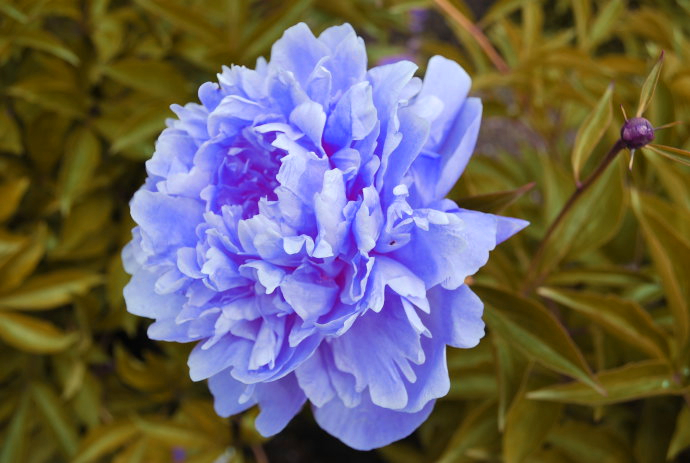
An Overview of Peony Cultivation Methods and Precautions
Peony Cultivation Methods
1. Peony planting time: Peonies prefer sunlight and are cold-hardy. They require cool temperatures and fear heat, growing poorly during high summer temperatures. Autumn is the best period for planting peonies.
2. Soil: For ground planting, choose a sunny spot with high terrain and good drainage. Never plant in low-lying areas prone to water accumulation. Peonies have fleshy roots, so when planting, choose loose, fertile, slightly acidic sandy soil. They are not suitable for growing in alkaline soil. If the soil is too alkaline, it will cause leaf yellowing and even shrinkage and death.
3. Cultivation points: For open-field cultivation, apply farmyard manure and deep plow, then rake fine and form high beds. Generally, the bed height is 10-15 cm, the bed width is 70 cm, and the length is unlimited. The planting spacing is 80 cm. When planting, dig holes according to the length and size of the root system, taking care that the roots spread out and are not planted too deep; cover with soil to about 4-5 cm above the terminal bud. After planting, water thoroughly once and mound soil for overwintering.
4. Fertilizer and water management: Apart from natural rainfall, ground-planted peonies do not need frequent watering. Usually, water appropriately only a few times before and after flowering when water demand is highest and during spring drought, to supplement the lack of soil moisture. Do not water too much each time. Topdressing should be controlled, with three applications per year. The first is when new shoots rapidly emerge and leaves and flower buds are extending, mainly applying quick-acting fertilizer, known as flower-promoting fertilizer.
5. Shaping and pruning: To make peony flowers abundant and colorful and to grow robustly, shaping and pruning are very important. Peony shaping mainly includes trunk establishment, branch pruning, bud removal, bud thinning, and removal of spent flowers. Peonies can be shaped for trunk establishment after 2-3 years of planting. For varieties with particularly strong and vigorous growth, they can be pruned into single-trunk peonies. For varieties with weak growth and few branches, generally prune thin and weak branches and retain strong branches.
6. Pest and disease control: Common peony pests and diseases include brown spot disease, anthracnose, rust disease, root rot, and root-knot nematode disease, as well as longhorn beetles, red spiders, scarab beetles, mole crickets, etc. Among these, brown spot disease, anthracnose, and rust disease are fungal diseases. Pest and disease control should focus on early prevention. Once pests or diseases occur, according to the degree of occurrence, follow the above-mentioned dosage, appropriately shorten the spraying interval, and increase the number of applications.
Peony Cultivation Precautions
After planting, peonies should not be frequently transplanted, otherwise the roots will be damaged, affecting growth and flowering. For peonies to grow well, reasonable fertilization is needed each year. After each fertilization, water thoroughly and immediately loosen the soil to reduce moisture evaporation. During the rainy season, cultivate and weed frequently.
For potted peonies, after Frost's Descent, cut off withered branches and leaves to prevent pests and diseases. During overwintering, there is no need to move them indoors; place them on a balcony or under the eaves in a sunny spot, and just ensure the potting soil does not become too dry.
Before peonies bloom, once side buds appear, they can be removed promptly to concentrate nutrients and promote larger and more beautiful terminal buds. After flowers fade, if you do not plan to propagate by seed, cut off the flower stems at any time to prevent seed formation and nutrient consumption.
An Overview of Red Peony Root Facts and Appreciation of Red Peony Root Images
Red peony root is the root of plants in the Ranunculaceae family such as Paeonia lactiflora, Paeonia obovata, and Paeonia veitchii. It is harvested in autumn; the rhizome, fibrous roots, and branch roots are removed, the soil is washed off, and when sun-dried to half-dry, the roots are tied into bundles by size and then sun-dried until fully dry. Do you know about it? Today we will briefly introduce some facts about red peony root.
.....
An Overview of Red Peony Root Facts
Red peony root is the dried root of plants such as Paeonia obovata. It is cylindrical, with both ends nearly equal in thickness, slightly curved, 10-36 cm long, and about 6-19 mm in diameter. The surface is dark brown or dark brownish, rough, with transversely raised lenticels and root scars, and with coarse and deep longitudinal wrinkles. When rubbed by hand, the outer bark easily falls off, revealing a white or pale brown cortex.
Red peony root is hard and brittle, easily broken. The cross-section is flat, powdery white or yellowish-white; the cortex is narrow and somewhat pinkish; the central pith is small; the xylem rays are obvious, sometimes with fissures. It has a slight fragrance and a slightly bitter and astringent taste. Those with thick and long roots, outer bark that easily falls off, coarse and deep wrinkles, white cross-section, and high powdery content are considered best. The root of Paeonia lactiflora contains paeoniflorin. The root of Paeonia obovata contains volatile oil, fatty oil, resin, tannins, sugars, starch, mucilage, proteins, etc. It also contains about 0.92% benzoic acid.
.....
.....
Red Peony Root Growing Environment
It is mainly produced in Inner Mongolia, Hebei, Liaoning, Heilongjiang, and Jilin. It is also produced in Shaanxi, Shanxi, Gansu, Qinghai, Hubei, Sichuan, Guizhou, Yunnan, and other places. Among these, the red peony root produced in Northeast China, North China, and Northwest China is mainly the root of Paeonia lactiflora, with part being the root of Paeonia obovata. The red peony root produced in the southwestern region is mainly the root of Paeonia veitchii.
.....
.....
Main Value of Red Peony Root
Red peony root is used medicinally and has the effects of nourishing blood and regulating menstruation, cooling blood, and relieving pain. Red peony root is sour, bitter, and cool. It invigorates blood and disperses stasis, clears the liver, and relieves pain. It is used for blood stasis abdominal pain, amenorrhea, dysmenorrhea, and chest and hypochondriac pain.
[Korean medicine] Sanzaya, Taobaizha, Gaisan: the root mainly treats irregular menstruation, red and white vaginal discharge, amenorrhea, blood stasis abdominal pain, chronic enteritis, diarrhea and dysentery, gastric spasm, intercostal neuralgia, joint swelling and pain, carbuncle swelling and sores, etc.
[Korean medicine] Goushen, Paeonia obovata: the root is used for irregular menstruation, red and white vaginal discharge, amenorrhea, blood stasis abdominal pain, chronic enteritis, diarrhea and dysentery, gastric spasm, intercostal neuralgia, joint swelling and pain, carbuncle swelling and sores, etc. The root mainly treats irregular menstruation, red and white vaginal discharge, amenorrhea, blood stasis abdominal pain, chronic enteritis, diarrhea and dysentery, gastric spasm, intercostal neuralgia, joint swelling and pain, carbuncle swelling and sores, etc.
[Miao medicine] Paeonia ou: the root treats menstrual abdominal pain.
.....
Article Summary
Peony petals are obovate, and the flower disk is shallow cup-shaped. Its root, made into traditional Chinese medicine, has medicinal value for relieving spasms and pain. It ranks first among herbaceous flowers. It is hailed by people as the “Flower Fairy” and “Flower Minister,” and is also called the “May Flower Goddess.” Because it has served as the flower of love since ancient times, it is now honored as the representative flower of Qixi Festival. Today our introduction to red peony root among peonies ends here. Thank you all for reading.