Peony pest and disease control methods to help you grow peonies easily
During the cultivation of peonies, improper care and other reasons often cause peonies to suffer from pest and disease attacks. Therefore, the editors of Yiqizhuangxiu.com remind you that when growing peonies, you must first master certain relevant knowledge. Below, let the editors of Yiqizhuangxiu.com give you a detailed look at what peony pest and disease control methods there are.
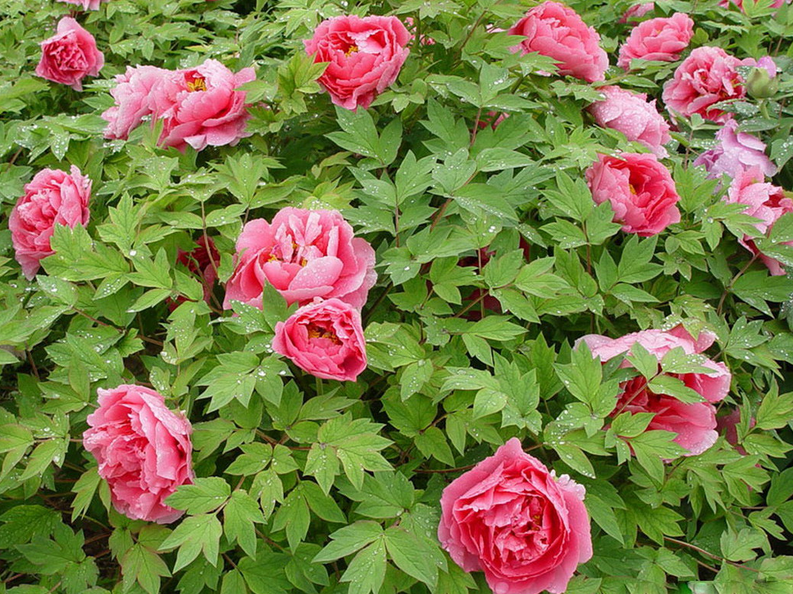
Peony pest and disease control methods to help you grow peonies easily
Peony flower pest and disease control methods
I. Diseases
1. Brown spot disease: Strengthen cultivation management, prune in a timely manner, and ensure the plants have ventilation and light, so as to avoid excessive moisture and the breeding of pathogens; promptly cut off diseased leaves when found and burn them immediately to reduce sources of infection; during the disease period, spray 50% carbendazim wettable powder 1000x solution, or 80% zineb wettable powder 500x to 700x solution, or 80% mancozeb wettable powder 400x to 600x solution, spraying once every 10 to 15 days. The solution should be sprayed evenly on both the front and back of the leaves for a notable effect; in late autumn, diseased leaves and diseased plants should be collected and destroyed, and in winter the nursery should be cleaned, then 7x to 10x lime-sulfur mixture should be used to spray the stems and trunks of the plants to kill the pathogens.
2. Rust disease: When planting peonies, choose a site with high terrain and good drainage; before the disease occurs, spray an equal-amount Bordeaux mixture at 160x dilution, or scatter 400x zineb around the plants; when the disease occurs, use lime-sulfur mixture, triadimefon, and other treatments for control; promptly remove and burn diseased plants.
3. Gray mold: Remove diseased plants and burn them to reduce sources of infection; in severely affected areas, practice crop rotation or deep plowing of the nursery land; during the growing season, pay attention to ventilation and light to enhance plant resistance; in the early stage of the disease, spray 0.1% equal-amount Bordeaux mixture once every 10 to 14 days, generally for 3 to 4 consecutive sprays.
4. Violet root rot: Choose dry, well-drained, and loose soil for planting, and apply decomposed organic fertilizer; when diseased plants are found, immediately remove and burn them, or scrape off the rotten parts, then disinfect with 4 to 5 degree lime-sulfur mixture or mercuric chloride, and replant. Disinfect around the affected diseased plants with lime or sulfur; in the early stage of the disease, pour 5% amobam 1000x solution onto the roots of diseased plants, 500 to 1000 milliliters per plant, and cover with soil immediately after pouring; when dividing and planting in autumn, soak the roots in 0.1% copper sulfate solution for 3 hours, then rinse clean with water before planting.
II. Pests
1. Cottony cushion scale: Strengthen plant quarantine, and immediately eliminate pest infestations when found. They can be gently brushed off with a soft brush, or the affected branches and leaves can be cut off and burned; during the larval hatching period, spray fluoroacetamide, and during the dormant period spray 3 to 5 degrees Baume lime-sulfur mixture; protect and release natural enemies, such as the Australian ladybird beetle and the large red ladybird beetle.
2. Red spider mite: Weed and compost to eliminate overwintering eggs and reduce the initial pest population; when red spider mites are abundant, spray 20% tetradifon wettable powder 1000x solution (which can be mixed with other acaricides) or 40% dicofol emulsion 2000x solution, or 40% omethoate 1200x to 1500x solution. To kill eggs, use 0.3 degree Baume lime-sulfur mixture; protect and use natural enemies such as ladybird beetles, lacewings, and thrips.
3. Scarab beetles: Take advantage of their death-feigning behavior and manually capture and kill the adults; use sex attractants to trap and kill them; when the pest infestation is severe, spray 1000x omethoate solution.
4. Root-knot nematodes: This pest is an underground pest. When the damage is severe, crop rotation can be practiced, weeds in the nursery should be cleared, and deep plowing should be done once every half month so that the nematodes die from drought; spray 80% dibromopropane, 1.5 kilograms per mu.
5. Mole crickets, cutworms, and white grubs: Deep plow the nursery land at the appropriate time, cultivate carefully, and promptly clear weeds; apply decomposed organic fertilizer; pour 500x to 800x omethoate solution at the roots; when damaged stems and leaves are found, dig open the soil and manually capture and kill the larvae or adults.
What are the common pests and diseases of peonies, and the control methods for common peony pests and diseases
Peonies prefer a warm, cool, dry, and sunny environment. They like sunlight and also tolerate partial shade, tolerate cold, tolerate drought, tolerate weak alkalinity, are averse to waterlogging, fear heat, and fear direct scorching sun. Perhaps for those who often grow peonies, these things are no longer difficult, but when it comes to peony pests and diseases, some may still be at a loss. So what are the common pests and diseases of peonies? Below is an introduction to the control methods for common peony pests and diseases.
What are the common pests and diseases of peonies
The main pests and diseases of peonies are: gray mold, brown spot disease, anthracnose, ring spot disease, branch blight, and root-knot nematode disease.
1. Harm of peony gray mold
Gray mold is one of the important peony diseases in the world, and it also occurs from time to time in China, being relatively serious in places such as Shanghai and Zhengzhou. The disease can occur throughout the peony growing season and is severely harmful to young and tender plants, causing seedlings to lodge and wilt.
Control methods for peony gray mold
Method 1. Reduce sources of infection: In autumn, clear away dead branches and fallen leaves of diseased plants; when the disease occurs in spring, remove diseased buds and diseased leaves, and deeply bury diseased residues.
Method 2. Chemical control during the growing season: Once the disease occurs during the growing season, the following agents can be used for spray control: 1% equal-amount lime Bordeaux mixture, 70% thiophanate-methyl 1000x solution, 65% zineb 500x solution, or 50% dichloran 1000x solution. Spray once every 10 to 15 days, for 2 to 3 consecutive sprays.
Method 3. Strengthen cultivation management: The planting density should be moderate; drain promptly after rain, and do not mound wet soil at the base of the plant clumps; implement crop rotation in severely affected areas; plant disease-free seedlings, and the seedlings can be soaked in 65% zineb 300x solution for 10 to 15 minutes.
2. Harm of peony brown spot disease
Brown spot disease, also called red spot disease, is a common worldwide disease of peonies. It often causes premature leaf withering and affects the growth vigor of peonies.
Control methods for peony brown spot disease
Method 1. Reduce sources of infection: In autumn, thoroughly clear away diseased residues on the ground; before the plants sprout in early spring, spray 50% carbendazim 600x solution or 3 degree lime-sulfur mixture to kill pathogens on the plants.
Method 2. In chemical control during the growing season: after the disease occurs, spray 50% carbendazim 1000x solution, or 65% zineb 500x to 600x solution, once every 7 to 10 days, for 3 to 4 consecutive sprays.
Method 3. Strengthen cultivation management: Moderate planting density, and apply organic fertilizer and compound fertilizer.
3. Harm of peony anthracnose
Anthracnose is a common disease of peonies in China. Anthracnose often causes peony leaf spots to wither and merge into patches, diseased stems to twist, and young tender branches to die.
Control methods for peony anthracnose
Method 1. Reduce sources of infection, with the same method as for peony brown spot disease.
Method 2. Chemical control during the growing season: In the early stage of the disease (May to June), spray 70% thiram 500x solution, or 1% equal-amount lime Bordeaux mixture, or 65% zineb 500x solution. Once every 10 to 15 days, for a total of 2 to 3 sprays.
4. Harm of peony ring spot disease
Ring spot disease, also known as white star disease, is also a common leaf spot disease of peonies, mainly harming the leaves. At the initial onset, the lesions on the leaves are net-shaped or nearly circular, 4 to 10 mm in diameter, numerous, light brown to grayish white, with brown edges. Old lesions have obvious concentric rings, and gray-black mold-like substances grow in the center of the lesions, namely the fungal fruiting bodies.
Control of peony ring spot disease
Method 1. Reduce sources of infection: Promptly clear away fallen leaves of diseased plants, and before the plants sprout, spray 3 degree lime-sulfur mixture to kill pathogens on the peony plants.
Method 2. Chemical control during the growing season: Spray 1% equal-amount lime Bordeaux mixture, or 50% thiram 800x solution, or 65% zineb 500x solution. After the disease occurs, spray 2 to 3 consecutive times (once every 10 to 15 days).
Method 3. Strengthen cultivation management: Suitable planting density and good ventilation and light.
5. Harm of peony branch blight
Peony branch blight infects parts such as the stems and branches of peonies. On the stems, the disease appears as light brown lesions that gradually expand into reddish-brown elliptical lesions. The lesions can encircle the stem, causing the branches and trunks above the lesions to die quickly.
In autumn, small black dots appear on the lesions, namely the pathogen's pycnidia. Buds become brown when infected, and dead buds can remain on the plant for a long time. The disease is caused by fungi.
Conditions for onset: The pathogen mainly invades through wounds. Many wounds and weak plant growth favor the occurrence of the disease.
Control methods for peony branch blight
(1) Strengthen cultivation management, enhance growth vigor, reduce wounds, and improve disease resistance. (2) Chemical control: refer to peony brown spot disease.
6. Harm of peony root-knot nematode disease
Peony root-knot nematode disease occurs relatively commonly and has been reported both in China and abroad. In the past 10 years or more, root-knot nematode disease has become the most important disease of peony roots in China, causing early leaf fall. When the disease is severe, all peony leaves fall off in August. Occurring year after year, the plants become dwarfed, with small leaves, small flowers, or no flowering.
Control methods for peony root-knot nematode disease
Method 1. Strengthen quarantine to prevent the expansion of affected areas: In introduction work, diseased seedlings must be treated when found: soak in 0.1% isofenphos-methyl for 30 minutes, or soak in warm water at 48 degrees C to 49 degrees C for 30 minutes.
Method 2. Field chemical control: Apply 15% aldicarb granules in holes, 5 g to 10 g per plant, with holes about 10 cm deep. Apply in early May (Beijing), once a year.
Method 3. Disease prevention and control methods: Disinfect with heat or pesticides. Commonly used pesticides include dibromoethane, aldicarb, fenamiphos, and others. Soil can also be disinfected with drying and high temperature; for example, after the potting soil is dried for 30 days (with a moisture content of 0.17%), no nematodes survive.
How to plant peonies: cultivation methods for peonies
There are many flower-loving friends around us, and peonies are one of the varieties everyone loves very much. How are peonies planted? Below, we will tell you the cultivation methods for peonies.
1. Temperature and light
Sufficient sunlight is relatively beneficial to peony growth, but they do not tolerate the scorching sun in summer, and temperatures above 25 degrees C will cause the plants to enter a dormant state. The suitable temperature for flowering is 17 to 20 degrees C, but before flowering they must undergo low-temperature treatment at 1 to 10 degrees C for 2 to 3 months. They can tolerate low temperatures down to -30 degrees C, but in cold northern regions appropriate cold protection measures are needed in winter to avoid freezing damage. The hot and humid weather in the south is extremely unfavorable to peony growth, so cultivating peonies in the south requires providing them with specific environmental conditions in order to see the wonderfully beautiful peony flowers.
2. Watering
Whether watering is done properly is a key issue in the success or failure of potted peonies. After being moved outdoors in early spring, apply fertilizer once first, then water thoroughly. After the water seeps in, loosen the soil and maintain the moisture of the potting soil until buds appear. If the potting soil is too dry, a small amount of water can be given again until flowering. After that, it is best to keep the potting soil moist regularly. During continuous rainy days in summer, promptly pour out accumulated water in the pot to prevent root rot.
3. Fertilizing
Peonies are fertilizer-loving plants. To make peony flowers large and brightly colored and avoid the phenomenon of "flowering every other year," attention must be paid to reasonable fertilizing. Newly planted peonies do not need fertilizer within half a year, and can be fertilized only after half a year. Generally, fertilizer needs to be applied at least 3 times each year. The first is "pre-flowering fertilizer," applied after the soil thaws when the leaves and flower buds are extending, together with watering "thawing water." The second is "post-flowering fertilizer," applied within half a month after the flowers fade; this fertilizing has a relatively large effect on restoring the plant's growth condition and promoting flower bud differentiation. Apply the third fertilizer before winter; this fertilizing plays an important role in enhancing growth in the coming spring. For the first and second fertilizing, quick-acting fertilizers are used, while the third fertilizing mainly uses slow-release base fertilizer.
4. Pruning
To ensure that peonies have a beautiful plant shape, abundant flowering, and robust growth, shaping and pruning are also needed. Pruning of potted peonies can be divided into two types: winter pruning and spring-summer pruning. In spring, for potted peonies, select and retain branches and buds, wipe away excess buds sprouting at the root crown, cut off inward-growing branches, crossing branches, and heavily blooming branches, and thin out weak branches and excess branches to ensure a beautiful plant shape and ventilation and light. In summer, faded flowers can be cut off, and after leaf fall in late autumn, diseased and dead branches and leggy branches can be cut off.
5. Pests
The common disease of peonies is brown spot disease. At the initial onset, yellow-green spots appear on the leaf surface, and later gradually expand to form brown or black patches. Bordeaux mixture can be sprayed 1 to 2 times per month, and if the condition is severe, it can be sprayed 3 times. Leaves with heavier infection should be cut off and burned to prevent summer spread. There is also a root rot disease that specifically harms the roots of peonies. The symptoms are that the roots turn black and rot, hindering growth, and in severe cases can cause the entire branch to die. To prevent this disease, carefully inspect when dividing and planting; if diseased roots are found, they must be cut off and burned, and some sulfur powder should be sprinkled into the planting hole when planting. The common pest is the cottony cushion scale, which can be sprayed with 40% omethoate emulsion 1500x solution. In winter or early spring, applying lime-sulfur mixture to the lower part of the stems and trunks also has a good control effect.