An Analysis of the Benefits and Cultivation Methods of Gladiolus
Gladiolus is also called sword lily, and by other names such as bianzhulian, shiyangjin, and shisantaibao. It has diverse flower colors and beautiful flower shapes, and is deeply loved by people. The editor of Yiqizhuangxiu.com reminds you that when cultivating gladiolus, you must first master some relevant knowledge. Below, let the editor of Yiqizhuangxiu.com give you a detailed understanding.
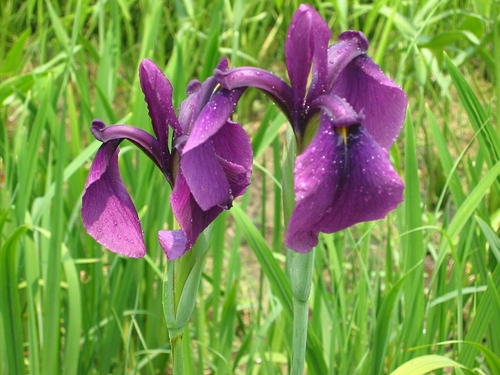
The Benefits of Gladiolus: An Analysis of Gladiolus Cultivation Methods
Gladiolus Cultivation Methods
1. Soil: It likes fertile, deep sandy soil and requires good drainage. Sandy sloping soil with good drainage is most suitable, with a pH of 5.6-6.5 being appropriate. It should not be planted in heavy clay soil or places prone to waterlogging.
2. Watering: Gladiolus is a flower that needs a lot of water. Watering in a timely manner and keeping the soil moist are important measures to encourage it to bloom more. If there is hot, high temperature, spray in time to increase humidity and lower the temperature. After rain, attention should be paid to drainage.
3. Temperature: The optimum temperature for growth is 20-25°C during the day and 10-15°C at night. When the temperature is higher than 27°C, growth is hindered and the petals are easily scorched. Below 10°C, growth is slow.
4. Sunlight: Gladiolus is not tolerant of shade and is a long-day plant. The most suitable is 16 hours of light per day. Cut flower varieties are greatly affected by light. Sufficient sunlight makes them grow strong and sturdy with strong stress resistance, and the flower colors are bright and long-lasting. However, in hot summers, strong direct sunlight should also be avoided.
The Benefits of Gladiolus
The benefits of gladiolus: 1. Ornamental. Gladiolus is a perennial herbaceous flower with beautiful flower shapes, bright colors, and petals like thin silk, making it very endearing. Some bloom naturally in spring and some in summer. Its role in decorating and beautifying the home for appreciation is quite prominent.
The benefits of gladiolus: 2. Gift-giving. Gladiolus is a famous cut flower material and indispensable for festivals and celebrations. In addition, the flowers of gladiolus open gradually from bottom to top, symbolizing rising step by step, making it a very commonly used flower material in congratulatory flower baskets and a good material for gifts.
The benefits of gladiolus: 3. Medicinal use. Gladiolus can be enjoyed ornamentally, given as a gift, and also used medicinally. The corms of gladiolus are used as medicine, mainly to treat bruises, swelling, and pain as well as carbuncles. The stems and leaves can be used to extract vitamin C, and its medicinal value is not low either.
An Analysis of the Cultivation Techniques of Gladiolus, a Common Choice for "Cut Flowers"
Among the flowers commonly used in bouquets and flower baskets, gladiolus is one of the most commonly used cut flowers. It is one of the more famous cut flowers in the world, mainly because its flower colors are relatively bright and it also has a relatively long flowering period, with strong decorative value. It can not only be used as a cut flower, but can also be used to arrange flower beds and for potted planting on balconies.
Ecological Habits and Flowering Period Regulation
Gladiolus likes warmth and has a certain degree of cold tolerance. It is not tolerant of high temperatures and especially avoids muggy heat. A climate with warm winters and cool summers is most suitable. The critical low temperature for growth is 3°C. At 4°C-5°C, the corm can begin to sprout and grow; the optimum growth temperature is 20°C-25°C during the day and 10°C-15°C at night. As long as there are 4-5 months in a year with suitable growing conditions, it can be cultivated. In China, it is usually cultivated as a spring-planted bulbous plant, blooming in summer and dormant in winter, with a dormancy period generally of 30-90 days. Gladiolus likes deep, fertile, and well-drained sandy loam, and is not suitable for growing in heavy clay soil or low-lying waterlogged places. The soil pH is best at 5.6-6.5, and sufficient sunlight is required. Gladiolus is a long-day flower. Under long-day conditions, flower bud differentiation is promoted, while under short-day conditions, flowering is promoted. The corm lifespan of gladiolus is 1 year, and it is renewed once each year. While new corms are produced, cormels are also formed. After the mother corm shrinks and dies, the new corm and cormels separate naturally from the mother corm.
Flowering period control of gladiolus is relatively easy. Through corm cold storage, sowing in stages, and then using greenhouses, hotbeds, and cold frames for cultivation and light regulation, year-round flower supply can be achieved. The key is to keep the corms in a low-temperature, dry environment, control their flower buds and rooting, and keep them in a dormant state, then take them out for planting when needed.
Varieties
(1) Red series: Hector: fresh flesh color; Optimist: vermilion; Ballerina: bright scarlet; Baleado: bright scarlet with purple spots; Red Light: bright red; Flame Trademark: bright scarlet red.
(2) Peach series: Elisha Wiscombe: vine peach background with white spots; Friendship: fresh peach color with a white center.
(3) Yellow series: Spotlight: bright yellow with a red center; Gold: bright deep yellow; Meg: bright yellow; Gold Bank: pure yellow.
(4) White series: Snow White: pure white; White Gold: creamy white; Broken Wave White Edge: white; Peggy White: pure white.
(5) Purple series: Concaira: blue; Spring: purple.
Propagation and Cultivation
Gladiolus propagation is mainly by corm division, but cut-corm sowing and tissue culture methods can also be used for propagation. The excellent seed corms used for cut flower production are all capable of flowering and free of pests and diseases.
Division method: Remove the new corms and cormels that naturally form on the mother corm and plant them separately. Usually, new corms can bloom normally in the second year; cormels need 1-2 years of cultivation to reach the required standard for use in cut flower production.
Cutting method: To accelerate propagation, cut the seed corm lengthwise into several parts, but each part must carry more than 1 bud and part of the basal plate. Note that the cut surfaces should be coated with plant ash to prevent rotting, and planting should be done after the cuts have dried.
Sowing method: This method is often used when breeding new varieties and rejuvenating old varieties. Generally, after the seeds mature and are harvested in summer and autumn, they are immediately sown in pots, with a relatively high germination rate. In winter, move the seedlings into a greenhouse for cultivation (or sow directly in a greenhouse in autumn). In the second spring, divide and plant them in the open field, and by summer some plants can bloom.
Tissue culture method: Use lateral buds on the flower stem or corm as explants for tissue culture to obtain sterile corms. Tissue culture methods can be used for virus elimination and rejuvenation propagation of gladiolus. For large-scale cut flower planting of gladiolus, ridge planting or trench planting is usually used. For trench planting, the trench spacing for large corms is 40 cm-60 cm, and the plant spacing is 10 cm-15 cm; for ridge planting, the row spacing for large corms is 20 cm-30 cm, and the plant spacing is 10 cm-15 cm. Before cultivation, apply 1500 kg-2250 kg of decomposed compost, 300 kg of cake fertilizer, 120 kg of superphosphate, and 120 kg of plant ash per 0.1 hectare as base fertilizer. Before use, seed corms are best disinfected. The outer membrane can be removed, then they can be soaked in clean water, and after 5 minutes soaked in a 1000-fold mercuric chloride dilute solution or 80-fold formalin solution for 30 minutes. When cultivating under conditions with heat preservation facilities, attention should be paid to maintaining fresh air and dry ventilation, especially during flower bud differentiation and inflorescence growth. During the seedling stage, the temperature should be maintained at 10°C-15°C, and later as the plant grows it should be raised to 20°C-25°C, with correspondingly lower temperatures at night. Sufficient sunlight and 14 hours of sunlight per day must be maintained; if insufficient, artificial lighting should be added, otherwise blind flower phenomenon is likely to occur. In addition, varieties with strong adaptability, early flowering, and early corm maturity should be selected for planting.
Harvesting and Fresh-keeping of Cut Flowers
The most suitable time for harvesting gladiolus is when one or two small flowers at the base of the spike show color and are about to open but have not yet opened. If harvested too early, the plant's own sugar content is low, affecting cut flower quality and causing all the small flowers on the whole plant to fail to open fully from bottom to top; if too late, the flowers have already opened, affecting storage and transportation as well as ornamental vase life. During the day, harvesting before 10 a.m. is preferable. In order to nourish the corm, 2-3 intact leaves should be retained after cutting. After harvesting, the flower branches are graded and packaged according to variety, color, and grade standards, in bunches of 10 or 12, and then packed in cardboard boxes or straw packaging for market. Before transportation, treat with a 4% sucrose solution for 24 hours, or treat with silver nitrate at a mass fraction of 1000×10-6 for 10 minutes, to increase the sugar accumulation of the flower branches themselves and control ethylene production. Vase fresh-keeping solutions usually consist of a mixture of sucrose, 8-hydroxyquinoline citrate, silver nitrate, and aluminum sulfate.
The Benefits and Effects of Sword Lily: Its Corm Can Be Used as Medicine (Can Treat Bruises, Swelling, and Pain)
Sword lily is a potted flower suitable for growing indoors. It is not only easy to grow, but its flowers are also very beautiful, so it is deeply loved by people. Earlier we discussed how to grow sword lily, when sword lily blooms, and what to do when sword lily leaves turn yellow or black. Now let us look at the benefits and effects of sword lily. Sword lily not only has medicinal effects but can also be given as a gift.
1. The Benefits and Effects of Sword Lily: It Can Be Used as Medicine to Treat Bruises, Swelling, and Pain
Whether in flower shops or flower markets, sword lily can always be seen. Sword lily has many colors and is more eye-catching than other flowers. When it comes to the benefits and effects of sword lily, its ornamental value is obvious to all. Sword lily is more than suitable for decorating the home. Secondly, it also has medicinal effects.
1. Medicinal effects
When discussing the benefits and effects of sword lily, another major effect is that it can be used as medicine. Sword lily can be enjoyed ornamentally, given as a gift, and also used medicinally. The corm of sword lily is used as medicine, mainly to treat bruises, swelling, and pain as well as carbuncles. The stems and leaves can be used to extract vitamin C, and its medicinal value is not low either.
2. Ornamental effect
Sword lily is a perennial bulbous flower with beautiful flower shapes, bright colors, and petals like thin silk, making it very endearing. Moreover, people can appreciate the beauty of sword lily in different seasons. Those that bloom naturally do so in spring and summer, while artificially controlled ones can bloom in all four seasons. Therefore, using gladiolus to decorate the home is more than suitable.
3. Cut flower material
Sword lily is a very famous cut flower material and one of the world's four major cut flowers. Festivals and celebrations naturally cannot do without it. The flowers of gladiolus open one after another from bottom to top, symbolizing rising step by step. It is relatively common in congratulatory flower baskets and is a very good material for gifts. In Western countries, it is indispensable on occasions such as return gifts, banquets, and mutual visits between celebrities.
4. Pollution detection
Sword lily is very sensitive to hydrogen fluoride. When the content in the soil is relatively high, its growth will be inhibited. It can be used as an indicator plant for monitoring pollution and is suitable for planting near chemical plants and similar locations. After reading the benefits and effects of sword lily, let us now look at the precautions for cultivating sword lily.
2. Precautions for Cultivating Sword Lily
1. When producing cut flowers in a greenhouse, fluorescent lamps must be used for supplementary lighting, increasing the daily light duration to more than 14 hours. Sword lily should not be continuously cropped. It cannot be planted in the same field year after year; otherwise, the corm will become smaller year by year, and each flower branch will also bear fewer flowers. It should be planted again after an interval of 3-4 years; in greenhouse production, the soil must be changed every year.
2. After planting in spring, it should be watered frequently. Once it suffers drought, the leaf tips will wither and turn yellow. After the flower stem is drawn, it should not suffer drought even more. In rainless seasons, it should be watered at least once a week.
3. If the flower branches are not cut, the flower stems should be cut off in time after flowering to prevent seed formation and allow the new underground corms to develop fully. In late autumn, after the leaves turn yellow and wither, dig out the corms, shake off the soil and dry them thoroughly, then cut off the dead leaves, put them into cardboard boxes or bamboo baskets, and store them dry indoors where they will not freeze for the winter. Do not let them get damp. The above is a complete analysis of the benefits and effects of sword lily. Do you think sword lily is a very practical flower? If you are interested, you can grow a pot at home.