How to grow indoor potted flowers and points to note
Indoor potted flower growing methods, potted flower growing points to note. Which flowers suit which environments also involves particular know-how, and what points should be noted when growing flowers? Follow the official WeChat account "wx17house" and join the editor at Yiqizhuangxiu Network to explore content related to indoor potted flower growing methods and potted flower growing points to note. We hope today's content will be of some help to you.
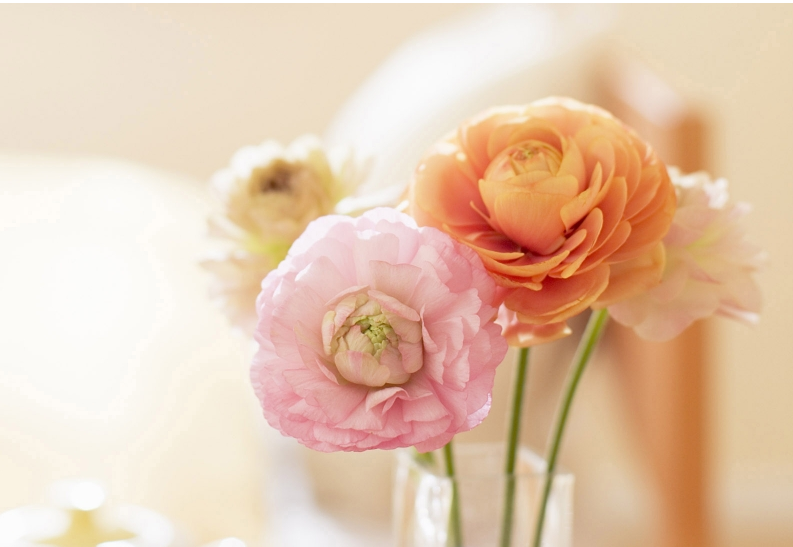
Indoor potted flower growing methods, potted flower growing points to note
Indoor potted flower growing methods
1. Flowers suitable for growing by a south window. If a room has a south window and can receive more than 5 hours of sunlight per day, then the following flowers can grow well, such as spider plant, nasturtium, gardenia, camellia, morning glory, geranium, azalea types, bird of paradise, jasmine, Aglaia odorata, pomegranate, four-season orchid, tulip, narcissus, hyacinth, freesia, winter coral, ornamental pepper, lantana, chrysanthemum, calla lily, coleus, Echeveria, aloe, agave, sago palm, rain lily, sedum, mother of thousands, cactus, cactus ball types, five-needle pine, juniper, etc.
2. Flowers suitable for growing by an east window, such as calla lily, cyclamen, asparagus fern, asparagus, begonia, caladium, camellia, azalea, clivia, Christmas cactus, etc.
3. Flowers suitable for growing by a west window. Climbing flowers that are easy to grow and tolerant of heat and strong light, such as star jasmine, Boston ivy, Chinese trumpet creeper, primrose, Euonymus fortunei, Buddhist pine, etc.
4. Flowers suitable for growing by a north window, including spider plant, purple heart, Monstera deliciosa, Commelina, bamboo palm, English ivy, Peperomia, Chinese evergreen, maidenhair fern, etc.
Points to note
(1) Foliage plants with relatively strong shade tolerance are best. They can be displayed for a longer time. In winter they need to overwinter indoors; in the summer and autumn growing seasons, as long as they are placed in a well-ventilated spot indoors, or rotated between indoors, windowsills, balconies and courtyards, and preferably placed outdoors at night, the plants can grow luxuriantly and stay evergreen all year round.
(2) The growth habit of the potted flowers and the place where they are placed should match appropriately. For example, upright-growing ones, or taller plants, should be placed in lower positions. For some potted flowers with drooping or spreading branches and leaves, they should be placed in higher positions, which creates a sense of three-dimensional beauty.
(3) Consider whether the size of the plant matches the size of the room space. In small rooms, place small potted flowers; they look exquisite and elegant without being vulgar. In larger rooms, some large potted flowers can be placed appropriately, such as rubber tree, Monstera deliciosa, sago palm, etc., making people feel it is beautiful and dignified.
(4) The colors of the potted flowers should coordinate with the colors of the indoor walls and furniture. This can create contrast, reflect overall beauty, and enhance ornamental value. In addition, a suitable purple clay pot, glazed pot, or flower basket or bamboo-woven pot cover can be placed over a clay pot. Also consider the reasonable matching and selection of furnishings such as boxes, stands, small tables and desks.
Indoor potted plants that purify the air, potted flowers suitable for placing indoors
Indoor potted plants that purify the air, potted flowers suitable for placing indoors. Which potted plants are suitable for placing indoors, and which plants purify the air? Follow the official WeChat account "wx17house" and join the editor at Yiqizhuangxiu Network to explore content related to indoor potted plants that purify the air and potted flowers suitable for placing indoors. We hope today's content will be of some help to you.
Indoor potted plants that purify the air, potted flowers suitable for placing indoors
Among indoor plants that purify the air: spider plant
In a room of 8-10 sq m, a spider plant is equivalent to a green, natural air purifier. Data shows that after placing a spider plant in a room for 24 hours, 80% of harmful substances in the room are killed and 86% of formaldehyde is absorbed; at the same time, spider plant can absorb almost all the carbon monoxide and nitrogen peroxide given off by stoves, electrical appliances and plastic products. (Another plant that can efficiently adsorb formaldehyde is English ivy.)
Spider plant is extremely easy to keep alive, has strong adaptability, is drought-tolerant but not cold-tolerant, and likes a moist, semi-shaded environment.
Among indoor plants that purify the air: snake plant
Snake plant is a "pollution-control expert" for the home. Also in a room of 8-10 sq m, one pot of snake plant can absorb more than 80% of indoor harmful gases, and its ability to absorb formaldehyde is extremely strong. In addition, snake plant can release a large amount of oxygen during the day.
Snake plant likes warmth and humidity, is drought-tolerant, and likes light while also tolerating shade.
Among indoor plants that purify the air: aloe
It is not at all an exaggeration to rank aloe at the forefront of indoor plants that purify the air. As the saying goes: "Spider plant and aloe are strong hands; formaldehyde is so scared it hides away." This is the best proof of aloe's effectiveness. Under 24-hour lighting, one pot of aloe can eliminate 90% of the formaldehyde contained in 1 cubic meter of air.
Aloe likes a warm, dry climate, is not very cold-tolerant, and does not tolerate shade. Aloe is not only a preferred indoor plant for purifying the air, but also has strong medicinal value, such as sterilizing and beauty benefits.
Among indoor plants that purify the air: English ivy
English ivy has the highest formaldehyde adsorption capacity among many plants. One pot of English ivy can eliminate 90% of benzene in a room of 8 to 10 sq m, can deal with bacteria and other harmful substances brought in from outdoors, and can even absorb dust that is difficult for even a vacuum cleaner to pick up.
English ivy likes shade and humidity, is not cold-tolerant, and has strong survival ability.
Among indoor plants that purify the air: agave
Agave can eliminate 70% of benzene, 50% of formaldehyde and 24% of trichloroethylene in a room of about 10 sq m.
Agave likes a warm, dry environment with plenty of sunlight. It is slightly cold-tolerant, relatively shade-tolerant, and strongly drought-tolerant.
Special note: Because plants respire at night and release carbon dioxide, bedrooms should not have too many plants, otherwise sleep quality may be affected. For different rooms, such as studies, living rooms and bedrooms, the pollution produced also differs because the decoration materials used are different, so plants with different functions can be chosen. In addition, plants should be selected and placed according to the size of the room. Generally, for a room of about 10 sq m, placing two plants 1.5 m tall is relatively suitable.
Potted flowers suitable for placing indoors
1. Star jasmine
Variegated star jasmine is an evergreen woody vine with inconspicuous lenticels on the stems. Young branches, young petioles and the undersides of leaves are covered with short soft hairs, while old branches and leaves are hairless. It is a light-loving, strongly shade-tolerant plant that likes environments with relatively high air humidity. It can be used as a year-round "flowering" plant for various flower border arrangements, and it is also an excellent material for potted plants.
Function: Strong adaptability. It is not strict about soil, has a strong ability to absorb and retain dust, can purify the air and stays evergreen all year round. Its flowers are as pure white as snow, with a striking delicate fragrance. It can also be planted in courtyards and parks, and can also be used for greening in heavily polluted factory areas. It is an ideal groundcover plant for color bands and color blocks.
2. Thyme
The fragrance of thyme is the paradise of dawn, because it smells fresh and charming, natural and comfortable, as pure and beautiful as paradise, and it is a symbol of courage.
Function: It can strengthen the nerves and activate brain cells, thereby improving memory and concentration. It lifts low moods, feelings of exhaustion, and the frustration of defeat. It is said to release a confined mind and soothe emotional wounds.
3. Chrysanthemum
Chrysanthemum is one of the important flowers in landscape applications, widely used in flower beds, groundcovers, potted flowers and cut flowers, etc. Some are used medicinally or as cooling summer drinks, such as Chuzhou chrysanthemum and Hangzhou white chrysanthemum.
Function: It has a cooling and calming effect, and treats headaches, dizziness, high blood pressure, nervous headaches and conjunctivitis, etc. In addition, the chrysanthemum's flowers in a thousand postures and its character of braving frost and snow, standing alone in cold autumn and fearing no severe cold, make people love it all the more.
4. Jasmine
Jasmine, an evergreen small shrub type, has emerald-green leaves, pure white flowers and a rich fragrance, and is a common fragrant ornamental flower for courtyards and pots. It is mostly used in pots to adorn rooms, elegant and pleasant, and can also be processed into decorations such as flower garlands. The deciduous vine types, mostly yellow and fragrant white flowers, are one of the best ways for many households abroad to decorate a winter garden.
Function: Jasmine is richly fragrant and jasmine oil can be extracted; it is a raw material for making essences, and jasmine oil is very valuable, comparable to the price of gold. Jasmine flowers, leaves and roots can all be used medicinally. Jasmine flowers can also be used to scent tea, or their juice can be steamed and extracted to replace rose water. Places south of the Yangtze such as Suzhou, Nanjing, Hangzhou and Jinhua have long produced it as a tea-scenting fragrance.
5. Rose
Rose, also called thorn rose, lingering flower, assassin, heart-piercing rose. It is a shrub of the genus Rosa in the family Rosaceae. The flowers are bright red with a velvety sheen, high-centered and rolled at the edges, very beautiful in shape, with hard petals, small dark green leaves and thick texture. The branches are stiff and upright, slightly curved, with many thorns.
Function: The flowers are mainly used for food and for extracting rose essential oil. Rose oil is more valuable than an equal weight of gold and is used in cosmetics, food, fine chemicals and other industries. In addition, it symbolizes beautiful and pure love; different colors represent different meanings, and it is a key flower material for expressing love. It can be used on any occasion, and is the special flower material for Valentine's Day.
6. Aglaia odorata
Aglaia odorata is a flower plant people love, with many dense branches; pinnately compound leaves alternate, with 3 to 5 leaflets, glossy; the flowers are small like millet, golden yellow, polygamous and dioecious, with axillary panicles; new shoots bloom, and the peak flowering period is summer and autumn; when blooming, it is richly fragrant, with a scent like orchid.
Function: Potted Aglaia odorata can be displayed in living rooms, studies and porches. When in bloom, its fragrance assails the senses, fresh and elegant, soothing to body and mind. As an edible flower, it can be used to extract essence. In southern courtyards, Aglaia odorata is also an excellent landscape tree. It symbolizes that where there is love, life will bloom.
Indoor potted flowers, potting key points and points to note
Origin of potted plants: Potted plants evolved from China's traditional garden art. As for the cultivation of ornamental plants, it originated from ancient garden landscaping, creating gardens by imitating natural mountain and water scenery. The Xia had Yao Can, the Shang had Lutai, and the Zhou had Lingtai.
Classification by tree species and ornamental use. Common potted tree species and ornamental classification table
(1) Trees. Evergreen. Broadleaf: banyan, red banyan, ivory tree, Buddhist pine, Chinese box orange
Conifers: black pine, red pine, Japanese red pine, five-leaf pine, juniper, true cypress, Chinese fir, Taiwan cypress, Hinoki cypress, horsetail tree, spruce, dragon juniper, golden cypress
Mixed trees. Flowering trees: plum blossom, azalea, flowering pomegranate, stump, wisteria, camellia, flowering quince, silk tree, longevity plum, Japanese pieris, crabapple, apricot blossom, crape myrtle
Fruiting: pear, pomegranate, gardenia, bergamot, mulberry, hairy persimmon, dwarf apple, zhuangyuan red, kumquat, cherry
Foliage and cold-resistant trees: maple, trident maple, smoke tree, jade leaf, Chinese pistache, zelkova, elm, hackberry,
ginkgo, golden willow, weeping willow, tamarisk, silk tree, stone plum, Sageretia thea
(2) Bamboo and grasses. Bamboo types: black bamboo, square bamboo, fernleaf bamboo, moso bamboo, Mengyuan bamboo, golden bamboo, bottle bamboo, human-face bamboo, makino bamboo, world bamboo, spotted world bamboo, heavenly bamboo, bamboo palm
Herbaceous plants: spring orchid, cold orchid, cymbidium, golden dragon edge, grass orchid, sago palm, reed grass, dwarf rose, Japanese iris, Fuzhicao, mountain moss, red moss, velvet moss, dwarf azalea
Classification by number of trunks
Roughly divided into two types: single-trunk and multiple-trunk. A single-trunk tree has only one trunk in the pot, while a multiple-trunk tree has two or more trunks in the pot.
Single trunk - straight trunk, slanted trunk, curved trunk (moyang wood), etc.
Multiple trunk - double trunk, three trunk, five trunk, seven trunk, combined planting, clump planting, connected roots, etc.
In order to ensure flower quality, further improve landscape effects, and provide high-quality flowers for urban greening, Fangshan District in Beijing has summarized six practical and feasible experience measures over many years of summer flower cultivation management and urban landscape flower arrangement work.
These six measures are:
First, adopt substrate cultivation so that the soil has good permeability;
Second, control temperature well through comprehensive regulation by measures such as ventilation, shading and water spraying;
Third, apply fertilizer reasonably according to the different growth stages of the flowers;
Fourth, adjust the spacing between flower pots to ensure a good ventilation environment;
Fifth, do a good job of drainage measures to ensure smooth drainage;
Sixth, regularly spray fungicides and insecticides to prevent and control pests and diseases.