How to grow Phalaenopsis orchids? Cultivation methods and precautions
Phalaenopsis gets its name because its flowers resemble butterflies, and it is deeply loved by people. Many people want to grow Phalaenopsis themselves. The editors at Yiqizhuangxiu.com remind you that when growing Phalaenopsis, you must first master certain relevant knowledge. Below, let the editors at Yiqizhuangxiu.com give you a detailed look at what cultivation methods there are for Phalaenopsis.
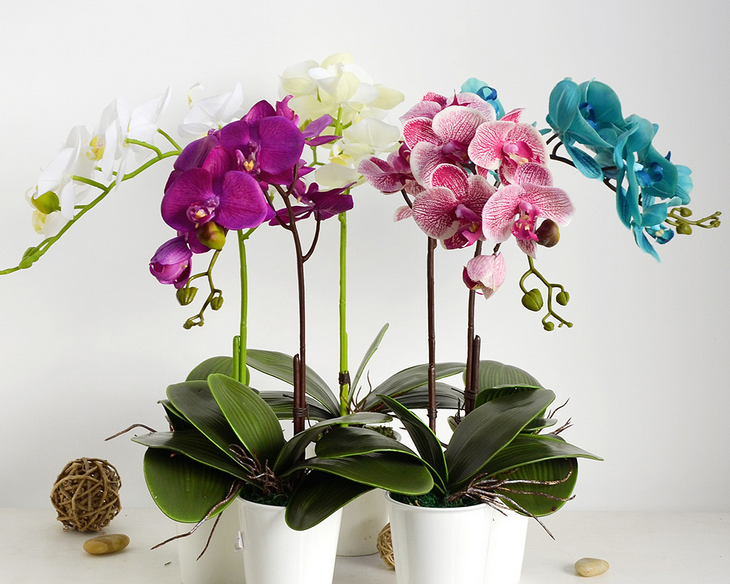
Cultivation methods and precautions for Phalaenopsis orchids
Cultivation methods for Phalaenopsis orchids
1. Temperature
When growing Phalaenopsis at home, the first thing to ensure is temperature. Phalaenopsis likes a high-temperature, high-humidity environment. During the growing period, the minimum temperature should be kept above 15°C, and the suitable growing temperature for Phalaenopsis is 16-30°C. In autumn and winter, at the turn of winter and spring, and when winter temperatures are low, attention should be paid to raising the temperature. Generally, in rooms with heating equipment in winter, this temperature is not difficult to reach, but be careful not to place the flowers directly on the radiator or too close to it.
In summer, when the temperature is on the high side, it needs to be cooled down, and attention should be paid to ventilation. If the temperature is above 32°C, Phalaenopsis usually enters a semi-dormant state, so continuous high temperatures should be avoided. Around the Spring Festival is the peak flowering period; appropriately lowering the temperature can extend the viewing time. During flowering, the nighttime temperature is best kept between 13-16°C, but must not be lower than 13°C.
2. Humidity
Phalaenopsis is native to primeval forests, where there is more mist and higher temperatures. Phalaenopsis does not have thick, large pseudobulbs to store nutrients. If the air humidity is insufficient, the leaves will wrinkle and become weak and limp. Therefore, Phalaenopsis should be cultivated and cared for in a ventilated, high-humidity environment.
The suitable air humidity for growing Phalaenopsis is 60%-80%. During the vigorous period of new root elongation, Phalaenopsis should be watered more, and during the dormant period after flowering, it should be watered less. In spring and autumn, water once a day around 5 p.m. In summer, when the plant grows vigorously, water once each at 9 a.m. and 5 p.m. In winter, when light is weak and temperatures are low, watering once every other week is enough, and it is best done before 10 a.m. If a cold wave arrives, do not water; keep it dry and resume watering after the cold wave passes.
The principle of watering is "water when dry, stop when wet" - when the surface of the growing medium becomes dry, water thoroughly again, and the water temperature should be close to room temperature. When the indoor air is dry, you can use a sprayer to spray directly on the leaves; it is enough when the leaf surface is moist, but note that during the flowering period, do not spray water mist onto the flowers. Tap water should be stored for more than 72 hours before being used for watering.
3. Light
Although Phalaenopsis prefers shade, the plant still needs to receive some light, especially before and after the flowering period. Appropriate light can promote flowering in Phalaenopsis and make the flowers more brilliant and long-lasting. Generally, it should be placed in a spot indoors with diffused light, and direct sunlight should be avoided.
4. Ventilation
The normal growth of Phalaenopsis requires flowing fresh air, so when grown at home, ventilation must be good, especially during the high-humidity period in summer. Good ventilation must be used to prevent heat stress, and it can also help avoid infection by pests and diseases.
5. Fertilizing
Phalaenopsis should be fertilized throughout the year; unless low temperatures persist for a long time, fertilization should not be stopped. Winter is the flower bud differentiation period for Phalaenopsis, and stopping fertilization can easily lead to no flowers or few flowers. Spring and summer are the growing period, and a dilute liquid fertilizer can be applied once every 7-10 days. Organic fertilizer is preferable, and a special nutrient solution for Phalaenopsis can also be used, but do not apply it when there are flower buds, otherwise the buds may easily drop early. In summer, when leaves grow (that is, after the flowering period), nitrogen fertilizer and potassium fertilizer can be applied as a top dressing. In autumn and winter, during the flower stem growth period, phosphorus fertilizer can be used, but it should be dilute, applied about once every 2-3 weeks.
The time for fertilizing is after watering in the afternoon. After fertilizing several times, use a large amount of water to rinse the orchid pot and plant, so as to prevent residual inorganic salts from harming the roots.
6. Management
The flowering period of Phalaenopsis is generally around the Spring Festival, and the viewing period can last as long as 2-3 months. When the flowers wither, the faded flowers must be cut off as early as possible, as this can reduce nutrient consumption. If the flower stem is cut at the 4th-5th node from the base, it can bloom again after 2-3 months. However, this consumes too much of the plant's nutrients and is not good for growth the following year.
If you want it to bloom well again the following year, it is best to cut the flower stem from the base. When the growing medium ages, it should be replaced in a timely manner; otherwise, air permeability will worsen, causing root rot and weakening the plant's growth or even death. Generally, repotting in May, when new leaves grow, is suitable.
Precautions for Phalaenopsis orchids
1. Watering too frequently: Friends who grow Phalaenopsis always worry that the orchid lacks water, and regardless of whether the growing medium is dry, they water it every day, causing severe root rot.
2. Temperature too low: Usually, flowering Phalaenopsis plants are mostly marketed in early spring, and after being bought and taken home, they are generally placed in places such as the living room for viewing. Although the daytime temperature in these places is sufficient, the nighttime temperature is slightly on the low side. On the other hand, professionally cultivated orchids are mostly in well-equipped greenhouses. By comparison, the temperature and humidity at home are somewhat insufficient, causing the plant's growth to gradually weaken. Therefore, sometimes no matter how well it is cared for, the orchid still may not bloom.
3. Over-fertilizing: Applying fertilizer whenever there is some, and not paying attention to concentration, thinking that applying fertilizer will make it grow faster. You should know that Phalaenopsis should be given light fertilizer, applied little and often. Remember that "tonic feeding" must not be excessive, otherwise it will have the opposite effect.
4. Planting a small plant in a large pot: Thinking that using a large pot can give the Phalaenopsis a spacious environment and ample material. In fact, after using a large pot, the sphagnum is not easy to dry. You should know that Phalaenopsis likes ventilation, and when air flows freely, it thrives.
5. Dry bud wrap: Most Phalaenopsis nowadays are forced into bloom, and after leaving the base, once the environment changes, dry bud problems easily appear. At this time, do not think it is dry and do not water more; instead, increase indoor humidity, control indoor temperature, and the temperature must not be too high. When buying flowers, try to choose those with thicker petals.
Phalaenopsis is prone to soft rot and gray leaf spot. Soft rot is extremely contagious; once discovered, immediately isolate the diseased plant. Diseased plants can be treated with mancozeb or Huoshengling, usually sterilizing once every 15 days. The common growing media for Phalaenopsis are mainly sphagnum and moss, so the potting material should not be soil; instead, use sphagnum moss, pumice, tree fern shavings, charcoal fragments, etc.
The complete guide to Phalaenopsis cultivation methods and precautions
Phalaenopsis is a plant suitable for indoor cultivation, with flowers shaped like butterflies. Elegant and delicate. It has the reputation of being the "queen of orchids." The flowers are the most ornamental part of Phalaenopsis. Because most Phalaenopsis originate from humid Asia, this also determines the growth characteristics of Phalaenopsis. An environment with ventilation, moderate temperature, and high humidity can be said to be very suitable for growing Phalaenopsis. Beginners should be clear before growing Phalaenopsis that water accumulation is not good for its growth, and avoid exposing Phalaenopsis to scorching sun. When winter comes, indoor temperature must be controlled well; when the temperature is below 15 degrees, it will affect the growth of Phalaenopsis. The following is a detailed introduction to Phalaenopsis cultivation methods and precautions for growing Phalaenopsis, shared with everyone!
Cultivation methods for Phalaenopsis
1. Light Although Phalaenopsis prefers shade, the plant still needs to receive some light, especially before and after the flowering period. Appropriate light can promote flowering in Phalaenopsis and make the flowers more brilliant and long-lasting. Generally, it should be placed in a spot indoors with diffused light, and direct sunlight should be avoided; if placed on an indoor windowsill, use a window screen to block part of the sunlight.
2. Soil You can choose materials such as pine needles, peanut shells, bark shreds, and clay balls as the growing medium for Phalaenopsis. Phalaenopsis has relatively high requirements for soil and needs it to be breathable, rot-resistant, slightly acidic, and well-draining. If you cannot prepare these materials yourself, you can directly buy special orchid soil for Phalaenopsis at the flower market. (PS: For the pot for planting Phalaenopsis, you can choose a plastic pot or a ceramic pot. Considering that Phalaenopsis likes a breathable growing environment, it is recommended to choose a shallow pot with multiple holes; the best is one whose height is less than its diameter.)
3. Temperature There are particular requirements for the cultivation temperature of Phalaenopsis grown indoors. The daytime temperature is best controlled at 25-28 degrees, and the nighttime temperature needs to be controlled at 18-20 degrees. Phalaenopsis originates from the subtropics, so a high-temperature, high-humidity environment is very suitable for its growth (when the summer temperature is above 32 degrees, Phalaenopsis will directly enter a semi-dormant state, so high temperatures must be prevented). When the temperature is lower, the growth of Phalaenopsis will be inhibited. According to relevant sources, when the temperature is 15 degrees, the growth of Phalaenopsis directly stagnates. When it is below 15 degrees, the roots will stop absorbing water. This will cause black spots to appear on the leaves. Winter weather in the north is relatively severe and indoor temperatures are also lower, but heating can be turned on. When the indoor temperature is below 15 degrees, special care must be taken with Phalaenopsis. During the day, place the Phalaenopsis in a sunny spot and reduce the frequency of watering. Or use the method of sprinkling water on the floor. At night, it needs to be kept warm, and a plant cover bag should be put over it. When using heating equipment to provide heat to the plant, be sure not to let the radiator be too close to the flowers.
4. Watering High humidity is what Phalaenopsis loves most, but water accumulation definitely is not. Avoid letting Phalaenopsis be in a state of water shortage, especially during its growing period. Once water shortage occurs frequently, it will cause the leaves to turn yellow, and it is very difficult to recover. Usually, Phalaenopsis can be watered with a watering can. Water until water flows out from the bottom of the pot; avoid watering too much. Because Phalaenopsis likes a high-humidity environment, you can often sprinkle water where the orchid is placed to maintain the humidity around it. But be careful not to let water accumulate in the heart of the orchid leaves. In winter, water also must not be sprinkled on the leaves. Watering principle: water when dry, stop when wet; when the surface of the growing medium becomes dry, water thoroughly again; generally, watering should be done on a clear, sunny morning, and the water temperature should be close to room temperature. When the indoor air is dry, you can use a sprayer to spray directly on the leaves; but note that during the flowering period, do not spray water mist onto the flowers.
5. Ventilation and shading In flower-growing forums, some Phalaenopsis root rot problems are often seen, and this may also be caused by a lack of a ventilated environment. Phalaenopsis is delicate, and choosing a ventilated environment will be more conducive to its growth. A stuffy, hot environment is also not suitable for growing Phalaenopsis, especially in the summer in the south, where attention must be paid to shading the Phalaenopsis. Phalaenopsis is an epiphytic orchid and likes semi-shade. In winter, when temperatures are low, use the midday time to ventilate it, but do not let the draft blow directly on the plant. In spring and autumn, pay attention to protecting the orchid from light.
6. Fertilizing
The principle of fertilizing should be to apply less fertilizer and dilute fertilizer. This is because it grows relatively quickly and its growth period is also relatively long. Fertilizing by month and precautions: Phalaenopsis grown for one year or many years will be repotted in late spring and early summer each year (May). Newly repotted Phalaenopsis is in a recovery period, and the plant does not need fertilizing. After about a month of recovery, the plant begins normal growth. That is, from June to September, the plant enters the growing period, and it needs to be fertilized once a week. Fertilizers suitable for Phalaenopsis: foliar fertilizer, monopotassium phosphate, farmyard manure fermented with water, special orchid fertilizer, etc. During the growing period, foliar fertilizer and monopotassium phosphate can be used alternately to fertilize Phalaenopsis. If these two fertilizers are not available, you can choose farmyard manure fermented with water to water the plant with fertilizer solution. If you have special orchid fertilizer at home, directly apply the special orchid fertilizer. Precautions for fertilizing in spring and summer: In summer, when temperatures are relatively high, stop fertilizing the plant. In autumn, the growth rate of Phalaenopsis begins to slow down, and the frequency of fertilizing should also be reduced. At this time, if the plant is fertilized frequently, it will affect the formation of flower buds, making it difficult to bloom.
7. Care When growing Phalaenopsis indoors, due to factors such as temperature and humidity, the leaves of the plant only grow 1-2 leaves in a year. When growing Phalaenopsis at home, due to limitations of temperature and humidity, it grows singly at the top, and the flower buds grow between two leaves. When the plant grows flower buds, control the indoor temperature at 18 to 20 degrees, and after about 120 days of care, the Phalaenopsis will bloom. You can set up a support in the pot in advance for the flower stem that is about to emerge to prevent the flower stem from falling over. During the growth of the flower stem, it needs to be fixed multiple times to prevent the flower stem from breaking. When each flower bud in the pot has grown well, do not change the direction in which the pot is placed, so as to avoid the Phalaenopsis flowers blooming unevenly and affecting the ornamental effect. During the flowering period, which lasts as long as 4 months, maintain indoor ventilation and temperature, and keep the temperature controlled between 15-18 degrees. Around the Spring Festival is the peak flowering period; appropriately lowering the temperature can extend the viewing time. During flowering, the nighttime temperature is best kept between 13°C-16°C, but must not be lower than 13°C. During the flowering period, pay attention to gray leaf spot. The main reason is failure to notice water droplets on the petals, or other diseases, which impair the ornamental value of the flowers. Therefore, never spray fertilizer water onto the petals.
8. Repotting Phalaenopsis must be repotted once every year. Late spring and early summer are the most suitable periods for repotting Phalaenopsis. Timely repotting can prevent the growing medium from rotting, which causes poor growth and even death of Phalaenopsis. Phalaenopsis likes soil with strong air permeability, and rotting growing medium will make the soil impermeable.
Precautions for growing Phalaenopsis at home
1. To avoid causing root rot in Phalaenopsis, be sure to water appropriately. Never water too much. Before watering, it is best to check whether the growing medium is dry. Only then can root rot be avoided.
2. Temperature affects the flowering of Phalaenopsis. Most Phalaenopsis bloom in early spring. Many people like to place Phalaenopsis in the living room. The nighttime temperature there is relatively low and cannot be well controlled. Compared with professional orchid growing rooms, the temperature and humidity in the living room are not very ideal, and this will indirectly affect the orchid's growth. So sometimes failure to bloom is also caused by this reason.
3. When growing Phalaenopsis at home, the amount of fertilizer must be specially controlled to avoid over-fertilizing. Fertilize the plant little and often.
4. Be sure to choose a breathable, multi-hole pot for planting. Some people say that using a large pot is better. This is wrong. Because orchids use materials such as sphagnum as the substrate, if the sphagnum does not dry, it will cause poor ventilation and lead to poor growth of the plant.
Cultivation methods and precautions for Phalaenopsis">Everyday tips: cultivation methods and precautions for Phalaenopsis
Phalaenopsis is a plant that does not like water constantly around its roots. So if the Phalaenopsis at home has finished blooming, what should you do? Below we will solve this problem for everyone, and tell everyoneCultivation methods and precautions for Phalaenopsis。
Everyday tips: cultivation methods and precautions for Phalaenopsis">Everyday tips: cultivation methods and precautions for Phalaenopsis">
Everyday tips: What should you do when Phalaenopsis finishes blooming?
1. If your Phalaenopsis was bought by yourself or given by a friend around the Spring Festival, and it was already blooming when bought, then basically by now (around the end of March) it will have no flowers left. If you want it to continue blooming, you can choose to keep the flower stem, take the plant out of the pot and check the root condition. If there are rotten roots or dry roots, cut them off in time, check whether the sphagnum has rotted, become moldy, or has other adverse conditions, and consider whether it needs to be replaced. Still use a transparent pot for repotting, and water and care for it normally, watering when wet and letting it dry when dry. If the humidity at home is a bit higher, that is naturally more ideal (it is no problem if it is not). If you have a special liquid fertilizer at home, giving some is naturally better (it is no problem if you do not). If the plant is very strong, it will soon continue to grow new flower buds at the front end of the original flower stem. If the plant is relatively weak after flowering and has consumed a lot, then with normal care until around May, it will grow side stems on the original flower stem and produce flower buds, continuing to bloom until around the end of June (this flowering period will be shorter because the weather gradually becomes hotter). After the flowers fade, cut off the flower stem and care for it normally.
2. If it is grown at home, it generally begins to grow flower stems and flower buds around December of the previous year (in rooms with heating), and generally blooms successively in late February to early March, with the flowering period lasting until around the end of May. Then the method is the same as (1). If you want to see the flowers once more, keep the flower stem and care for it normally; it will soon grow side stems on the flower stem, produce buds, and bloom.
3. Whether purchased or home-grown, if after the first flowering you do not want it to continue blooming (this can preserve the plant's strength), cut off the flower stem in time, still check the roots and growing medium, and then care for it normally. By the end of the year, new stems will naturally sprout and flower buds will frequently appear.
4. Many people think that caring for Phalaenopsis is very difficult because they feel it needs a warm, high-humidity environment, and in fact this is also true. Having such an environment is naturally a blessing for Phalaenopsis. But Phalaenopsis is very tough; even without such an environment, it is still easy to care for in the north. You can pay attention to the following points:
(1) First, it must pass through summer smoothly. If possible, place it in a place with bright light but not direct sunlight as much as possible; reduce water supply (although summer temperatures are high, if there is too much water, it can easily cause root rot and lead to plant death); if you feel you do not know how to fertilize (light fertilizer applied frequently; preferably a special liquid fertilizer for Phalaenopsis), you can always use clean water for care, especially in summer, try not to fertilize or fertilize less; after summer, to be safe, you can check the roots and growing medium again to ensure the basic elements for normal plant growth;
(2) The quality of autumn management is an important factor affecting whether Phalaenopsis blooms. Entering autumn, you can apply light fertilizer frequently to make the plant strong. At this time, you can appropriately increase light. In the northern climate in autumn, there will be a temperature difference between morning and evening, which exactly prompts Phalaenopsis to develop flower buds. Autumn is dry, so maintain appropriate moisture. If conditions permit, you can use spraying to increase air humidity (it is no problem if you do not spray).
(3) In a normal winter, around the end of December, new flower stems should grow and flower buds should slowly emerge. During care, it is strictly forbidden to let wind blow directly onto the flower buds. At the same time, it is best to stop fertilizing and control water to prevent improper application of fertilizer water from causing bud drop. If the heating indoors is too high, you can increase spraying to maintain humidity (it is no problem if you do not spray).
(4) Usually pay attention to observing root growth. Living roots are the basic element for maintaining plant growth. If the root color is green, robust, and firm, and the root tips are red, it shows vigorous vitality; if you find roots escaping from the pot, it indicates that there is a problem with the growing medium or care, and adjustment is needed; if the roots turn black and rot, it indicates that there is too much water; if some roots show symptoms of drying up, it indicates excessive water shortage. Under normal conditions, the leaves are bright, glossy, thick, and firm, showing good growth, and new shoots will continuously grow.
Cultivation methods and precautions for Phalaenopsis - cultivation methods:
1. Temperature
When growing Phalaenopsis at home, the first thing to ensure is temperature. Phalaenopsis likes a high-temperature, high-humidity environment. During the growing period, the minimum temperature should be kept above 15°C, and the suitable growing temperature for Phalaenopsis is 16-30°C. In autumn and winter, at the turn of winter and spring, and when winter temperatures are low, attention should be paid to raising the temperature. Generally, in rooms with heating equipment in winter, this temperature is not difficult to reach, but be careful not to place the flowers directly on the radiator or too close to it.
In summer, when the temperature is on the high side, it needs to be cooled down, and attention should be paid to ventilation. If the temperature is above 32°C, Phalaenopsis usually enters a semi-dormant state, so continuous high temperatures should be avoided. Around the Spring Festival is the peak flowering period; appropriately lowering the temperature can extend the viewing time. During flowering, the nighttime temperature is best kept between 13-16°C, but must not be lower than 13°C.
2. Humidity
Phalaenopsis is native to primeval forests, where there is more mist and higher temperatures. Phalaenopsis does not have thick, large pseudobulbs to store nutrients. If the air humidity is insufficient, the leaves will wrinkle and become weak and limp. Therefore, Phalaenopsis should be cultivated and cared for in a ventilated, high-humidity environment.
The suitable air humidity for growing Phalaenopsis is 60%-80%. During the vigorous period of new root elongation, Phalaenopsis should be watered more, and during the dormant period after flowering, it should be watered less. In spring and autumn, water once a day around 5 p.m. In summer, when the plant grows vigorously, water once each at 9 a.m. and 5 p.m. In winter, when light is weak and temperatures are low, watering once every other week is enough, and it is best done before 10 a.m. If a cold wave arrives, do not water; keep it dry and resume watering after the cold wave passes.
The principle of watering is "water when dry, stop when wet" - when the surface of the growing medium becomes dry, water thoroughly again, and the water temperature should be close to room temperature. When the indoor air is dry, you can use a sprayer to spray directly on the leaves; it is enough when the leaf surface is moist, but note that during the flowering period, do not spray water mist onto the flowers. Tap water should be stored for more than 72 hours before being used for watering.
3. Light
Although Phalaenopsis prefers shade, the plant still needs to receive some light, especially before and after the flowering period. Appropriate light can promote flowering in Phalaenopsis and make the flowers more brilliant and long-lasting. Generally, it should be placed in a spot indoors with diffused light, and direct sunlight should be avoided.
4. Ventilation
The normal growth of Phalaenopsis requires flowing fresh air, so when grown at home, ventilation must be good, especially during the high-humidity period in summer. Good ventilation must be used to prevent heat stress, and it can also help avoid infection by pests and diseases.
5. Fertilizing
Phalaenopsis should be fertilized throughout the year; unless low temperatures persist for a long time, fertilization should not be stopped. Winter is the flower bud differentiation period for Phalaenopsis, and stopping fertilization can easily lead to no flowers or few flowers. Spring and summer are the growing period, and a dilute liquid fertilizer can be applied once every 7-10 days. Organic fertilizer is preferable, and a special nutrient solution for Phalaenopsis can also be used, but do not apply it when there are flower buds, otherwise the buds may easily drop early. In summer, when leaves grow (that is, after the flowering period), nitrogen fertilizer and potassium fertilizer can be applied as a top dressing. In autumn and winter, during the flower stem growth period, phosphorus fertilizer can be used, but it should be dilute, applied about once every 2-3 weeks.
The time for fertilizing is after watering in the afternoon. After fertilizing several times, use a large amount of water to rinse the orchid pot and plant, so as to prevent residual inorganic salts from harming the roots.
6. Management
The flowering period of Phalaenopsis is generally around the Spring Festival, and the viewing period can last as long as 2-3 months. When the flowers wither, the faded flowers must be cut off as early as possible, as this can reduce nutrient consumption. If the flower stem is cut at the 4th-5th node from the base, it can bloom again after 2-3 months. However, this consumes too much of the plant's nutrients and is not good for growth the following year.
If you want it to bloom well again the following year, it is best to cut the flower stem from the base. When the growing medium ages, it should be replaced in a timely manner; otherwise, air permeability will worsen, causing root rot and weakening the plant's growth or even death. Generally, repotting in May, when new leaves grow, is suitable.
Cultivation methods and precautions for Phalaenopsis - cultivation precautions:
1. Watering too frequently: Friends who grow Phalaenopsis always worry that the orchid lacks water, and regardless of whether the growing medium is dry, they water it every day, causing severe root rot.
2. Temperature too low: Usually, flowering Phalaenopsis plants are mostly marketed in early spring, and after being bought and taken home, they are generally placed in places such as the living room for viewing. Although the daytime temperature in these places is sufficient, the nighttime temperature is slightly on the low side. On the other hand, professionally cultivated orchids are mostly in well-equipped greenhouses. By comparison, the temperature and humidity at home are somewhat insufficient, causing the plant's growth to gradually weaken. Therefore, sometimes no matter how well it is cared for, the orchid still may not bloom.
3. Over-fertilizing: Applying fertilizer whenever there is some, and not paying attention to concentration, thinking that applying fertilizer will make it grow faster. You should know that Phalaenopsis should be given light fertilizer, applied little and often. Remember that "tonic feeding" must not be excessive, otherwise it will have the opposite effect.
4. Planting a small plant in a large pot: Thinking that using a large pot can give the Phalaenopsis a spacious environment and ample material. In fact, after using a large pot, the sphagnum is not easy to dry. You should know that Phalaenopsis likes ventilation, and when air flows freely, it thrives.
5. Dry bud wrap: Most Phalaenopsis nowadays are forced into bloom, and after leaving the base, once the environment changes, dry bud problems easily appear. At this time, do not think it is dry and do not water more; instead, increase indoor humidity, control indoor temperature, and the temperature must not be too high. When buying flowers, try to choose those with thicker petals.
Phalaenopsis is prone to soft rot and gray leaf spot. Soft rot is extremely contagious; once discovered, immediately isolate the diseased plant. Diseased plants can be treated with mancozeb or Huoshengling, usually sterilizing once every 15 days. The common growing media for Phalaenopsis are mainly sphagnum and moss, so the potting material should not be soil; instead, use sphagnum moss, pumice, tree fern shavings, charcoal fragments, etc.