How to Grow Jasmine: A Detailed Guide to Cultivation Methods and Precautions
Jasmine is fresh and elegant with beautiful flowers. It can be enjoyed for its beauty and also used to make tea. Many people want to grow jasmine themselves, so what exactly should you do when growing jasmine? Are there any methods and precautions? Let's take a detailed look together with the editors of Tongzhuangxiu.
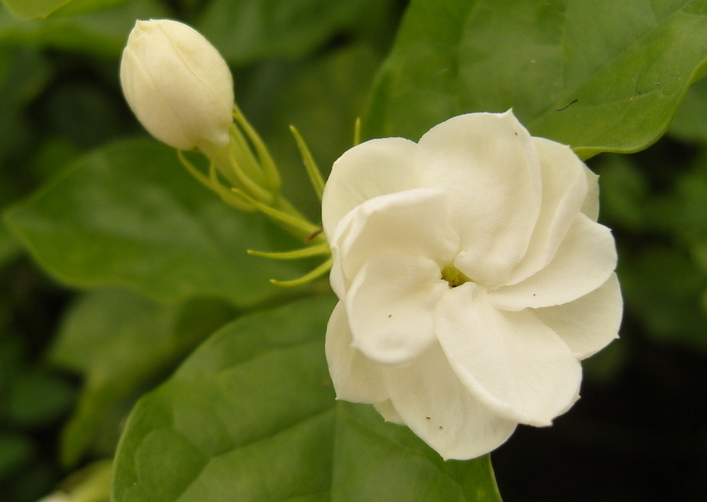
Jasmine Cultivation Methods and Precautions
Jasmine Cultivation Methods
1. Environment and light: Jasmine prefers hot, humid, well-ventilated environments and needs ample light. Jasmine is sensitive to cold. In the south, potted jasmine can be grown outdoors to overwinter; in the north, you need to keep it warm during autumn and winter, moving it indoors to a south-facing spot. With strong light, the branches and trunk become sturdy, the leaves turn deep green, and there are many fragrant flowers; with insufficient sunlight, the nodes are sparse, there are few flowers, and they lack fragrance.
2. Fertilizing: The peak heat of midsummer is the vigorous growth period for jasmine. Apply plenty of organic fertilizer and phosphorus-potassium fertilizer, such as peanut cake powder, bone meal, superphosphate, and multi-element flower fertilizer, twice a month. During the summer growing period, jasmine often shows lush branches and leaves but no flowers. The main reason is applying too much nitrogen fertilizer, causing excessive vegetative growth. When this happens, control fertilizer and water, increase phosphorus-potassium fertilizer to encourage flower bud formation, and at the same time move the jasmine to a spot with ample sunlight and good ventilation.
3. Water: Jasmine is not drought-tolerant, but it also dislikes waterlogging. During rainy seasons, promptly pour out any standing water in the pot, otherwise the leaves tend to turn yellow. On hot sunny summer days, water twice a day, once in the morning and once in the evening. If you notice the leaves curling and drooping, spray water on the leaves to promote growth.
4. Soil: For growing jasmine, fertile sandy and semi-sandy soil is best. Planting in slightly acidic soil with a pH of 6 to 6.5 results in a dense root system and vigorous growth. If the soil is heavy clay, lacking organic matter, low in fertility, and poorly aerated, the roots will be few, the plant will be short, the stems and leaves will be thin, and the flowers will be few and small.
5. Pruning: Jasmine grows very quickly in summer, so prune it promptly. For potted jasmine, prune to keep 10 cm to 15 cm of the base to encourage many sturdy new shoots. If the new shoots grow very vigorously, pinch the tips when they reach 10 cm to encourage secondary shoots, which results in more flowers and a more compact plant shape. After flowers fade, promptly cut off the flowering branches to reduce nutrient consumption and also encourage new shoots, making the branches dense, the buds numerous, and the blooms abundant.
6. Pest and disease control: Jasmine is often harmed by snout moth larvae, scale insects, and red spider mites, with July to September being the most severe period. They often bore into and eat the flower buds. You can spray with all-purpose powder or fenvalerate diluted 200 times with water, once every half month. Even if no pests or diseases have occurred, you should still spray as a preventive measure. The best times to spray are 9 AM and 4 PM on sunny days. Avoid spraying under the scorching midday sun to prevent chemical burn.
Precautions for Growing Jasmine
1. During the flowering period, do not spray water on the flowers, to prevent premature flower drop and loss of fragrance. When it rains, move potted jasmine to a sheltered spot.
2. Potted jasmine generally needs repotting about every 2 years. When repotting, you can place some bone meal and horse hoof powder in the pot as a base fertilizer. The best time for repotting is late winter to early spring.
3. When jasmine grows only branches and leaves without flowering, it is generally because too much nitrogen fertilizer was applied or there is a lack of sunlight. Therefore, when jasmine enters its vigorous growth period, strictly control the amount of nitrogen fertilizer applied and give it plenty of sun to prevent excessive vegetative growth.
4. In winter, place jasmine in a warm, sunny spot to prevent the plant from suffering cold damage. You can also cover the entire plant tightly with a plastic bag and cut a small hole at the top, which can also help keep it warm, retain moisture, and prevent freezing. Applying more phosphorus and potassium fertilizer can improve the cold resistance of potted jasmine.
5. Watering precautions: Jasmine also prefers acidic soil. During the growing period, apply 0.2% ferrous sulfate solution every 10 days to maintain soil acidity. Proper water regulation is key to cultivating jasmine: jasmine likes moisture but fears waterlogging. If the potting soil is too wet, roots and leaves easily rot, and the plant may even die.
6. Fertilizing precautions: During jasmine cultivation, pay special attention to fertilizing it. Generally starting in May, apply dilute soybean cake water once every 7 days. During bud formation and flowering, apply light fertilizer frequently, about once every 5 days. Starting in October, stop fertilizing. During the rainy season, if growing outdoors, switch to dry fertilizer, such as soybean cake powder (loosen the surface soil in the pot, add soybean cake powder, and cover it with soil).
How to Grow Jasmine: Jasmine Cultivation Methods and Precautions / Give It Plenty of Sun
Jasmine, needless to say, everyone must have seen it. It is a fairly common potted flowering plant in daily life, and its most notable feature is undoubtedly its pure white flower color. How to grow jasmine? Generally speaking, it is the same as other plants, but during cultivation, the points that need attention are different. Below is a very comprehensive guide to jasmine cultivation methods and precautions compiled by the editor. You might as well try growing it according to what is said here.
I. How to Grow Jasmine: Sunlight and Watering
Generally speaking, jasmine cultivation methods are relatively simple compared with flowers such as Phalaenopsis orchids and peonies, but if you want to grow jasmine well and extend the flowering period, it still takes some effort. Light, watering, temperature, and soil are all things we need to pay attention to. Next, let's discuss them specifically.
II. Jasmine Cultivation Methods and Precautions
1. Loose soil
In jasmine cultivation methods, the most important thing to pay attention to is the soil. Jasmine is especially sensitive to soil permeability, so loose soil is more suitable. For a flower like jasmine whose root system is relatively underdeveloped, this makes growth easier.
Precautions: If the potting soil is on the alkaline side, it will cause the leaves to turn yellow. When the leaves turn yellow, apply dilute alum fertilizer water once every 5 to 7 days. Before long, the yellowed leaves on the plant will turn from yellow to green and gradually return to normal. After that, combined with fertilizing, apply dilute alum fertilizer water once every 7 to 10 days to keep the leaves bright green and growing normally.
Soil selection: Mix 5 parts leaf mold (or peat soil), 4 parts garden soil, and 1 part cake fertilizer residue. When potting, place a small amount of bone meal at the bottom of the pot as a base fertilizer. It is best to repot once a year or every other year, replacing it with fresh potting soil. After repotting, water thoroughly and pay attention to loosening the soil. Keeping the temperature between 22-24°C can speed up the sprouting of new buds.
2. Ample light
Jasmine is a light-loving flower. During the growing period, it prefers relatively strong direct light. During bud formation and flowering, if it receives more than 8 hours of sunlight per day, the buds will be plump and white. So as long as it is daytime, gardeners should place it outdoors so it receives ample light, but in the height of summer, do not place it under direct scorching sun.
Precautions: If light is insufficient, jasmine branches and leaves will grow excessively, the leaf color will be pale, the branches will be thin, there will be few flowers, and the fragrance will be faint. Therefore, to ensure sufficient light, placing jasmine on a balcony or rooftop is a good choice.
3. Water frequently
Since jasmine is suitable for loose soil, and such soil has good drainage, you need to pay attention when watering. Water thoroughly, until water just seeps out of the bottom of the pot. But that does not mean it is enough. Gardeners should water at least twice a day, preferably once in the morning and once in the evening.
Precautions: Once watering is insufficient, jasmine will not grow well, and symptoms such as yellowing and sparse leaves will appear, so gardeners must water frequently. As for when to water, there are two methods: 1. Check the potting soil for dry-wet alternation, making sure the soil is not dry to the point of a white crust and not wet to the point of mud; 2. Tap the flower pot with your finger and listen to the sound. A crisp, pleasant sound means the potting soil is already dry; a dull, muffled sound means the potting soil still contains water.
4. Temperature: 25°C-35°C
Jasmine is a long-day, sun-loving plant and grows best at 25°C to 35°C. It fears cold and cannot withstand low temperatures. Below 3°C, its tender branches and leaves will suffer cold damage. At a minimum temperature of 0°C with slight frost, most of the leaves will fall off; at around minus 3°C, the branches are at risk of freezing damage, so jasmine must be kept in a warmer place to grow.
Precautions: When the temperature drops to 5°C-10°C, move jasmine indoors and place it at a sunny window. When the temperature is below 0°C, move the potted plant away from the window at night to prevent cold wind from blowing in through window cracks and freezing the jasmine. When freezing occurs indoors, at night you should also cover the potted plant all the way to the bottom with a polyethylene film bag and tie the bag opening tightly, then place the potted plant in a warmer spot. To avoid the danger of suffocating the jasmine, you can also poke a few small holes in the bag.
5. Reasonable fertilizing
Jasmine loves fertilizer and is suitable for growing in fertile, loose, well-structured sandy loam and loam with a pH of 5.5-7. However, during the flowering period, less nitrogen fertilizer should be applied, because the effect of nitrogen fertilizer is to promote leaf growth. Too much nitrogen fertilizer will make jasmine branches and leaves grow lushly but without flowering. Therefore, nitrogen fertilizer is more suitable for use during the seedling stage. During the flowering period, applying organic fertilizer is more effective, as it can promote flowering and extend the flowering period.
Precautions: Sometimes jasmine will grow only leaves without flowering. The main reasons are, first, insufficient light, and second, too much nitrogen fertilizer. Jasmine needs at least 6 hours of sunlight every day, and at the same time, pinch the tips of non-flowering branches. Second, use less nitrogen fertilizer and more phosphorus fertilizer.
6. Prune frequently
In jasmine cultivation methods, learning to prune is a very important step. Necessary and appropriate pruning of jasmine not only ensures the storage of its own nutrients, benefiting the growth of new branches and the sprouting of new flower buds, but also ensures a beautiful tree shape. You can also use the healthy pruned branches for cuttings propagation, ensuring what is needed for replacing old jasmine with new.
Precautions: In suitable weather, jasmine grows very quickly and has lush branches and leaves. If new branches grow too quickly and too long, they should be cut off about 10 cm from the branch tip to encourage more side branches to grow.
7. Reasonable repotting
For jasmine that has already been grown for more than 2 years, repotting is relatively necessary. By this time, the jasmine roots have become tangled and disordered, and their ability to absorb water and air has greatly decreased. Simply loosening the soil can no longer solve the actual problem. Changing to a larger pot and refilling it with loose soil is the only way to give the jasmine a second spring.
Precautions: When jasmine planted in a pot grows from small to large and its root system fills the entire pot, the plant needs to be moved from a small pot to a large pot. Generally, before jasmine sprouts, prune the root system and then move it into a larger pot.
8. Pest and disease control
Jasmine is a flower not easily harmed by pests, but if you want it to bloom well, it is still necessary to take some preventive measures. Red spider mites are one of the more common pests when growing jasmine. The corresponding insecticides are easy to buy, so I will not go into detail here. Specific information is introduced in the pest and disease control section for potted jasmine.
Precautions: When spraying the solution, do not only spray the jasmine leaves and flowers. The soil must also be sprayed, otherwise the pest problem will not be thoroughly treated. Leaves that have already been infected should be promptly removed.
Jasmine Cultivation Methods and Precautions
Jasmine Cultivation Methods and Precautions is a fairly comprehensive article on jasmine cultivation. It is the care experience of a gardener who has grown jasmine for 30 years, and it is very worth reading and learning from for gardeners who love jasmine. The article covers important aspects such as watering, fertilizing, and pruning jasmine.
I. Jasmine Cultivation Methods——Watering
In growing jasmine, learning to water is considered the gateway to growing jasmine. Many people's jasmine does not grow well, such as yellowing or sparse leaves, or large leaves with sparse nodes, or few flowers or no flowers at all, and then failure to survive the winter, so that by the next year it either withers or grows even more poorly and loses its shape, and so on.
The above symptoms indicate: first, improper watering in daily care, mainly not understanding which season requires more watering, which season requires less watering, and in seasons requiring more watering, how to divide watering throughout the day, and in seasons requiring less watering, how to water less. How to observe whether watering is needed, and so on.
These are all somewhat technical and detailed care steps. Too much watering makes jasmine prone to root rot. Laypeople often cannot see whether the roots have rotted, and still think watering is insufficient, or think there is a nutrient deficiency, and fertilize it again. This time it will cost the jasmine its little life! Watering jasmine less generally will not kill it. There is a gardening proverb: "Dry jasmine, wet chrysanthemum." This is the summary of experience from flower growers since ancient times, so it is said: learning to water is considered the gateway to growing jasmine.
How to manage watering:
1. Check the potting soil for dry-wet alternation, making sure the soil is not dry to the point of a white crust and not wet to the point of mud.
2. Tap the flower pot with your finger and listen to the sound. A crisp, pleasant sound means the potting soil is already dry; a dull, muffled sound means the potting soil still contains water.
Usually broken pot pieces and the like are placed at the bottom of the flower pot to facilitate drainage and aeration. Foam blocks used as a bottom cushion for the pot are a new type of material, and can also be considered a new thing. You cannot define it as good or bad; it is simply a matter of using materials according to what is suitable. It is the same principle as the original practice of using styptic powder plus gauze to bandage wounds, and after adhesive bandages appeared, people used materials according to what was suitable.
II. Jasmine Cultivation Methods——Fertilizing
The three elements of plant growth: "soil, sunlight, and water." With these three elements, a plant can survive and grow. Then, if you want the plant to grow sturdy, with luxuriant branches and leaves and abundant flowers and fruit, you must know the three nutrient elements of plants: "nitrogen, phosphorus, and potassium." Growing jasmine is the same. You must understand these two "three elements." Often, beginners at growing jasmine, because they do not initially understand the essence of the plant nutrient "three elements," casually fertilize the jasmine. This not only fails to achieve the effect but actually backfires, making jasmine that was originally growing acceptably grow worse and worse.
Once you have learned to fertilize jasmine, then you have moved from the beginner stage of growing jasmine up a step to the next stage, an important care stage. When jasmine is fertilized appropriately, the satisfying results are self-evident. The jasmine will certainly have abundant flowers and luxuriant leaves, sturdy branches, and a moderate tree shape, and thus its ability to resist disease, disasters, severe cold, and extreme heat will need no worry from its owner.
Why should home potted jasmine not be fertilized hastily in spring and early summer?
(1) Many gardening friends are relatively concerned about this issue, but often after believing the words of flower sellers, or introductions from the internet, books, magazines, and so on, they fertilize jasmine at home at what seems the right time, hoping their jasmine will grow faster, bloom more, and have sturdier branches after receiving fertilizer. The result is either wrinkled leaves, or large leaves with sparse nodes, or only branches and leaves with few flowers. At this time the owner still thinks the jasmine lacks fertilizer and keeps applying all kinds of fertilizer, and the result is still unsatisfactory. In this way they lose confidence in caring for jasmine. This is the reason why you must not fertilize hastily.
(2) Fertilizing must be done when the potting soil is dry, and preferably from afternoon to before evening. In general home jasmine care, do not fertilize in the morning or at noon. The next morning, give the fertilized jasmine a small amount of clear water; this is called watering back. This step is very important and is a key move in whether the jasmine can absorb the fertilizer applied. For fertilizer, fully decomposed human waste water is best, followed by fully decomposed cake fertilizer (soybean cake and sesame cake) water, and third (when conditions do not allow) chemical granular fertilizer. The method is to slightly loosen the soil at the edge of the pot, put in the granular fertilizer, press the potting soil firm, and water with clear water. Generally, for a flower pot of about 5 cun, about 15 granules is enough. In my early years (around the 1990s) I used "Feihuadan" produced in Zhenjiang, and the effect was acceptable. I do not know whether it is still sold now. After applying this kind of granular fertilizer, remember the time and apply it on schedule according to the instructions. Remember that no fertilizer may be used indiscriminately. Jasmine loves fully decomposed human waste fertilizer most, but for home jasmine growing this is not easy to implement. Generally, soybean cake and sesame cake are crushed, soaked until rotten and decomposed, then diluted with water and applied, or eggshells are soaked in water until decomposed and then diluted with water and applied. If conditions do not allow, then after flower buds sprout, apply granular fertilizer containing phosphorus and potassium elements. Note that you should apply as little nitrogen-containing granular fertilizer as possible, otherwise it will only grow leaves and be unlikely to form flower buds.
(3) After the Dragon Boat Festival, the temperature gradually rises. There is a saying in Wuhan: "After eating salted egg zongzi, send away the cotton clothes," meaning there will no longer be a "cold wave." High temperature and high heat are exactly the good climate that jasmine loves and that makes it easy for it to form flower buds. People usually call the period from the Dragon Boat Festival to the Mid-Autumn Festival the jasmine flowering period. The flowers jasmine opens during the hottest dog days of midsummer are called fu flowers. Professional flower growers have the saying "first fu flower tide, second fu flower tide, third fu flower tide," meaning that during this peak flowering period jasmine blooms like surging tides. Home-grown jasmine is the same. During this period, abundant flowers and luxuriant leaves are delightful to the eye, and the rich fragrance is refreshing... During the peak flowering period of jasmine, people must never neglect its care. Each jasmine flower lasts only one day and night. After flowering, promptly cut off the spent flowers and let the nutrients go to the other flowers. Prune progressively in this way. After a batch of flowers has finished blooming, promptly prune the branches according to the shape of the plant and personal preference, wait for it to sprout new branches and then form new flower buds. Once new flower buds are found forming, promptly apply fertilizer water. The frequency of applying fertilizer water should increase as the buds grow larger. It is a principle that fertilizer must not be applied when the potting soil is on the wet side. Only stop applying when the jasmine buds are about to open and people want to enjoy the flowers while avoiding off-flavors.
III. Jasmine Cultivation Methods——Pruning
In growing jasmine, learning to prune is a very important step. Necessary and appropriate pruning of jasmine not only ensures the storage of its own nutrients, benefiting the growth of new branches and the sprouting of new flower buds, but also ensures a beautiful tree shape. You can also use the healthy pruned branches for cuttings propagation, ensuring what is needed for replacing old jasmine with new.
Key Points for Jasmine Care in Early Spring:
[Leaf removal] During the period from Qingming to Guyu, the temperature gradually rises and tends to stabilize, and jasmine branches begin to stir. At this time, all old leaves on the jasmine branches should be promptly removed. These old leaves have already completed their historical mission of storing nutrients and keeping the jasmine safe through winter, and their photosynthetic circulation function has basically been lost. Keeping them not only obstructs the jasmine branches from receiving light, but also greatly consumes the limited nutrients remaining in the jasmine branches after winter. Therefore, before jasmine sprouts new buds, that is, before Qingming, all old leaves on the branches must be removed.
Removing all leaves from jasmine is experience summarized from many years of jasmine care. Those old leaves that have gone through last year and another winter have basically lost their photosynthetic circulation function. Keeping them, to beginners at growing jasmine, may look nice with green branches and leaves, but in essence, leaving these old leaves on the jasmine branches greatly harms the jasmine itself:
[First] Leaving these old leaves on the jasmine branches in early spring, when jasmine has not yet restored normal function, especially when the jasmine root system has not fully restored its ability to absorb nutrients from the soil, they are the first to absorb the limited nutrients remaining in the jasmine branches after winter. This directly affects the sprouting of new jasmine buds, causing delayed sprouting or incomplete development, and further affects flower bud formation. This is why many people's jasmine blooms quite lushly in the first year of care, but then gets worse year after year; it is because they do not understand this key point.
[Second] Leaving these old leaves on the branches directly affects the jasmine branches' access to light, and further affects the sprouting of new jasmine buds. More importantly, it affects the formation of flower buds among the new buds. Jasmine flower buds are all formed in new buds. Those old leaves left on the branches can neither help jasmine carry out photosynthesis and keep nutrients circulating normally in the jasmine branches and trunk, nor stop continuously absorbing nutrients that should be supplied for the growth of new branches, leaves, and new flower buds. In this way, how can the jasmine being cared for grow sturdier year after year?
[Pruning] After new buds sprout, choose the direction in which the new buds extend, then carry out directional shaping and branch pruning.
After Qingming, the temperature gradually rises and is relatively stable, and the pruned jasmine can be placed on a flower stand for care.
Experience summarized over many years: Do not rush to repot in spring. Wait until after the first flush of flowers has finished, then repot. The advantage is that after flowering it happens to have a recovery period for renewing and sprouting new buds. During this period the temperature is relatively high and stable, and the jasmine root system disturbed during repotting easily recovers its vitality.
Spring care for jasmine mainly consists of cutting off old branches and leaves, pruning old and weak branches, and shaping pruning. In addition, there is an important care point that is not widely known: namely, removing the tips of new buds. A large portion of newly sprouted buds are excessive vegetative branches. Such branches generally will not sprout flower buds. If not removed promptly, they not only affect the shape of the plant but also absorb a large amount of nutrients from the pot, which is unfavorable for flower bud formation. Therefore, they must be removed promptly.
The flower buds formed at this time (April) are called "following-mother flowers." For the jasmine to be sturdier, they are generally all removed. After removal, it is greatly beneficial for its peak flowering period in summer. People often focus only on the few flower buds in front of them and neglect long-term care and cherishing of the plant. When new leaves are not green, it is because the following-mother flowers have absorbed a large amount of nutrients. Whether to prune the [following-mother flowers], or how much to prune, is up to the grower. If you want the plant's branches and trunk to be sturdy and to bloom more later, then all [following-mother flowers] should be pruned off. If you want to enjoy the flowers in your pot at that time, you may leave the [following-mother flowers] unpruned, but if you do not prune them, these flowers will absorb a large amount of nutrients from the main trunk and affect the main trunk's sprouting of new branches and new flower buds. This is a chain effect brought by [following-mother flowers]. The so-called [following-mother flowers] are a kind of flower bud under abnormal conditions specific to the characteristics of jasmine. They sprout earlier, are fewer, and are not very fragrant. Professional flower growers and flower collectors all know that [following-mother flowers] must be pruned cleanly for jasmine to achieve high efficiency and high yield. These are experiences summarized by people, rarely published in theory, and often difficult for people to understand.
Pinch off the tips according to the plant shape you like. You can carefully observe my pot of jasmine with pinched tips. Generally, pinch off the [through tip——a tip with no flower buds] from the first or second node of the branch (that is, the first or second pair of leaf stalks counting upward from the base). Do not pinch the tips randomly!
[Several key points] (1) Ferrous sulfate must not be applied at will. Do not listen to the promotion of flower fertilizer sellers. After the potting soil becomes too alkaline, jasmine leaves will turn yellow, which indicates that acidic elements need to be supplemented. Improper use of ferrous sulfate will backfire, causing root rot, burning to death, and other adverse phenomena. In fact, you have a raw material at home for supplementing acidic elements——rice washing water. Keep the rice washing water and pour it into an empty Gaocheng bottle, let it fully ferment for later use. When needed, take a small amount, dilute with water, and pour it to immediately supplement acidic elements. It is economical, affordable, and relatively safe.
(2) Place it outdoors in the sun for care. Do not place it indoors or in a dark place.
(3) After flowering, prune according to the plant shape you like. There is no fixed definition; pruning techniques need to be summarized slowly by yourself.
(4) The height of the branches retained when pruning should be determined by the plant shape, or by the plant shape you personally prefer. For example, some people prefer a tall, sturdy shape (growing upward, mainly with the central trunk and with side branches as auxiliary), while others prefer a low, spreading shape (a shorter tree shape extending in all directions, mainly with side branches and with the central trunk pruned directionally). It cannot be generalized as cutting off a certain number of nodes or retaining a certain number of nodes.
(5) When repotting, part of the root system will be damaged intentionally or unintentionally, more or less, so [after repotting, never rush to fertilize]. If fertilizer is applied (no matter what kind), the roots will inevitably rot. People generally cannot see jasmine root rot, but from surface phenomena such as not growing as well as before repotting, not sprouting many new buds, and no flower buds sprouting, it can be seen that the root system has already been damaged. People often mistakenly understand it as lacking fertilizer, lacking water, lacking this or that, and continuously supplement fertilizer and water. The more they supplement, the worse it gets, and in the end they lose confidence in caring for jasmine. Generally when repotting, place an appropriate amount of fully decomposed cake fertilizer at the very bottom of the pot, and cover the fertilizer well with potting soil. Do not let the root system directly touch the fertilizer, to avoid root rot. After repotting, normal watering and fertilizing management can be carried out again after 2 to 3 weeks.
(6) On sunny days, a lack of water in the pot can easily be seen from the leaves. On cloudy days, it is generally difficult to determine whether the pot lacks water. Also, the size of the plant and its light tolerance and shade tolerance matter: large plants consume more water, while small plants do the opposite; light-tolerant plants consume more water, while shade-tolerant plants do the opposite. If the tip leaves wilt, first tap the flower pot with your finger and listen to the sound it makes. If the sound is crisp, it means the potting soil is on the dry side. If the sound is dull, it means the potting soil contains water. Sometimes wilting leaves may also mean the plant's root system has a problem. At this time, the more you water, the more the leaves will wilt.
Place newly repotted plants outdoors in a cool, ventilated place, generally for at most 1 to 3 days. Or place them in a spot with light but no direct sun (that is, not exposed to the sun) for 1 to 3 days, and then normal care can resume.
(7) Any newly potted or newly repotted plant (including jasmine) must not be placed directly under the sun to bake. Generally place it in a spot avoiding direct sunlight——seeing sky but not sun——for 3 to 5 days. The purpose is to let the already disturbed root system recover its vitality. When the root system's absorption function is normal, the plant's branches and leaves will show a response, and then it can be placed in the sun for care. The three elements of plant growth: soil, water, and sunlight, none can be missing.
(8) If jasmine leaves are found to be wrinkled in spring: first, fertilizing too early. Second, too little light at the growing location. Third, watering too frequently.
(9) The potting soil should be obtained according to your own conditions and adapted to the location. If conditions allow, dried [lotus pond mud] is best for jasmine care. Next is old [vegetable garden soil] used for growing vegetables——oily sandy soil. The soil must both retain moisture and have good permeability. It should be dry without a white crust and wet without becoming mud.
IV. Jasmine Cultivation Methods——Early Summer Management
Entering early summer, the temperature gradually rises and is relatively stable, and jasmine branch and leaf growth is also relatively vigorous. When the temperature reaches above 30°C, it will begin to sprout flower buds. The key management points are as follows:
(1) For jasmine placed on a balcony flower stand for care, during this period pay attention to regularly (must rotate at least once a week) changing the direction of the flower pot, so that the jasmine does not always grow toward one direction and become crooked in shape. Rotating the pot in this way also allows the jasmine branches to bathe evenly in sunlight and better sprout new branches and flower buds. Jasmine flower buds are all formed in new branches.
(2) During this season, also pay attention to appropriate pruning of branches to ensure that jasmine continuously sprouts new buds and continuously forms flower buds, so that during the peak flowering period (the three months of July, August, and September) the owner can enjoy its abundant flowers and luxuriant leaves and enjoy its refreshing fragrance.
(3) Water moderately. Do not water if the potting soil is not dry. On cloudy and rainy days, prevent waterlogging in the potting soil that could cause jasmine root rot. Ensure the drainage function of the pot bottom. When placing the flower pot, do not block the drainage hole at the bottom. When watering is needed, it is best to do it in the morning. Generally do not water at noon or in the evening, unless you missed watering in the morning and are making it up.
(4) After new branches grow, prune according to the shape requirements. Cut off tips that affect the beauty of the plant shape, through tips (branches growing excessively that are unlikely to sprout flower buds), abnormal tips (single leaves, whereas normal ones are opposite paired leaves), and so on.
(5) Promptly cut off following-mother flowers. Jasmine's peak flowering period is in midsummer. The flower buds sprouted in this season are formed from nutrients remaining in the branches and trunk after jasmine overwinters. They are generally single flowers, and some are even deformed buds. If not cut off, they have an enormous impact on jasmine sprouting more new branches and forming new flower buds. Many people are very happy to see their jasmine developing buds early, fear losing them, and carefully nurture them until they bloom. As a result, some become deformed flowers, and some, even if they bloom, are not very fragrant. The biggest drawback is that these following-mother flowers absorb a large amount of nutrients from the branches and trunk, making it difficult for jasmine to sprout new flower buds when it enters the peak flowering period. The reason is that the nutrient supplement for sprouting new flower buds was lost too early. Pruning off one following-mother flower tip can at least allow two new tips to sprout. By extension to its peak flowering period, the new flower buds it sprouts far exceed these following-mother flowers that have no "gold content."
[Key Points for Jasmine Care in Autumn]
When entering autumn, be sure to pay attention to the following points in jasmine care:
(1) Strictly prohibit fertilizing. Avoid too many excessive vegetative branches affecting overwintering. ⟹99⟧(2) Water lightly. Encourage the jasmine branches to lignify, which helps overwintering.
(2) Water sparingly. This promotes the lignification of jasmine branches, helping it survive the winter.
(3) Retain branches and leaves. Do not prune branches or leaves, so that jasmine uses branches and leaves to store nutrients and create conditions for overwintering.
(4) Outdoor care. Place jasmine outdoors day and night for care, so it adapts to the gradually colder seasonal climate and overwinters more easily.
(5) After entering autumn, excessive new buds near the jasmine potting soil, especially on the main trunk, generally must be removed. Whether to retain new buds sprouting on the main trunk in spring and summer can be decided according to the plant shape.
In addition: It is not very normal for jasmine leaves to turn yellow in autumn. The main reason is that deviations occurred in summer care, such as improper watering, fertilizing, and light, and it is only reflected in autumn. If it occurs in spring and summer, it is relatively easy to treat, but in this season it is not very easy to cure completely. Conservative care methods: (1) Keep it on the dry side and promptly remove the more severely yellowed leaves. (2) Give it more light; photosynthesis can alleviate leaf yellowing. (3) Add a trace amount of ferrous sulfate (crystalline powder) when watering. Once the leaves show some improvement, stop using it.
(Supplement)
A—Whether the jasmine root system sprouts mainly depends on temperature. When the temperature is below 30°C, jasmine branches, leaves, branches, and roots all grow slowly, and flower buds certainly cannot sprout. Cuttings that have not sprouted new roots are mainly constrained by temperature and light. Strengthening light after autumn may still give a glimmer of hope for cuttings to sprout new roots.
B—In autumn, absolutely do not fertilize jasmine!! Be sure to keep the potting soil on the dry side (using the standard that jasmine branches and leaves do not wilt). Make its fibrous roots plump, main roots sturdy, and branches and leaves luxuriant, storing enough nutrients so it can safely pass through the cold winter. Note: First, if the potting soil is on the wet side, root rot easily occurs (obviously the white, tender fibrous roots are the most delicate and most prone to rotting). Second, if care is improper at the turn of summer and autumn, and strong main stems, branches, and leaves cannot be preserved well, jasmine can neither use leaves for photosynthesis to sustain life nor have a sturdy root system to absorb water to supply leaf production. Third, if pruning is improper in late summer and early autumn, excessive branches and leaves that are not removed in time will wither due to being too tender. Fourth, do not use ferrous sulfate solution or any other biochemical products indiscriminately; improper use can very easily cause the entire potted plant (jasmine) to die prematurely.
[Key Points for Jasmine Care in Winter]
It can neither be too dry nor too wet (not watering easily dries out and damages the branches; too much watering easily causes root rot),
It can neither be frozen nor wrapped too tightly (not wrapping easily freezes and damages the branches; wrapping too tightly easily causes leaf drop),
It can neither be enclosed nor exposed to wind (lack of ventilation easily damages the branches by suffocation; too much wind easily causes branch withering),
It fears both cold wind and sunlight (lack of light easily damages the branches by suffocation; too much sun exposure easily causes cold damage).
Improper winter care of jasmine has a direct impact on its sprouting of new buds the following spring. Winter care of jasmine is a key season in jasmine care. How to care for it varies from person to person, and numerous newspapers, magazines, and flower books have introduced it. I have cared for jasmine at home for more than 30 years, and winter care is especially meticulous.
Key points for wrapping branches to prevent cold:
In winter, jasmine still has weak physiological circulation functions, such as leaf respiration and root water absorption, but people cannot see them as directly as in hot weather. A slight mistake in care can cause it to lose vitality. Therefore, when wrapping it to prevent cold, only materials such as woven bag material can be used. This kind of material can both block wind and prevent cold while allowing air flow. Absolutely do not use plastic bag materials for wrapping. Although plastic bag wrapping can temporarily achieve wind-blocking and cold-prevention effects, it does not allow air flow and directly affects the jasmine's functional circulation, causing branches and leaves to be damaged by suffocation, resulting in jasmine branch necrosis and complete leaf drop, so that in the next spring it cannot sprout and slowly withers.