How to Plant Dichondra repens? Detailed Guide to Planting Methods and Value
Dichondra repens has emerald-green leaves, a low-growing habit, and dense, attractive foliage, making it deeply loved by people. The editors at Yiqizhuangxiu.com remind you that when planting Dichondra repens, you must first master some relevant knowledge. Let's take a detailed look together with the editors at Yiqizhuangxiu.com.
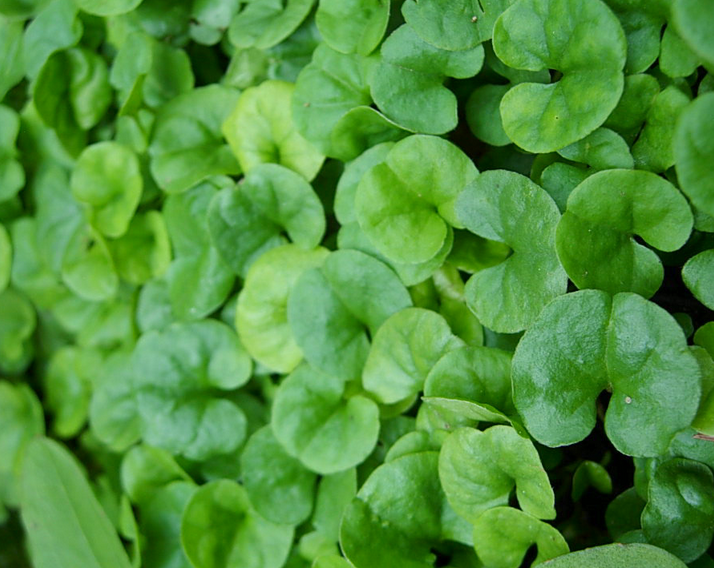
Dichondra repens Planting Methods and Value
Planting Methods for Dichondra repens
1. Land preparation: Rotary-till the ground to loosen it, rake it level, and work it fine so that the soil particles are below 2 cm in diameter. Adjust the soil pH to 5.5-7.0. Sterilize the soil with formalin:water = 1:40, using 10-15 L per sq m of bed surface. Before sterilization, the soil needs to be dry.
2. Ditching and transplanting: Open small furrows 2-3 cm deep on the prepared turf bed, with 3-4 cm between furrows. Separate the prepared Dichondra repens plants and place them evenly in the furrows, keeping a plant spacing of 3-4 cm within the furrows, cover with 2 cm of soil, water thoroughly once, cover with a shade net or straw curtain, and keep the soil moist every day. On the 5th day after planting, the plants grow vigorously, but the stolons have not yet fully contacted the ground to grow new roots; on the 10th day, a large number of stolons fully contact the ground and grow new roots and new shoots.
3. Fine sand topdressing cultivation: Before planting, water the prepared turf bed thoroughly, tear apart the prepared Dichondra repens sod by hand, spread it evenly over the turf bed, and evenly scatter the prepared fine sandy soil over the Dichondra repens, with a sand layer 6-10 mm thick, keeping the fine sandy soil completely moist, and cover with a shade net to prevent excessive water evaporation. By the 5th day, a large number of new roots have grown from the stolon nodes of the Dichondra repens; by the 10th day, a large number of new branches have grown from the places where new roots emerged.
4. Fertilization: Because Dichondra repens grows creeping along the ground and its leaves are relatively broad, fertilization is very difficult. If fertilization techniques are not strictly controlled, serious fertilizer burn can result. Generally speaking, if using highly soluble fertilizer, it is best to dissolve it first and then spray it with a sprayer; if using fertilizer that cannot dissolve immediately, then after fertilizing you must water heavily, washing the fertilizer that has fallen on the leaves into the soil with water and allowing it to dissolve as quickly as possible, which can reduce the degree of burn; or fertilize first, then use a broom to sweep the fertilizer under the leaves, and then water. At the same time, avoid fertilizing during high temperatures.
It likes nitrogen fertilizer. Usually, in combination with rain and watering, apply an appropriate amount of nitrogen fertilizer as a topdressing, preferably urea 3-5 kg/mu plus diammonium 5-10 kg/mu. After the turf has been cultivated for 2-3 years, because the rhizomes become densely packed together, it is easy for the soil to become compacted and for aeration and water infiltration to be affected. Depending on the situation, you can spike holes, or use a knife or spade to cut lines and sever the grass roots, improving soil looseness, while also adding nitrogen fertilizer and watering appropriately, so that the lawn regains its vitality.
5. Weed control: The types of weeds appearing in Dichondra repens lawns are fewer than those appearing in bermudagrass, Manila grass, and tall fescue lawns. On the one hand, this phenomenon is because Dichondra repens lawns have a very strong creeping habit; on the other hand, it is because Dichondra repens has a long green period, turns green early, and has strong competitiveness against weeds. However, in newly planted Dichondra repens lawns, because it takes 2-3 months of growth to fully cover the ground, weeds can easily invade before full ground coverage. When there are few weeds, manual pulling can be used; if there are many weeds, herbicides can be used. A single spray of the compounded formulation Lujun SL-2 at 525-675 g/hm2 can control the damage of most weeds, with a residual effect lasting up to 80-90 d, and it is safe for Dichondra repens lawns. It is worth noting that herbicides are ideally used at the weed seedling stage.
Medicinal Value of Dichondra repens
Dichondra repens functions and indications: jaundice; dysentery; gravel strangury; white turbidity; edema; boils and pyogenic infections; traumatic injuries; venomous snake bites. Clears heat and drains dampness, resolves toxins and reduces swelling. Used for hepatitis, cholecystitis, dysentery, nephritic edema, urinary tract infection, urinary tract stones, tonsillitis, and traumatic injuries. Slightly bitter, sweet, cold in nature. Enters the water and wind towers.
It can protect the liver and lower enzymes, provide analgesia, have anti-inflammatory, antibacterial, antipyretic and cholagogic effects, enhance immunity, and have anticancer effects. As an adjunct formula to other medicines, Dichondra repens can treat "long niu," "long meng sha hei," treat "long an da le," treat "long hai mai mao ba," and "shuo feng ling lan" (these are all in the Miao language; the editor really cannot understand the meanings, so I can only ask friends to search online).
When taken, it can be used internally, decocted in soup; for external use, an appropriate amount is pounded and applied to the affected area.
Caopingning removes weeds in cedar garden lawns safely and with good results
The diversity of plants in cedar gardens and the composite nature of their layout make lawn weeding somewhat difficult. To clarify the weed control effect of Caopingning in cedar garden lawns and its safety to the environment, under the guidance of experts, tests on more than 200,000 sq m of lawn showed that Caopingning has a significant effect on controlling weeds in cedar garden lawns.
“Prescribing the right remedy” is the premise
Southern cedar garden lawns are mainly warm-season grasses such as zoysia grass, bermudagrass, and seashore paspalum. The main weeds are lawn pennywort, threeflower beggarticks, KyIlinga brevifolia, purple nutsedge, and crabgrass, supplemented by Hedyotis corymbosa, Oxalis, Centella asiatica, Rhynchosia, goosegrass, and torpedograss. There are many types of lawn herbicides, including pre-emergent, post-emergent, and those that control both pre-emergent and post-emergent weeds. Some control grasses, some control sedges, some control broadleaf weeds, and some control multiple types. The selection of chemicals should be based on weed species, weed growth stage, management level, and lawn type, "selecting the right remedy for the symptoms," and consideration should also be given to a high safety margin for the lawn. Warm-season grasses have relatively strong herbicide tolerance, but some grasses should be treated with care, such as broadleaf carpetgrass and Dichondra repens.
“Seizing the opportunity” is the guarantee
Applying chemicals at the right time is the guarantee of success. Using pre-emergent herbicides before weeds germinate during the lawn growing season is an efficient, labor-saving, and money-saving method. If the germination period is missed, application can also be made in the early post-emergent stage. For stubborn perennial weeds such as torpedograss, chemicals should be applied during the transition period from vegetative growth to reproductive growth, which can eradicate them. When controlling weeds such as Hydrocotyle sibthorpioides, Parthenocissus tricuspidata, and Hedyotis corymbosa in zoysia grass on a football field, in August during the lawn growing season, after mowing and before weed germination, the author used Caopingning No. 1 + No. 38 + No. 42, 1 packet each, mixed with 16 kg of water and sprayed over 150-200 sq m, with an effect of more than 95%. Similar nursery stock includes different treatment and repair methods for weeping willow. In November, when weeds enter the flowering stage, the same amount of chemical can only be sprayed over 100 sq m, and the effect reaches only 90%, doubling the cost. Therefore, lawn weeding should seize the great opportunity of spring or late spring and early summer.
“Proceeding step by step” is fundamental
Testing first and then expanding demonstrations is fundamental to achieving success in lawn weeding. Weed control in cedar garden lawns must both efficiently eradicate weeds and prevent hidden phytotoxicity to the lawn, while also not harming flowers and shrubs. We first marked out a piece of lawn with about 90% weed coverage, mainly lawn pennywort, KyIlinga brevifolia, and purple nutsedge. We first mowed, cleared all grass clippings, and used Caopingning No. 1 + No. 38 + No. 42, 1 packet each, mixed with 16 kg of water and sprayed over 150 sq m, then watered after spraying (watering after fertilizing is preferable). The temperature was 30°C. Seven days after spraying, the weed leaves turned yellow; after 21 days, the weed roots rotted, with a control effect of more than 95%. Large-scale promotion and application of Caopingning for weeding solved the difficult problem in the management of cedar garden lawns.
“Adapting measures to local conditions” is the foundation
In the practice of lawn weeding, special areas should be matched with special application methods. There are many slopes in gardens, with lawns laid on the slopes, and around them there are often flower or shrub belts. If spraying is done conventionally, due to soil leaching and the horizontal movement of herbicides, the roots of flowers and trees below the slope are prone to chronic herbicide damage. In such areas, pre-emergent weed control is generally not used; instead, post-emergent weed control is used. Spray on sunny or cloudy days (preferably avoiding rain within 48 hours), spraying thoroughly and sufficiently, so that the chemical is applied as much as possible to the weed stems, leaves, and base. In one test, below a lawn slope, the leaves of Forsythia viridissima turned yellow and the roots died. Investigation showed it was phytotoxicity: when watering after pre-emergent spraying, the chemical solution flowed down along the slope, invaded the roots of Forsythia viridissima, and damaged its roots. The following remedial measures were then taken: ① Increase the water volume and spray the affected flowers and trees. ② Spray the affected flowers and trees with foliar agents such as 0.4% potassium dihydrogen phosphate or Gaomeishi 500-fold solution, used in rotation, for 3 consecutive times, once every 7 days. If pre-emergent chemicals require watering after spraying, increase the water volume instead of watering. For spraying, choose a knapsack sprayer with smaller droplets, rather than a high-pressure gasoline sprayer, because its droplets are large and its spray width is wide, making it very easy to damage garden plants. To avoid harming flowers and trees around the lawn, maintain a safe distance from cedar garden plants when spraying (calculated from the center of the plant stem): more than 1 m for fibrous-rooted plants (such as palm plants and willow trees), and more than half a meter for taprooted plants (such as masson pine and camphor tree). If there is strong wind, or if spraying at the edge of a flower bed even when there is no wind, add a protective cover to the nozzle (a simple method is to punch a hole in the bottom of an instant noodle cup and put it over the nozzle with the cup mouth facing down) to prevent drift of the chemical solution.
“Ecological control” is the direction
To reduce dependence on herbicides, we also adopted integrated weed management through plant quarantine to eliminate weed seeds, appropriate low mowing, reduced fertilization, aerification and sand topdressing, and dethatching supplemented by manual weeding. This improves the lawn's competitiveness against weeds, using a robust lawn and a good ecological environment to control weed damage. Because Caopingning is a low-toxicity environmentally friendly chemical, it can be applied to lawns where manual weeding is impossible. On lawns where Caopingning has successfully controlled weeds, after the weeds are removed, lawn management should be strengthened so that the lawn grows more robustly, thereby inhibiting weed germination and eliminating space for weeds to reproduce.
The effect of controlling weeds in cedar garden lawns is significant
The diversity of plants in cedar gardens and the composite nature of their layout make lawn weeding somewhat difficult. To clarify the weed control effect of Caopingning in cedar garden lawns and its safety to the environment, under the guidance of experts, tests on more than 200,000 sq m of lawn showed that Caopingning has a significant effect on controlling weeds in cedar garden lawns.
“Prescribing the right remedy” is the premise
Southern cedar garden lawns are mainly warm-season grasses such as zoysia grass, bermudagrass, and seashore paspalum. The main weeds are lawn pennywort, threeflower beggarticks, KyIlinga brevifolia, purple nutsedge, and crabgrass, supplemented by Hedyotis corymbosa, Oxalis, Centella asiatica, Rhynchosia, goosegrass, and torpedograss. There are many types of lawn herbicides, including pre-emergent, post-emergent, and those that control both pre-emergent and post-emergent weeds. Some control grasses, some control sedges, some control broadleaf weeds, and some control multiple types. The selection of chemicals should be based on weed species, weed growth stage, management level, and lawn type, "selecting the right remedy for the symptoms," and consideration should also be given to a high safety margin for the lawn. Warm-season grasses have relatively strong herbicide tolerance, but some grasses should be treated with care, such as broadleaf carpetgrass and Dichondra repens.
“Seizing the opportunity” is the guarantee
Applying chemicals at the right time is the guarantee of success. Using pre-emergent herbicides before weeds germinate during the lawn growing season is an efficient, labor-saving, and money-saving method. If the germination period is missed, application can also be made in the early post-emergent stage. For stubborn perennial weeds such as torpedograss, chemicals should be applied during the transition period from vegetative growth to reproductive growth, which can eradicate them. When controlling weeds such as Hydrocotyle sibthorpioides, Parthenocissus tricuspidata, and Hedyotis corymbosa in zoysia grass on a football field, in August during the lawn growing season, after mowing and before weed germination, the author used Caopingning No. 1 + No. 38 + No. 42, 1 packet each, mixed with 16 kg of water and sprayed over 150-200 sq m, with an effect of more than 95%. Similar nursery stock includes different treatment and repair methods for weeping willow. In November, when weeds enter the flowering stage, the same amount of chemical can only be sprayed over 100 sq m, and the effect reaches only 90%, doubling the cost. Therefore, lawn weeding should seize the great opportunity of spring or late spring and early summer.
“Proceeding step by step” is fundamental
Testing first and then expanding demonstrations is fundamental to achieving success in lawn weeding. Weed control in cedar garden lawns must both efficiently eradicate weeds and prevent hidden phytotoxicity to the lawn, while also not harming flowers and shrubs. We first marked out a piece of lawn with about 90% weed coverage, mainly lawn pennywort, KyIlinga brevifolia, and purple nutsedge. We first mowed, cleared all grass clippings, and used Caopingning No. 1 + No. 38 + No. 42, 1 packet each, mixed with 16 kg of water and sprayed over 150 sq m, then watered after spraying (watering after fertilizing is preferable). The temperature was 30°C. Seven days after spraying, the weed leaves turned yellow; after 21 days, the weed roots rotted, with a control effect of more than 95%. Large-scale promotion and application of Caopingning for weeding solved the difficult problem in the management of cedar garden lawns.
“Adapting measures to local conditions” is the foundation
In the practice of lawn weeding, special areas should be matched with special application methods. There are many slopes in gardens, with lawns laid on the slopes, and around them there are often flower or shrub belts. If spraying is done conventionally, due to soil leaching and the horizontal movement of herbicides, the roots of flowers and trees below the slope are prone to chronic herbicide damage. In such areas, pre-emergent weed control is generally not used; instead, post-emergent weed control is used. Spray on sunny or cloudy days (preferably avoiding rain within 48 hours), spraying thoroughly and sufficiently, so that the chemical is applied as much as possible to the weed stems, leaves, and base. In one test, below a lawn slope, the leaves of Forsythia viridissima turned yellow and the roots died. Investigation showed it was phytotoxicity: when watering after pre-emergent spraying, the chemical solution flowed down along the slope, invaded the roots of Forsythia viridissima, and damaged its roots. The following remedial measures were then taken: ① Increase the water volume and spray the affected flowers and trees. ② Spray the affected flowers and trees with foliar agents such as 0.4% potassium dihydrogen phosphate or Gaomeishi 500-fold solution, used in rotation, for 3 consecutive times, once every 7 days. If pre-emergent chemicals require watering after spraying, increase the water volume instead of watering. For spraying, choose a knapsack sprayer with smaller droplets, rather than a high-pressure gasoline sprayer, because its droplets are large and its spray width is wide, making it very easy to damage garden plants. To avoid harming flowers and trees around the lawn, maintain a safe distance from cedar garden plants when spraying (calculated from the center of the plant stem): more than 1 m for fibrous-rooted plants (such as palm plants and willow trees), and more than half a meter for taprooted plants (such as masson pine and camphor tree). If there is strong wind, or if spraying at the edge of a flower bed even when there is no wind, add a protective cover to the nozzle (a simple method is to punch a hole in the bottom of an instant noodle cup and put it over the nozzle with the cup mouth facing down) to prevent drift of the chemical solution.
“Ecological control” is the direction
To reduce dependence on herbicides, we also adopted integrated weed management through plant quarantine to eliminate weed seeds, appropriate low mowing, reduced fertilization, aerification and sand topdressing, and dethatching supplemented by manual weeding. This improves the lawn's competitiveness against weeds, using a robust lawn and a good ecological environment to control weed damage. Because Caopingning is a low-toxicity environmentally friendly chemical, it can be applied to lawns where manual weeding is impossible. On lawns where Caopingning has successfully controlled weeds, after the weeds are removed, lawn management should be strengthened so that the lawn grows more robustly, thereby inhibiting weed germination and eliminating space for weeds to reproduce.
This article is from a professional nursery stock cooperative for cedar, osmanthus, Magnolia grandiflora, and Magnolia denudata. Website: