What are the cultivation methods for large-flowered pansy?
Large-flowered pansy, also known as butterfly flower or face flower, is a perennial herbaceous flowering plant in the genus Viola of the family Violaceae. The editors at Yiqizhuangxiu remind you that when cultivating large-flowered pansy, you must first master some relevant knowledge. Below, let's take a detailed look with the editors at Yiqizhuangxiu at what cultivation methods exist for large-flowered pansy.
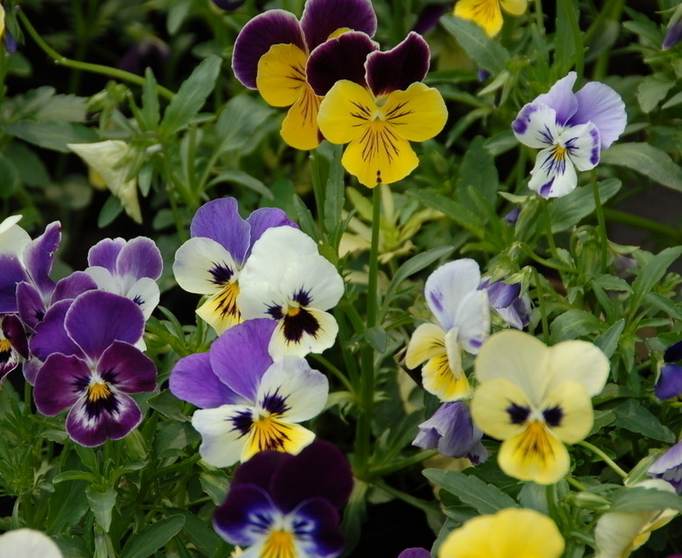
Large-Flowered Pansy Cultivation Methods Revealed
Large-Flowered Pansy Cultivation Methods
1. Temperature and Light Management
Large-flowered pansy loves a cool growing environment. In terms of temperature, its optimal growing temperature is between 7 and 15°C. The plant is relatively cold-tolerant, but when the temperature remains too low for a long time, the plant and flowers may show symptoms similar to leaves turning purple. Likewise, when the temperature is too high, especially above 30°C in summer, the plant will also be affected, the flowers will gradually become smaller, and the blooms will grow more slender and weak. Large-flowered pansy loves light, and during the growing and flowering periods it needs sufficient sunlight. If light is insufficient for a long time, leggy growth may occur. However, when it is in bloom, the light should not be too intense, otherwise the flowers produced are easily damaged.
2. Water and Fertilizer Management
When cultivating large-flowered pansy, water and fertilizer management is actually quite difficult. Large-flowered pansy's demand for water is neither high nor low. Each time you water, the plant must be in a state of dry soil, and this is especially important to note in seasons with low temperatures and weak light. When watering, the amount of water must not be excessive. Too much water not only affects plant growth but to a certain extent also causes the plant to produce leggy branches, so the frequency and amount of watering should be appropriate. When fertilizing, operations should be carried out according to the time and place. In the early growth stage, the plant's needs are great, and applying sufficient nitrogen fertilizer works well. After every 2 to 3 waterings, you can apply a calcium-containing compound fertilizer once. When the flowering stage arrives, phosphorus fertilizer needs to be added.
3. Pest and Disease Control
Large-flowered pansy is robust in constitution and generally not easily infected by pests and diseases. However, in the rainy south, due to high humidity, the flowers are prone to gray mold. Timely picking of faded flowers is very important, and spraying with a 800-1000 times dilution of baijunqing gives good results. In addition, in places with high planting density, poor ventilation makes them prone to red spider mite infestation, and a 800 times dilution of dichlorvos and omethoate can effectively control it.
Large-flowered pansy is widely used and is mostly applied in large green space arrangements for block-surface effects. The eye-catching golden yellow and deep blue, as well as the velvet-textured wine red and white, can be combined to create a flowing melody. The large-flowered and speckled color series are especially suitable as pot flowers or combination potted plants, while small-flowered varieties can be used as hanging cultivation or as edging material for flower pots.
Large-Flowered Pansy Cultivation Methods, Large-Flowered Pansy Image Appreciation
With the continuous improvement and enhancement of science and technology, people's lives have become more and more convenient, but at the same time people's distance from nature has also grown farther and farther. However, everyone knows that people cannot completely stay away from nature, and people also deeply love nature. So in order to get closer to nature, many people have started growing plants, and this large-flowered pansy is one of the plants people commonly grow. So how do you cultivate large-flowered pansy? Below let's take a look together at the cultivation methods for large-flowered pansy.
Introduction to Large-Flowered Pansy
Large-flowered pansy, also known as butterfly flower or face flower, is a perennial herbaceous flowering plant in the genus Viola of the family Violaceae. Its plant height is about 15 cm. The plant's stems are upright, its basal leaves are numerous, and the plant's leaves are mostly ovate. The leaf edges have some neat blunt serrations, looking very unique. The flower colors of large-flowered pansy are very astonishing. Its flower colors are mostly bicolor or multicolor, often appearing as composite colors of white, yellow, blue, brick red, brownish red, brown, orange and purple, looking very magical. Large-flowered pansy flowers are gorgeous and refined, with high ornamental value, so they are widely cultivated by people as ornamental plants.
Large-Flowered Pansy Cultivation Methods
1. Temperature and Light Management
Large-flowered pansy loves a cool growing environment. In terms of temperature, its optimal growing temperature is between 7 and 15°C. The plant is relatively cold-tolerant, but when the temperature remains too low for a long time, the plant and flowers may show symptoms similar to leaves turning purple. Likewise, when the temperature is too high, especially above 30°C in summer, the plant will also be affected, the flowers will gradually become smaller, and the blooms will grow more slender and weak. Large-flowered pansy loves light, and during the growing and flowering periods it needs sufficient sunlight. If light is insufficient for a long time, leggy growth may occur. However, when it is in bloom, the light should not be too intense, otherwise the flowers produced are easily damaged.
2. Water and Fertilizer Management
When cultivating large-flowered pansy, water and fertilizer management is actually quite difficult. Large-flowered pansy's demand for water is neither high nor low. Each time you water, the plant must be in a state of dry soil, and this is especially important to note in seasons with low temperatures and weak light. When watering, the amount of water must not be excessive. Too much water not only affects plant growth but to a certain extent also causes the plant to produce leggy branches, so the frequency and amount of watering should be appropriate. When fertilizing, operations should be carried out according to the time and place. In the early growth stage, the plant's needs are great, and applying sufficient nitrogen fertilizer works well. After every 2 to 3 waterings, you can apply a calcium-containing compound fertilizer once. When the flowering stage arrives, phosphorus fertilizer needs to be added.
Large-Flowered Pansy Image Appreciation
Large-flowered pansy truly deserves to be a magical and beautiful flowering plant. Every time you see its flowers' appearance, you find it magical and enchanting. The eye-catching golden yellow and deep blue of the flowers, as well as the velvet-textured wine red and white, the different combinations of various colors are like different musical notes, creating flowing songs one after another, both joyful and wonderful. Under the sunlight, the flowers seem to shine brightly, looking as if they have been endowed with a magical glow, so beautiful it stops your breath and moves you deeply. If you had such a potted flowering plant at home and could see it blooming every day, our mood would surely be beautiful.
Conclusion: Large-flowered pansy is beautiful and unique, a flowering plant with relatively high ornamental value. Its cultivation method is simple, and everyone can absolutely try growing it at home. Used as an indoor potted flower, it is very stunning.
Large-Flowered Pansy Cultivation Methods and Functions
Large-flowered pansy is a biennial or perennial herbaceous plant of the genus Viola. It likes cool conditions and is relatively cold-tolerant, and it avoids high temperatures and excessive moisture. It grows extremely well in fertile, moist clay loam, and in poor soil the varieties easily degenerate. Do you like this plant? Today let's learn about its cultivation methods and functions together.
.....
The sowing period for large-flowered pansy is the cool season. In areas where winter is not considered severely cold, you can try bringing it to market in early autumn for green space applications. This requires sowing in summer. Because of the high temperature, the germination rate will be greatly reduced. The solution is to find a cool environment for sowing, or use pre-germinated seeds. The pH value of the sowing medium is 5.8 to 6.2. If too low, it will cause boron deficiency and lead to scorched leaf tips. Seedlings emerge in about 7 to 14 days. During the germination period, no light is needed, and the medium should be kept moist, otherwise germination will be uneven.
.....
.....
After the cotyledons of large-flowered pansy have fully unfolded, the moisture of the medium should be controlled to just slightly moist, so that its color stays in the transition from dark to brown. At this point you can begin applying 50 ppm nitrogen fertilizer. After the true leaves have unfolded, the fertilization concentration can rise to 150 ppm. When the seedlings have 3 to 4 pairs of true leaves and the seedling height is about 3 cm, the humidity should be adjusted so that there is a periodic cycle of dry and wet within 24 hours, and potting can begin. For planting, small pots with a diameter of 10 to 13 cm are commonly used, with well-drained culture soil, and the pH value controlled at 5.8 to 6.2. If it is greater than 6.5, the root system will turn black and the basal leaves will turn yellow.
.....
.....
Large-flowered pansy needs sufficient sunlight during growth in autumn and winter, otherwise symptoms such as leggy growth easily occur. During the flowering period it can tolerate slight partial shade. The optimal temperature for growth is 7—15°C. If the temperature remains too low for a long time, the leaves will turn purple. Below 15°C is beneficial for producing a good plant shape, and above 15°C is beneficial for flowering. Above 30°C in summer, the flowers become smaller and growth becomes slender and weak.
.....
.....
Each watering of large-flowered pansy must be carried out when the soil is slightly dry, especially in seasons with low temperatures and weak light. Too much water not only affects growth but also easily produces leggy branches. When the plant is flowering, sufficient water should be guaranteed to make the flowers larger and increase the number of blooms. In the early growth stage, nitrogen fertilizer is the main type, and a calcium-containing compound fertilizer is applied once every 2 to 3 waterings. As the flowering period approaches, phosphorus fertilizer should be increased. When the temperature is low, ammoniacal nitrogen will cause root rot.
.....
.....
Large-flowered pansy is robust in constitution and generally not easily infected by pests and diseases. However, in the rainy south, due to high humidity, the flowers are prone to gray mold. Timely picking of faded flowers is very important, and spraying with a 800—1000 times dilution of baijunqing gives good results. In addition, in places with high planting density, poor ventilation makes them prone to red spider mite infestation, and a 800 times dilution of dichlorvos and omethoate can effectively control it.
.....
.....
Large-flowered pansy is widely used and is mostly applied in large green space arrangements for block-surface effects. The eye-catching golden yellow and deep blue, as well as the velvet-textured wine red and white, can be combined to create a flowing melody. The large-flowered and speckled color series are especially suitable as pot flowers or combination potted plants, while small-flowered varieties can be used as hanging cultivation or as edging material for flower pots.
.....
Large-flowered pansy planted together with other flowers can form a unique early spring landscape. In addition, it can also be potted or used to arrange balconies, windowsills, steps, or to adorn living rooms, studies and reception rooms, quite novel and full of elegant charm. That is all I have brought you about large-flowered pansy. Thank you all for appreciating it.