How to Grow Twin Lotus Flowers? A Complete Guide to Cultivation Methods
Twin lotus, also known as bing-tou lotus, is deeply loved by people, and many want to grow it themselves but don't know how. The editors at Yiqizhuangxiu.com remind you that when growing twin lotus flowers, you must first master some relevant knowledge. Below, let the editors at Yiqizhuangxiu.com give you a detailed introduction.
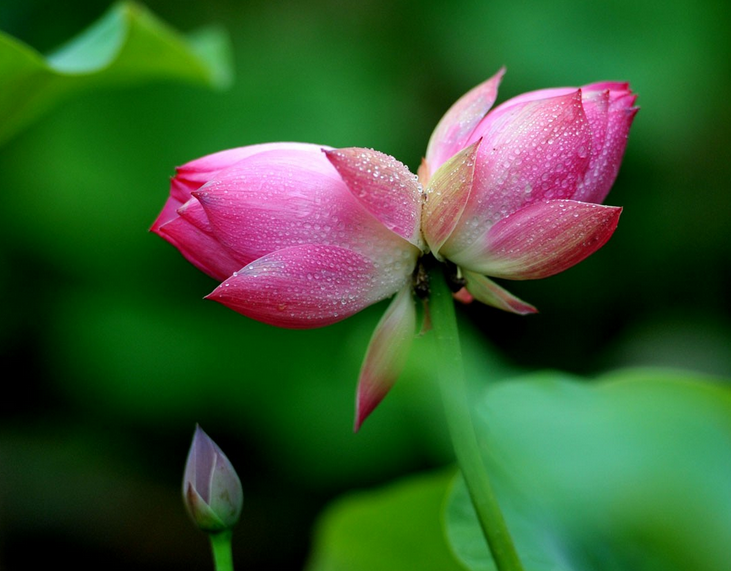
An Analysis of Twin Lotus Flower Cultivation Methods
Introduction to Twin Lotus
Twin lotus belongs to the water lily family (Nymphaeaceae) and is a thousand-petaled lotus type among lotuses. It is a rare treasure among flowers, a perennial herbaceous plant that grows in shallow water. Its underground stem is called a lotus root. Both the seeds and the underground stem can be eaten. It originated in our country and is one of our country's traditional famous flowers. It is a variety of lotus and a rare treasure among flowers, gathering the essence of the lotus into one, and is especially captivating. It produces two flowers from a single stem, each flower having its own receptacle, with the receptacles joined together on the flower stem, so some people also call it bing-tou lotus. Its leaves are large and round, called lotus leaves.
Feng Xiaoqing, a female poet from Hangzhou in the Ming Dynasty (a figure in literary stories, said to have once lived in Yangzhou), once wrote: "I bow before the great Bodhisattva Lanyun, praying not to be born in the Western Paradise nor in heaven. I wish to take a drop of willow-branch water and sprinkle it as twin lotuses in the human world." This expressed her boundless longing and blessings for the twin lotus.
The Blooming Period of Twin Lotus Flowers
Twin lotus is a rare treasure among lotuses, with a probability of occurrence of one in one hundred thousand. It is a "twin" among plants that is seen only once in ten years. Its genetic mechanism is still under study and cannot currently be replicated. Heredity. Lotus experts have repeatedly conducted cultivation experiments using lotus root seeds that had grown twin lotus flowers and lotus seeds from twin lotus seed pods, and the results all failed to produce twin lotus flowers, confirming that it is not hereditary and can only occur naturally. So it should be the same as the lotus, with a blooming period from June to September.
Twin Lotus Flower Cultivation Methods
Lotus seeds have no dormancy period and can be sown all year round. The temperatures of spring and autumn are most suitable for sowing.
Under suitable temperature and light conditions, lotus seeds take 50-60 days from sowing to blooming in spring and 60-80 days in autumn. Choose to sow in an environment suitable for aquatic cultivation. Use pond mud or paddy field mud rich in humus as the growing medium. Never use industrially polluted soil.
Timing for aquatic flower cultivation. It can be done indoors all year round, with spring and autumn being preferable. The indoor temperature must not be lower than 5°C, with an optimal temperature of 15-24°C.
About watering: The best water for watering flowers is mountain spring water or natural falling water, that is, rainwater. If using tap water, it is best to store it in a separate vat and let it sit in the sun for one or two days before use. The depth of the nutrient solution. It is best to keep it level with the roots. Too deep and the stems easily rot; too shallow and it affects root and stem growth and development. Small and medium-sized plants are only suitable for a water depth of 20-60 cm. In summer, the leaf surface should be sprayed with water frequently. Summer is the peak growth period for lotuses, and the pot must never lack water. If water is not added for just 3 hours, the lotus leaves planted in the water vat will wilt; if water is stopped for one day, the lotus leaf edges will scorch and the flower buds will wither and die back. After the beginning of winter, the pot soil should also be kept moist to prevent the seed lotus roots from drying out due to lack of water.
A well-ventilated environment can provide twin lotus with fresh air, accelerate photosynthesis, reduce the occurrence of pests and diseases, and promote healthy growth.
Judging and handling root rot. For rotten roots, they must be promptly and completely cut away. If part of the rotten root is left, it will spread upward and develop, while also deteriorating the water quality and affecting the plant's survival. Fertilizer should be mainly phosphorus and potassium fertilizer, supplemented with nitrogen fertilizer.
After the beginning of winter, simply place the pot indoors or bury it below the frozen soil layer. In areas north of the Yellow River, in addition to burying it below the frozen soil layer, it should also be covered with agricultural film. The pot soil should be kept moist throughout the winter.
Twin lotus belongs to the lotus and has many uses. It not only has ornamental value but also edible and medicinal value. Many tourist attractions and parks plant lotuses for viewing and decoration. At home, using twin lotus as potted plants or cut flowers not only adds vitality but also brings a faint, delicate fragrance. Lotus seeds, lotus stamens, lotus flowers, and lotus leaves can all be eaten, with lotus seed porridge and lotus seed powder being the most popular. Lotus flowers have the effect of clearing heat and detoxifying, lotus seeds can benefit the kidneys and nourish the spleen, lotus leaves are a weight-loss wonder, and lotus stamens help promote salivation and quench thirst. There are many benefits.
[Twin Lotus Cultivation Methods] Symbolic Meaning of Twin Lotus_Complete Picture Collection
Twin lotus is a relatively precious variety of lotus, with a growth probability of one in one hundred thousand among lotuses, and is called a twin among plants that is seen only once in ten years. According to research by lotus experts, cultivating the lotus roots and lotus seeds of twin lotus flowers cannot produce twin lotus flowers. It is a plant that cannot be inherited and can only occur naturally, which makes the twin lotus variety appear very rare. In Tinglin Park in Kunshan City, there is a twin lotus pond, and in June 2011, a very rare twin lotus was also discovered in Chating Park in Fuzhou. Below, let us look at the cultivation methods of twin lotus, as well as the symbolic meaning of twin lotus, and at the same time briefly enjoy a complete collection of twin lotus pictures.
[Introduction to Twin Lotus]
Twin lotus is a perennial herbaceous plant belonging to the water lily family (Nymphaeaceae) and the genus Nelumbo. It is a very precious thousand-petaled lotus variety among lotuses. Twin lotus generally grows in shallow water. The stem that grows underground is the lotus root, and both its seeds and stem can be eaten, possessing very good medicinal value. Twin lotus originated in China and is a very traditional famous flower, known as a rare variety of lotus. It concentrates the essence of the lotus into one, giving people a captivating feeling, and is very much loved by people.
[Morphological Characteristics of Twin Lotus]
Twin lotus is a very precious lotus variety. Generally, two lotus flowers grow from the stem position, and each lotus flower has its own receptacle, with the receptacles growing on the flower stem in a joined state, so people call it twin lotus or bing-tou lotus. The leaves of twin lotus are very large, round in shape, and are called lotus leaves. When the flowers bloom, they are also very large, with pink and white colors, very beautiful. The seeds of twin lotus are called lotus seeds, which grow inside an inverted cone-shaped receptacle called the lotus seed pod.
[Appreciation of a Complete Collection of Twin Lotus Pictures]
Twin lotus is a relatively precious variety among the thousand-petaled lotuses, occupying all the essence of the lotus and giving people a captivating feeling. From ancient times to the present, twin lotus has been called an auspicious and fortunate plant. It is the embodiment of beauty and goodness, symbolizing love, representing marital harmony, happiness and fulfillment, lingering love, deep affection, brotherly bond, and more, which is why it is especially loved by people. People call twin lotus one of the Three Treasures of Kunshan City. People also call it tongxin furong, bing-tou lotus, hehuan lotus, and rui lotus. It is a plant that grows in water all year round.
During the growth process of twin lotus, first a flower bud forms, then it divides at the center and would normally produce one flower. Under the influence of the external environment or internal variation in the receptacle, the flower bud growing on one stem will differentiate, splitting into two centers, thus forming two flower buds like twins. On a single stem, two flower receptacles form, blooming into two flowers, and finally growing into two lotus seed pods. This is the growth process of twin lotus.
[Symbolic Meaning of Twin Lotus]
Twin lotus has the title of "gentleman among flowers" and is a precious variety of lotus. It symbolizes eternal union and a harmonious marriage of a hundred years, which is based on its growth state. On a single stem, twin lotus blooms two flower buds, flowers, and lotus seed pods, symbolizing shared fortune, shared roots, shared life, and shared heart. In ancient literary works, twin lotus symbolizes love, with meanings such as marital harmony, brotherly bond, deep affection, happiness and fulfillment, lingering love, and more. Among the common people, it is called an auspicious plant.
More related information: Ginkgo tree pictures Eucommia tree pictures How to plant creeping ivy Chayote pictures
Twin Lotus Cultivation Methods
Twin lotus belongs to the thousand-petaled lotus type among lotuses and is a rare treasure among flowers. It gathers the essence of the lotus into one, and is especially captivating. Since ancient times, people have regarded twin lotus as an omen of good fortune and celebration, and the embodiment of goodness and beauty. Now let us learn about its cultivation methods. Friends who enjoy growing plants, let's take a look together.
Twin Lotus Illustration 1
Introduction to Twin Lotus FlowersTwin lotus belongs to the water lily family (Nymphaeaceae) and is a thousand-petaled lotus type among lotuses. It is a rare treasure among flowers, a perennial herbaceous plant that grows in shallow water. Its underground stem is called a lotus root. Both the seeds and the underground stem can be eaten. It originated in our country and is one of our country's traditional famous flowers. It is a variety of lotus and a rare treasure among flowers, gathering the essence of the lotus into one, and is especially captivating. It produces two flowers from a single stem, each flower having its own receptacle, with the receptacles joined together on the flower stem, so some people also call it bing-tou lotus. Its leaves are large and round, called lotus leaves.
Feng Xiaoqing, a female poet from Hangzhou in the Ming Dynasty (a figure in literary stories, said to have once lived in Yangzhou), once wrote: "I bow before the great Bodhisattva Lanyun, praying not to be born in the Western Paradise nor in heaven. I wish to take a drop of willow-branch water and sprinkle it as twin lotuses in the human world." This expressed her boundless longing and blessings for the twin lotus.
Twin Lotus Illustration 2
The Blooming Period of Twin Lotus FlowersTwin lotus is a rare treasure among lotuses, with a probability of occurrence of one in one hundred thousand. It is a "twin" among plants that is seen only once in ten years. Its genetic mechanism is still under study and cannot currently be replicated. Heredity. Lotus experts have repeatedly conducted cultivation experiments using lotus root seeds that had grown twin lotus flowers and lotus seeds from twin lotus seed pods, and the results all failed to produce twin lotus flowers, confirming that it is not hereditary and can only occur naturally. So it should be the same as the lotus, with a blooming period from June to September.
Twin Lotus Flower Cultivation Methods
Lotus seeds have no dormancy period and can be sown all year round. The temperatures of spring and autumn are most suitable for sowing.
Under suitable temperature and light conditions, lotus seeds take 50-60 days from sowing to blooming in spring and 60-80 days in autumn. Choose to sow in an environment suitable for aquatic cultivation. Use pond mud or paddy field mud rich in humus as the growing medium. Never use industrially polluted soil.
Timing for aquatic flower cultivation. It can be done indoors all year round, with spring and autumn being preferable. The indoor temperature must not be lower than 5°C, with an optimal temperature of 15-24°C.
About watering: The best water for watering flowers is mountain spring water or natural falling water, that is, rainwater. If using tap water, it is best to store it in a separate vat and let it sit in the sun for one or two days before use. The depth of the nutrient solution. It is best to keep it level with the roots. Too deep and the stems easily rot; too shallow and it affects root and stem growth and development. Small and medium-sized plants are only suitable for a water depth of 20-60 cm. In summer, the leaf surface should be sprayed with water frequently. Summer is the peak growth period for lotuses, and the pot must never lack water. If water is not added for just 3 hours, the lotus leaves planted in the water vat will wilt; if water is stopped for one day, the lotus leaf edges will scorch and the flower buds will wither and die back. After the beginning of winter, the pot soil should also be kept moist to prevent the seed lotus roots from drying out due to lack of water.
A well-ventilated environment can provide twin lotus with fresh air, accelerate photosynthesis, reduce the occurrence of pests and diseases, and promote healthy growth.
Judging and handling root rot. For rotten roots, they must be promptly and completely cut away. If part of the rotten root is left, it will spread upward and develop, while also deteriorating the water quality and affecting the plant's survival. Fertilizer should be mainly phosphorus and potassium fertilizer, supplemented with nitrogen fertilizer.
After the beginning of winter, simply place the pot indoors or bury it below the frozen soil layer. In areas north of the Yellow River, in addition to burying it below the frozen soil layer, it should also be covered with agricultural film. The pot soil should be kept moist throughout the winter.
Twin lotus belongs to the lotus and has many uses. It not only has ornamental value but also edible and medicinal value. Many tourist attractions and parks plant lotuses for viewing and decoration. At home, using twin lotus as potted plants or cut flowers not only adds vitality but also brings a faint, delicate fragrance. Lotus seeds, lotus stamens, lotus flowers, and lotus leaves can all be eaten, with lotus seed porridge and lotus seed powder being the most popular. Lotus flowers have the effect of clearing heat and detoxifying, lotus seeds can benefit the kidneys and nourish the spleen, lotus leaves are a weight-loss wonder, and lotus stamens help promote salivation and quench thirst. There are many benefits.