How to Grow Oriental Lilies? Detailed Guide to Cultivation Methods
The Oriental lily is the queen among lilies; its petals always open with such confidence. A queen never feels lost. Everything about her is so spontaneous and direct. The editors at Yiqizhuangxiu remind you that when growing Oriental lilies, you must first master some relevant knowledge. Below, let's take a detailed look together with the editors at Yiqizhuangxiu.
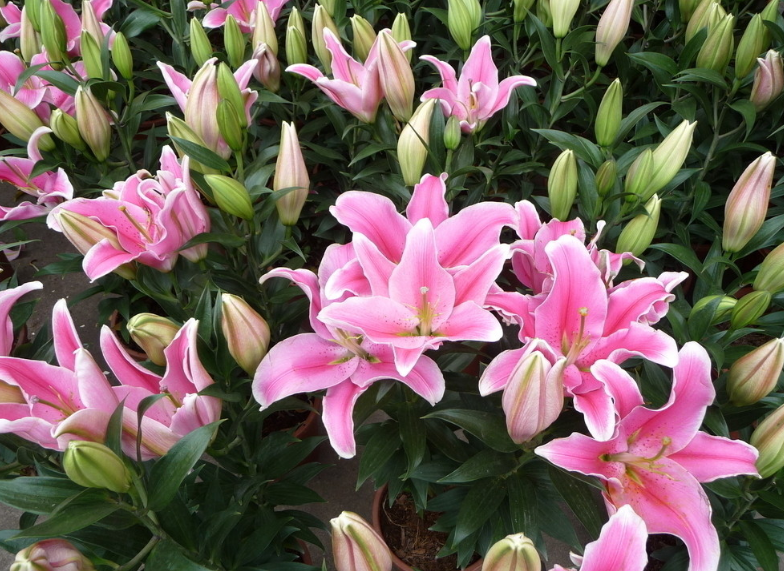
How to Grow Oriental Lilies: Detailed Guide to Oriental Lily Cultivation Methods
How to Grow Oriental Lilies
1. Soil: Oriental lilies prefer fertile, deep soil rich in humus, and above all dislike hard clay; well-drained, slightly acidic soil is best, with a soil pH of 5.5-6.5.
2. Watering: Simply keep the potting soil moist; the potting soil should not be too wet, otherwise the bulbs rot easily.
3. Light: Potted lilies have different requirements for light intensity at different growth stages. During the bud stage, shading treatment is needed; if the leaf temperature is too high, appropriate shading should also be provided. At other growth stages, light should be increased, especially during the flower development period. Temperature: The growth and flowering temperature for Oriental lilies is 16-24°C; below 5°C or above 30°C, growth almost stops; only above 10°C do plants grow normally; above 25°C, growth stalls again. If the winter nighttime temperature stays below 5°C for 5-7 consecutive days, flower bud differentiation and flower bud development will be severely affected, delaying flowering or even causing blind flowers and split flowers.
4. Fertilizing: Lilies have a relatively high demand for nitrogen and potassium fertilizers, which should be applied once every 10-15 days during the growing season, while phosphate fertilizer should be limited, because too much phosphate fertilizer causes yellowing leaves. (During the flowering period, phosphate fertilizer can be applied additionally for 1-2 days.)
5. Pests and diseases:
(1) Gray mold: Use captan, thiophanate, or zineb at 500 times dilution for control.
(2) Damping-off: Before planting, soak in 500 times dilution of Formasen or 50 times dilution of 40% formaldehyde for 15.
(3) Root rot: Diseased plants need to be pulled out, then the soil disinfected with dexon.
(4) Pests: For aphids, mites, white grubs, and cutworms, use omethoate, dicofol, and poisonous bait for control.
6. Pruning: To make the bulbs plump, lilies can be cut off at the base after flowering to reduce nutrient consumption, because flowering has already used up a lot of the bulb's nutrients. If you want to keep the bulbs for continued planting, you must continue fertilizing to replenish the bulbs' nutrients. After one month, the bulbs can be dug out, the fibrous roots cut off, and placed in the refrigerator for cold storage for a period to break dormancy before planting again, but the flower quality will decline.
Propagation Methods for Oriental Lilies
(1) Bulb propagation
The number of bulbs is relatively small, so it cannot become the main propagation method, but it can still be used.
(2) Bulbil propagation
Purple-black bulbils similar to small bulbs can be used for propagation.
(3) Seed propagation
Lily seeds are divided into fast-sprouting and slow-sprouting types. Slow-sprouting seeds must go through: storage - rooting - small bulb formation - flowering and other processes, while the fast-sprouting type has a relatively shortened process.
(4) Cutting propagation
The stems and leaves near the ground of lilies can regrow in water or moist soil.
Complete Detailed Guide to Snow White Tradescantia Cultivation Methods
✿ Related Reading Recommendations
✿ Balanophora ✿ Acer palmatum
✿ Senecio ✿ Water hyacinth
✿ Viola ✿ Saxifrage
(◕‿◕✿) For flowers and bonsai, plant cultivation, please follow the Meilele Flowers and Bonsai section!
.......
Snow White Tradescantia belongs to the Commelinaceae family, Tradescantia genus. It is a perennial succulent herbaceous plant native to Guatemala, Belize, Mexico and other countries in Central and South America. Also known as white silk grass, it prefers warm, humid conditions. Today the editor will briefly introduce the cultivation methods of Snow White Tradescantia.
.......
Snow White Tradescantia is a perennial succulent herbaceous plant. The plant grows in clumps, with erect or slightly creeping stems, 15-20 cm tall. The short, thick succulent stems are hard and straight, covered with dense long white hairs. The leaves are alternate, green or brownish-green, slightly succulent, long ovate, about 2 cm long and 1 cm wide, also covered with dense white hairs. The small flowers are light purple-pink, borne at the top of the stems.
.......
.......
Snow White Tradescantia prefers a warm, humid environment and bright but soft sunlight. It tolerates partial shade and drought but not cold, and dislikes scorching sun exposure and waterlogged potting soil. The optimum growth temperature is 16-24°C.
.......
.......
Under these conditions, the plant can be kept in a bright place without direct sunlight. If light is insufficient, the plant will become leggy, the distance between leaves will lengthen, and the white hairs on stems and leaves will become sparse, affecting its ornamental value; if light is too strong, the leaves turn brown, which also affects appearance.
.......
.......
Snow White Tradescantia can be propagated by division along with repotting; the method is to take the densely growing plant out of the pot and divide it for planting. It can also be propagated during the growing season by cutting stem tips and inserting them in sand or vermiculite. After insertion, place in partial shade, keep the soil moist but not waterlogged. At 20-25°C, roots can form in about 2 weeks.
.......
.......
During the growing season, keep the potting soil moist but not waterlogged. When the air is dry, clean water can be sprayed on the plant and surrounding ground, but water droplets must not remain on the leaf surface for long, otherwise the leaves will rot. Apply decomposed dilute liquid fertilizer or compound fertilizer once a month, but the amount should not be too much, to avoid excessive stem and leaf growth that makes the plant shape messy.
.......
.......
In summer, when temperatures are high, appropriate shading can be provided and ventilation strengthened, otherwise stuffy heat and humidity will cause the plant to rot. In winter, place it indoors in a sunny spot and reduce watering; it can overwinter safely at 8-10°C. Because the plant grows quickly, it should be pruned and shaped regularly during cultivation. Timely cut back overly long stems and remove yellowed, withered, and rotten lower leaves to keep the plant shape neat and attractive.
.......
Because the plant is densely covered with long hairs, it is very difficult to remove dirt once it sticks. Therefore, be especially careful when fertilizing to prevent fertilizer liquid from contaminating the plant, and place the flowerpot in a clean indoor spot for cultivation to avoid outdoor rain contaminating the leaves.
.......
Conclusion: Snow White Tradescantia is also relatively easy to care for and is very suitable for home cultivation and appreciation. It is often grown as a small potted plant to accent desks, writing tables, windowsills, and other places, fresh and elegant, quite distinctive. Today the editor's introduction to Snow White Tradescantia cultivation methods ends here. Thank you for reading. If you want to learn about the characteristics of other plants, you can click the links below the article. More information is waiting for you.
[Article Source] Flowers and Bonsai
✿Flowers and Bonsai✿
✿ Characteristics of Peonies ✿ How to Grow Azaleas ✿ Are Cactus Plants Poisonous ✿ Black Datura Flower ✿ How to Grow Lucky Bamboo in Soil
✿ Uses of Cactus ✿ How to Eat Yacon ✿ What Is Cistanche ✿ Harm of Water Hyacinth ✿ Price of Hedyotis diffusa
✿ Characteristics of Osmanthus Trees ✿ Golden Monkey Cactus ✿ Oriental Lily Price ✿ Complete Collection of Peony Pictures ✿ Does Mimosa Bloom
✿ Meaning of Pink Roses ✿ How to Grow Cyclamen ✿ Forget-me-not Flower Pictures ✿ Red Carnation Pictures ✿ What Are Betel Nuts
✿ **Tianshan Snow Lotus ✿ How to Grow Money Tree ✿ Thousand-Hand Guanyin Pictures ✿ Rose Planting Techniques ✿ Rubber Plant Cultivation Methods
✿ Characteristics of Mimosa ✿ White Magnolia Flower Pictures ✿ Sago Palm Leaves Turning Yellow ✿ Pictures of Lucky Bamboo Grown in Water ✿ Aloe Vera Pictures
Detailed Guide to Soil Cultivation Methods and Precautions for Lucky Bamboo
Lucky bamboo symbolizes good fortune and prosperity, which is why so many people like it very much. It appears especially in indoor environments such as bedrooms, living rooms, studies, and offices. Many people hope it can bring wealth and good luck, making their lives more beautiful and abundant. But many people still do not particularly understand lucky bamboo, especially its cultivation methods. There are two cultivation methods for lucky bamboo: soil cultivation and water cultivation. Below, the editor will introduce the soil cultivation method for lucky bamboo and what precautions should be taken during cultivation, so that more and more people can learn how to grow lucky bamboo and make their lives more colorful.
Introduction to Lucky Bamboo
Lucky bamboo is an evergreen herbaceous plant. It not only has very high ornamental value, but can also help people purify the air, allowing people to live healthily and happily every day in a comfortable and fresh environment. Lucky bamboo is becoming more and more popular. There are four varieties of lucky bamboo: Golden Heart Lucky Bamboo, with green-yellow and golden-yellow stripes, relatively thick plants, and generally dark green leaves; Silver Heart Lucky Bamboo, very similar to Golden Heart Lucky Bamboo, but with white longitudinal stripes in the middle of the leaves; Golden Edge Lucky Bamboo, with golden-yellow leaf margins, corresponding to Silver Edge Lucky Bamboo; Silver Edge Lucky Bamboo, with broad silvery-white bands on the leaf margins, very eye-catching. Lucky bamboo has very high ornamental value in all four seasons, especially remaining evergreen in winter and summer. Its emerald, gracefully upright stems give people a feeling of vigor and inspiration. It is often grown by people as a potted plant and has very high ornamental value.
Propagation Methods for Lucky Bamboo
The propagation method for lucky bamboo is generally cutting propagation. It grows most luxuriantly in summer, so the rainy season in June-July is the best time. During cutting, choose mature branches about 10 cm long, then grow them in coarse sand. At 25-30°C, after cutting, roots begin to form in about one month, and after two months of rooting, they can be transplanted into pots. During growth, moisture should be maintained, and spraying water can be used to increase air humidity, with fertilizing once every half month. In April-May each year, repotting and pruning can be done, which helps new branches sprout. It should be placed in a shaded environment and watered more, and the pot must not be allowed to become dry.
Soil Cultivation Methods for Lucky Bamboo
1. Soil
Lucky bamboo has a very good ability to adapt to the environment and is suitable for growing in clay and sandy soil. It likes loose, fertile, well-drained humus sandy soil best, and can also be planted with a mixture of special plant nutrient soil, leaf mold, and river sand. During cultivation, repot once every two years, which helps lucky bamboo grow healthily and vigorously.
2. Light
Lucky bamboo likes to grow in a warm environment, but dislikes high temperatures and cannot grow under direct summer sunlight. For potted cultivation, it can be placed below a window or on a balcony to avoid direct sunlight, and a certain amount of light can be given, which helps it grow healthily; otherwise the leaves will become dull or turn golden-yellow and lose good ornamental value.
3. Watering
Lucky bamboo is suitable for growing in a 20-30°C environment, and in winter it should be kept at 10°C; it is not tolerant of low-temperature freezing damage. During growth, air humidity needs to be maintained, otherwise the leaves will become dull. Clean water can be sprayed on the leaves to maintain humidity and also increase the humidity of the growing environment.
4. Fertilizing
Lucky bamboo is not very strict about environmental requirements, especially fertilization requirements, but some topdressing should still be done during growth. Use chemical fertilizers and organic fertilizer liquids for fertilizing; use chemical fertilizers in small amounts and frequently, and water a little after fertilizing.
5. Pest and Disease Prevention
During the growth of lucky bamboo, leaf spot disease, root rot, stem rot, and other viral problems may occur. Bordeaux mixture at 100 times dilution can be sprayed on the leaves for prevention and control. Pests include thrips and scale insects. When these occur, 50% omethoate and emulsifiable concentrate at 1000 times dilution can be sprayed, which can help effectively kill the insects.
Precautions for Soil Cultivation of Lucky Bamboo
In the process of growing lucky bamboo, not much effort is needed; as long as you follow the editor's advice, lucky bamboo can grow vigorously. But during cultivation, change the water frequently, and when the leaves turn somewhat yellow, carry out photosynthesis and fertilizing. When rotten leaves or rotten roots appear, deal with them promptly to prevent spread. Do not place it next to electrical appliances, to prevent the leaf tips and leaf margins from drying up.
Summary: The above is the detailed guide to soil cultivation methods and precautions for lucky bamboo introduced by the editor. We hope more and more people can grow lucky bamboo with very high ornamental value. This not only beautifies the environment but also purifies the air. Why not do such a good thing? If you want to learn more cultivation methods for lucky bamboo, then keep following the editor's website. Thank you for reading.
More related information: Acorus gramineus pictures Uses of Alocasia How to Grow Oriental Lilies How to Grow Crabapple Flowers Cultivation Methods for Podocarpus