How to Grow a Desert Rose? Detailed Guide to Cultivation Methods and Precautions
Many friends want to grow a desert rose at home but do not know how to go about it. So when growing a desert rose, what exactly should you do? Are there any methods, tips or tricks? Let's take a detailed look together with the editors of Tongzhuangxiu.
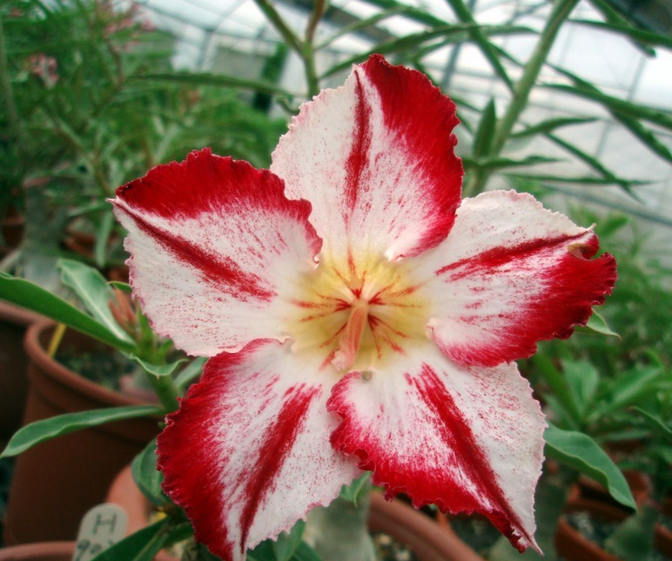
Desert Rose Cultivation Methods and Precautions
Desert Rose Cultivation Methods
1. Habits: The desert rose (Adenium obesum) likes a hot, sunny, dry and well-ventilated environment. Its growing temperature is 25-35°C, and it can survive the harsh summer very well, but it is not cold-tolerant, so the winter temperature should generally be kept above 10°C.
2. Soil: The desert rose is not demanding about soil, but it requires loose, breathable soil with good drainage, which helps it grow better. The growing medium can be made by mixing coarse sand, leaf mold, limestone granules and vermiculite in a ratio of 3:4:1:2, and an appropriate amount of NPK compound fertilizer can be added to the soil as a base fertilizer.
3. Sunlight: The desert rose rather likes sunlight. During its growing period, it can be kept in direct sunlight for long periods, and the pot can be rotated regularly to keep the branches looking attractive.
4. Watering: The desert rose is fairly drought-tolerant. Watering can follow the principle of watering when dry and withholding when wet. Summer is the growing season for the desert rose; as long as it has enough water, watering once every 1-2 days is generally enough. In winter, water can be reduced appropriately.
5. Fertilizing: What the desert rose dislikes most is heavy, concentrated fertilizer. Generally, during its growing period, nitrogen fertilizer is the main choice, supplemented by phosphorus and potassium fertilizer, in a ratio of about 2:1:1, with a thin compound liquid fertilizer applied every 10 days.
6. Pruning: The desert rose can be pruned regularly, which effectively keeps its branches flexible and attractive. The branches can also be shaped to maintain an ideal plant form.
Precautions for Growing a Desert Rose
1. The desert rose is quite susceptible to leaf spot disease, which in severe cases can cause large numbers of leaves to drop. It can be controlled with a 500-fold dilution of 25% carbendazim wettable powder or a 1000-fold dilution of 50% thiophanate.
2. The main pest of the desert rose is the scale insect. In severe infestations it causes all the leaves to drop, the growing points of the plant to die, and even the plant to die. When growing it at home, watch it closely and wipe the insects off with a water-moistened cotton swab as soon as they are found. During the egg-laying and hatching periods, you can also spray 1-2 times with a 1000-2000 fold dilution of 40% omethoate emulsifiable concentrate, or a 1000-fold dilution of 50% fenitrothion emulsifiable concentrate. When controlling pests and diseases, pay attention to the safety of the chemicals used.
3. Key care points: good sunlight, a temperature of around 30°C, watering only after the potting soil has dried out, moderate fertilizing in the spring and summer rainy seasons, and repotting and changing the soil at the appropriate time.
The Flower Language of the Desert Rose
The desert rose is a flower species that grows close to deserts. Like the cactus, it needs great courage to survive, so the desert rose symbolizes strength and courage. At the same time, its flowers are strikingly beautiful, and in tropical regions it can be called a rare flower. When in bloom, it looks like a false azalea, so in its place of origin it is also called the false azalea. The flower language of the desert rose represents "love you unwaveringly."
The desert rose belongs to the genus Adenium in the family Apocynaceae and is somewhat toxic; its milky sap is quite toxic, and if ingested by mistake it can cause symptoms such as irregular heartbeat and rapid heartbeat. Although the desert rose is somewhat toxic, it can be placed indoors as long as it is not eaten by mistake.
Desert Rose Cultivation Methods and Precautions
First, let's understand the habits of the desert rose: it likes a hot, dry, sunny climate; it likes calcium-rich, loose, breathable, well-drained sandy loam; it is not tolerant of shade; it dislikes waterlogging; it dislikes concentrated fertilizer and unfermented fertilizer; it fears cold; and its optimum growing temperature is 25-30°C. The desert rose is a plant with great ornamental value, deeply loved by many people. Below we introduce the cultivation methods and precautions for the desert rose.
Desert Rose Cultivation Methods1. Soil: The desert rose is not demanding about soil, but it needs loose, well-drained soil, which helps it grow better. The growing medium can be made by mixing coarse sand, leaf mold, limestone granules and vermiculite, and adding some NPK compound fertilizer as a base fertilizer is also very good.
2. Sunlight: The desert rose rather likes sunlight. During its growth, it can be placed in direct sunlight, and the pot can be rotated regularly to keep the branches looking attractive.
3. Watering: The desert rose likes a dry environment. Watering follows the principle of watering when dry and withholding when wet. The growing season of the desert rose is summer. As long as it has enough water, watering once every 1-2 days is generally enough. In winter, watering needs to be reduced.
4. Fertilizing: What the desert rose dislikes most is heavy, concentrated fertilizer. Generally, during its growing period, nitrogen fertilizer is the main choice, supplemented by phosphorus and potassium fertilizer, in a ratio of about 2:1:1, with a thin compound liquid fertilizer applied every 10 days.
5. Pruning: The desert rose can be pruned regularly, which effectively keeps its branches flexible and attractive. The branches can also be shaped to maintain an ideal plant form.
6. Pest control: It can be harmed by leaf spot disease, which can be sprayed with a 500-fold dilution of 50% thiophanate wettable powder. Pests include scale insects and leaf-rolling caterpillars, which can be sprayed with a 1000-fold dilution of 50% fenitrothion emulsifiable concentrate. The main pest is the scale insect. In severe infestations it causes all the leaves to drop, the growing points of the plant to die, and even the plant to die. When growing it at home, watch it closely and wipe the insects off with a water-moistened cotton swab as soon as they are found.
Precautions for Growing a Desert Rose1. The desert rose is quite susceptible to leaf spot disease, which in severe cases can cause large numbers of leaves to drop. It can be controlled with a 500-fold dilution of 25% carbendazim wettable powder or a 1000-fold dilution of 50% thiophanate.
2. The main pest of the desert rose is the scale insect. In severe infestations it causes all the leaves to drop, the growing points of the plant to die, and even the plant to die. When growing it at home, watch it closely and wipe the insects off with a water-moistened cotton swab as soon as they are found. During the egg-laying and hatching periods, you can also spray 1-2 times with a 1000-2000 fold dilution of 40% omethoate emulsifiable concentrate, or a 1000-fold dilution of 50% fenitrothion emulsifiable concentrate.
The Value of the Desert Rose 1. Ornamental ValueWhether it is the flowers, leaves, stems or its overall shape, it is elegant and distinctive, natural and graceful, and truly one of a kind, making it especially suitable for decorating the home interior and balcony. When in full bloom, most of the leaves have dropped and the branches are covered with flowers, creating a beautiful sight.
2. Garden DesignThe desert rose is a short plant with an old, vigorous tree form, and its roots and stems are swollen like a wine bottle. It blooms twice a year, in April-May and September-October, with bright red, gorgeous flowers shaped like trumpets that are extremely distinctive and deeply loved by people. Planted in the ground in small southern courtyards, it looks rustic and dignified, natural and graceful. Grown in pots for viewing, it makes a unique decoration for the interior and balcony.
How to Grow a Desert Rose, Cultivation Methods and Precautions for the Desert Rose / 6 Simple Tips
We know that the desert rose has many benefits and uses, and its main purpose is flower viewing, but to make it bloom successfully you must understand how to grow a desert rose, otherwise it will not only be difficult to make it bloom but may also cause the plant to die. Today we will introduce the cultivation methods and precautions for the desert rose.
How to Grow a Desert Rose
To grow a plant well, you need to provide the most suitable environment and the most scientific methods according to its growth habits. So how do you grow a desert rose? We first need to understand its growth habits.
Desert Rose Growth Habits
It likes a hot, dry environment with plenty of light, and its most suitable temperature is 25-30°C; it likes loose, breathable, well-drained sandy soil, and the soil is best rich in calcium; it is not afraid of drought but fears waterlogging; it likes sunlight and is not tolerant of shade; it likes fertilizer but fears highly concentrated fertilizer and unfermented fertilizer; and its cold tolerance is relatively weak.
Desert Rose Cultivation Methods and Precautions
I. Create the Most Suitable Environment
1. Light
The desert rose likes a sunny environment best. It can grow vigorously in full light, and good light can promote its flowering. Unlike other plants, even during its winter dormancy the desert rose still needs plenty of sunlight to overwinter successfully.
[Precautions]: Never grow the desert rose in a shaded environment. If conditions allow, place it in a sunny spot for care. If it is in a place that sunlight cannot reach, you can supplement the light with fluorescent lamps, scattered light, and so on.
2. Temperature
The desert rose can adapt to high-temperature environments. During its growing period, the average temperature can be kept at 30°C, so its growth is most vigorous in summer. In other seasons, you should try to create an environment above 20°C, and sun exposure is one of the best ways to do this.
[Precautions]: In the cultivation methods for the desert rose, you must pay attention to keeping it warm in winter, because its cold tolerance is relatively weak. You should move it back indoors promptly and keep the temperature above 10°C so that it can overwinter successfully.
3. Soil
The best soil is fertile, loose, well-drained sandy soil. We can make it by mixing sandy soil and leaf mold, and to increase its calcium content, we can add some bone meal.
[Precautions]: Good soil drainage is crucial for the desert rose, because it prefers a dry environment. If drainage is insufficient, not only can such an environment not be created, but waterlogging is also more likely to occur, causing enormous damage to the roots.
II. The Cultivation Methods for the Desert Rose Must Be Scientific
1. Watering
As mentioned earlier, the desert rose likes a dry environment, but we cannot go without watering it at all when growing it. So how do you grow a desert rose when it comes to watering? Before each watering, first make sure whether the potting soil is completely dry, and water only after the soil is dry, to avoid keeping it in a moist environment.
[Precautions]: Do not water too much each time, and in winter you must stop watering, otherwise it is easy to cause cold damage or withering of the desert rose.
2. Fertilizing
The desert rose does not have high fertilizer requirements, but during the growing period it should be given sufficient fertilizer. For example, in spring and summer it should be fertilized once a month, mainly with slow-release fertilizers such as compost and so on.
[Precautions]: When fertilizing, the concentration of the fertilizer must not be too high, and the amount applied should not be too much either, otherwise it is easy to cause fertilizer burn, leading to thick, fleshy leaves and hindered flowering.
3. Pruning
When flower enthusiasts grow the desert rose, they mainly want to bring out its ornamental value, and pruning can keep its plant form beautiful while also promoting new flowering branches, so that it keeps blooming. Therefore, pruning is a very important task.
[Precautions]: After the flowering period, the spent flowers and dead branches should be cut off to avoid wasting nutrients. In addition, you need to regularly cut off branches that are too dense or too tall, otherwise they tend to grow leggy.