Narrow-leaf Clivia (Clivia gardenii) Growing Methods and Photo Appreciation
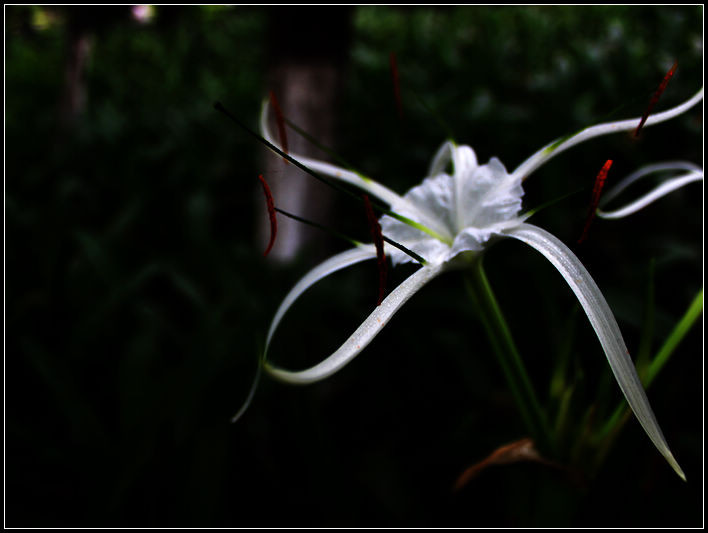
Narrow-leaf Clivia Photos and Narrow-leaf Clivia Growing Methods
1. Preparing the potting soil. Clivia has fleshy roots and requires loose, fertile, well-drained soil; it grows best in slightly acidic soil (pH 6.2-6.7). You can mix decomposed chicken manure and pond mud at a ratio of 4:6, or better yet, use pine needles, decomposed organic fertilizer, and river sand mixed at a ratio of 5:3:2.
2. Light. Clivia prefers partial shade, especially in summer, as direct scorching sunlight can easily cause "sunburn disease." Therefore, in summer, shading is essential, with half-shade and half-sun being ideal, giving deep green leaf color; but in winter, there must be sufficient sunlight and good lighting, which are important conditions for producing large, brightly colored flowers.
3. Humidity. Clivia likes to grow in a moist environment; the relative air humidity should not be lower than 60%, so that the leaves have a glossy color. In a dry environment, the leaves become dull and lusterless, and may even wilt, turn yellow, and grow poorly. Therefore, in summer when temperatures are high and evaporation is fast, you should sprinkle water on the ground around the pot and mist the leaves 2-3 times a day to increase humidity, lower temperature, and keep the leaf surface clean. But be careful not to let water flow to the root crown, to prevent waterlogging of the potting soil.
4. Watering. Accurately judging the dryness and moisture of the clivia's potting soil is the key to watering; the method is not to water when dry, and to water thoroughly when watering. In spring and autumn during vigorous growth, the water amount can be larger to keep the potting soil moist; during the "dog days" of summer, evaporation is high, so if ventilation is good you can water more, but if the weather is stuffy and hot with poor ventilation, water less; during the "coldest days" of winter, growth basically stops, so watering is not advisable; to keep the potting soil moist, you can place a layer of moss on the pot surface.
5. Fertilizing. Follow the principle of "light fertilizer applied frequently," and never apply concentrated or raw fertilizer, to avoid leaf scorch and root rot. Organic fertilizer must be fully decomposed. The suitable growing temperature for clivia is 15-25°C; if you can keep it within this range, you can fertilize continuously throughout the year. If at natural temperatures, apply more in spring and autumn, and less or not at all in summer and winter. For plants that have not yet bloomed, apply more nitrogen-rich fertilizers such as decomposed cake fertilizer (do not fertilize one-year-old seedlings); in late autumn, you can apply fertilizer rich in potassium, which not only promotes robust growth of leaves, stems, and roots, but also improves cold resistance and disease resistance. For plants that have already bloomed, apply more decomposed cake fertilizer in spring, and especially in autumn, apply more phosphorus and potassium fertilizers; you can also use a 0.2% potassium dihydrogen phosphate solution for foliar feeding in the early morning or evening.
6. Repotting and soil changing. Change the potting soil once a year; when planting, do not plant too deep, burying soil only up to the fleshy root crown, and the surface can be covered with a layer of moss.
During the year-round care of clivia, the potted plant should be frequently sprayed with clean water, and after spraying it is best to wipe it dry with a fine cloth; this not only increases the glossiness of the leaves but also enhances its ornamental value.
Narrow-leaf Clivia Photos_Narrow-leaf Clivia Prices
Modern people place great importance on growing potted plants, which has become a great pleasure in people's lives. It not only enriches people's leisure time but also broadens their horizons, beautifies people's living environment, and lets people live every day in a healthy and fresh environment. Therefore, we can see clivia everywhere, and clivia is a flower of wealth and nobility; it looks very beautiful and elegant, and can be placed in conference rooms, hotels, bedrooms, living rooms, offices, and other places, with very good ornamental value. Before growing clivia, we will learn something about its price and morphological characteristics. Below, the editor will introduce the photos of the narrow-leaf clivia and the prices of the narrow-leaf clivia.
[Introduction to the Narrow-leaf Clivia]
The narrow-leaf clivia is also called Clivia gardenii; its plant height is generally 80-130 mm * length is 350-900 mm * width is 25-60 mm; its leaves are bright green, the leaves are very narrow, and the leaf tips are pointed. If the flower color is red, the tips are orange and yellow; it originates from Hlabisa in Natal Province, South Africa. The narrow-leaf clivia is further divided into varieties such as the narrow-leaf yellow-flowered clivia, narrow-leaf white-flowered clivia, and narrow-leaf red-flowered clivia.
[Narrow-leaf Clivia Photos]
1. Narrow-leaf Yellow-flowered Clivia
The leaves of the narrow-leaf yellow-flowered clivia are narrow, and the flower color is yellow. It is a variety introduced from countries such as South Africa, Australia, and Japan. Its leaf length is 60-70 mm * width 6 cm; the leaves are obliquely upright, dark green in color, with little gloss; the flower scape is relatively thin. Because the flowers are yellow, it is called the yellow-flowered clivia.
2. Narrow-leaf White-flowered Clivia
The narrow-leaf white-flowered clivia is also a variety introduced from countries such as South Africa, Japan, and Australia. Its flowers are milky white, and its leaves are narrow blades; the leaf length is 60-70 cm, and the leaf width is 6 cm; the leaves are obliquely upright, dark green in color, without gloss; the flower scape is thin, some blooming flowers are funnel-shaped, and some flowers are reflexed lily-shaped. Because the flower color is milky white, it is called the narrow-leaf white-flowered clivia.
3. Narrow-leaf Red-flowered Clivia
The narrow-leaf red-flowered clivia is also a variety introduced from countries such as South Africa, Japan, and Australia. Its leaves are narrow, and the flower colors are orange-red and bright red; the leaf length is 60-70 cm * width is 6 cm; the leaves are obliquely upright, dark green without gloss; the flower scape is generally thin; the flower shapes include funnel-shaped and lily-shaped reflexed petals; the flower colors are orange-red and bright red, so it is called the narrow-leaf red-flowered clivia.
[Narrow-leaf Clivia Prices]
The prices of the narrow-leaf clivia differ completely according to the variety; common varieties are all around several hundred yuan. The more intense the color of the narrow-leaf clivia, the more expensive the price. Moreover, the price of clivia is also constantly rising; one seed is 0.3 to 1 yuan, and it has also reached 50 yuan. The price of narrow-leaf clivia seedlings is 1-5 yuan, and it has also reached 200-300 yuan; if the narrow-leaf clivia is relatively large, it can reach several thousand yuan, and if it is a rare treasure, it can reach tens of thousands of yuan; the price depends on the variety.
More related information: Cactus photos Calla lily photos Anthurium photos Money tree growing methods How to grow gardenia
Clivia - Clivia growing methods | Clivia photos | What to do about clivia root rot | Clivia yellow leaves
Clivia
Clivia is also called large-flowered clivia, large-leaf lycoris, sword-leaf lycoris, and damulan; it is a perennial herbaceous plant of the genus Clivia in the Amaryllidaceae family. The flowering period lasts as long as 30-50 days, mainly in winter and spring, and it also blooms from New Year's Day to around the Spring Festival. It dislikes strong light and is a semi-shade plant; it likes coolness and dislikes high temperatures.Clivia Growing Methods
1. Soil: Fertile, loose neutral or weakly acidic humus soil is the most suitable seedbed for clivia. Soil selection is the first key factor for clivia, and it is also one of the reasons many people fail to grow it well.
Clivia Prices
1. Drooping clivia price. The growth cycle of the drooping clivia is extremely long, generally requiring about 10 years. Its fruit generally has about 2 seeds, the pericarp is red, and the maturity period takes 9 months. The price of the drooping clivia is generally around 400 to 500 yuan.
Clivia Yellow Leaves
[Solutions for Clivia Yellow Leaves]
1. Clivia leaves turn yellow, and the small leaves in the middle turn black and rot. Solution: When this symptom appears, you first need to use the above 9 methods to prescribe the right remedy. For the small leaves in the middle turning black and rotting, further judgment is needed; pry open two leaves to check. If the gap between the leaves is black and oozing rotten juice, then it can be judged that the formed clivia flower scape did not have time to grow out from between the leaves and directly rotted in the middle of the leaves.
What to Do About Clivia Root Rot
The living habits of clivia are roughly as described above. Therefore, when growing clivia, it should be placed in a semi-shaded environment, and then watered every day in the evening. In hot seasons, methods such as building a shade structure can be used to keep clivia cool. As for fertilizing, it should be done in appropriate amounts; excessive fertilizing will instead cause phenomena such as root rot.
The Role of Clivia
The role of clivia: 1. Cultural accomplishment. Clivia is a high-grade precious flower, with meanings of wealth, nobility, beauty, and magnificence. It can satisfy people's many needs such as beautifying the home, cultivating character, purifying air, improving health, and enhancing cultural and artistic accomplishment, making the home display an elegant and luxurious style, and adding brilliance and charm to enriching and adjusting people's lives.
Clivia Virus Prevention and Control
1. Southern blight: When this disease occurs, the stem near the root appears water-soaked irregular brown lesions, the cortex soft-rots, and then white silky mycelium grows and spreads over the soil surface around the roots, later forming small sclerotia, and finally becoming colored rapeseed-like bodies, expanding until the entire base rots and necroses.
Methods to Force Clivia to Bloom
Method 1: Forcing flowers and promoting the scape. If you want a pot of clivia to bloom as soon as possible, it can mainly be achieved by using fertilizer, lowering the temperature, and increasing the temperature difference. First, about fertilizing: the simplest and most practical method is to pour beer (using commercially available flower-forcing fertilizer also works very well). Beer can be poured directly into the pot, then rinsed with clean water to increase air permeability.
Clivia Flower Language
The flower language of clivia: noble, with the demeanor of a gentleman
It has the meaning of "nobility": a gentleman is modest, gentle and courteous, talented but not arrogant, successful but not proud, and does not feel inferior when residing in a valley
Clivia Varieties
There are two common types of clivia: one is the drooping clivia; the other is the large-flowered clivia.
Clivia varieties include yellow-flowered clivia, variegated-leaf clivia (leaves have markings), and narrow-leaf clivia (leaves are relatively narrow, darker in color, drooping or arched, with 10-14 flowers, flower color yellow or orange-yellow, and an earlier flowering period).
Can Clivia Be Placed in the Bedroom
Yes. Clivia is an evergreen perennial herbaceous plant with strong shade tolerance, thick large dark green leaves. The leaf mesophyll contains a large amount of chlorophyll and can absorb carbon dioxide and water under sunlight, synthesize organic matter for its own growth and development needs, and at the same time release oxygen. In addition, on the broad, thick leaves of clivia, there are many stomata and hairs that can secrete a large amount of mucus; during gas exchange, it can absorb a large amount of indoor dust, dirt, and harmful gases, making the indoor air clean. Therefore, clivia is also praised by people as an "absorption machine" and "dust remover," and a guardian of human health.
Precautions for Repotting Clivia
1. Preparation for changing the soil
(1) Prepare the soil: mix leaf mold, pine needles, river sand, and charcoal residue in a ratio of 4:2:3:1 in spring and summer, stir well, spray with water until semi-moist, put in a plastic bag, and let it sit for three to five days before use (in autumn and winter, the leaf mold and river sand can be increased or decreased); (2) fry small hemp seeds or sunflower seeds and set aside; in autumn and winter do not exceed 10%, and in spring and summer reduce as appropriate or do not use;
Related Encyclopedia
Pocket scale non-woven bag rush pith bamboo shoot crab claw red rice note 3 ykk zipper ybs zipper large mountain cherry climbing rose wild senna winter plum green pine watch Omega Longines famous watch children's building blocks flint azalea club moss stick sugar apple