How to Grow Rohdea japonica? Cultivation Methods, Precautions and Pictures
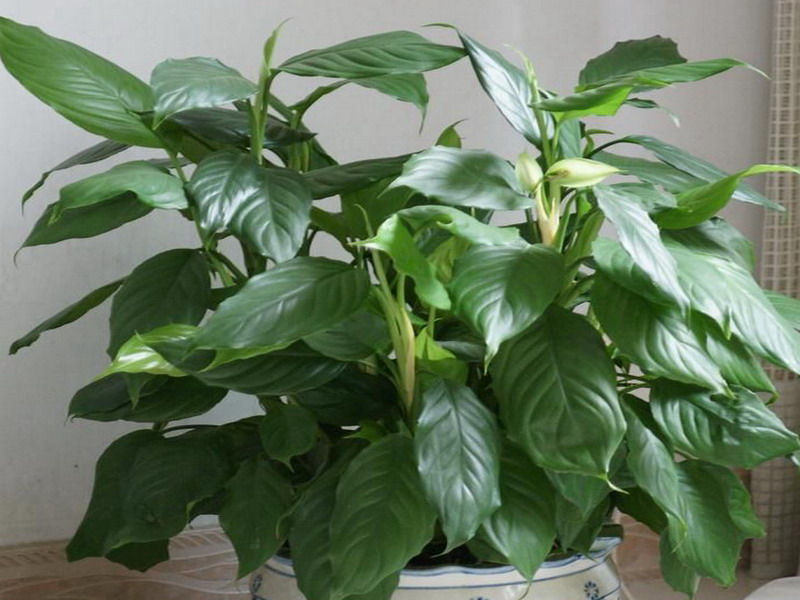
Rohdea japonica (Rohdea japonica (Thunb.) Roth), also known as Baiheche, is a perennial evergreen herbaceous plant native to southern China and Japan. It is a fine ornamental plant loved by all, with a long history of cultivation in China. Its Chinese name "" means "a herbaceous plant that loves warmth." It can be grown as an indoor potted plant and is very ornamental.
Perennial evergreen herb, without above-ground stems. The rhizome is thick and short, yellow-white, with nodes, and many slender fibrous roots grow from the nodes. The leaves grow in clusters from the rhizome, thick, lanceolate or band-shaped, 10-25 cm long and 2.5-5.5 cm wide, with edges slightly folded inward, gradually narrowing at the base into a petiole-like shape, dark green above and light green below, with multiple straight parallel veins, and the main vein relatively thick.
In spring and summer, scapes grow from the leaf cluster, 10-20 cm long; the flowers are numerous, clustered at the top in a short spike-like inflorescence; the perianth has 6 segments, pale greenish-white, ovate to triangular, with pointed tips and broad bases, fused at the lower part into a disc shape; there are 6 stamens, sessile, with oblong anthers; the ovary is spherical, the style is short, and the stigma is 3-lobed. The berry is spherical, orange-red; it contains 1 seed.
Rohdea japonica likes a warm, humid and semi-shaded environment, and avoids direct strong sunlight in summer. The key to growing Rohdea japonica well is to avoid direct strong light in summer when the weather is hot and the sunlight is intense. Otherwise, it easily causes dry leaf tips and scorched edges or even yellowing and withering, affecting the ornamental effect. Therefore, Rohdea japonica is very suitable for growing in the bedroom. Note that the indoor temperature in winter should be between 6-18°C; in winter, the air should also be kept humid and the potting soil slightly moist. If the bedroom air is dry, spray water on the leaves frequently, and also spray-wash the leaves once a week to prevent the leaves from being polluted by smoke and dust.
Rohdea japonica likes a warm, humid and semi-shaded environment. It grows vigorously in summer, so it needs to be placed in a shaded area to avoid strong light exposure; otherwise, it easily causes dry leaf tips and scorched edges and affects the ornamental effect. Therefore, after being moved outdoors in early spring, it should be placed under a shaded trellis or eaves or in a shaded place on a balcony.
Rohdea japonica has a fleshy root system and is most afraid of water accumulation and waterlogging, so it cannot be watered too much; otherwise, it easily causes root rot. Usually, just water the potting soil appropriately, and follow the rule of not watering until the potting soil is dry. It is better to keep it on the dry side than too wet. Apart from keeping the potting soil moist in summer, watering in spring and autumn should not be too frequent. However, the air must be kept humid; if the air is dry, bad conditions such as dry leaf tips are also likely to occur. In summer, sprinkle water on the ground around the flower pot every morning and evening to create a humid microclimate. Also be careful to prevent heavy rain from drenching it, especially during the flowering period, when it must not be rained on. It should be placed in a shaded, dry, ventilated place free from rain.
During the growing period, every 20 days or so
apply a decomposed liquid fertilizer once; in early summer, when growth is more vigorous, apply a liquid fertilizer once about every 10 days, and a small amount of 0.5% ammonium sulfate can be added to the topdressing, so as to promote better growth and make the leaf color dark green and glossy. In the vigorous flowering period from June to July, apply a 0.2% potassium dihydrogen phosphate aqueous solution once about every 15 days to promote flower bud differentiation and help it bloom and fruit better. In addition, around the Beginning of Summer, several old leaves on the outer part of mature plants should be cut off to facilitate the sprouting of new buds and new leaves and the growth of scapes.
In winter, Rohdea japonica needs to be moved indoors to overwinter, placed in a place with ample strong light and good ventilation, with the temperature kept at 6-18°C. If the indoor temperature is too high, it easily causes excessive leaf growth, consumes a large amount of nutrients, and leads to weak growth the following year, affecting normal flowering and fruiting. If Rohdea japonica shows yellowed and scorched leaf tips in winter, or even the whole plant withers, it is mainly caused by the roots being unable to absorb water, which affects growth. Therefore, in winter, the air should also be kept humid and the potting soil slightly moist, and generally watering 1-2 times a week is suitable. In addition, the leaves also need to be spray-washed once a week with warm water to prevent the leaves from being polluted by smoke and dust, so as to keep the stems and leaves fresh green and evergreen throughout the four seasons.
How to Grow Rohdea japonica_ Cultivation Methods and Precautions for Rohdea japonica_ Rohdea japonica Pictures
Rohdea japonica gets its name because its leaves stay green all year round. Rohdea japonica is also relatively popular among indoor plants, so how do you grow Rohdea japonica? Let us learn together about the cultivation methods, precautions and pictures of Rohdea japonica.
I. Cultivation Methods for Rohdea japonica
1. Soil:When loosening the soil and repotting Rohdea japonica, try to do it in spring. Rohdea japonica is not very demanding about soil for cultivation, but it is most afraid of water accumulation. Whether choosing ground planting or pot planting, hard clay or alkaline soil is most taboo. For pot planting, a mixed soil of leaf mold and sand is mostly used for potting. Soil also varies by region. In the south, pot planting or open-field cultivation can be chosen, while in the north it needs to be cultivated in a greenhouse. Replace with new soil once a year, and repot once every 2 years. When repotting, appropriately add new fertile soil.
2. Light and Temperature:Rohdea japonica is suitable for a semi-shaded environment and is afraid of direct sun exposure in summer. If cultivated in a greenhouse, it should be shaded more than 60% in spring, summer and autumn, and shaded 40% in winter. Too strong light easily causes sunburn, while too weak light is not good for flowering and fruiting. It adapts to growing in an environment of 15-18°C. Winter is its dormant period, when it can be placed indoors in a sunny place, with the temperature kept above 10°C, and the lowest temperature should not be lower than 5°C. In the Yangtze River basin, it can be cultivated outdoors to overwinter; the leaves may be frost-damaged, but the following year it can still show new green leaves again.
3. Fertilizing and Watering:During the growing season, topdress Rohdea japonica once every 10-15 days, preferably with liquid fertilizer. In summer, ventilation should be strengthened to prevent heatstroke and lower the temperature. This is a period when sufficient water supply is needed, so keep the potting soil moist and the surrounding air humid frequently. In summer, water 1-2 times a day, while in winter reduce the watering frequency and stop fertilizing.
4. Pruning:The main purpose of pruning and shaping Rohdea japonica is to maintain a good plant shape and make it pleasing to the eye. As the plant grows, if yellow leaves, damaged leaves or some old leaves appear on the lower part of the plant, they should be pruned off in time. When growing it in a home pot, you can use a soft cloth dipped in some beer to wipe the leaves. This can not only remove dust, but also add nutrients to the leaves, keeping them bright green and clean.
II. Precautions for Growing Rohdea japonica
1. Rohdea japonica is a flowering plant that likes warmth and humidity, tolerates shade, and is afraid of cold. When placed outdoors for cultivation in summer, a shade frame needs to be set up. Under strong sunlight, the leaves easily turn greenish-white, and the leaf edges also easily become scorched. The most suitable temperature for the growth of Rohdea japonica is 20-30°C. In winter, the indoor temperature should preferably be kept between 12-15°C, and the lowest should not be lower than 7°C. Below 7°C, the leaves wilt and yellow and fall off, and in severe cases the whole plant dies.
2. During the growing season, Rohdea japonica would rather be wet than dry. When the temperature is above 25°C, spray water on the leaves frequently; after autumn, watering should be controlled, preferably following the principle of watering when dry and stopping when wet; in winter, keep it appropriately dry.
3. Rohdea japonica has strong fertilizer tolerance, but fertilizing should be in appropriate amounts. During the growing season, apply 20% cake fertilizer water or 1% compound fertilizer solution once every 15-20 days; stop fertilizing in winter. In spring and autumn at noon and in summer, shading is needed. When grown indoors, placing it in a bright place is sufficient. But in winter, sufficient light should be maintained.
The above isthe cultivation methods and precautions for Rohdea japonicaintroduced. Everyone should quickly go and plant a few pots too. Placed at home, they can not only be enjoyed ornamental but also purify the air.
How to Grow Rohdea japonica_ Cultivation Methods and Precautions for Rohdea japonica
Rohdea japonica, also known as Silver Queen, Mingyun, Kaihoujian, Dongbudiao, Dongbudiaocao, Qiannianyuan, etc., is a perennial herbaceous plant. How do you grow Rohdea japonica? Below we will explain the cultivation methods and precautions for Rohdea japonica.
Cultivation Methods for Rohdea japonica:
1. Planting: Plant in spring or repot and change the soil. It is not strict about soil, but is afraid of water accumulation, and hard clay and alkaline soil are taboo when planting in the ground or in pots. For pot planting, a mixed soil of leaf mold and sand is generally used for potting.
2. Light and Temperature: Rohdea japonica likes a semi-shaded environment and is afraid of direct sun exposure in summer. For greenhouse cultivation, shade more than 60% in spring, summer and autumn, and shade 40% in winter. Too strong light easily causes sunburn, and too weak light makes flowering and fruiting difficult. Cuihuawang No. 3 can be used to promote flower bud differentiation, more flowering and more fruiting. In winter, it goes dormant and should be moved into a greenhouse, placed in a sunny place, with the temperature kept above 10°C, and the lowest temperature should not be lower than 5°C. In the Yangtze River basin, it can overwinter outdoors. Although the leaves may suffer frost damage, new leaves can still sprout again the following year.
3. Watering and Fertilizing: During the growing season, topdress with liquid fertilizer once every 10-15 days and combine it with spraying Xingao Zhimo to enhance fertilizer efficiency, so that it will have abundant flowers and lush leaves and be splendid and graceful. In summer, strengthen ventilation, prevent heatstroke and lower the temperature, and provide sufficient water, frequently keeping the potting soil moist and the surrounding air humid. In summer, water 1-2 times a day. In winter, reduce watering and stop fertilizing.
4. Shaping and Pruning: In order to maintain a good plant shape and improve ornamental value, as the plant grows, yellow leaves, damaged leaves and some old leaves on the lower part of the plant should be pruned in time. Apply a wound-healing and antiseptic film to the cut, to prevent infection and invasion by pathogens. It can still sprout new branches and bloom again in late autumn. When growing it in a home pot, you can use a soft cloth dipped in beer to wipe the leaves and combine it with spraying Zhuangjingling. This can not only remove dust, but also add nutrients to the leaves, making them bright green and clean.
Precautions for Growing Rohdea japonica:
1. Note that when loosening the soil, during the early stage just after transplanting, water must not be applied too much; otherwise, the roots will die because of excessive water. For potted soil, it is best to use soil rich in humus, as this is suitable for warm cultivation. Be sure to remember that the potting soil can be changed once every 2 years.
2. Rohdea japonica is a semi-shade plant and does not have a high light requirement, but it cannot be without light, especially in summer when there must not be too much or too strong light. In winter, remember to often take it out into the sunlight to sun it, but the temperature must not be lower than 10°C. Otherwise, the flowers are easily frostbitten.
3. If the leaves of Rohdea japonica turn yellow or the leaf edges curl, it may be caused by lack of water, or it may also be caused by lack of light.