A Detailed Guide to Growing and Caring for Rohdea japonica
Rohdea japonica, as its name suggests, is green all year round; to put it more exaggeratedly, taken literally, it never changes color for ten thousand years. Its symbolic meaning is also excellent. Rohdea japonica has emerald green leaves and stays evergreen through all four seasons; in winter, the green leaves paired with red berries look elegant and beautiful, carrying the fine meanings of lasting youth, health and longevity, enduring friendship, and wealth and good fortune. This can be seen from the 1688 horticultural work "Hua Jing" by Chen Haozi: "People use its flourishing or decline to foretell good or ill fortune; when building a house or moving residence, arranging betrothals or managing ponds, or when a child is newly born, it is used for all joyous occasions." During the Spring Festival, people love to place Rohdea japonica indoors to celebrate the holiday. Below, the editor of Yiqiwang will introduce the cultivation of Rohdea japonica.
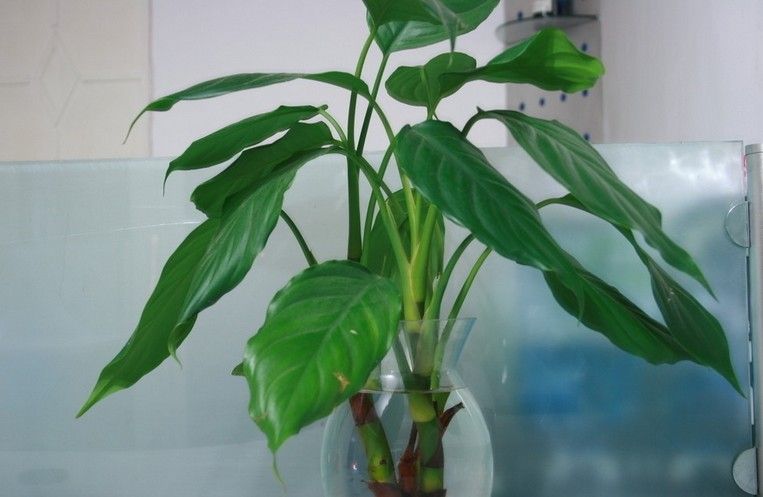
What are the growing methods and precautions for Rohdea japonica?
Rohdea japonica (Rohdea japonica (Thunb.) Roth), also known as Baiheche, is a perennial evergreen herbaceous plant native to southern China and Japan. It is a fine ornamental plant that everyone loves, and it has a long history of cultivation in China. Its Chinese name "Yun" means "a herbaceous plant that by nature loves warmth." It can be grown as an indoor potted plant and is highly ornamental.
Perennial evergreen herb, without an aboveground stem. The rhizome is thick and short, yellowish white, jointed, with most of the slender fibrous roots growing at the nodes. The leaves grow in a cluster from the rhizome, thick in texture, lanceolate or strap-shaped, 10~25 cm long, 2.5~5.5 cm wide, with margins slightly folded inward, the base gradually narrowing into a petiole-like form, dark green above, light green below, with multiple straight parallel veins, the midrib relatively thick.
In spring and summer, a scape grows from the leaf cluster, 10~20 cm long; the flowers are numerous, clustered at the top and arranged in a short spike-like inflorescence; the perianth has 6 segments, pale greenish white, ovate to triangular, pointed at the tip, broad at the base, fused below into a disc shape; there are 6 stamens, sessile, with oblong anthers; the ovary is spherical, the style short, the stigma 3-lobed. The berry is spherical, orange-red; it contains 1 seed.
Rohdea japonica by nature prefers a warm, humid, and semi-shaded environment, and dislikes direct strong light in summer. The key to growing Rohdea japonica well is to avoid direct strong light when the weather is hot and sunlight is intense in summer. Otherwise, it easily causes dry leaf tips and scorched edges or even yellowing and withering, affecting the ornamental effect. Therefore, Rohdea japonica is very suitable for growing in the bedroom. Note that the indoor temperature in winter should be between 6-18°C; in winter, the air should also be kept humid and the potting soil slightly moist. If the bedroom air is dry, spray water on the leaf surface frequently, and also spray-wash the leaf surface once a week to prevent the leaves from being polluted by smoke and dust.
Rohdea japonica by nature prefers a warm, humid, and semi-shaded environment. It grows vigorously in summer, so it needs to be placed in a shaded spot to avoid strong light exposure; otherwise, it easily causes dry leaf tips and scorched edges, affecting the ornamental effect. Therefore, after being brought out of the room in early spring, it should be placed under a shaded trellis or eaves or in a shaded spot on the balcony.
Rohdea japonica has a fleshy root system and is most afraid of waterlogging, so it should not be watered too much, otherwise it easily causes root rot. Usually, just water the potting soil with an appropriate amount; the rule is not to water until the potting soil is dry, and it is better to keep it on the dry side than too wet. Apart from summer, when the potting soil must be kept moist, watering in spring and autumn should not be too frequent. However, the air must be kept humid; if the air is dry, it also easily causes problems such as dry leaf tips. In summer, water should be sprinkled on the ground around the flowerpot every morning and evening to create a humid microclimate. Also be careful to protect it from heavy rain, especially during the flowering period, when it must not be rained on; it should be placed in a shaded, dry, ventilated place sheltered from rain.
During the growing period, every 20 days or so
apply a decomposed liquid fertilizer once; in early summer, when growth is more vigorous, a liquid fertilizer topdressing can be applied about every 10 days. A small amount of 0.5% ammonium sulfate can be added to the topdressing, so as to promote better growth and make the leaf color dark green and glossy. In the vigorous flowering period of June-July, apply a 0.2% potassium dihydrogen phosphate aqueous solution once every 15 days or so to promote flower bud differentiation and facilitate better flowering and fruiting. In addition, around the Start of Summer, several old leaves on the outer part of the mature plant should be cut off to facilitate the sprouting of new buds and new leaves and the emergence of scapes.
In winter, Rohdea japonica needs to be moved indoors to overwinter, placed in a spot with ample strong light and good ventilation, with the temperature kept at 6-18°C. If the room temperature is too high, it easily causes spindly leaf growth, consumes a large amount of nutrients, and leads to weak growth the following year, affecting normal flowering and fruiting. If Rohdea japonica shows yellowed and scorched leaf tips in winter, or even the whole plant withering, it is mainly caused by the roots being unable to absorb water, which affects growth. Therefore, in winter the air should also be kept humid and the potting soil slightly moist; generally, watering 1-2 times a week is suitable. In addition, the leaves also need to be spray-washed once a week with warm water to prevent them from being polluted by smoke and dust, so as to keep the stems and leaves fresh green in color and verdant through all four seasons.
Growing Methods and Precautions for Rohdea japonica
Rohdea japonica is a common variety among home-grown flowers. In fact, Rohdea japonica also has multiple varieties. If people want to grow Rohdea japonica well, they must not only understand the growing methods for Rohdea japonica, but also clearly understand the precautions during its cultivation. Only in this way can they grow a beautiful and attractive Rohdea japonica. So what are the growing methods and precautions for Rohdea japonica? Read the editor's introduction and everyone will understand.
Growing Methods and Precautions for Rohdea japonicaGrowing Methods for Rohdea japonica
This plant, Rohdea japonica, likes to grow in a warm and humid environment. It does not particularly like light, and instead grows faster under semi-shaded conditions. Therefore, in summer, Rohdea japonica should be placed in a spot that sunlight cannot reach; otherwise, its leaves will turn yellow. When growing Rohdea japonica indoors, pay attention to regulating indoor temperature and humidity, and try to keep the temperature between 6 and 18°C. If the indoor humidity is too low, water can be sprayed on the leaf surface of Rohdea japonica.
Precautions for Growing Rohdea japonica
1. Although this plant, Rohdea japonica, does not have high requirements for soil, it is afraid of water accumulating in the soil. In addition, during cultivation, the soil should be changed once a year, and the flowerpot should be replaced once every two years. When repotting, new soil should be replaced in time.
2. Rohdea japonica is a plant that is afraid of direct sunlight, so shading treatment should be given in all three seasons of spring, summer, and autumn. If the light is too strong, Rohdea japonica will be scorched by the sun; if the light is too weak, Rohdea japonica will also fail to bloom and fruit. Therefore, light must be controlled under reasonable conditions.
3. Shaping and pruning are things people must do when growing Rohdea japonica. Only timely pruning can maintain its beautiful appearance. When pruning, its yellow leaves and withered leaves should be removed in time. In addition, a soft cloth dipped in some beer can be used to wipe the leaves, which can make the leaves brighter green and also absorb some of the nutrients in the beer.
Rohdea japonica Pictures: Growing Methods and Precautions for Rohdea japonica
Many people like to place a pot of Rohdea japonica in places such as the living room or study at home for decoration. Rohdea japonica is a relatively elegant indoor foliage plant. Its leaves are so green they seem about to drip, elegant and beautiful. So how do you plant a pot of Rohdea japonica? Next, the editor will tell everyone some growing methods and precautions for growing Rohdea japonica.Rohdea japonica (Rohdea japonica (Thunb.) Roth), also known as Baiheche, is a perennial evergreen herbaceous plant native to southern China and Japan. It is a fine ornamental plant that everyone loves, and it has a long history of cultivation in China. Its Chinese name "Yun" means "a herbaceous plant that by nature loves warmth." It can be grown as an indoor potted plant and is highly ornamental.
Perennial evergreen herb, without an aboveground stem. The rhizome is thick and short, yellowish white, jointed, with most of the slender fibrous roots growing at the nodes. The leaves grow in a cluster from the rhizome, thick in texture, lanceolate or strap-shaped, 10~25 cm long, 2.5~5.5 cm wide, with margins slightly folded inward, the base gradually narrowing into a petiole-like form, dark green above, light green below, with multiple straight parallel veins, the midrib relatively thick.
In spring and summer, a scape grows from the leaf cluster, 10~20 cm long; the flowers are numerous, clustered at the top and arranged in a short spike-like inflorescence; the perianth has 6 segments, pale greenish white, ovate to triangular, pointed at the tip, broad at the base, fused below into a disc shape; there are 6 stamens, sessile, with oblong anthers; the ovary is spherical, the style short, the stigma 3-lobed. The berry is spherical, orange-red; it contains 1 seed.
Rohdea japonica by nature prefers a warm, humid, and semi-shaded environment, and dislikes direct strong light in summer. The key to growing Rohdea japonica well is to avoid direct strong light when the weather is hot and sunlight is intense in summer. Otherwise, it easily causes dry leaf tips and scorched edges or even yellowing and withering, affecting the ornamental effect. Therefore, Rohdea japonica is very suitable for growing in the bedroom. Note that the indoor temperature in winter should be between 6-18°C; in winter, the air should also be kept humid and the potting soil slightly moist. If the bedroom air is dry, spray water on the leaf surface frequently, and also spray-wash the leaf surface once a week to prevent the leaves from being polluted by smoke and dust.
Rohdea japonica by nature prefers a warm, humid, and semi-shaded environment. It grows vigorously in summer, so it needs to be placed in a shaded spot to avoid strong light exposure; otherwise, it easily causes dry leaf tips and scorched edges, affecting the ornamental effect. Therefore, after being brought out of the room in early spring, it should be placed under a shaded trellis or eaves or in a shaded spot on the balcony.
Rohdea japonica has a fleshy root system and is most afraid of waterlogging, so it should not be watered too much, otherwise it easily causes root rot. Usually, just water the potting soil with an appropriate amount; the rule is not to water until the potting soil is dry, and it is better to keep it on the dry side than too wet. Apart from summer, when the potting soil must be kept moist, watering in spring and autumn should not be too frequent. However, the air must be kept humid; if the air is dry, it also easily causes problems such as dry leaf tips. In summer, water should be sprinkled on the ground around the flowerpot every morning and evening to create a humid microclimate. Also be careful to protect it from heavy rain, especially during the flowering period, when it must not be rained on; it should be placed in a shaded, dry, ventilated place sheltered from rain.
During the growing period, every 20 days or so
apply a decomposed liquid fertilizer once; in early summer, when growth is more vigorous, a liquid fertilizer topdressing can be applied about every 10 days. A small amount of 0.5% ammonium sulfate can be added to the topdressing, so as to promote better growth and make the leaf color dark green and glossy. In the vigorous flowering period of June-July, apply a 0.2% potassium dihydrogen phosphate aqueous solution once every 15 days or so to promote flower bud differentiation and facilitate better flowering and fruiting. In addition, around the Start of Summer, several old leaves on the outer part of the mature plant should be cut off to facilitate the sprouting of new buds and new leaves and the emergence of scapes.
In winter, Rohdea japonica needs to be moved indoors to overwinter, placed in a spot with ample strong light and good ventilation, with the temperature kept at 6-18°C. If the room temperature is too high, it easily causes spindly leaf growth, consumes a large amount of nutrients, and leads to weak growth the following year, affecting normal flowering and fruiting. If Rohdea japonica shows yellowed and scorched leaf tips in winter, or even the whole plant withering, it is mainly caused by the roots being unable to absorb water, which affects growth. Therefore, in winter the air should also be kept humid and the potting soil slightly moist; generally, watering 1-2 times a week is suitable. In addition, the leaves also need to be spray-washed once a week with warm water to prevent them from being polluted by smoke and dust, so as to keep the stems and leaves fresh green in color and verdant through all four seasons.