Dracaena Pictures, Care Methods and Precautions
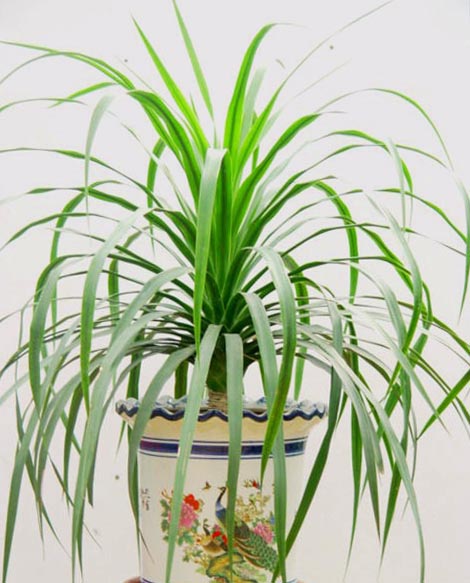
Dracaena Pictures, Dracaena Care Methods and Precautions
The dragon blood tree likes high temperatures and humidity, and likes light; with sufficient light, its leaves are brightly colored. It is not cold-tolerant; the winter temperature should be about 15°C, with a minimum temperature of 5~10°C. If the temperature is too low, because the root system cannot absorb enough water, yellow-brown patches will appear on the leaf tips and leaf margins. The dragon blood tree likes loose, well-drained soil rich in humus and nutrients.
You can use 1 part each of humus soil, peat soil, and river sand mixed as the substrate, and cultivate it under 70~80% shading. During the growing season, apply compound fertilizer 1~2 times per month, keep the soil moist, and in summer spray the leaf surfaces more to increase air humidity; the leaf texture will then be thicker, the leaf color brighter, and the tips less prone to drying. In winter, protect it from the cold, keep it above 8°C, reduce watering of the potting soil, but frequently wetting the floor to increase humidity helps maintain leaf color and prevent dry tips. Plants of this genus have elegant leaf forms and are good material for all kinds of indoor arrangements. If before bringing them indoors you can appropriately lower the humidity so they adapt to a drier environment, and after bringing them indoors frequently spray water on the leaf surfaces, they can be enjoyed indoors for a long time and their leaf tips are not prone to drying. Some plants damaged by indoor display, if the damage is not serious, can recover after being moved back to the production site and given a period of care; some severely damaged plants are difficult to restore and can be used as seedlings for propagation; for example, some people throw away Dracaena fragrans after its leaves are damaged after being displayed for a while, which is quite a pity. In fact, you only need to cut off the damaged branches about 2cm below the sprouting branch at the upper end of the stem, continue routine management, and after a period of time new branches and leaves will sprout again.
The dragon blood tree likes a loose, fertile substrate with good permeability, and soilless cultivation methods can be used for cultivation and management. For the cultivation container, choose a beautiful and elegant Yixing zisha pot, or select a high-grade porcelain pottery pot from Jingdezhen City, Jiangxi Province. The substrate can be a thorough mixture of vermiculite, perlite, and peat soil. This kind of substrate has good permeability, is clean, and is sterile and odorless. Moreover, when the dragon blood tree is cultivated in this substrate in a high-grade container, it can go several years without repotting or changing the soil, and the plant's root system is well developed and grows robustly. For fertilizer and water management in soilless cultivation, the main thing is to apply nutrient solution as a top dressing. If the number of plants cultivated is small, you do not need to specially prepare a nutrient solution, and can instead use the "Hongmei" and "Jinyue" brand nutrient solutions sold on the market. According to the instructions, add an appropriate amount of water, mix thoroughly, and then water with it. Alternatively, every 30 to 40 days, dig open the surface substrate and apply a granular slow-release fertilizer once. Water once every 3 to 5 days to keep the substrate moist. In summer, most areas are hot and dry, so every day at 10 a.m. and after 6 p.m., use a fine-hole spray bottle to spray a mist of water on the leaf surfaces to protect the beautiful and vivid leaf color. During the winter dormant period, stop fertilizing and control watering; generally place it indoors to overwinter, and you can water once every ten days to half a month, keeping the potting soil slightly dry and moist, so that it overwinters safely.
The dragon blood tree likes both a warm, humid, and sunlit environment, and can also tolerate shade. However, if cultivated indoors and placed in too shady an environment for a long time, it will also cause the leaves to fade. So it is best to place the flower pot on a southeast-facing windowsill so it can fully receive sunlight. If the dragon blood tree is cultivated on a balcony, when the summer sunlight is too strong, move the flower pot indoors, especially at noon, and provide appropriate shading; generally a light level of 40-50% is enough, so as to avoid the scorching sun burning the leaves. The dragon blood tree likes warmth and is not tolerant of severe cold. Its most suitable growth temperature is 20-28°C. If summer temperatures are high and the air temperature exceeds 32°C, or if the winter temperature is below 15°C, the dragon blood tree enters a dormant or semi-dormant state. In the Yangtze River basin and areas to its south, after late October, move the dragon blood tree indoors one after another to prevent damage from early frost. Throughout winter, it is best to keep the room temperature between 10-20°C, and it must not be too low. At the same time, place the potted flower inside a south-facing window so that sunlight falls directly on the plant body, and regularly rotate its orientation so it receives light evenly. If there is no sunlight for a long time, you can turn on a lamp at night and place the dragon blood tree under a 40-watt light for supplemental artificial lighting to ensure the leaves remain attractive. At night, place the dragon blood tree inside the curtains, and use thick curtains to block cold air, or place the flower pot in a warm corner of the room, so that it overwinters safely.
When placed indoors as a potted plant, it should be 3-4 m from a south-facing windowsill or in a similar light location, and note that strong direct light at noon should be prevented. The water amount should be balanced; potting soil that is too dry or too wet both have adverse effects, and excess water at the bottom of the pot will cause root rot, so use a highly drainage pad at the bottom of the pot, and in summer it is best to water with rainwater. It requires moderate air humidity. Dracaena fragrans Dracaena fragrans If the humidity is insufficient, the leaves may fall off, so frequently use misting to increase air humidity. On rainy days, place it outdoors in the shower, which is beneficial to growth, but at the same time cover the potting soil with plastic sheeting to prevent waterlogging damage. Repot every April; new plants are repotted once a year, and old plants once every other year. For the potting soil, use grass peat soil mixed with a small amount of coarse sand, and add a small amount of sesame residue or decomposed cake fertilizer to increase nutrients.
If the environment is unsuitable, there may be damage from scale insects, red spider mites, or thrips. In addition, excessive ventilation, dryness, irregular watering, or overfertilization can all cause leaf tips to scorch and wither. If the plant is clean, it generally does not easily attract pests.
What Are the Care Methods and Precautions for the Dragon Blood Tree?
The editor only just learned that this plant is called the dragon blood tree; the editor was ignorant. Now the editors at Yiqi Network will introduce the dragon blood tree. The dragon blood tree, also known as: the bleeding tree, the holy medicine for invigorating blood, and the longevity plant. It is the precious Yunnan red medicine -- dragon's blood, also known as qilin blood, which is as famous as Yunnan Baiyao, and is also the main ingredient of the well-known medicine "Qili San". Li Shizhen praised it in the "Compendium of Materia Medica" as the "holy medicine for invigorating blood," with excellent effects of invigorating blood and resolving stasis, reducing swelling and relieving pain, and astringing and stopping bleeding. Plants of this genus mainly grow in tropical regions such as Africa and southern Asia; in Central America there is only one species. The genus Pleomele has already been merged into this genus, and the genus Sanseviera is relatively closely related to this genus, with some taxonomists also merging it into this genus. Its flowers are bisexual and small, with a perianth split into 7 parts, in panicles or spicate racemes or dense spikes; the fruit is a berry. It is said that in ancient times, when a giant dragon and an elephant fought, the giant dragon's blood spilled over the earth, and what later grew from the soil was the dragon blood tree. When the dragon blood tree is injured, it exudes a dark red mucus like blood plasma -- this mucus, believed in legend to be dragon's blood, is how the dragon blood tree got its name. The Cambodian dragon blood tree was listed by the state as a second-class rare and endangered protected plant in 2001, and was included in the "China Plant Red Data Book -- Rare and Endangered Plants."What Are the Care Methods and Precautions for the Dragon Blood Tree?
The dragon blood tree likes high temperatures and humidity, and likes light; with sufficient light, its leaves are brightly colored. It is not cold-tolerant; the winter temperature should be about 15°C, with a minimum temperature of 5~10°C. If the temperature is too low, because the root system cannot absorb enough water, yellow-brown patches will appear on the leaf tips and leaf margins. The dragon blood tree likes loose, well-drained soil rich in humus and nutrients.
You can use 1 part each of humus soil, peat soil, and river sand mixed as the substrate, and cultivate it under 70~80% shading. During the growing season, apply compound fertilizer 1~2 times per month, keep the soil moist, and in summer spray the leaf surfaces more to increase air humidity; the leaf texture will then be thicker, the leaf color brighter, and the tips less prone to drying. In winter, protect it from the cold, keep it above 8°C, reduce watering of the potting soil, but frequently wetting the floor to increase humidity helps maintain leaf color and prevent dry tips. Plants of this genus have elegant leaf forms and are good material for all kinds of indoor arrangements. If before bringing them indoors you can appropriately lower the humidity so they adapt to a drier environment, and after bringing them indoors frequently spray water on the leaf surfaces, they can be enjoyed indoors for a long time and their leaf tips are not prone to drying. Some plants damaged by indoor display, if the damage is not serious, can recover after being moved back to the production site and given a period of care; some severely damaged plants are difficult to restore and can be used as seedlings for propagation; for example, some people throw away Dracaena fragrans after its leaves are damaged after being displayed for a while, which is quite a pity. In fact, you only need to cut off the damaged branches about 2cm below the sprouting branch at the upper end of the stem, continue routine management, and after a period of time new branches and leaves will sprout again.
The dragon blood tree likes a loose, fertile substrate with good permeability, and soilless cultivation methods can be used for cultivation and management. For the cultivation container, choose a beautiful and elegant Yixing zisha pot, or select a high-grade porcelain pottery pot from Jingdezhen City, Jiangxi Province. The substrate can be a thorough mixture of vermiculite, perlite, and peat soil. This kind of substrate has good permeability, is clean, and is sterile and odorless. Moreover, when the dragon blood tree is cultivated in this substrate in a high-grade container, it can go several years without repotting or changing the soil, and the plant's root system is well developed and grows robustly. For fertilizer and water management in soilless cultivation, the main thing is to apply nutrient solution as a top dressing. If the number of plants cultivated is small, you do not need to specially prepare a nutrient solution, and can instead use the "Hongmei" and "Jinyue" brand nutrient solutions sold on the market. According to the instructions, add an appropriate amount of water, mix thoroughly, and then water with it. Alternatively, every 30 to 40 days, dig open the surface substrate and apply a granular slow-release fertilizer once. Water once every 3 to 5 days to keep the substrate moist. In summer, most areas are hot and dry, so every day at 10 a.m. and after 6 p.m., use a fine-hole spray bottle to spray a mist of water on the leaf surfaces to protect the beautiful and vivid leaf color. During the winter dormant period, stop fertilizing and control watering; generally place it indoors to overwinter, and you can water once every ten days to half a month, keeping the potting soil slightly dry and moist, so that it overwinters safely.
The dragon blood tree likes both a warm, humid, and sunlit environment, and can also tolerate shade. However, if cultivated indoors and placed in too shady an environment for a long time, it will also cause the leaves to fade. So it is best to place the flower pot on a southeast-facing windowsill so it can fully receive sunlight. If the dragon blood tree is cultivated on a balcony, when the summer sunlight is too strong, move the flower pot indoors, especially at noon, and provide appropriate shading; generally a light level of 40-50% is enough, so as to avoid the scorching sun burning the leaves. The dragon blood tree likes warmth and is not tolerant of severe cold. Its most suitable growth temperature is 20-28°C. If summer temperatures are high and the air temperature exceeds 32°C, or if the winter temperature is below 15°C, the dragon blood tree enters a dormant or semi-dormant state. In the Yangtze River basin and areas to its south, after late October, move the dragon blood tree indoors one after another to prevent damage from early frost. Throughout winter, it is best to keep the room temperature between 10-20°C, and it must not be too low. At the same time, place the potted flower inside a south-facing window so that sunlight falls directly on the plant body, and regularly rotate its orientation so it receives light evenly. If there is no sunlight for a long time, you can turn on a lamp at night and place the dragon blood tree under a 40-watt light for supplemental artificial lighting to ensure the leaves remain attractive. At night, place the dragon blood tree inside the curtains, and use thick curtains to block cold air, or place the flower pot in a warm corner of the room, so that it overwinters safely.
When placed indoors as a potted plant, it should be 3-4 m from a south-facing windowsill or in a similar light location, and note that strong direct light at noon should be prevented. The water amount should be balanced; potting soil that is too dry or too wet both have adverse effects, and excess water at the bottom of the pot will cause root rot, so use a highly drainage pad at the bottom of the pot, and in summer it is best to water with rainwater. It requires moderate air humidity. Dracaena fragrans
Dracaena fragrans humidity. If the humidity is insufficient, the leaves may fall off, so frequently use misting to increase air humidity. On rainy days, place it outdoors in the shower, which is beneficial to growth, but at the same time cover the potting soil with plastic sheeting to prevent waterlogging damage. Repot every April; new plants are repotted once a year, and old plants once every other year. For the potting soil, use grass peat soil mixed with a small amount of coarse sand, and add a small amount of sesame residue or decomposed cake fertilizer to increase nutrients.
If the environment is unsuitable, there may be damage from scale insects, red spider mites, or thrips. In addition, excessive ventilation, dryness, irregular watering, or overfertilization can all cause leaf tips to scorch and wither. If the plant is clean, it generally does not easily attract pests.
How to Grow the Dragon Blood Tree: Care Methods and Precautions / Temperature Is Key
The dragon blood tree is called the holy medicine for invigorating blood and the longevity plant. It is a very famous plant. Although the dragon blood tree has many effects and functions, growing it well still requires some skill. So how do you grow the dragon blood tree? The editor will tell everyone the care methods and precautions for the dragon blood tree.
How to Grow the Dragon Blood Tree
Before becoming familiar with care techniques, you first need to understand the growth habits of the dragon blood tree. It likes a high-temperature, humid environment, likes light but is also shade-tolerant, and can be enjoyed in a dark environment for 2-4 weeks, but cannot lack light for a long time. Its cold tolerance is relatively weak, and in winter you need to ensure the minimum temperature is above 5-10°C.
Care Methods and Precautions for the Dragon Blood Tree
1. Soil requirements
The dragon blood tree likes soil containing a large amount of humus, and the soil must be nutrient-rich, loose, and well-drained. You can use peat soil, river sand, and leaf mold mixed evenly as the substrate, or you can mix vermiculite, perlite, and sandy soil.
Precautions: In addition to the soil being sufficiently fertile, good drainage is also very critical. It can ensure the interior of the soil is sufficiently moist, thereby allowing the roots to grow and develop better.
2. Light requirements
In terms of light, it likes a sunny environment. During normal care, it should be placed in the sun, keeping the light level at least above 40%, and it is most suitable for the leaves in every position to be able to enjoy sunlight.
Precautions: Although the dragon blood tree can survive in a dark room for 2-4 weeks, it cannot lack light for a long time, because the leaf marks are closely related to light. If there is insufficient sunlight, the leaves will turn yellow and lose their luster, affecting appearance and also being unfavorable to growth.
3. Temperature requirements
The dragon blood tree especially likes high-temperature environments. Its most suitable temperature is 20-28°C. It is relatively afraid of cold, and when the temperature is low it enters dormancy. Therefore, in late autumn and winter, pay attention to temperature changes and take heat-preservation measures in advance.
Precautions: Low temperature is extremely harmful to the dragon blood tree. It will cause the roots to absorb nutrients and water poorly, thereby causing yellow-brown patches to appear on the leaf tips and leaf margins. Therefore, ensure the temperature is above 15°C, and the minimum temperature must not be lower than 5-10°C.
4. Watering method
In terms of drought tolerance, the dragon blood tree is relatively strong, but when growing it, it cannot lack water for a long time. During the growing period, water once every 3-5 days; in winter, water once every 10-15 days. Keeping the soil slightly moist rather than dry is the ideal state.
Precautions: When watering, prevent water accumulation, otherwise it will cause root rot, and then the water applied cannot be absorbed by the roots, which has a very large impact on the whole plant. Frequent water accumulation can easily lead to plant death.
5. Fertilization techniques
The dragon blood tree has relatively high nutritional needs. In addition to fertile soil, fertilization is also very important. During the growing period, apply organic fertilizer once a month, or evenly water with a specialized nutrient solution.
Precautions: Fertilization should mainly use dilute fertilizer water. If using solid fertilizer, water immediately after fertilizing. Do not use raw fertilizer or fertilizer with too high a concentration, and follow the principle that nutrients can be fully absorbed.