What are the cultivation methods and precautions for snake plant (Sansevieria)?
Cultivation Methods and Precautions for Snake Plant
Ecological habits: A light-loving long-day plant; during winter cultivation, light must be increased on cloudy days; it fears cold and freezing. The suitable growing temperature is 20-25°C during the day and 10-15°C at night. Bulbs that have passed through dormancy sprout at 4-5°C, and plants freeze to death at low temperatures of 0°C during winter cultivation. It is not tolerant of waterlogging, and water accumulation should be avoided in the cultivation site. It prefers fertile, loose, well-drained sandy loam soil, with a pH of 5.6-6.5 being optimal.
The main diseases include:
A. Penicillium rot: during harvest and transport, try not to injure the bulbs; before planting, soak in 2% potassium permanganate solution for 1 hour; during growth, remove diseased plants at any time.
B. Dry rot: when planting, select disease-free mother bulbs, and during growth, remove diseased plants promptly.
C. "Blind flower" is a physiological disease that mostly occurs during protected cultivation in winter. The prevention method is to ensure suitable temperature and light, and to select varieties tolerant of low temperatures and short-day conditions.
The main pest is the two-lined slug, which can be killed by spraying with lime water or ammonia water; scatter lime powder around the garden to prevent them from entering; and hand-collect and kill them.
Soil
Snake plant requires loose, highly breathable soil, so when mixing soil for snake plant, be sure to use 2/3 leaf mold plus 1/3 garden soil. Remember that the soil must be loose and breathable, otherwise water will not evaporate easily, leading to rot of the roots and stems. You can also mix 3 parts fertile garden soil with 1 part coal cinder, then add a small amount of soybean cake or chicken manure as base fertilizer.
Propagation
Propagation can be done by division and cuttings. All varieties of snake plant can be propagated by division, generally done together with repotting in spring. The method is to cut over-dense leaf clusters into several clusters; each cluster must have, in addition to leaves, a section of rhizome and a sucker, and each can be potted separately.
Yellow-edged or silver-veined varieties of snake plant are propagated by cuttings, which can be done when the temperature is above 15°C. The method is to take 5-10 cm long leaf sections, let them dry slightly, then insert them into sand. When inserting, they must not be placed upside down. After insertion, spray with Xin Gao Zhi Mo (new high-fat film) on the plant surface, which can prevent pathogen infection, improve resistance to natural disasters, and increase photosynthetic intensity. Be careful to maintain a certain humidity, and roots will form after one month.
Temperature
Snake plant has high temperature requirements; its suitable growing temperature is 20-30°C, and it stops growing below 13°C. In winter, the minimum temperature should not be lower than 10°C, otherwise the base of the plant will rot, causing the death of the entire plant.
Humidity
During the growing season, watering snake plant should follow the principle of preferring dryness over wetness. In spring, when new shoots emerge at the root crown, water appropriately more to keep the potting soil moist. In the rainy season, never allow water to accumulate in the pot. Usually, you can wipe dust off the leaf surface with clean water to keep the leaves clean and glossy.
Generally speaking, if the soil is relatively loose, water twice a week; in colder winter weather, watering once is sufficient.
Fertilizer
Snake plant has low fertilizer requirements. During the growing season, apply 15% soybean cake water once every half month. Spraying with Zhuang Jing Ling can make the plant stems thick and strong, the leaves fleshy, the leaf color fresh and tender, and the plant lush. During the peak growing season, apply fertilizer 1-2 times a month, with a small amount each time; long-term application of only nitrogen fertilizer will cause the markings on the leaves to become dull, so compound fertilizer is generally used. You can also evenly bury 3 holes of cooked soybeans in the soil at the edge of the pot, with 7-10 beans per hole, being careful not to let them touch the roots; stop fertilizing from November to March of the following year.
Diseases and Pests
Common diseases of snake plant mainly include leaf spot and anthracnose, which can be treated by spraying 50% carbendazim; common pests include weevil damage, which can be killed by spraying with 50% fenitrothion emulsifiable concentrate at 1000 times dilution.
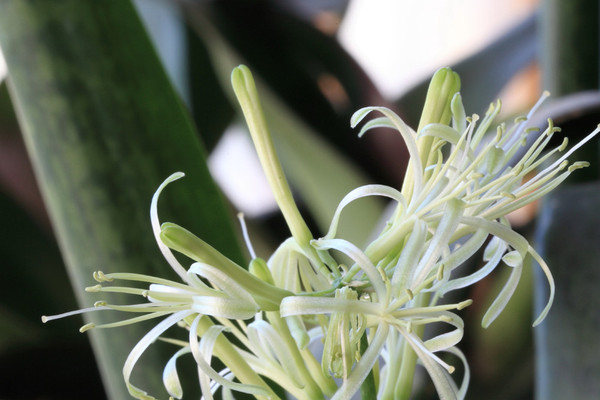
Mature snake plants can bloom every year and are fragrant, but they are mainly grown for their foliage. These plants are drought-tolerant, moisture-tolerant, and shade-tolerant, able to adapt to various harsh environments, suitable for garden landscaping or pot cultivation, and are high-grade indoor foliage plants, very suitable for decorating living rooms, studies and other places.
According to experts, snake plant can absorb more than 80% of harmful gases indoors, especially its ability to absorb formaldehyde is extremely strong, making it particularly useful in newly renovated houses. Moreover, snake plant can also protect against radiation. The above cultivation methods and precautions for snake plant are for your reference!
Cultivation Methods and Precautions for Snake Plant
Snake plant, also called Sansevieria, is a type of plant in the family Haemodoraceae (funnel-form family), and is also the most common foliage plant in daily life. It can purify the air and beautify the environment, and its leaves are large with tiger-skin-like patterns on the surface, with particularly high ornamental value, and it is easy to grow. However, to grow snake plant well, you also need to master certain cultivation methods and understand what to pay attention to during cultivation. Below is my detailed introduction to this knowledge; those of you who like this plant can focus on understanding it.
1. Soil
When growing snake plant, choose loose, fertile, well-aerated soil. When preparing potting soil, you can use two-thirds leaf mold mixed with one-third garden soil, or mix three parts fertile garden soil with one part loose coal cinder, stir evenly, and finally add an appropriate amount of soybean cake or chicken manure as base fertilizer.
2. Propagation
Snake plant can be propagated by division and cuttings, among which division is the most common. It can be done together with repotting in spring. The specific method is to cut over-dense leaf clusters into several pieces; each piece must have, in addition to leaves, a certain number of rhizomes and suckers, so that after transplanting into a new pot, it will easily survive.
3. Temperature
When growing snake plant, suitable temperature is very important. Snake plant has particularly high temperature requirements; it normally grows well in environments of 20 to 30 degrees. When the indoor temperature is below 13 degrees, it will stop growing, and in winter the minimum temperature must not be below 10 degrees, otherwise its roots will rot and it will die.
4. Humidity Adjustment
During the cultivation of snake plant, humidity adjustment is also very important. When it is in the peak growing season, follow the principle of preferring dryness over wetness. Just after entering spring, it is in the sprouting stage, and at this time you can water appropriately more to keep the potting soil moist, but after entering the rainy season, water must not be allowed to accumulate in the pot. To increase air humidity, you can wipe its leaf surface with clean water, which can both increase humidity and keep its leaves clean and glossy.
Snake Plant Pictures and Cultivation Methods of Snake Plant
Snake plant is also called Sansevieria, Jinlan, or Qian Sui Lan (thousand-year orchid). This is a very good foliage plant. Now let us take a look at how this plant is propagated.
Snake Plant Pictures and Cultivation Methods of Snake Plant. Snake plant is a foliage plant; many times people grow it just to look at its leaves, which have an appearance like a tiger's tail and look especially beautiful. The propagation methods of snake plant are also very common: division and cuttings.1. Propagating Snake Plant by Cuttings
For snake plant, you can first select some robust leaves, cut them into 6 cm sections, and then insert the cut leaves into potting soil. The pot uses soil mixed with sand and gravel, which makes it more breathable, and snake plant will also root very easily this way. Normally maintain the moisture and permeability of the potting soil, and roots will form after one month. Keep it in a ventilated and well-lit environment, and it will grow roots easily.2. Propagating Snake Plant by Division
For plants that are growing very well and have many snake plant shoots, we can cut off the roots of the snake plant and plant them separately. In this way, the snake plant is separated from a large plant and becomes an independent plant, which is especially easy to grow, because after becoming independent, the snake plant has the originally well-grown root system, and after division it can absorb more sunlight, which is more beneficial to the growth of the snake plant.