How to grow a small-leaf red sandalwood (Pterocarpus) bonsai? A detailed guide to its growing environment requirements
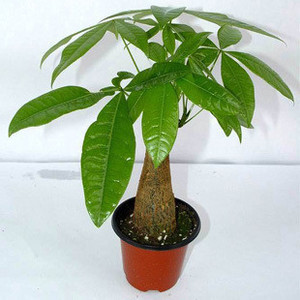
How to grow a red sandalwood tree bonsai and its growing environment
Small-leaf sandalwood has a well-developed root system and root nodules, can fix nitrogen, and has no strict requirements for soil, but for high-yield forests, fertile land with sufficient sunlight should be selected. Afforestation is from March to May, adjusted according to the rainy season in each place; container seedlings 30-40 cm tall give good afforestation results, and seedlings that are too tall should have their stems cut before planting. Planting holes are 50*50*30 cm, with calcium-magnesium-phosphate compound fertilizer as base fertilizer, about 250 grams per hole, and a spacing of 2*2 m. 2: Tending and management. Strengthen forest protection for young forests and prohibit grazing. Apply compound fertilizer 2 times each year, 200 grams per plant each time; in the first 3 years, weed before fertilizing and straighten the trunks. 3: Control of main pests. Seedlings and young trees are prone to anthracnose and black spot disease (leaves fade and then turn black), which can be controlled with 1:100 Bordeaux mixture or 50% carbendazim 1000-fold solution; for leaf-eating pests such as flea beetles and scarab beetles, trichlorfon can be used. In addition, small-leaf sandalwood likes a hot and humid climate, with an annual average temperature above 25°C, an extreme minimum temperature of 2°C, and annual precipitation of 1100-2200 MM. Seedlings are prone to frost damage below 3°C. It is not shade-tolerant, and flowers and fruits 6-8 years after planting, with the flowering period from April to May and the fruiting period from September to October.
It likes strong light, with the most suitable temperature of 20-30°C, and can survive at a minimum of 2°C. It likes to grow in a humid and hot climate. Because bonsai soil is relatively little, be careful not to let the water supply be cut off when going out. The watering principle is to water when dry and stop when wet, and loosen the soil frequently. Controlling the size of the tree shape is very important; methods such as pinching off the tips and pruning can be used to maintain the tree shape. Apply liquid fertilizer once every two months.
Appreciation methods and decoration of bonsai and potted plants
The natural tree form is appreciated from a distance, but bonsai is appreciated up close. Therefore, the overall appearance of a bonsai needs to conform to a natural tree form, so that at a glance one can tell what kind of tree it is. Thus, when creating it, in addition to fully expressing the characteristics of the tree species, even more attention should be paid to the details of each part: roots, trunk, and branches.The best visual viewing point for a bonsai is at one-half of the tree height, level with the eyes, with the crown leaning slightly forward, so that when viewing there is a slight feeling of looking up, which can then bring out the appearance of a giant tree.
The appreciation methods for bonsai can be divided into two aspects:
One is to divide the potted tree into several parts for appreciation; the other is to appreciate the potted tree in three parts: indoor, outdoor, and exhibition.
Various factors in appreciating the beauty of bonsai:
To appreciate the beauty of bonsai, one can appreciate the roots, trunk base, trunk, branches, leaves, crown, flowers, fruits, and pot.
1. Roots
For harmony between the root spread and the potted tree, the left-right size should preferably be twice the front trunk base. The extending state of the root spread is an important factor in creating a sense of stability in the tree, and the thickness and branching of the roots in the root spread best express the sense of age in pot cultivation.
The extending state of the tree roots is called "root display," and the shapes of root display include the following:
Eight-direction root display is the most ideal root form in bonsai. The roots extend evenly without omission in all directions from around the trunk, longer on the front left and right and shorter front and back; this is the best root spread for straight trunks and curved trunks.
One-sided root display: the main roots drag and grow on one side or two sides. Suitable for slanting trunks and cascade tree forms.
Coiled roots: after the four-direction root spread and eight-direction root spread develop, they coil together to form rock-like roots, called coiled roots. They have a sense of weight, age, and wild charm, and best express the giant-tree appearance of ancientness; they are also a common root spread in banyan and trident maple.
Exposed roots: the state in which roots are exposed above the ground surface due to sand and soil loss. Suitable for expressing the sloping faces of high mountains and steep ridges, as well as the tree posture of those surviving in harsh environments such as coasts and riverbanks.
The roots of young trees are all buried in the soil and divide there; over many years, under sunlight and rainwater washing, the old roots gradually emerge from the ground and become gnarled and twisted in an ancient wild manner, occupying the ground and becoming part of the trunk, to balance and stabilize the whole tree. Therefore, based on this natural phenomenon, when repotting a potted tree, make the soil surface slightly higher than the pot surface so that the roots can be slightly exposed above the soil; this will better give the roots a feeling of gripping the ground and greatly increase their beauty.
Trunk base
The part of a bonsai from the roots to the first branch of the trunk is called the "trunk base." The ideal upright shape is to form a strong and powerful trumpet state, gradually moving to the trunk. Therefore, the lower part near the root spread should be thick and large, becoming thinner and smaller toward the top of the tree. It is best to have undulating ridge lines and rich variation, which is even more superior. This part has no branches or leaves covering it, so wounds must absolutely be avoided.
2. Trunk
The trunk can be said to be the most important supporting part of the whole tree structure and the greatest factor determining the quality of the complete form, with a single trunk being best. The trunk must fully coordinate with the branches and leaves to express the characteristics of the tree species. Pine, maple, and trident maple leaves are stiff and sharp, so the trunk should be soft and curved, soft inside and firm outside; conversely, if the leaves of Chinese juniper are soft and beautiful, then the trunk should have strong twisting variation, firm inside and soft outside.
Essential conditions for a good trunk
(1) The lower part of the trunk should be thick, tapering smoothly upward.
(2) It should have no scars, be slightly round, or preferably show clear ridge lines with the root spread. If there is a wound, it should be able to avoid the front.
(3) The trunk should be irregularly curved, flowing smoothly and naturally. Rough bark also better expresses the ancient feel of bonsai.
(4) The thickness of the trunk should harmonize with the tree height.
The shapes of the trunk include round trunk, twisted trunk, deadwood trunk (the trunk is cracked, the bark peeled off to expose the xylem in a whitened dead-bone form, which is highly valued), burl trunk, rough-bark trunk, brocade trunk, and spirit (the top or branches of the tree naturally withering like white bones).
Because the form and structure of the trunk affect the overall quality, they must be strictly required and valued.
A good trunk must have large variation and small flowing curves. The defects of the trunk are described below:
S-shaped trunk: a fixed, regular S-shaped curve, without a sense of strength and vulgar; it should be avoided.
Usurping trunk: among double trunks, the secondary trunk is larger than the main trunk.
Tumor trunk: in the middle section of the trunk's variation, a local swelling forms a tumor; this is a plant disease state and hinders appreciation.
Reverse trunk: the variation of the trunk reverses and is unnatural, without a sense of stability or strength.
Frog-leg trunk: the joining point of a double-trunk tree forms a round obtuse angle; also called "surrender trunk."
Pigeon-breast trunk: curved like the breast of a pigeon, unable to express a sense of strength.
The above six kinds of trunks should be avoided.
3. Branches
The shaping of branches must coordinate with the root spread and trunk; the width of the branch structure is best 6-8 times the length of the trunk base. Internodes should be short, and those with dense fine branches are superior. At the same time, they should also be created according to the natural branch posture of the tree species to express their characteristics. Tree branches are short in front and long in back; it is best that the lower branches are thicker and sparser, and the upper branches finer and denser, but occasionally a thick branch appearing above can also express a rough, wild flavor. Deciduous trees usually grow branches upward at 45 degrees and often grow several branches from the same place; once they become ancient trees, height growth stops. When creating, slightly adjust the branch tips drooping where they meet the trunk. In bonsai shaping techniques, cutting off unused branches is called "branch removal."
The tree shape of bonsai, depending on the species, is ideally triangular, ovate, elliptical, or semicircular, and the first lower branch at one-third of the tree height is the most harmonious. Branches located above should not be pruned to the same length as the lower branches; they should differ in length, thickness, and fineness, so as to better express the abundant ancient feeling of bonsai. Branch variation is complex, and there are especially many taboos, so special attention must be paid to pruning and shaping. Front branches should be short, and back branches long, to express a three-dimensional sense of depth; front branches should lean slightly left and right to avoid creating a sense of pressure; branches should not cover up the variation of the trunk, and the points where branches emerge should also be made clear, partly hidden and partly visible, so that it is easier to inspire the viewer's associations.
4. Leaves
Except for deciduous cold trees exhibited in bare form, in general bonsai, leaves occupy a considerable share in visual appreciation, so the requirements for leaves must be careful. Special attention should be paid when selecting material varieties, because the characteristics of leaves cannot be shaped or changed by management techniques. Those with small, single, flat leaves and seasonal color changes are more welcomed in appreciation. Leaves must maintain a balanced and perfect proportion with the roots, trunk, and branches.
5. Crown
The uppermost part of the tree trunk is also the plant's growth point, also called the "crown." The shape, size, density, and front-back-left-right position of the crown have a great influence on the viewing angle and sense of stability of the entire potted tree. The crown should lean slightly forward at 15 degrees, so that when viewing there is a slight feeling of looking up, which can then show its image of enormity.
6. Flowers
Flowers are the most brightly colored part of plants, loved by all, and different flowers symbolize different meanings. The gorgeous flower colors and faint fragrance make people feel refreshed when appreciating them. If flower pots can be used for decoration on festive occasions, they can add a touch of lively atmosphere; if there are potted flowers and bonsai in the venue, it appears even more lively and vivid. The size of the flowers must harmonize with the size of the potted tree, otherwise even flowers of a fine variety lose their character. It is best if they can bloom fully, and the flowering period should be long, with bright and varied flower colors.
7. Fruits
Fruits symbolize the continuation of life and the harvest of effort, and bring people a considerable sense of satisfaction when appreciated. Flower-and-fruit bonsai have also always played a clever role in the layout of small bonsai.
After the flowers fade, the fruits begin to form and gradually grow larger; it is best if their size can harmonize with the potted tree and they can remain on the tree for a long time; many fruits and color variation provide appreciation. Occasionally growing a few edible fruit tree bonsai can not only provide appreciation but also allow you to enjoy the results of your own efforts; why not do it?
8. Pot
The appreciation of the pot mainly lies in whether it can achieve harmony with the potted tree and form an overall beauty. Therefore, according to the tree species, tree shape, tree age, and tree nature, pots of different colors, shapes, sizes, and textures need to be selected to achieve the effect of bringing out the best in each other.
Bonsai is a life art worthy of vigorous promotion. Therefore, by integrating bonsai into life, in one's own indoor and outdoor spaces or external exhibitions, everyone can share the beauty of bonsai art.
Indoor appreciation of bonsai
In places at home with lighter wall colors and larger blank areas, such as the entryway, living room, fireplace, and low tables, place pleasing bonsai and illuminate them with light. In their placement and appreciation, there are many points to note:
Display tables:
Choose tables of different shapes, textures, sizes, and colors according to the category of bonsai. For example, flower-and-fruit, deciduous trees, young delicate thin-trunk bonsai, and grasses can be placed not only on fine tables such as red sandalwood and rosewood, but also on tables made of bamboo frames or natural tree roots; while pines, cypresses, and strong tree species should use hard, rough tables such as red sandalwood and rosewood. As for the shape of the table, there are square, round, rectangular, etc., available as floor-standing or desk-top, and can be decided according to the form of the potted tree.
Placement positions:
Large and medium bonsai should be placed in places with larger space. If their flow direction and branches emerge on the left, they should be placed on the right side of the table; decorative grasses are placed slightly to the front left, so that there is a sense of harmony. At festive banquets, pines and cypresses can be the main tree, with deciduous trees as accompaniment, and grasses, bamboo, elegant stones, etc. arranged in the middle, placed on tables or stands.
Small bonsai
The decoration method is to place small bonsai on small bonsai display shelves of different styles and suitable sizes, and place them in appropriate indoor places, so that their cute and elegant interest can be shown.
Root-over-rock can be decorated on stands or flat tables, and then some grasses arranged. Usually, fine and soft grasses are better, and they should not be too large, so as not to overpower the main subject.
Cascade branches: large cascades and semi-cascades are decorated on tall stands, with branches hanging down; woodland, weeds, and water stones are placed under the table, elegant and leisurely, with a unique charm.
If bonsai is placed in a room, it must be placed at a height where one-half of the tree height is parallel to the eyes when standing. On desks, wine cabinets, and long tables, bonsai should be placed where, when sitting, the viewing point is about equal to eye height.
The most noteworthy thing about indoor appreciation is that it cannot be placed for too long; three days is the limit, and the leaves should be sprayed with water frequently. In cold or heated rooms, do not exceed one day, so as to avoid excessive evaporation from the leaf surface and dehydration, especially for trees sending out new buds and in hot summer, to avoid harming the potted tree.
Outdoor appreciation of bonsai
In a courtyard or on a balcony, place bonsai on bonsai racks made of wooden blocks, cement boards, or cement frames. When arranging bonsai on the racks, place larger bonsai in the back and smaller bonsai in the front. Do not arrange the bonsai too neatly; there should be layers between sizes and heights to create a sense of distance; for example, beside a majestic green pine, you can add poetic and charming red-leaved maples, bare-form cold trees, flower-and-fruit types, or place elegant stones and companion grasses; or use a ceramic shallow water tray with root-over-rock and small bonsai placed on it. If you want to appreciate them at night, lights can be installed so that at night you can view and stroll with family and close friends.
Planting sandalwood tree bonsai
Sandalwood tree bonsai are divided into root bonsai and whole-plant bonsai. Because ordinary sandalwood trees are more than ten meters tall, they are not suitable for indoor pot cultivation; among whole-plant bonsai, only red sandalwood is suitable in size, so most red sandalwood tree bonsai with leaves are red sandalwood bonsai.
(This article comes from a website; for more, please visitLeafy red sandalwood bonsai are not very pampered; anyone with experience in bonsai management can handle them, while root red sandalwood bonsai are very special and require extra care. Now the main points to note in planting red sandalwood bonsai will be introduced.
Most sandalwood bonsai on the market are sandalwood root material that has lost its vital activity; the fragrance they emit will dissipate after a period of time, and under long-term humid conditions they may even deteriorate, whereas sandalwood that has not lost its vitality can still grow under careful care and emit a long-lasting fragrance.
Because sandalwood trees are semi-parasitic tropical plants, according to their biological characteristics, sandalwood bonsai care should pay attention to several key points: 1. Maintain host plants to provide nutrients for sandalwood; 2. Host plants should be pruned frequently and must not overpower the main subject; 3. Ensure sufficient sunlight; 4. Do not water too much; follow "water when dry and stop when wet"; 5. Fertilize at the appropriate time; 6. Pay attention to ventilation, maintain a certain humidity, and spray regularly to prevent disease, especially during seasonal transitions, pay attention to preventing and controlling powdery mildew.
Because a single sandalwood tree is rather monotonous, other potted plants can be grown together with it. For example, Buddhist pine and sandalwood are a wonderful combination. The principle for mixed planting is to give priority to those that are mutually beneficial, those that do not interfere with each other are all suitable, and those that are mutually harmful must absolutely not be used. Also, try to choose plants that grow in tropical and subtropical climates, can survive in the same soil, and give priority to light-loving plants.
Many people think that the strong fragrance of sandalwood will affect human health, but this is not the case. Sandalwood itself is a medicinal plant, and its heartwood has a long history of medicinal use; moreover, the young leaves of sandalwood can be processed into sandalwood tea for people to drink; in addition, sandalwood has also been used as a very good spice. Therefore, the fragrance of sandalwood itself will not harm the human body.
(This article comes from a website; for more, please visitGrowing sandalwood tree bonsai is the same as growing other bonsai: skill alone is not enough. You must care about the growth condition of the sandalwood tree, be diligent in learning and asking questions, and only then can you grow a sandalwood tree bonsai well. Work hard!