Detailed Guide to the Cultivation Methods and Precautions for Ficus microcarpa
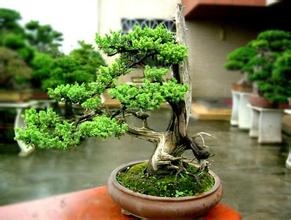
What are the cultivation methods and precautions for ficus trees?
I. Cultivation Methods for Ficus Trees
First, soil requirements: the soil for cultivating ficus trees is generally loose, breathable, slightly acidic black stone powder mud, or river sand, construction stone powder, coal cinder, etc. Soil containing such substances will promote the growth of the ficus tree.
Second, watering requirements: the ficus tree's demand for water is not particularly great, and it can be watered in appropriate amounts according to different weather conditions. For example, during the dog days of summer it will not die even if not watered for two or three days; on the contrary, overwatering that causes waterlogging will affect the growth of the ficus tree and may even cause its roots to turn black and necrotic. So when watering the ficus tree we must keep to "water when dry, stop when wet."
Third, light requirements: ficus trees are generally placed in a ventilated and well-lit spot. The ficus tree's demand for sunlight is not too great, but if sunlight is insufficient for a long time the plant will turn yellow and dry out, and in serious cases this leads to pest and disease problems, and even death.
Fourth, fertilizing requirements: the ficus tree relatively likes fertilizer, and reasonable fertilizing will make it grow more luxuriantly. We generally choose rotted human and animal manure or thoroughly decomposed cake fertilizer as a top dressing; these fertilizers contain no chemical components and better promote the ficus tree's absorption.
II. Precautions for Cultivating Ficus Trees
First, do not water too much. Overwatering a ficus tree will affect its normal growth, so we must be careful not to water too much; only when the soil in the pot is dry and not wet may it be watered, and it must not be watered until soaked through - moderation is required.
Second, insufficient light. Although the ficus tree is an indoor plant and does not need too much light, this does not mean it does not need sunlight at all. Many people mistakenly think the ficus tree needs no light; in fact this is wrong - the ficus tree grows better in an environment with sufficient light.
Third, timely prevention and control of insect pests. Common ficus tree pests include red spider mites and scale insects, and we must pay attention to preventing and controlling these two pests. Red spider mites are generally very small but numerous; the whole plant can be washed with a large amount of water and then sprayed with a mite-specific pesticide. Scale insects are few in number but extremely harmful; they can be brushed off with a toothbrush or wiped clean with a rag, and then a 0.2% solution of washing powder or essential balm can be sprayed for control.
Second, daily precautions for ficus trees
Ficus bonsai is a sculptural landscape that symbolizes vitality, so maintaining the continuation of its life and growth becomes the inevitable purpose of studying ficus cultivation methods. Cultivating a ficus tree requires watering, fertilizing and pruning in daily maintenance, and it is not complicated.
Ficus cultivation methods require attention to humidity and moisture: improper moisture is very harmful to the ficus tree. Feel the condition of the potting soil with your hand, and the principle of "water when dry, stop when wet" should be adopted. Do not water frequently, but when you water, water thoroughly. Overwatering will cause root rot and make the leaves drop. Ficus trees are relatively difficult to care for in the north, and households should spray the leaves with water more often to increase the humidity in the surrounding air.
Ficus cultivation methods require attention to temperature: the suitable growing temperature for the ficus tree should not vary too greatly between day and night, or it is very prone to leaf drop and death. Usually pay attention to placing it in a well-lit spot, and in summer pay attention to providing appropriate shade.
Ficus cultivation methods require attention to the growing medium: use loose, well-draining leaf mold soil, usually in the ratio of garden soil : humus soil : sand. It is best to place moss the same size as the pot on top of the bonsai; this is first for beauty, and second it plays a very good role in drainage and aeration.
Ficus cultivation methods require attention to fertilizing: the growth of the ficus tree likes fertilizer, but fertilizing too many times will harm its growth. The amount of fertilizer should also vary according to the season.
Ficus cultivation methods require attention to pruning and care: during the peak growing season the plant should be pinched and its buds removed, and a major pruning should be done in autumn, after which no pruning is done, because the plant grows slowly in winter and should not be pruned in winter. The pruning of the ficus tree should be done by a specialist, cutting off leggy branches, twin branches, diseased and weak branches, crossing branches, etc., to give the whole a layered beauty.
It easily makes the plant turn yellow and dry out, leading to pest and disease problems, and eventually death. The ficus tree is mainly distributed in the regions south of southern China, with the main commercial production in Zhangzhou, Fujian. It likes acidic soil and is a non-cold-tolerant plant; in northern regions it generally must be moved into a greenhouse for maintenance and management in winter.
The point that most deserves attention in ficus cultivation methods is the prevention and control of pests and diseases:
The main insect pests of the ficus tree are aphids, red spider mites, scale insects, etc. Spray the leaves with omethoate at 500 PPM, or spray with a 1000-fold solution of 50% phoxim wettable powder. A 0.1% solution of washing powder water or essential balm water is also very effective.
Third, bonsai shaping methods for ficus cultivation
Because the ficus tree has many aerial roots, it is suitable for the exposed-root-claw style and multi-trunk leaf bonsai. When making these two kinds of bonsai, in the first year first cultivate its root base and nourish its vitality; after it grows vigorously, raise the roots and repot into a shallow pot.
Because the ficus tree grows fast and has well-developed roots, it can be made into a rock-clinging bonsai. Before planting, coil the tree with wire into curved shapes of varying sizes and plant it at an angle in a soil pot. After 2-3 months of cultivation, the aerial roots increase and the crown takes shape; then take the sapling out, remove all the growing medium, and attach the sapling to the selected stone. At this point note that the ficus tree and the coiled tree-stone should have a consistent momentum, with the roots embedded in the crevices of the stone as much as possible. Bind the roots firmly with cotton cloth strips or wire and place them in a tall large pot to cultivate. According to the tree's momentum, rock-clinging bonsai can be created as far as possible into forms such as rock-embracing, rock-piercing and rock-hugging styles.
[Ficus Tree] What are the cultivation methods and precautions for ginseng ficus?
Perhaps many friends will ask the editor, how exactly should a ginseng ficus be cultivated? And what are its precautions? Today the editor will tell everyone here that the key to an indoor ginseng ficus bonsai still lies in pruning it, because this is a shaping technique, and through pruning its form can be made more graceful. Below, let the editor explain it to everyone in detail.
The roots of the ginseng ficus are shaped like ginseng; its form is natural and its root base is exposed, while its crown is very lush and elegant, with a unique charm that is full of delightful interest and makes people feel even more joyful. That is why it is deeply loved by consumers all over the world. As a furnishing and decoration for indoors and outdoors in the home, the ginseng ficus bonsai has very great ornamental value and is a beautiful scenery.
Cultivation Methods
Watering a ginseng ficus should follow "water when dry, stop when wet," and the potting soil is best kept moist frequently. In summer it should be placed in a shady spot, and fertilizing should also depend on its growth; generally, when it is in the peak growing season, about once a month it can be given a sufficient application of thoroughly decomposed, dilute bean cake water, etc. In winter, care must be taken to protect it from freezing, and in summer it must also be protected from direct sun exposure. It is best to pay attention to deworming and disease control all year round.
The roots of the ginseng ficus are just like ginseng, so when we plant it, exposing its roots above the soil looks very nice. Of course, we can also use it to graft different varieties of ficus, and it is also the best gift for birthday congratulations. As for soil, river sand or sandy soil is best for cultivation; to make its roots large and fat we can add a little fertilizer for it.
How to Care for the Bonsai
Temperature: the most suitable temperature for its growth is between 18-33°C, and in winter its temperature must not be lower than 10°C; if it falls below 6°C it will very easily suffer cold damage.
Light: the ginseng ficus likes a moist and warm environment. In spring and autumn we can place it in a spot with appropriate light, letting it fully receive sunlight. In summer it should be placed where there is no direct sunlight.
Watering: watering it should follow the principle of alternating dry and wet, and its potting soil is best kept moist at all times.
Fertilizing: during the growing season the ginseng ficus can normally be fertilized once a month, mainly with phosphorus and potassium fertilizers, and it is best to bury them shallowly near the plant's roots.
Repotting: repotting and changing the soil is best done once every spring, and it is best to add base fertilizer, as this is more beneficial to its growth the following year.
Pruning: every spring and autumn the thin, weak and diseased branches of the bonsai can be appropriately pruned, which can increase the growth of its branches.
The above is the ginseng ficus cultivation method the editor has brought to everyone. If you still want to know related content about other plants, you can come to my grape trellis; the editor awaits everyone's arrival.
Ficus Cultivation Methods and Precautions: Ficus Cultivation Methods and Six Major Precautions
The ficus tree is a large arbor plant; its plant reaches 15-25 m tall with a widely spreading crown, and older ficus trees often have rusty-brown aerial roots. The ficus tree has been rated as the provincial tree of Fujian Province, and has also been rated as the city tree of Fuzhou and Ganzhou. The ficus tree's adaptability is very strong, and it relatively likes a sunny, warm climate. Below, let us take a look at the introduction to ficus cultivation methods and precautions.
Ficus Cultivation Methods: Propagation Methods
Although the ficus tree bears fruit every year, its seeds are very small and threshing them is also very difficult. Generally, the best propagation methods for the ficus tree are cuttings and layering. Cutting propagation is mostly carried out during the rainy season, inserting softwood cuttings into an open-field seedling bed. Layering propagation can make use of the ficus tree's characteristic of soft large branches. First place a large flower pot near the mother plant of the ficus tree, fill it with potting soil, then choose a well-formed side branch and bury it into the flower pot, then place a stone on top; after about two months it can be cut away from the mother plant and planted.
Ficus Cultivation Methods: Soil
The ficus tree likes loose, fertile acidic soil, and can also grow in poor sandy soil. So when cultivating it in pots, black stone powder mud, river sand, construction stone powder and coal cinder can be used for planting. However, the growing medium for planting a ficus tree is best loose, well-draining leaf mold soil, which can be prepared in the ratio of garden soil : humus soil : sand at 2:2:1 for cultivation. When cultivating in pots, it is best to place moss the same size as the pot on top of the bonsai; this is first for beauty, and second it plays a very good role in drainage and aeration.
Ficus Cultivation Methods: Light
The ficus tree likes a sunny, warm and humid climate, so when cultivating it in pots, place the ficus tree in a ventilated spot, and there must be a certain amount of spatial humidity. If sunlight is insufficient, ventilation is poor and there is no certain spatial humidity, it will cause the plant to turn yellow and dry out, leading to pest and disease problems, and eventually death. The ficus tree's growing temperature should not vary too greatly between day and night; during cultivation, it must usually be placed in a well-lit spot, and in summer care should be taken to provide appropriate shade.
Ficus Cultivation Methods: Watering
The ficus tree is a plant relatively tolerant of water and moisture, and it will not rot its roots even in short-term waterlogging. Since it is cultivated in potting soil, it is enough to cover the roots with the growing medium, and inserting the tree to a depth of about 3 cun is appropriate. After watering to settle the roots, it can be placed in a shady, wind-sheltered spot for cultivation. When watering the ficus tree, water according to weather conditions, keeping the growing medium moist but not waterlogged; too much waterlogging easily causes the roots to turn black and necrotic. If a surviving ficus tree is waterlogged for a long time, it easily grows only roots and no branches or trunk. In summer, the ficus tree will not wither even if not watered for 2-3 days. So when watering the ficus tree, be sure to remember the rule of not watering frequently, but watering thoroughly when you do.
Ficus Cultivation Methods: Fertilizing
The ficus tree likes plenty of water and fertilizer, and is a plant that can tolerate both drought and moisture. Generally, after the ficus tree's trunk enters normal care, rotted human and animal manure or thoroughly decomposed cake fertilizer can be used as a top dressing, applied as a foliar supplemental feeding once or twice a day. When transplanting or repotting, thoroughly decomposed chicken manure, bean cake or bone meal can also be mixed into the growing medium as a base fertilizer. Sufficient fertilizer can make the ficus tree's branches and trunk grow fast and thick. Although the ficus tree likes fertilizer, excessive fertilizing will also cause it a certain amount of harm. So when fertilizing it, be sure to fertilize according to the different seasons.
Precautions for Ficus Trees
1. If during cultivation the ficus tree is watered improperly, it easily causes its leaves to drop. So watering the ficus tree must adhere to the principle of not watering when not dry, and watering thoroughly when you do.
2. The ficus tree is a plant that likes plenty of water and fertilizer, but fertilizing with high-concentration chemical fertilizer or unfermented, undecomposed organic fertilizer will cause fertilizer burn - in mild cases leaf drop, in severe cases death. So when fertilizing, be sure to use the method of light fertilizer applied frequently.
3. The ficus tree is a light-loving plant; if light is insufficient and ventilation is poor, it will cause its leaves to drop and pest problems. So the ficus tree should grow in an environment with sufficient light, and when cultivating it in summer, it needs to be shaded.
4. The ficus tree is easily damaged by pests such as red spider mites, scale insects and mealybugs, so when cultivating it, be sure to place it in a ventilated spot. If pests are encountered, spray the leaves with omethoate at 500 PPM or spray with a 1000-fold solution of 50% phoxim wettable powder.
5. When cultivating a ficus tree, be sure to place it in a ventilated and well-lit spot, and there must be a certain amount of spatial humidity; insufficient sunlight, poor ventilation and no certain spatial humidity can make the plant turn yellow and dry out, leading to pest and disease problems, and eventually death.
6. When pruning a ficus tree, be sure to do it during its dormant period, because during the growing period the sap flows faster, and after pruning a large amount of white sticky sap flows out, which is detrimental to the plant's growth.
Summary: The above is the editor's introduction to ficus cultivation methods and the six major precautions for ficus trees. After reading the editor's introduction, I believe everyone understands it relatively well. The ficus tree is a tree species with strong adaptability; it likes loose, fertile acidic soil, grows poorly under dry climate conditions, and can develop aerial roots in humid air, greatly enhancing its ornamental value.