Boston Fern: How to Grow It, Key Points to Note, and Photo Gallery
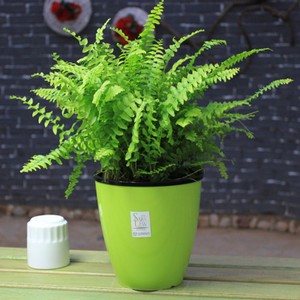
How to Grow the Boston Fern and Key Points to Note, Boston Fern Photos
The Boston fern is a perennial evergreen herbaceous fern of the family Nephrolepidaceae (sword fern family) and the genus Nephrolepis. It originated in the tropics and subtropics and is a fern foliage plant with a drooping form; it is currently fairly widely distributed in Taiwan, China. As a foliage plant with a drooping form, the Boston fern has high ornamental value and is often grown in pots and hung indoors for ornament, and its stolons are also cut and used as decorative arrangement material, so it is fairly common in people's lives. In addition, it is said that the Boston fern has good air-purifying ability and can effectively absorb formaldehyde from the air when used as an indoor decoration; it is recognized as one of the most effective biological purifiers, absorbing roughly 20 micrograms of formaldehyde per hour, so it is very popular.
At present there is actually not much information on how to grow the Boston fern, because this plant is fairly unique: it does not produce fertile fronds, so to a certain extent it can only be propagated by division or by runners, and the method people commonly use is division. When growing it, this is usually done in summer each year: small rooted plantlets growing from the stolons of a robust, vigorously growing Boston fern are cut off, used as cuttings, and planted separately into pots; after division, water thoroughly and place in a cool spot indoors, and the plants will soon take root and sprout.
1. Soil management
As a fairly good foliage plant, the Boston fern is often grown in pots, so how should the Boston fern be grown? The first thing to pay attention to is the soil. The Boston fern has fairly high soil requirements; when growing it in pots, leaf mold, river sand and garden soil should be mixed in certain proportions, and the soil should be rich in nutrients, loose and airy, and well draining. If conditions allow, a small amount of sphagnum moss can also be added to the soil, making the soil even more ideal and helping the Boston fern grow more healthily. In addition, to keep enough nutrients in the potting soil, it should be replaced once every spring.
2. Light management
The Boston fern likes light and warmth, so light and temperature need to be carefully attended to when growing it. Although the plant likes light, the Boston fern is still better suited to a semi-shaded environment; when growing it, try to avoid direct sunlight, otherwise its fronds will gradually wither and curl, and growing it under diffused light is best.
3. Temperature management
The suitable growing temperature for the Boston fern is between 18 and 35 °C; temperatures that are too high or too low are both unfavorable for the plant's growth, especially when the temperature is above 35 °C or below 15 °C. The Boston fern is also not cold-tolerant: when the winter temperature drops below 5 °C, the plant is at risk of cold damage, so the growing temperature must be well controlled, with appropriate cooling and warming.
3. Water and fertilizer management
The Boston fern's requirements for water and fertilizer are not especially high. As for watering, a moderate amount of moisture is enough - not too much and not too little; during the vigorous growth period, simply keep up a sufficient water supply, and as long as the soil stays moist the plant will grow normally and healthily. In summer, watering once or twice a day is enough; if there is no water replenishment for a long time, the Boston fern easily turns yellow and drops its leaves. As for fertilizing, during the growing period the Boston fern needs a dilute, well-rotted cake fertilizer applied once every 4 weeks. Be very careful when fertilizing: do not let the fertilizer contaminate the Boston fern's fronds, otherwise the fronds will be damaged.
How to grow the Boston fern? How to Grow the Boston Fern and Key Points to Note
How to Grow the Boston Fern and Key Points to Note
1. Light
The Boston fern likes bright, diffused light. In spring and summer it should be placed where there is bright, diffused light indoors; when the sunlight is strong, it must not be placed in direct sunlight, since direct sunlight turns the fronds yellow. In winter, light should be appropriately increased, otherwise the frond color easily turns yellow or the frond margins dry up.
2. Water
The Boston fern likes a moist environment and requires fairly high soil moisture and air humidity. Because the Boston fern's roots are adventitious roots with poor water-absorbing and water-retaining ability, water must be supplied in time; otherwise, if it dries out for too long, the fronds easily turn yellow and drop. In spring and summer, the potting soil must always stay moist, but must not become waterlogged or overly wet; it is best to keep the potting soil consistently moist. In summer, besides watering in time, also mist the fronds frequently. In winter, when the room temperature is low, reduce watering and simply keep the soil slightly moist.
3. Fertilizing
The Boston fern should not be fertilized at too high a concentration, otherwise the roots are easily damaged. The best way to fertilize is to first add well-rotted barnyard manure when potting up (repot once every 1 year in spring), and then during the peak growing season apply a dilute fertilizer as a top dressing. When fertilizing, avoid letting the fertilizer solution contaminate the fronds; if they are accidentally contaminated, immediately spray clean water to rinse them.
4. Temperature
The suitable growing temperature for the Boston fern is 15-25 °C, and in winter it can overwinter safely at above 10 °C.
How to grow the Boston fern: How to Grow the Boston Fern and Key Points to Note
The Boston fern is an evergreen fern, suitable for growing in pots for indoor ornament; its cut stolons can be used as decorative arrangement material, making it a very good houseplant. So how do you grow the Boston fern? Let's learn about how to grow the Boston fern and the key points to note.
I. How to grow the Boston fern
It is generally placed indoors where there is bright, diffused light for growing; it must not be exposed to strong direct light, but it also must not be placed in a dark spot. The suitable growing temperature is 15-25 °C, and in winter it can overwinter safely at above 10 °C.
Although it is drought-tolerant, it still needs sufficient water, and should not be too wet or too dry; keep the potting soil consistently moist. In summer, water once or twice a day and mist the fronds frequently. It does not need much fertilizer; during the growing period, applying a dilute, well-rotted cake fertilizer once every 4 weeks is enough. Quick-acting chemical fertilizers should not be used, and when fertilizing, never contaminate the fronds, so as to avoid damage. For potting, use a mixed growing medium of leaf mold, river sand and garden soil; if conditions allow, using sphagnum moss as the growing medium gives even better growth. Repot once every other year in spring.
II. How to grow the Boston fern
1. Light: The Boston fern likes bright, diffused light. In spring and summer it should be placed where there is bright, diffused light indoors; when the sunlight is strong, it must not be placed in direct sunlight, since direct sunlight turns the fronds yellow. In winter, light should be appropriately increased, otherwise the frond color easily turns yellow or the frond margins dry up.
2. Water: The Boston fern likes a moist environment and requires fairly high soil moisture and air humidity. Because the Boston fern's roots are adventitious roots with poor water-absorbing and water-retaining ability, water must be supplied in time; otherwise, if it dries out for too long, the fronds easily turn yellow and drop. In spring and summer, the potting soil must always stay moist, but must not become waterlogged or overly wet; it is best to keep the potting soil consistently moist. In summer, besides watering in time, also mist the fronds frequently. In winter, when the room temperature is low, reduce watering and simply keep the soil slightly moist.
3. Fertilizing: The Boston fern should not be fertilized at too high a concentration, otherwise the roots are easily damaged. The best way to fertilize is to first add well-rotted barnyard manure when potting up (repot once every 1 year in spring), and then during the peak growing season apply a dilute fertilizer as a top dressing. When fertilizing, avoid letting the fertilizer solution contaminate the fronds; if they are accidentally contaminated, immediately spray clean water to rinse them.
4. Temperature: The suitable growing temperature for the Boston fern is 15-25 °C, and in winter it can overwinter safely at above 10 °C.
5. Soil: When choosing soil for the Boston fern, choose a mixed growing medium of leaf mold, river sand and garden soil. If conditions allow, using sphagnum moss as the growing medium gives even better growth. The Boston fern should be repotted once a year. When growing the Boston fern outdoors, about half expanded plastic artificial soil can be mixed into ordinary growing medium and stirred evenly.
6. Fertilizing: The Boston fern does not need much fertilizer; during the growing period, applying a dilute, well-rotted cake fertilizer once every 4 weeks is enough. Quick-acting chemical fertilizers should not be used for the Boston fern, and when fertilizing, never contaminate the Boston fern's fronds, so as to avoid damaging the Boston fern.
7. Pests and diseases: The main diseases of the Boston fern are leaf spot and damping-off, and the main pests are damage caused by caterpillars, scale insects, mealybugs and nematodes.
III. Key points to note when growing the Boston fern
1. During the growing period, water the Boston fern once a day; drip irrigation is preferable, so that water droplets do not get on the Boston fern's fronds and cause them to turn yellow and rot. In hot summer, water can also be sprayed around the Boston fern to raise humidity.
2. If the Boston fern is too dry, the frond margins turn yellow, or even the whole frond turns yellow. At midday in summer, increase shading and ventilation, and supplement water on the frond surface and ground water to achieve cooling.
3. The Boston fern likes a warm, semi-shaded environment and is suited to diffused light; it must not be exposed to direct sunlight, otherwise the Boston fern easily wilts and curls.
4. To keep the Boston fern's shape attractive and promote air circulation, remove the Boston fern's withered, yellowed old fronds along with shaping.
The above ishow to grow the Boston fernan introduction to the methods. Friends who like the Boston fern can check whether their own growing practices are reasonable.