Can Hedonghong flowers be grown indoors? With pictures to enjoy
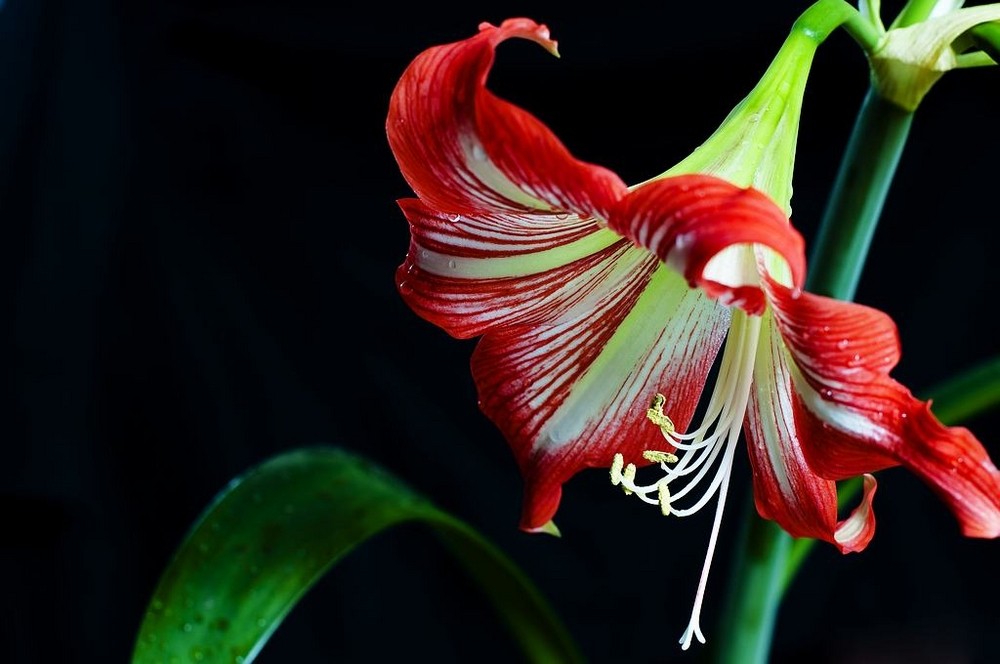
Hedinghong flower pictures to enjoy, can Hedinghong flowers be grown indoors
The Hedinghong flower is native to tropical and subtropical America. It likes a warm, humid and semi-shaded environment and cannot be exposed to direct sunlight, but the light must be sufficient and not too dim. In summer this flower prefers a cool climate with a temperature of 18-22°C; in winter it prefers cool and dry conditions with a temperature of 10-13°C.
The Hedinghong flower is propagated by division and by sowing. The division time is late winter; after division it should be planted shallowly, but the roots must all be planted into the soil so that they can receive moisture from the soil to promote growth. In tropical and subtropical regions, sowing propagation can also be used, in spring, sown in loose, well-drained soil. Germination is slow and generally takes several months. When the seedlings grow to 4-5 cm, they can be transplanted into 10 cm pots.
When growing Hedinghong flowers, water 2-3 times a week. Do not use tap water directly; it must be left to stand for 24 hours before use. In addition, spray the leaves 2-3 times a day to maintain humidity. In winter, it can be placed on the balcony during the day and moved indoors at night. At noon in summer it must not be placed on the balcony; avoid direct sunlight to prevent sunscald. Placing it in the living room is fine. Every 10-15 days, water with a diluted solution made of sesame paste residue, ferrous sulfate and potassium dihydrogen phosphate. In addition, low-concentration beer diluted in water can be used to wipe the leaves and keep them glossy.
If the Hedinghong flower is infected by pests, you can wipe it clean with a moist soft cloth to eliminate them; once pests leave the plant body they cannot survive. Specialized pesticides can also be sprayed for control, such as methidathion, chlorpyrifos, Jiebisid, Jieke, etc.; ordinary pesticides find it difficult to penetrate the waxy layer to take effect. Spraying a 1000-fold washing powder solution can also control them, but the plant still needs to be rinsed with clean water after 12 hours, otherwise it will affect the respiration of the Hedinghong flower.
We all know that Hedinghong is toxic, so is the similarly named Hedinghong flower toxic? Can it be grown indoors? The Hedinghong flower is very beautiful when it blooms, but the internet says it is toxic. Is the Hedinghong flower really a toxic ornamental flower? Yes, the sap of the Hedinghong flower is toxic, but growing it indoors for viewing is no problem. Just remember to wash your hands after tending the Hedinghong flower and it is fine. However, if there are small children in the home, it is still better not to grow this plant indoors, for fear that children may accidentally eat it.
Hedinghong flower pictures to enjoy, can Hedinghong flowers be grown indoors
....
The Hedinghong flower is native to Dali. Because its petals are purple-red and bear short white hairs, it is known as “snow scattered on peach blossoms.” Due to limited cultivation numbers, it is rarely sold on the market. How much do you know about this plant? Today the editor will take everyone to enjoy pictures of Hedinghong flowers and learn about its cultivation methods.
A fashionable new favorite! A new choice for decorating spaces! Creative decorative flowers! Click to view>>
.....
Hedinghong flower is a flower name. Its leaves are broadly ovate to broadly elliptic, 5—7 cm long and 3.5—5.5 cm wide, with a short-acuminate to acute apex and a rounded base; the leaf blades spread flat and are thick and fleshy. The flowers are purple-red, 12—15 cm in diameter. Hedinghong has 30—35 petals arranged in 6—7 whorls in a neat imbricate arrangement. The petals are slightly incurved when first opening and gradually become smaller from the outer to the inner whorls. The inner whorl petals have pinkish-white band-shaped stripes, and the remaining petals bear short silvery-white hairs. Most stamens have become petal-like, with only a few vestigial stamens remaining. The pistil is vestigial. The flowering period is February—March.
.....
.....
The Hedinghong flower is native to tropical and subtropical America. It likes a warm, humid and semi-shaded environment and cannot be exposed to direct sunlight, but the light must be sufficient and not too dim. In summer this flower prefers a cool climate with a temperature of 18-22°C; in winter it prefers cool and dry conditions with a temperature of 10-13°C.
.....
.....
The Hedinghong flower is propagated by division and by sowing. The division time is late winter; after division it should be planted shallowly, but the roots must all be planted into the soil so that they can receive moisture from the soil to promote growth. In tropical and subtropical regions, sowing propagation can also be used, in spring, sown in loose, well-drained soil. Germination is slow and generally takes several months. When the seedlings grow to 4-5 cm, they can be transplanted into 10 cm pots.
.....
.....
When growing Hedinghong flowers, water 2-3 times a week. Do not use tap water directly; it must be left to stand for 24 hours before use. In addition, spray the leaves 2-3 times a day to maintain humidity. In winter, it can be placed on the balcony during the day and moved indoors at night. At noon in summer it must not be placed on the balcony; avoid direct sunlight to prevent sunscald. Placing it in the living room is fine. Every 10-15 days, water with a diluted solution made of sesame paste residue, ferrous sulfate and potassium dihydrogen phosphate. In addition, low-concentration beer diluted in water can be used to wipe the leaves and keep them glossy.
.....
.....
If the Hedinghong flower is infected by pests, you can wipe it clean with a moist soft cloth to eliminate them; once pests leave the plant body they cannot survive. Specialized pesticides can also be sprayed for control, such as methidathion, chlorpyrifos, Jiebisid, Jieke, etc.; ordinary pesticides find it difficult to penetrate the waxy layer to take effect. Spraying a 1000-fold washing powder solution can also control them, but the plant still needs to be rinsed with clean water after 12 hours, otherwise it will affect the respiration of the Hedinghong flower.
.....
.....
We all know that Hedinghong is toxic, so is the similarly named Hedinghong flower toxic? Can it be grown indoors? The Hedinghong flower is very beautiful when it blooms, but the internet says it is toxic. Is the Hedinghong flower really a toxic ornamental flower? Yes, the sap of the Hedinghong flower is toxic, but growing it indoors for viewing is no problem. Just remember to wash your hands after tending the Hedinghong flower and it is fine. However, if there are small children in the home, it is still better not to grow this plant indoors, for fear that children may accidentally eat it.
.....
Although the Hedinghong flower is toxic, only its sap is toxic and it does not disperse into the air, and its flowers are also very beautiful, so if you like it you can grow it. That is all for today's editor's introduction on whether Hedinghong flowers can be grown indoors. Thank you all for accompanying the editor in enjoying the Hedinghong flower pictures.
Winged Euonymus Euonymus alatus Winged Euonymus illustrated guide: how to grow Winged Euonymus / how to propagate Winged Euonymus
Winged Euonymus profileWinged Euonymus Euonymus alatus
Winged Euonymus cultivation methods and precautions, introduction to Winged Euonymus
Winged Euonymus, also called Guijianyu, Guijian, Liuyueling, Simianfeng, Bijichai, Silengshu, ShanjitiaOzi, Simianji, Jianzhongxiao, Mayao. It is the winged branches or wing-like appendages of the Celastraceae plant Winged Euonymus. It can be collected throughout the year; after cutting the branches, remove the tender branches and leaves and dry in the sun. Or collect its wing-like parts and dry in the sun. It has the effects of breaking blood and promoting menstruation; detoxifying and reducing swelling; and killing parasites.
Morphological characteristics of Winged Euonymus
Shrub, about 2-3 m tall. Branchlets four-angled, with 2-4 rows of broad corky wings. Leaves opposite, blades obovate to elliptic, 2-5 cm long and 1-2.5 cm wide, pointed at both ends, rarely obtuse-rounded, margins with fine sharp serrations; they turn purplish-red in early spring when first emerging and after frost in early autumn. Flowers yellow-green, about 5-7 mm in diameter, usually 3 together in cymes. Capsules brown-purple, deeply split into 4 lobes, sometimes 1-3 lobes; seeds brown, with an orange-red aril. Flowering period April-June, fruit ripening period September-October.
Deciduous shrub, branchlets with 2-4 hard corky wings. Obovate-elliptic leaves opposite, margins finely serrate; in autumn the red leaves are like brocade, bright and eye-catching. Small yellow-green flowers, usually 3 in a cyme with a short peduncle. Red-purple capsules, divided into 4 mericarps, only 1-2 mericarps developing; seeds brown, with an orange-red aril.
Winged Euonymus deciduous shrub, plant smooth and hairless, 2-3 m tall. Much branched. Branchlets usually four-angled, the angles often with corky flat strip-like wings, wings about 1 cm wide or wider. Simple leaves opposite; petiole very short; leaf blades thin, slightly membranous, obovate, elliptic to broadly lanceolate, 2-6 cm long and 1.5-3.5 cm wide, apex shortly acuminate or acuminate, margins finely serrate, base cuneate or broadly cuneate, upper surface dark green, lower surface pale green. Cymes axillary, with 3-9 flowers; flowers small, bisexual, pale yellow-green, about 3 mm in diameter; calyx 4-lobed, lobes semicircular, margins with irregular hairy teeth; petals 4, nearly round, margins sometimes slightly wavy; stamens 4, filaments short, inserted on a thick square disc, disc adnate to the ovary. Capsule elliptic, green or purple, 1-3 locular, separating. Seeds elliptic or ovate, pale brown, covered with an orange-red aril.
Ecological habits of Winged Euonymus
Produced in northeast, north, northwest China and as far as the Yangtze River basin; also distributed in Japan and Korea. Strong adaptability, cold-resistant, shade-tolerant, tolerant of pruning, drought and barren soil. Relatively strong resistance to sulfur dioxide. Grows slowly. Young leaves and frosted leaves are both purplish-red; in sunny places the autumn leaves are bright and lovely, and the capsules persist for a long time and are also quite ornamental; often planted in courtyards for viewing.
Landscape uses of Winged Euonymus
Hedges and topiary, indoor potted plants, lawns and ground cover. In gardens, solitary planting or grouped planting on lawns, slopes, watersides, or among rocks and beside pavilions and corridors are all very suitable. At the same time, it is also a good material for hedges, potted plants and bonsai.
Distribution range of Winged Euonymus
Habitat: evergreen broad-leaved forests, streamside shrublands, streamside shrub forests, river valley shrub forests, broad-leaved forests, fir broad-leaved forests, forest margins, within forests, valleys, hillsides, hillside shrublands, hillside broad-leaved forests, hillside forest margins, hillside forests, hillside deciduous broad-leaved forests, sparse forests, mixed woods, coniferous and broad-leaved mixed forests.
Overseas distribution: Korea; Russian Far East: Sakhalin; Russian Far East: Ussuri; Russian Far East: Zeya-Bureya.
Domestic distribution: Heilongjiang Province, Jilin Province, Liaoning Province, Inner Mongolia Autonomous Region, Beijing, Hebei Province, Shanxi Province, Shaanxi Province, Gansu Province, Qinghai Province, Shandong Province, Jiangsu Province, Anhui Province, Shanghai, Zhejiang Province, Jiangxi Province, Fujian Province, Henan Province, Hubei Province, Hunan Province, Guangdong Province, Guangxi Autonomous Region, Chongqing, Sichuan Province, Guizhou Province, Yunnan Province.
There are wild plants in mountainous areas, growing under mixed woods in the mountains, at forest margins or in shrublands; distributed in all provinces along the lower reaches of the Yangtze River to Jilin, Heilongjiang and Shaanxi Ziwuling. Mostly cultivated garden plants.
Mainly distributed in Korea, Japan and China's Qinghai, Northeast, Tibet, Hainan, **, Guangdong and other places, growing in areas from 150 m to 3,000 m above sea level, mostly growing on hillsides and along gully edges; it has not yet been introduced and cultivated artificially.
Medicinal or dietary therapeutic value of Winged Euonymus
The medical information and health dietary therapy information on Huhua Website is for reference only and cannot be used as a basis for diagnosis or medical treatment. Any health problem should be consulted with professional medical personnel, and the treatment of any disease should follow a doctor's advice.
Ultimate flower-protecting mission: to love yourself, start from reality and strictly follow a doctor's advice. Toward illness, do not be careless, do not delay, do not give up hope; face it bravely, warm the silent world with love, and care for the flower field in your heart with your heart.
The medical content on Huhua Website is for reference only and cannot be regarded as professional advice. For any health problem, you should consult professional medical personnel.
Medicinal information (1)
[Chinese name] Winged Euonymus, Bamu, Daojiancha, Guijianchou, Guijianyu, Jianzhongxiao
[Chinese pinyin] Weimao
[English name] Winged Euonymus, Winged Spindle-tree, Winged Spindle Tree, Winged-spindle Tree, Burning Bush, Corkbush
[Latin scientific name] Euonymus alatus (Thunb.) Sieb.
[Family and genus classification] Celastraceae, Euonymus
[Plant morphology] Deciduous shrub, 1-3 m tall, entirely hairless. Branches slanting outward, stiff and straight, green, with 2-4 rows of longitudinally split corky wings, wings up to 1.2 cm wide, or sometimes nearly wingless. Leaves ovate-elliptic or rhombic-obovate, 2-8 cm long and 1-3 cm wide, apex acute or short-acuminate, base broadly cuneate or nearly rounded, margins with fine sharp serrations, both surfaces hairless; petiole 1-3 mm long or nearly sessile. Cymes axillary, usually with 3 flowers; peduncle 0.7-2 cm long, slender and weak; flowers pale yellow-green, 4-merous, about 6-8 mm in diameter; pedicels 3-5 mm long, up to 8 mm after fruiting; sepals semicircular, green, about 1 mm long; petals obovate-round, about 3.5 mm long; filaments not exceeding the anthers, inserted near the edge of the disc; disc flat, 4-lobed; ovary adnate to the disc, 4-locular, each locule with 2 ovules, style short. Capsule purplish, usually 1-2 carpels developing, united at the base. Seeds brown elliptic, wrapped outside by an orange-red aril, 4-6 mm long. Flowering period May-June, fruiting period September-October.
[Habitat and distribution] Grows in mountains and grasslands. Distributed in Northeast China, Yunnan, Anhui, Sichuan, Guizhou, Hebei, Hubei, Hunan, Zhejiang and other places. The medicinal material is mainly produced in northeast and north China and in the provinces along the lower reaches of the Yangtze River.
[Medicinal part] The winged tender branches or branch wings are used as medicine. Chinese medicine name: Guijianyu.
[Collection and processing] Can be collected throughout the year; after cutting the branches, take the tender branches and dry in the sun. Or collect its wing-like parts and dry in the sun.
[Main components] The branches contain phenolic acids, such as p-hydroxybenzoic acid, protocatechuic acid and other components.
[Pharmacological effects] Lowers blood sugar, regulates blood lipids, anti-tumor.
[Nature, flavor and functions] Bitter, pungent, cold. Activates blood and disperses stasis, kills parasites, detoxifies and reduces swelling.
[Indications and usage] Amenorrhea, postpartum blood stasis abdominal pain, parasitic abdominal pain, dysmenorrhea, menorrhagia, hernia, postpartum stagnant abdominal pain, retained lochia, metrorrhagia and metrostaxis, sores and swelling, traumatic injuries, venomous snake bites, scald and burn injuries, parasitic abdominal pain. Internal use: decoct in water, 4-9 g; or soak in wine or make into pills and powders. External use: appropriate amount, grind into powder and apply; or decoct in water and wash; or pound fresh material and apply. Contraindicated for pregnant women and those with metrorrhagia due to qi deficiency.
1. Abdominal mass: Winged Euonymus 6 g, red peony root 9 g, safflower 9 g, red wood 3 g. Decoct in water and take. (Liaoning Commonly Used Chinese Herbal Medicine Manual)
2. Irregular menstruation: Winged Euonymus stem and branches 15 g. Decoct in water, mix with brown sugar and take. (Hunan Flora)
Medicinal information (2)
The wood wings are used as medicine, called "Guijianyu," and have the effects of breaking blood, relieving pain, promoting menstruation, purging and killing parasites; the seed oil is used as industrial oil. The whole plant contains components such as euonymol and sugars.
Name explanation: Guijian, Shenjian.
[Aliases] Guijianyu, Mayao [Guangdong], Bashu [Shaanxi], Bishufeng [Hunan]
[Source] The plant Euonymus alatus (Thunb.) Sieb. of the Celastraceae genus Euonymus, with roots, winged branches and leaves used as medicine. Roots are collected throughout the year; winged branches and leaves are collected in summer and autumn and dried in the sun.
[Nature and flavor] Bitter; pungent; cold.
①"Classic of Materia Medica": flavor bitter, cold.
②"Wu Pu's Materia Medica": bitter, non-toxic.
③"On Medicinal Properties": slightly toxic.
④"Rihuazi Materia Medica": flavor sweet and astringent.
⑤"Compendium of Materia Medica": flavor sour and astringent.
[Meridian entry]: Liver meridian.
①"Essentials of Materia Medica": enters the foot jueyin meridian.
[Efficacy and effects] Breaks blood and promotes menstruation; detoxifies and reduces swelling; kills parasites. Main indications: abdominal masses and lumps; heart and abdominal pain; amenorrhea; dysmenorrhea; metrorrhagia and metrostaxis; postpartum stagnant abdominal pain; retained lochia; hernia; joint pain; sores and swelling; traumatic injuries; parasitic abdominal pain; scald and burn injuries; venomous snake bites.
[Active components] The sun-dried tender branches or branch wings of Guijianyu contain steroids such as stigmasterol, euonymol, and flavonoid components such as aromadendrin, D-catechin, and dehydrodicatechin.
Main indications:
1. Postpartum lochioschesis (firm and distended umbilical and abdominal region, unsatisfactory lochia). Use angelica (fried), Winged Euonymus (remove the central wood), and safflower 50 g each. Take 15 g each time, decoct with one large bowl of wine until reduced to 70 percent, and take warm before meals.
2. Malaria. Use Winged Euonymus and pangolin scales (coal ash) 7.5 g each, grind together into powder. Take 0.5-1.5 g each time and put into the nose when the disease occurs. Another formula: use Winged Euonymus powder 0.5 g, arsenic 5 g, and trogopterus dung 50 g, grind together into powder. When the disease occurs, take 5 g with cold water.
①"Classic of Materia Medica": mainly treats women's metrorrhagia and blood discharge, abdominal fullness and sweating.
②"Supplementary Records": mainly treats sudden abdominal pain, removes white worms, disperses wind-toxin swelling of the skin, and frees the genitals.
③"On Medicinal Properties": breaks old blood, induces abortion. Mainly treats sudden abdominal and lumbar pain.
④"Tang Materia Medica": treats women's blood and qi.
⑤"Rihuazi Materia Medica": promotes menstruation, breaks masses, stops metrorrhagia and leukorrhea, kills parasites in the abdominal organs, and treats postpartum blood colic and abdominal pain.
⑥"Illustrated Examination of the Names and Realities of General Things": treats swollen toxins.
[Clinical application] Promotes blood circulation and menstruation, disperses stasis and relieves pain. Used for irregular menstruation, postpartum blood stasis abdominal pain, and swelling and pain from traumatic injuries.
[Dosage and usage] 5-15 g.
[Excerpt]"Compilation of Chinese Herbal Medicines Nationwide"
Chemical components of the Chinese medicine
The winged branches contain stigmast-4-en-3-one, stigmast-4-en-3,6-dione, β-sitosterol, 6-β-hydroxystigmast-4-en-3-one, dehydrodicatechin A, aromadendrin, d-catechin, △4β-sitosterone, alatamine, wilfordine, evonine, neoevonine, and euonymine. In addition, it also contains sodium oxalacetate.
Brief description of the drug
Drug name: Guijianyu.
Chinese pinyin: gui jian yu.
English name: twig of Winged Euonymus.
Latin plant, animal and mineral name: Euonymus alatus (Thunb.) Sieb.
Efficacy classification: blood-activating medicine.
Family and genus classification: Celastraceae.
Aliases: Winged Euonymus, Guijian, Liuyueling, Simianfeng, Bijichai, Silengshu, ShanjitiaOzi, Simianji, Jianzhongxiao, Mayao.
Nature and flavor: bitter; pungent; cold.
Meridian entry: Liver meridian.
Functions: breaks blood and promotes menstruation; detoxifies and reduces swelling; kills parasites.
Main indications: abdominal masses and lumps; heart and abdominal pain; amenorrhea; dysmenorrhea; metrorrhagia and metrostaxis; postpartum stagnant abdominal pain; retained lochia; hernia; joint pain; sores and swelling; traumatic injuries; parasitic abdominal pain; scald and burn injuries; venomous snake bites.
Dosage and usage: Internal use: decoct in water, 4-9 g; or soak in wine or make into pills and powders. External use: appropriate amount, pound and apply or decoct in water and wash; or grind into powder and mix for application.
Ecological environment: grows in mountains and wilds.
Resource distribution: distributed in Northeast China and Hebei, Shaanxi, Gansu, Shandong, Jiangsu, Anhui, Zhejiang, Hubei, Hunan, Sichuan, Guizhou, Yunnan and other places.
Medicinal base source: the winged branches or wing-like appendages of the Celastraceae plant Winged Euonymus.
Collection and storage: can be collected throughout the year; after cutting the branches, take the tender branches and dry in the sun. Or collect its wing-like parts and dry in the sun.
Processing method: remove impurities, soak thoroughly in water, remove, cut into sections, and dry in the sun. "Leigong's Treatise on Drug Processing": after collecting (Guijian), only use the arrow-like parts. Wipe off the red hairs, slowly fry with butter and then use. For each one liang processed, use one fen of butter for frying, until the butter is exhausted.
Guijianyu - medication contraindications
"Essentials of Classification and Collection": pregnant women must not take it.
Variety verification
Guijianyu was first recorded under the name Winged Euonymus in the"Classic of Materia Medica"and listed as a medium-grade drug. Tao Hongjing said: "Its stem has three wings." The"Compendium of Materia Medica"states: "Guijian grows among mountain rocks, small plants forming clumps; in spring it grows tender shoots, and on all four sides of the shoots there are wings like arrow feathers, appearing as if there were three wings. The green leaves are shaped like wild tea, opposite, sour and astringent in taste. In March and April it opens small flowers, yellow-green. Its fruits are as large as wintergreen seeds." According to the description and attached illustration, it should be this species. "Illustrated Examination of the Names and Realities of Plants"includes it in the wood category, stating: "Winged Euonymus, namely Guijianyu. Hunan folk doctors call it Liuyueling and use it to treat swollen toxins." The attached illustration also resembles this species.
Guijianyu comes from"Rihuazi Materia Medica". "Illustrated Classic of Materia Medica": Winged Euonymus is Guijian. Its wood is also called Gougu. "Cui's Formulas"treats evil possession in the heart with unbearable pain, and there is Guijianyu Decoction. "Collected Experiential Formulas"treats sudden heart pain or pain from malignant qi poisoning; Dahuang Decoction also uses Guijian, both are major formulas. "Compendium of Materia Medica": Liu Xi's"Explanation of Names"says that the people of Qi called arrow feathers "wei." This plant's stem has straight wings, like arrow feathers and spear blades defending itself, hence the name. Guijian grows among mountain rocks. Small plants form clumps; in spring it grows tender shoots, and on all four sides of the shoots there are wings like arrow feathers, appearing as if there were three wings. The green leaves are shaped like wild tea, opposite, sour and astringent in taste. In March and April it opens small flowers, yellow-green. Its fruits are as large as wintergreen seeds.
Medicinal material identification, macroscopic identification
It is a cylindrical branch with wing-like appendages, mostly branched at the tip, about 40-60 cm long, branch diameter 2-6 mm, surface relatively rough, dark gray-green to gray-yellow-green, with longitudinal striations and lenticels; lenticels longitudinal, gray-white, slightly raised and slightly recurved outward. The wing-like appendages are flat, slightly thicker near the base, gradually thinner outward, 4-10 mm wide, about 2 mm thick, surface dark gray-brown to dark brown-red, with slender longitudinal straight striations or slightly wavy curves; the wings fall off very easily, and broken marks are commonly seen on the branches. The branches are hard and tough, difficult to break, the fracture surface pale yellow-white, coarsely fibrous. Odor slight, taste slightly bitter. In addition, wood wings are also sold on the market; wood wings are broken flat thin pieces, varying in length and size, about 4-10 mm wide, unequal in thickness on the two sides, the side growing along the branch up to 2 mm thick, gradually thinner outward, surface earth-brown-yellow, slightly glossy, both surfaces with fine dense longitudinal striations or slightly wavy curves, sometimes transverse sunken groove striations visible, light and brittle, easily broken, fracture surface flat, dark red, odor slight, taste slightly astringent. When using branches, those with tender branch stalks, uniform strips, and prominent and complete wing-like appendages are preferred. When using wing-like appendages, those that are pure, red-brown in color, free of branches, free of impurities, and dry are preferred.
Microscopic identification
Branch transverse section: epidermal cells 1 layer, outer wall markedly protruding, covered with a thick cuticle. The cortex is composed of more than 10 layers of cells; the outer 2-3 layers are smaller collenchyma cells with slightly thickened walls, and below them are several layers of irregular thin-walled cells containing chloroplasts; the inner thin-walled cells are larger, walls sometimes slightly lignified, some cells with wall pits, and the thin-walled cells contain many calcium oxalate cluster crystals, about 17-34 μm in diameter. The phloem is relatively thin, most cells shrunken, cambium not obvious. The xylem is relatively wide, composed of vessels, tracheids, wood fibers, etc., cell walls thick, lignified. Ray cells single-row, lignified, with wall pits. The xylem often has annual rings. The pith is composed of thin-walled cells, often in an oblique "cross" shape, with a few calcium oxalate cluster crystals. The branch wings are formed after the epidermis at the hypodermal site ruptures, becoming several rows of flat thin-walled meristematic cells that continuously divide outward and become suberized.
Powder characteristics: The branch wings are entirely fragments of suberized cells, pale yellow-brown, cells rectangular or square, generally about 58 μm long and about 49 μm wide, walls slightly thickened. In the branches there are commonly square cork cells, fragments of sheet-like thickened collenchyma cells, fibers and reticulate. Spiral-thickened vessels and scattered cluster crystals. Fiber diameter 17-20 μm, vessel diameter 13-17 μm, cluster crystals 17-34 μm in size.
Physicochemical identification
Take 10 g of the powder of this product, add 50 mL of ethanol, heat-extract for 1 hour, filter, evaporate the filtrate to dryness, dissolve the residue in chloroform, and take the chloroform solution for the following tests:
① Take 1 mL of the solution, evaporate off the chloroform, add 1 mL of acetic anhydride to the residue to dissolve, add 1 drop of concentrated sulfuric acid, and the acetic anhydride layer turns green. (Examination for sterol compounds)
② Take 1 mL of the solution, add 1 mL of concentrated sulfuric acid, and the chloroform solution changes from yellow to dark red. (Examination for phytosterols and triterpenes) Thin-layer chromatography
Take the above chloroform solution, use 6β-hydroxystigmast-4-en-3-one, β-sitosterol, stigmast-4-en-3,6-dione and stigmast-4-en-3-one as controls, spot on the same silica gel G plate, use benzene-ether (3:2) as the developing solvent, development distance: 17.5 cm. Use 1% vanillin sulfuric acid for color development; the test sample and control show yellow-brown or purple spots at corresponding positions.
Chemical Composition
The leaves contain epifriedelanol, friedelin, quercetin, and dulcitol. The seed oil contains saturated fatty acids (20%), oleic acid, linoleic acid, linolenic acid, caproic acid, acetic acid, and benzoic acid, among others. It also contains oxaloacetic acid.
Processing Methods
Remove impurities, soak thoroughly in water, take out, cut into sections, and sun-dry. According to the "Lei Gong Pao Zhi Lun": after collecting (Guijian), only the arrow-like wings are used. Wipe off the red hairs, slowly stir-fry with butter until done. For each liang processed, use one fen of butter for stir-frying, until the butter is fully absorbed.
Pharmacological Effects
Hypoglycemic effect: Sodium oxaloacetate extracted from the decoction of Euonymus has the effect of lowering blood glucose and urinary glucose and increasing body weight in normal rabbits or rabbits with alloxan-induced diabetes. In normal anesthetized dogs, intravenous infusion can cause a significant drop in blood glucose. Oral administration of 5-10 mg/day in rats for 40 days can cause hypoglycemia and proliferation of pancreatic islet cells, hyperplasia of pancreatic beta-cells, and atrophy of pancreatic alpha-cells, indicating that sodium oxaloacetate can stimulate beta-cells, regulate abnormal metabolic processes, and enhance insulin secretion. Oral administration of 100-1000 mg/day in diabetic patients may have a certain effect. The seeds of the related species European Euonymus (Euonymus europaeus) contain cardiac glycosides with effects similar to strophanthin, but also have a moderate blood pressure-lowering effect; in addition, they can increase coronary artery flow and can contract guinea pig intestinal tracts.
Blood lipid-regulating effect: Gastric gavage of 3.6 g/[kg·day] of the water decoction of Guijianyu for 60 days has a certain blood lipid-regulating effect on Japanese quail fed a high-cholesterol diet, reducing high-density lipoprotein, cholesterol, and plasma total cholesterol (TC), increasing HSL2-c, raising the HSL2-c/HSL3-c ratio, and increasing lecithin-cholesterol acyltransferase (LCAT) activity, thereby regulating lipid metabolism and reducing the severity of atherosclerotic (AS) lesions.
Nature and Flavor: Bitter; Pungent; Cold
"Ben Jing": Bitter in flavor, cold.
"Wu Pu Ben Cao": Bitter, non-toxic.
"Yao Xing Lun": Slightly toxic.
"Ri Hua Zi Ben Cao": Sweet and astringent in flavor.
"Gang Mu": Sour and astringent in flavor. Functions and indications: Breaks blood and unblocks menstruation; detoxifies and reduces swelling; kills parasites. Mainly treats abdominal masses; heart and abdominal pain; amenorrhea; dysmenorrhea; metrorrhagia and metrostaxis; postpartum blood stasis abdominal pain; retention of lochia; hernia; arthralgia of the joints; sores and swelling; traumatic injuries; parasitic abdominal pain; scald and burn injuries; and venomous snake bites.
Usage and Dosage: Oral administration, decocted in water, 4-9 grams; or steeped in wine or made into pills or powders. External use, appropriate amount, pounded and applied or decocted for washing; or ground into powder and mixed for application.
Common Formulas
To treat abdominal masses: Euonymus 6g, red peony root 9g, safflower 9g, red sappan wood 3g. Decoct in water and take. ("Liaoning Common Chinese Herbal Medicine Manual")
To treat amenorrhea and blood stasis abdominal pain: Guijianyu 9g, Salvia miltiorrhiza 15g, red peony root 12g, Leonurus japonicus 30g, Cyperus rotundus 9g. Decoct in water and take. ("Shandong Chinese Herbal Medicine Manual")
To treat irregular menstruation: Euonymus stems and branches 15g. Decoct in water, mix with brown sugar and take. ("Hunan Materia Medica")
To treat metrorrhagia: Euonymus 10g, Angelica sinensis 10g, licorice 10g. Decoct in water, take orally twice. ("Northeast Medicinal Plants")
To treat postpartum retention of putrid blood, hard infant-pillow masses, intermittent pain, and for recent childbirth with deficiency, wind-cold invading internally, sluggish lochia, and hard painful umbilical and abdominal region: Safflower, Guijian (with the central wood removed), and Angelica sinensis (with the seedling removed, stir-fried) one liang each. Grind the above into a coarse powder. Take three qian per dose, with one large cup of wine, decoct until reduced to seven-tenths, remove the dregs, and take warm before meals with congee. ("Ju Fang" Danggui San)
To treat postpartum blood dizziness, fainting and near death: Guijianyu one liang, Angelica sinensis one liang (cut, lightly stir-fried), Leonurus japonicus one liang. Grind the above medicines into a fine powder. Take at any time, mix half a cup of boy's urine with half a cup of wine, warm it, and take two qian. ("Sheng Hui Fang" Guijianyu San)
To treat severe chest pain from noxious agents, or piercing pain in the abdomen and hypochondrium, or shoulder and back pain of no fixed location: Guijianyu, peach kernel (soaked in water, skin and tip removed, stir-fried with bran until slightly yellow), red peony root, Dysosma (rootlets removed), aged tangerine peel (soaked in water, white inner layer removed, baked), Angelica sinensis (cut, lightly stir-fried), cinnamon heart, Bupleurum (seedling removed), cinnabar (finely ground) one liang each, and rhubarb two liang (cut, ground, lightly stir-fried). Grind the above medicines into a fine powder, add cinnabar, and grind until uniform. Take one qian per dose at any time, mixed with warm wine. ("Sheng Hui Fang" Guijianyu San)
To treat women with no breast milk: Guijian five liang. With six sheng of water, decoct to obtain four sheng; take eight ge per dose, three times a day. It can also be burned to ash and taken with water, one square-inch spoon per dose, three times a day. ("Qian Jin Yao Fang" Single Guijian Tang)
To treat wind invading the heart and abdomen causing spasm: Guijianyu one piece the size of a chicken egg, licorice one chi (roasted, cut), Ephedra four liang (roots and nodes removed, decocted, scum skimmed off, baked dry), gypsum one piece the size of a chicken egg. Coarsely grind and sieve the above four ingredients. Take five qian-spoons per dose, with one and a half cups of water, decoct until reduced to eight-tenths, remove the dregs; take one dose on an empty stomach and one at bedtime, and guard against external wind. ("Sheng Ji Zong Lu" Guijian Tang)
To treat nephritis: Guijianyu stem bark 60g. Decoct in water to obtain the liquid, and use the liquid to make egg tea and drink. ("Henan Chinese Herbal Medicine Manual")
To treat gui malaria: Guijianyu and pangolin scales (burned to retain their nature) one fen each. Grind the above two ingredients into a fine powder. Take one zi per dose, blow into the nose, used at the onset of the attack. ("Sheng Ji Zong Lu" Yi Zi San)
To treat rheumatic pain: Euonymus stems (with wings) 60-90g. Decoct in water and take. ("Zhejiang Folk Common Chinese Herbal Medicine") To treat dry cough: Euonymus and red dates 30g each. Decoct and take. ("Zhejiang Folk Herbal Medicine")
To treat the common cold: Euonymus stems and branches 30g. Decoct in water and take. ("Fujian Materia Medica")
To treat traumatic injuries: Euonymus 50g, red peony root 25g, safflower and peach kernel 15g each, rhubarb 5g. Grind together into a fine powder, take 5g per dose, three times a day. ("Northeast Medicinal Plants")
For local anesthesia in bone-setting surgery: Ma Yao (Euonymus) 60g, Hei Lao Hu 30g, Niu Er Feng 30g, Zhen Zhu Gai Lang San 30g. Steep in an appropriate amount of wine for external use. ("Yuebei Herbal Medicine")
To treat lacquer dermatitis: An appropriate amount of Guijianyu branches and leaves, plus an equal amount of ginkgo leaves, decoct in water and wash the affected area. The branches and leaves of this product alone may also be used. ("Shaanxi Chinese Herbal Medicine")
To treat generalized intermittent pain and itching: Euonymus 9-12g, pangolin scales 6g, garlic 500g. Decoct in water and take. ("Hunan Materia Medica")
To treat rubella: Euonymus, cicada slough, and Tribulus fruit 9g each, Saposhnikovia 6g. Decoct in water and take. ("Hebei Chinese Herbal Medicine")
To treat scald and burn injuries: Grind the corky wings of Guijianyu into a fine powder, sprinkle on the affected area, or mix with egg yolk oil and apply to the affected area. ("Shaanxi Chinese Herbal Medicine")
Application and Combinations
Used for amenorrhea, abdominal masses, dysmenorrhea, postpartum blood stasis abdominal pain, blood stasis metrorrhagia, traumatic injuries, hernia pain, and joint pain. Guijianyu is bitter and pungent, dispersing and entering the blood aspect; it is good at both breaking blood stasis and dissipating nodules, and at activating blood, reducing swelling, and relieving pain, with relatively strong medicinal power. For all patterns of blood stasis obstruction, it may be selected as appropriate.
To treat amenorrhea, abdominal masses, dysmenorrhea, and postpartum blood stasis abdominal pain, it is often combined with Angelica sinensis, safflower, Leonurus japonicus, and other medicines to enhance the power of activating blood and transforming stasis; formulas include "Ju Fang" Danggui San and "Sheng Hui Fang" Guijianyu San;
To treat metrorrhagia and bleeding, it can be combined with Panax notoginseng, cattail pollen, madder, and other medicines to enhance the effect of transforming stasis and stopping bleeding;
To treat traumatic injuries, it can be combined with rhubarb, safflower, red peony root, and other medicines to enhance the effect of transforming stasis, reducing swelling, and relieving pain;
To treat hernia pain, it can be combined with Toosendan fruit, Corydalis yanhusuo, lychee seed, and other medicines to enhance the effect of soothing the liver, regulating qi, and relieving pain;
To treat joint pain, it is often combined with Notopterygium, Angelica pubescens, Achyranthes bidentata, and other medicines to jointly achieve the effects of dispelling wind-dampness, unblocking meridians, and stopping pain.
Used for parasitic abdominal pain. Guijianyu can both relieve pain and kill parasites. The ancients said it can treat parasitic abdominal pain. It can be combined with Melia bark, areca nut, pumpkin seeds, and other medicines to enhance the parasite-killing power.
Used for sores and swelling, and venomous snake bites. Guijianyu can both transform stasis and reduce swelling, and detoxify and kill parasites. It is commonly used for various diseases caused by wind pathogens, heat toxins, and insect toxins spreading over the skin.
To treat sores and swelling, it can be combined with dandelion, Viola philippica, honeysuckle, and other medicines to enhance the detoxifying power;
To treat rash toxin with itching, it can be combined with white Tribulus fruit, Kochia scoparia fruit, Cnidium monnieri, and others to jointly achieve the effects of dispelling wind, detoxifying, and relieving itching;
To treat venomous snake bites, it can be combined with Lobelia chinensis, Paris polyphylla, Cynanchum paniculatum, and other medicines to enhance the detoxifying power.
References
"Ben Cao Shu": Guijianyu, as treated in the "Ben Jing", seems to be specifically effective for the blood aspect of women. Also, as Su Song described in ancient formulas, it seems even more specifically effective for severe noxious agents and noxious qi poisoning that causes blood diseases. However, in formula books, for women's amenorrhea there is Moutan Cortex San that includes this ingredient, and for men's distension and fullness there is Jian Xian Wan, which also uses this ingredient. Even in the ancient formulas described by Su Song, it is still not said to specifically treat women. Generally, its effects are precise and specific to the blood aspect; since women are primarily governed by blood, its efficacy is more directly applicable than in men. Su Gong said it is greatly effective for treating women's blood and qi, which is not without basis.
"Ben Jing Feng Yuan": Guijian, specifically disperses putrid blood, hence the "Ben Jing" has treatments for metrorrhagia and bleeding. The "Bie Lu" treats noxious abdominal pain, removes white worms, and disperses skin wind-toxin swelling, which is the treatment for abdominal fullness and sweating. Today people use it to treat severe wind and joint pain of various types, postpartum blood dizziness in women, and blood binding and accumulating in the chest, or leaning toward the hypochondrium and lower abdomen; they use Si Wu Tang with doubled Angelica, plus Guijianyu, safflower, and Corydalis yanhusuo, decocted and taken. Because its nature specifically breaks blood, its power can cause abortion.
"Ben Jing": Mainly treats women's metrorrhagia and bleeding, abdominal fullness and sweating.
"Bie Lu": Mainly treats noxious abdominal pain, removes white worms, disperses skin wind-toxin swelling, and causes relief in the genital area.
"Yao Xing Lun": Breaks old blood, causes abortion. Mainly treats noxious lumbar and abdominal pain.
"Tang Ben Cao": Treats women's blood and qi.
"Ri Hua Zi Ben Cao": Unblocks menstruation, breaks abdominal masses, stops metrorrhagia and leukorrhea, kills abdominal and visceral parasites, and treats postpartum blood cramping and abdominal pain.
"Zhi Wu Ming Shi Tu Kao": Treats swelling and toxicity.
"Ben Jing Feng Yuan": In 1695 AD, the 34th year of the reign of Emperor Kangxi of the Qing Dynasty. Compiled by Zhang Lu.
"Ben Jing": That is, "Shen Nong Ben Cao Jing"
"Bie Lu": Western Han. Compiled by Liu Xiang.
"Yao Xing Lun": Pan Ru Yu Bookshop
"Tang Ben Cao": Tang Emperor Gaozong, Xianqing era
"Ri Hua Zi Ben Cao": Song Dynasty. Examined by Zhang Yuxi.
Euonymus Uses and Functions: Ornamental Value
The winged branches of Euonymus are unique, and the autumn leaves turn a brilliant red; the split fruits are also red, making it extremely attractive and worthy of being called an excellent ornamental tree. New leaves of Euonymus are also red; in summer, appropriately removing old leaves and applying fertilizer and water can promote the growth of new leaves and extend the ornamental period. To make the autumn leaves turn red earlier, in summer it should be placed in a semi-shaded location, so that the leaves do not thicken and are more likely to form beautiful red foliage. After leaf fall, the winged branches resemble arrow feathers, and the persistent split capsules are also red, making the winter form quite ornamental as well.
Latest Research
Latest research by American scientists: Euonymus seed oil can be used for cooking and can also directly power cars.
According to a June 22 report from the American website Live Science, American scientists have extracted a unique plant oil from the seeds of a shrub called Euonymus by altering its biochemical characteristics. This plant oil is composed of acetylglycerides, which are very rare in nature. It can be used as a low-calorie cooking oil or as biofuel for cars.
Michael Pollard, a researcher at Michigan State University, said that the plant oil comes from the seeds of the shrub Euonymus. Scientists discovered the potential of this plant oil in the 1960s, but because Euonymus seeds contain some toxic molecules, this hindered its research, development, and application. Now, researchers at the University of Michigan and the University of Wisconsin have used genetic engineering techniques to alter its biochemical characteristics, taking a key step toward commercializing this oil.
Euonymus Cultivation Techniques: Key Cultivation Points
Placement: Euonymus likes light and should be placed in a spot with ample sunlight and good air circulation. In summer, it should be appropriately shaded to prevent scorching sun exposure. In autumn, exposure to light helps the leaf color turn red earlier. In winter, it can overwinter outdoors; simply bury the pot in soil in a sunny spot.
Watering: Euonymus bonsai should usually be kept moist; do not water when not dry. It is better to keep it on the dry side than too wet. During the spring and summer growing season, water appropriately to promote growth, flowering, and fruiting. In autumn, when the leaves turn red, water should be withheld, and the pot soil should be kept slightly dry. During the winter dormant period, watering once every 5-7 days is sufficient.
Fertilizing: Euonymus likes fertilizer. During the growing season, apply dilute, fully decomposed cake fertilizer water once every two weeks. Phosphorus and potassium fertilizers should predominate, with less nitrogen fertilizer to avoid excessive vegetative growth. After autumn, fertilize less or not at all. In winter, place some decomposed cake fertilizer crumbs in the pot as a base fertilizer.
Pruning: When new branches and leaves sprout in spring, they should be appropriately shortened to keep the crown dense rather than sprawling. After leaf fall in autumn, carry out shaping and pruning. Cut off sprouting branches, excessively vigorous branches, and crossing or overlapping branches to maintain a certain shaped tree form.
Repotting: Repot once every 2-3 years. Spring, from February to March, before buds sprout and leaves emerge, is suitable; autumn is also acceptable. During repotting, combine with pruning overly long roots, remove old soil, and replace with fertile, loose culture soil, mixed with an appropriate amount of cake fertilizer crumbs and rice hull ash. If cultivating a raised-root style, the plant can gradually be lifted to expose the main roots at the base.
Euonymus Disease and Pest Control
Euonymus is harmed by leaf-eating insects such as the boxwood looper moth and the boxwood spotted moth. For control, during the larval activity period from April to May, spray with trichlorfon or dichlorvos at a 1500-fold dilution.
Euonymus Pictures