Is the Lipstick Plant Toxic? Detailed Guide to Growing Methods and Precautions
Is the Lipstick Plant Toxic? Growing Methods and Precautions for the Lipstick Plant
Introduction to the Lipstick Plant
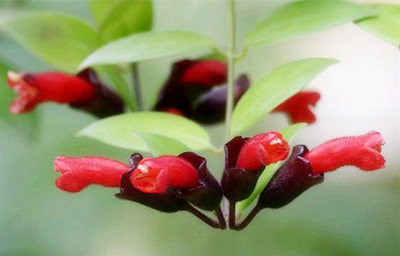
Before discussing whether the Lipstick Plant is toxic, let us first understand its morphological characteristics. The Lipstick Plant is an evergreen woody climber with epiphytic habits, often planted in hanging baskets. The leaves are opposite, ovate, elliptical, or obovate, leathery and slightly fleshy, with a deep green upper surface and a light green underside. The flowers are axillary or terminal in clusters. The flowers grow in pairs at the tips of branches, with short pedicels; the corolla ranges from Chinese red to red-orange; the calyx is tubular, dark purple and covered with fine hairs; the corolla emerges from the mouth of the calyx, is tubular, and bright red, just like lipstick, hence the name.
Is the Lipstick Plant Toxic?
The Lipstick Plant, with its deep green leaves paired with bright red and unusual corollas, is deeply loved by people. It is an excellent choice among trailing flowering plants for the home. It can absorb the harmful gas formaldehyde; spider plants themselves also have the ability to absorb toxic gases. Generally, keeping a pot of Lipstick Plant can effectively absorb toxic gases emitted by smoking and building materials in the air. So the Lipstick Plant is not toxic; rather, it is an excellent ornamental plant that can effectively purify the air.
Growing Methods for the Lipstick Plant
The Lipstick Plant mainly blooms in summer. It likes high temperatures and grows in semi-shaded environments with ample sunlight. Although it likes sunlight, it can only receive about 2 hours of direct sunlight per day at most. The Lipstick Plant is generally propagated by cuttings, which can be done throughout the year, as long as the temperature is maintained between 20°C and 30°C. Spring cuttings are easy to keep alive. Cut a suitable length of stem from the top of a branch as a cutting, insert it into clean river sand or vermiculite, keep the soil and air moist, avoid exposure to scorching sun, maintain normal room temperature, and roots will develop in about one month.
After rooting, remove the bag, keep the potting soil slightly moist, and after about 1-2 weeks it can be transplanted for management. Several plants can be planted per pot. When planting, just keep the soil moist; do not water too much, as this can easily cause rot or leaf drop. In summer, it can be directly inserted into the potting soil. When growth is vigorous, pinch back appropriately to promote branching.
Precautions for Growing the Lipstick Plant
The Lipstick Plant prefers a warm, semi-shaded environment with bright light. Insufficient light will cause leggy growth and make it difficult to bloom; strong light exposure will turn the leaves reddish-brown. For home-grown Lipstick Plants, it is best to hang them about 1 m from a south-facing window. During the day, keep the indoor temperature above 24°C, and at night the temperature should be 18-21°C. The potting soil should be loose, well-aerated, and kept consistently moist. After the flowering period, prune once and apply a light fertilizer. Also pay attention to pest and disease control.
Is the Lipstick Plant Toxic? Growing Methods and Precautions for the Lipstick Plant
The Lipstick Plant is also called "Lipstick Spider Plant, Flower Vine Grass, Large Red Bristle Gesneriad" because both its flowers and leaves are ornamental, and it is often used as an indoor ornamental plant. Many people question whether the Lipstick Plant is toxic, so let us explain right away whether it is actually toxic.
.....
.....
Introduction to the Lipstick Plant
Before discussing whether the Lipstick Plant is toxic, let us first understand its morphological characteristics. The Lipstick Plant is an evergreen woody climber with epiphytic habits, often planted in hanging baskets. The leaves are opposite, ovate, elliptical, or obovate, leathery and slightly fleshy, with a deep green upper surface and a light green underside. The flowers are axillary or terminal in clusters. The flowers grow in pairs at the tips of branches, with short pedicels; the corolla ranges from Chinese red to red-orange; the calyx is tubular, dark purple and covered with fine hairs; the corolla emerges from the mouth of the calyx, is tubular, and bright red, just like lipstick, hence the name.
.....
.....
Is the Lipstick Plant Toxic?
The Lipstick Plant, with its deep green leaves paired with bright red and unusual corollas, is deeply loved by people. It is an excellent choice among trailing flowering plants for the home. It can absorb the harmful gas formaldehyde; spider plants themselves also have the ability to absorb toxic gases. Generally, keeping a pot of Lipstick Plant can effectively absorb toxic gases emitted by smoking and building materials in the air. So the Lipstick Plant is not toxic; rather, it is an excellent ornamental plant that can effectively purify the air.
.....
.....
Growing Methods for the Lipstick Plant
The Lipstick Plant mainly blooms in summer. It likes high temperatures and grows in semi-shaded environments with ample sunlight. Although it likes sunlight, it can only receive about 2 hours of direct sunlight per day at most. The Lipstick Plant is generally propagated by cuttings, which can be done throughout the year, as long as the temperature is maintained between 20°C and 30°C. Spring cuttings are easy to keep alive. Cut a suitable length of stem from the top of a branch as a cutting, insert it into clean river sand or vermiculite, keep the soil and air moist, avoid exposure to scorching sun, maintain normal room temperature, and roots will develop in about one month.
.....
.....
After rooting, remove the bag, keep the potting soil slightly moist, and after about 1-2 weeks it can be transplanted for management. Several plants can be planted per pot. When planting, just keep the soil moist; do not water too much, as this can easily cause rot or leaf drop. In summer, it can be directly inserted into the potting soil. When growth is vigorous, pinch back appropriately to promote branching.
.....
.....
Precautions for Growing the Lipstick Plant
The Lipstick Plant prefers a warm, semi-shaded environment with bright light. Insufficient light will cause leggy growth and make it difficult to bloom; strong light exposure will turn the leaves reddish-brown. For home-grown Lipstick Plants, it is best to hang them about 1 m from a south-facing window. During the day, keep the indoor temperature above 24°C, and at night the temperature should be 18-21°C. The potting soil should be loose, well-aerated, and kept consistently moist. After the flowering period, prune once and apply a light fertilizer. Also pay attention to pest and disease control.
.....
.....
Editor's Summary
Summary: The Lipstick Plant is a very easy plant to keep alive and grow. It can be enjoyed both for its flowers and its foliage, making it one of the flowers with great ornamental and cultivation value. It grows quickly, has dense branches and leaves, and a long flowering period. It is often cultivated as a trailing plant for placement on home balconies and in sunny indoor spots, and in landscaping it is often used for desert-themed displays. You can try growing a pot of Lipstick Plant at home!
Is the Lipstick Plant Toxic? Growing Methods for the Lipstick Plant
The Lipstick Plant is also called "Lipstick Spider Plant, Flower Vine Grass, Large Red Bristle Gesneriad" because both its flowers and leaves are ornamental, and it is often used as an indoor ornamental plant. Many people question whether the Lipstick Plant is toxic, so let us explain right away whether it is actually toxic...................................................
Introduction to the Lipstick Plant
Before discussing whether the Lipstick Plant is toxic, let us first understand its morphological characteristics. The Lipstick Plant is an evergreen woody climber with epiphytic habits, often planted in hanging baskets. The leaves are opposite, ovate, elliptical, or obovate, leathery and slightly fleshy, with a deep green upper surface and a light green underside. The flowers are axillary or terminal in clusters. The flowers grow in pairs at the tips of branches, with short pedicels; the corolla ranges from Chinese red to red-orange; the calyx is tubular, dark purple and covered with fine hairs; the corolla emerges from the mouth of the calyx, is tubular, and bright red, just like lipstick, hence the name.
..................................................
Is the Lipstick Plant Toxic?
The Lipstick Plant, with its deep green leaves paired with bright red and unusual corollas, is deeply loved by people. It is an excellent choice among trailing flowering plants for the home. It can absorb the harmful gas formaldehyde; spider plants themselves also have the ability to absorb toxic gases. Generally, keeping a pot of Lipstick Plant can effectively absorb toxic gases emitted by smoking and building materials in the air. So the Lipstick Plant is not toxic; rather, it is an excellent ornamental plant that can effectively purify the air.
..................................................
Growing Methods for the Lipstick Plant
The Lipstick Plant mainly blooms in summer. It likes high temperatures and grows in semi-shaded environments with ample sunlight. Although it likes sunlight, it can only receive about 2 hours of direct sunlight per day at most. The Lipstick Plant is generally propagated by cuttings, which can be done throughout the year, as long as the temperature is maintained between 20°C and 30°C. Spring cuttings are easy to keep alive. Cut a suitable length of stem from the top of a branch as a cutting, insert it into clean river sand or vermiculite, keep the soil and air moist, avoid exposure to scorching sun, maintain normal room temperature, and roots will develop in about one month.
..................................................
After rooting, remove the bag, keep the potting soil slightly moist, and after about 1-2 weeks it can be transplanted for management. Several plants can be planted per pot. When planting, just keep the soil moist; do not water too much, as this can easily cause rot or leaf drop. In summer, it can be directly inserted into the potting soil. When growth is vigorous, pinch back appropriately to promote branching.
..................................................
Precautions for Growing the Lipstick Plant
The Lipstick Plant prefers a warm, semi-shaded environment with bright light. Insufficient light will cause leggy growth and make it difficult to bloom; strong light exposure will turn the leaves reddish-brown. For home-grown Lipstick Plants, it is best to hang them about 1 m from a south-facing window. During the day, keep the indoor temperature above 24°C, and at night the temperature should be 18-21°C. The potting soil should be loose, well-aerated, and kept consistently moist. After the flowering period, prune once and apply a light fertilizer. Also pay attention to pest and disease control.
..................................................
Editor's Summary
Summary: The Lipstick Plant is a very easy plant to keep alive and grow. It can be enjoyed both for its flowers and its foliage, making it one of the flowers with great ornamental and cultivation value. It grows quickly, has dense branches and leaves, and a long flowering period. It is often cultivated as a trailing plant for placement on home balconies and in sunny indoor spots, and in landscaping it is often used for desert-themed displays. You can try growing a pot of Lipstick Plant at home!