Cultivation Methods for Variegated Confederate Jasmine and Photo Appreciation
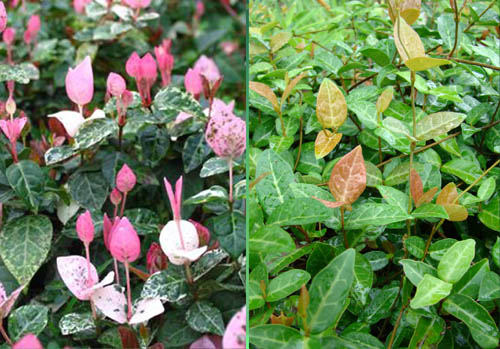
Cultivation Methods for Variegated Confederate Jasmine and Photos of Variegated Confederate Jasmine
Growth Habits
Variegated Confederate Jasmine is suitable for growing in well-drained acidic and neutral soil environments. It is robust with strong disease resistance and vigorous growth, similar to the native Chinese Confederate Jasmine, and it also has relatively strong drought tolerance, resistance to short-term waterlogging, and cold resistance. Its leaf color changes are related to light and growth conditions; the expression of vivid colors requires good light conditions and vigorous growth conditions.
Based on experimental cultivation, its leaf color changes are related to light and growth conditions. The expression of vivid colors requires sufficient light conditions and vigorous growth conditions for Variegated Confederate Jasmine, but at this time the plant does not grow quickly, with the growth increment in a growing month mostly around 3cm. In terms of its own plant growth, it is a light-loving, slightly shade-tolerant plant that prefers environments with high air humidity and well-drained acidic and neutral soil. It is robust and grows relatively quickly, with the monthly growth increment in a growing month reaching over 4cm. At the same time, it is also a relatively drought-tolerant and cold-resistant variety.
Variegated Confederate Jasmine can be propagated by cuttings in any season of the year. The rooting rate in spring and autumn can both reach over 98%. Cuttings taken in summer from some branches that are too tender are prone to rotting, but branches that have reached semi-lignification can all take root and survive. In addition, Variegated Confederate Jasmine can also be propagated by layering.
Generally, layering of old branches is done in early spring, and layering of young branches in summer, burying the soil about 3cm. Both nodes and internodes can take root and form a new plant, but the propagation rate of layering is rather slow and requires a large amount of labor, making it difficult to apply in most large-scale production. The tissue culture method for rapid propagation of Variegated Confederate Jasmine has already been completed; variegation can appear during the tissue culture process, and the ornamental traits are stable.
In cultivating Variegated Confederate Jasmine, based on the dual considerations of growth and ornamental value, seedling production, plant cultivation and finished nursery stock cultivation can be appropriately differentiated. That is, under the most suitable environmental conditions such as semi-shade and loose, fertile cultivation substrate, mass propagation and early-stage plant cultivation are carried out. When the plant reaches 20cm in length and has many branches, it is moved to stronger light conditions for cultivation, in order to achieve vivid leaf color.
Variegated Confederate Jasmine is an extremely beautiful ground cover plant material that can be planted in isolation belts under urban street trees, or used as slope-protection vine cover. It can replace potted flower arrangements in parks and modern facilities, in order to overcome the shortcomings of short ornamental periods and the high cost of frequent replacement of potted flowers. In addition, it can also be used as an excellent plant for home potting, or as a landscaping plant for moss micro-landscapes.
The ornamental value of Variegated Confederate Jasmine is reflected in three levels of leaf color, namely the color group composed of red leaves, pink leaves, pure white leaves, mottled leaves and green leaves, extremely resembling a blooming cluster of fresh flowers, extremely vivid and colorful, especially even better in the three seasons of spring, summer and autumn. Today the editor's introduction to the cultivation methods of Variegated Confederate Jasmine ends here. Thank you all for reading.
How to Grow Variegated Confederate Jasmine, Cultivation Methods for Variegated Confederate Jasmine
Variegated Confederate Jasmine is an evergreen woody vine with inconspicuous lenticels on its stems. The branchlets, young petioles and leaf undersides are covered with short pubescence, while old branches and leaves are hairless. It is a light-loving plant with strong shade tolerance, preferring environments with high air humidity. It can be used as a year-round “flowering” plant for various flower border arrangements, and it is also an excellent material for potted plants.
Growth Habits of Variegated Confederate JasmineVariegated Confederate Jasmine is suitable for growing in well-drained acidic and neutral soil environments. It is robust with strong disease resistance and vigorous growth, similar to the native Chinese Confederate Jasmine, and it also has relatively strong drought tolerance, resistance to short-term waterlogging, and cold resistance. Its leaf color changes are related to light and growth conditions; the expression of vivid colors requires good light conditions and vigorous growth conditions.
Cultivation Methods for Variegated Confederate Jasmine (Growth and Differentiation) 1. Obtaining Aseptic MaterialsSelect healthy annual seedlings; take disease-free and pest-free mother plants, cut the tips of spring shoots that sprouted in the current year, remove the leaves, retain the petioles, and cut the branches into 2—3cm segments. During disinfection, first soak in 10% laundry detergent solution for 15min, then rinse with running water for 30min. Under aseptic conditions, soak in 75% ethanol solution for sterilization for 30 S, then sterilize with 0.1% mercuric chloride solution plus Tween—20 for 3, 5, 10, 15min. The sterilization effect of 0.1% mercuric chloride solution improves with longer sterilization time. When the sterilization time is less than 10min, the aseptic seedling acquisition rate is less than 13.5%. With 15min sterilization” the aseptic seedling acquisition rate is 23.7%, and the explant mortality rate reaches 33.3%. As the sterilization time lengthens, the toxic effect of mercuric chloride on plant materials intensifies. A sterilization time of 10—15min with 0.1% mercuric chloride solution is appropriate. After rinsing with sterile water 3—5 times, inoculate onto MS solid medium.
2. Bud InductionTransfer the aseptic seedlings 20d after inoculation onto medium (1). After 5—7d the shoot tips begin to sprout, after 10d the axillary buds sprout, and the buds gradually grow larger. Continue culturing for 20d, and all axillary buds on the stem segments germinate into lateral branches. The lateral branches grow normally, with dark green leaves and relatively little callus at the stem base, which is yellow-green.
3. Proliferation of Test-Tube PlantletsDivide the lateral branches of the test-tube plantlets into segments of 2—3 buds each, and inoculate them onto medium (2). After 10d the leaf buds on the stem segments sprout, and after 30d they grow into a large number of lateral branches, with a large number of twin branches and triple branches produced. The inoculated stem segments form clustered shoots with 5—8 lateral branches, with an average proliferation of 5.8 times. The internodes of the test-tube plantlets noticeably elongate, the young leaves and stems are all pale red, the leaves are large, the stems are relatively thick, the tissue is not compact, and the callus at the stem base is large. Thereafter, subculture once every 30d; after 3—4 subcultures the test-tube plantlets show vitrification.
4. Vigorous Seedling CultivationAfter every 3—4 subcultures of proliferation culture, transfer the test-tube plantlets onto medium (3). After 40d a large number of lateral branches form, with an average of 4—6 lateral branches per stem segment, an average lateral branch length of 1.8cm, and an average proliferation of 3.1 times. There are basically no twin branches or triple branches. The lateral branches grow robustly; the tissue is compact, the leaf color is dark green, the callus at the base is small and yellow-green, and there is no vitrification.
5. Root InductionDivide the robust lateral branches longer than 1.2cm and transfer them onto medium (4). Increase the light intensity to 2500—3000lx and extend the photoperiod to 16h per day. After 15d of culture, root primordia begin to form. Once root primordia have formed, acclimatization can begin. Investigate rooting after 20—25d: the rooting rate is 73%, with an average of 1—2 roots per plantlet.
6. Acclimatization and TransplantingMove the rooted test-tube plantlets in bottles into the cultivation greenhouse and culture for 1 week. When the roots are 0.5—1 cm long, open the bottle caps for acclimatization for 3—5d, take out the rooted plantlets, wash off the rooting medium, and plant them in seedling plug trays. Using black peat as the substrate, with the temperature controlled between 20—25°C and the humidity at around 85%—95%, they can survive in 20d, with a survival rate of over 73%.
Pests and Diseases of Variegated Confederate Jasmine 1. Diseases of Variegated Confederate JasmineThe main disease of Variegated Confederate Jasmine is leaf spot damage, and anthracnose damage can also occur.
Control Methods
When Variegated Confederate Jasmine develops leaf spot and anthracnose, it can be controlled with an 800~1000 times dilution of 70% mancozeb wettable powder or a 600~800 times dilution of 50% thiophanate-methyl.
2. Pests of Variegated Confederate JasmineDamage from Moth Larvae
Variegated Confederate Jasmine sometimes suffers damage from moth larvae, which mainly occurs from June to September each year. Trapping and killing can be carried out before egg-laying, with timely chemical control. Spraying a 1000-2000 times dilution of 5% beta-cypermethrin emulsifiable concentrate or a 2000 times dilution of 1% abamectin emulsifiable concentrate are both acceptable, and it should be done in the evening. Usually pay attention to maintaining environmental ventilation.
Damage from Nematodes
For Variegated Confederate Jasmine, nematodes are also a pest that must be guarded against. When Variegated Confederate Jasmine is infested with nematodes, medication can be used: use a 2000 times dilution of 40% fenamiphos emulsifiable concentrate to disinfect the soil and kill the nematodes. Focus on prevention, combining prevention and control.
Damage from Aphids
Aphids are a very common pest of Variegated Confederate Jasmine. Aphids gather on the young tender parts of Variegated Confederate Jasmine, sucking its sap and harming its health. When Variegated Confederate Jasmine is infested by aphids, it can be controlled with a 2000~3000 times dilution of 48% chlorpyrifos emulsifiable concentrate or a 1500 times dilution of 25 imidacloprid wettable powder. Focus on prevention, with treatment as a supplement, and control aphids reasonably.
How to Grow Variegated Confederate Jasmine? Cultivation Methods and Precautions for Variegated Confederate Jasmine
Variegated Confederate Jasmine, also known as Chuxuege, Variegated Confederate Jasmine, etc., is a woody vine of the genus Trachelospermum in the family Apocynaceae. The leaves of Variegated Confederate Jasmine are rich in color, composed of red leaves, pink leaves, pure white leaves, mottled leaves and green leaves, and have very good ornamental value. So, how to grow Variegated Confederate Jasmine? The cultivation methods and precautions for Variegated Confederate Jasmine are introduced below.
Photo: Variegated Confederate Jasmine
I. Cultivation Methods for Variegated Confederate Jasmine
1. Fertilizer:Variegated Confederate Jasmine likes fertilizer but is not demanding; all kinds of fertilizer can be used. It can still bloom without fertilizing for a year, but the number of flowers will be somewhat fewer. For potted Variegated Confederate Jasmine, if you want it to bloom abundantly, you can apply more bone meal and phosphorus-potassium fertilizer, and use less nitrogen fertilizer. For ground-planted Variegated Confederate Jasmine, applying a nitrogen-phosphorus-potassium compound fertilizer once each in spring and autumn is sufficient; do not fertilize in winter and summer.
2. Watering:Variegated Confederate Jasmine likes moisture. During the growing season, the potting soil should be kept slightly moist. In spring and autumn, water once every two days; in summer, water once a day; in winter, water about once every half month. The potting soil should be slightly moist and not dry, and it must never be waterlogged at any time. For potted Variegated Confederate Jasmine placed on rooftop gardens or in courtyards, pay attention to draining accumulated water during the rainy season. Ground-planted Confederate Jasmine should not be planted in low-lying areas, otherwise it is prone to root rot. During the growing season, it is not too late to water when the soil is dry. In winter, ground-planted ones may not need watering.
3. Pruning:Variegated Confederate Jasmine tolerates pruning and stays evergreen all year round. It can also be combined with golden privet and red barberry for color band and color block landscaping. Controlling the vine length through pruning can promote branching and help achieve a full plant shape. The first pruning is done when the vine reaches 8 cm, cutting it back to about 6 cm. After that, prune every 4~5 cm of growth. Usually 2~3 prunings are enough to achieve a good pot shape.
Photo: Variegated Confederate Jasmine
4. Light:Variegated Confederate Jasmine is a temperate-zone flower that likes warmth and light. For ground planting, it should be planted in a sunny spot; in shady spots it grows poorly, with fewer flowers and a faint fragrance, or even no flowers. For potted plants, it should be placed in a sunny spot in spring, autumn and winter. In midsummer, if placed in a semi-shady spot where it can see the sun in the morning or evening and avoid direct strong light at noon, it will bloom continuously. If it is too sunny at noon, the flowers will be sparse, or even absent. Confederate Jasmine is relatively cold-resistant. In the Yellow River basin and areas to its south, it can overwinter safely outdoors; in the north, it is still better to overwinter it in a low-temperature greenhouse.
5. Pests and Diseases:The main diseases of Variegated Confederate Jasmine are anthracnose and leaf spot, etc., controlled with a 600~800 times dilution of 50% thiophanate-methyl or an 800~1000 times dilution of 70% mancozeb wettable powder. For damage from spider mites and other mites, and moth larvae, use a 1000~1500 times dilution of 15% pyridaben for control. For aphids, use a 1500 times dilution of 25% imidacloprid wettable powder or a 2000~3000 times dilution of 48% chlorpyrifos emulsifiable concentrate for control.
Photo: Variegated Confederate Jasmine
II. Precautions for Cultivating Variegated Confederate Jasmine
1. Soil:Loose, fertile loam with high humus content is best. During the cultivation of seedlings and finished nursery stock, they should be treated differently according to production goals.
2. Water and Fertilizer:Mainly apply nitrogen fertilizer, either by foliar spraying or root drenching, to increase growth. Fertilizer can also be applied from March to August, which will further promote plant growth. From September to early October, appropriate topdressing can also be carried out to promote plant robustness.
Photo: Variegated Confederate Jasmine
3. Pruning:Starting from October, pruning must be stopped.
4. Pests and Diseases:Variegated Confederate Jasmine has vivid leaf color and is easily harmed by aphids, so aphid control work must be done well.
[Editor's Conclusion]Variegated Confederate Jasmine is a light-loving, slightly shade-tolerant plant that likes environments with high air humidity, and special attention is needed during its care. Above, we have introduced the cultivation methods and precautions for Variegated Confederate Jasmine, and hope it can be helpful to everyone!