Maidenhair Fern: Growing Methods and Photo Appreciation
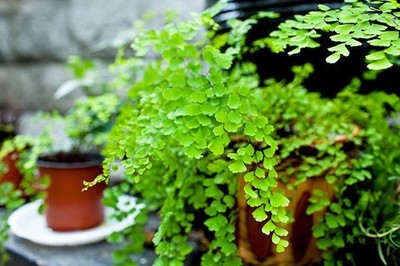
Maidenhair Fern Growing Methods, Maidenhair Fern Pictures
The maidenhair fern is commonly propagated by division or by spores. Division can be done indoors in any season, but it is generally carried out in early spring together with repotting. Take the mother plant out of the pot, cut apart its rhizome so that each piece carries some rhizome and fronds, then plant them separately in small pots. Cover the rhizomes with mixed soil, water them, and place them in a shady, humid environment for cultivation, and new plants will be obtained.
The spore propagation method is: place peat and fine sand used as the substrate in an oven for high-temperature sterilization, to kill pathogens and weed seeds. Then, put the sterilized soil into a shallow sowing pan. Cut off fronds bearing mature spores, gather the spores and evenly scatter them over the shallow sowing pan, without covering with soil; cover it with a piece of glass, soak up water from the bottom of the pan, keep the soil in the pan moist, and place it in a semi-shaded environment at 20-25°C. After about one month the spores can germinate into prothallia, and once they have filled the pan they can be divided and planted.
Note that 1-2 days before dividing and planting, the glass on the sowing pan should be removed for ventilation, to avoid rotting of the plants or the occurrence of pests and diseases. In addition, in a warm and humid environment it very easily disperses spores and reproduces on its own.
Planting
When potting, light-colored glazed pots and earthenware pots may be chosen; the potting soil must have good water permeability and aeration. Generally use humus-rich peat soil or leaf mold, then add about 1/3 coarse sand and fine sand, and put in some bone meal; the bottom of the pot should be lined with some broken tiles or coarse sand to facilitate drainage. The rhizome should be planted at a depth of 1.5-2.5 cm. Plant or repot and change the soil in spring. For potting, a growing medium commonly used is a mixture of humus soil or peat soil with a small amount of river sand and base fertilizer. Change the pot every spring; when repotting, do not damage the roots, avoid wind, and keep the potting soil moist and the air humidity relatively high. Once new shoots grow, normal management can resume.
Bottle Cultivation
For bottle cultivation of the maidenhair fern, it is best to choose a colorless, transparent, square glass bottle with a flat surface, so that the plant does not look distorted and appears attractive. Mix equal parts of peat and fine sand as the growing substrate and put it into the bottle. It is best to first put some old wall ash at the bottom of the bottle, as this is even more beneficial to the growth of the maidenhair fern. A growing substrate about 2 to 3 cm thick is enough; be careful not to stick the growing substrate onto the walls of the bottle. Then use a sharp knife to divide the mother maidenhair fern into several clumps, clamp them with chopsticks and carefully plant them into the bottle. A large bottle can hold several clumps, while a small bottle should hold fewer clumps. Gently press firm the places where the roots of the plants contact the growing substrate, then water. Next, put the bottle cap back on and place the bottle where there is no direct sunlight. Since the inside of the bottle is sealed, watering once a month and applying fertilizer once every few months is enough. To prevent water mist from forming on the inner wall of the bottle and affecting the display, besides thoroughly washing it with laundry detergent before use, special care should be taken not to place them where the temperature difference is large. After the beginning of autumn, as the temperature drops, the maidenhair fern enters a stage of slow growth, and the old fronds gradually turn yellow; at this time they should be cut off. Throughout the winter, the ambient temperature should not be lower than 5°C. In the following spring, when the weather warms up, the plant will grow a large number of new fronds, presenting a thriving scene.
Bottle-grown maidenhair fern not only saves trouble and labor, but also removes the worry of the plant's fronds withering and stems being broken because watering was not done on time. Under the high-humidity conditions inside the bottle, the maidenhair fern grows exceptionally vigorously. Place a bottle of maidenhair fern on the tea table by the window; seen from afar, the glass bottle is crystal clear and the fern fronds sway gracefully, just like a green gem sparkling.
Temperature and Light
The maidenhair fern likes a warm, humid and semi-shaded environment. The suitable growing temperature is 21-25°C during the day and 12-15°C at night. In winter it should be moved into a greenhouse; at temperatures above 5°C the fronds can still remain fresh green, but below 5°C the fronds will suffer cold damage. It likes bright, diffused light and fears direct sun. In summer it can be appropriately shaded; prolonged direct strong light will cause most of the fronds to turn yellow and wither. Indoors it should be placed in a bright spot; even if kept there for 1 year it can still grow normally.
Watering and Fertilizing
The maidenhair fern likes a humid environment. During the peak growing season it should be watered thoroughly; besides keeping the potting soil moist, attention should also be paid to maintaining relatively high air humidity, and when the air is dry, sprinkle water around the plant. Especially in summer, water 1-2 times a day; if water is lacking, the fronds will shrivel. Avoid letting the potting soil alternate between dry and wet when watering, as this easily turns the fronds yellow. Apply dilute liquid fertilizer 2-3 times a month; when fertilizing, do not let it soil the frond surface, so as to avoid rotting the fronds. Because the maidenhair fern likes calcium, an appropriate amount of lime and crushed eggshells should be added to the potting soil, and frequently applying calcareous fertilizer will produce even better results. In winter, reduce watering and stop fertilizing.
Pest and Disease Control
Potted maidenhair fern often suffers from leaf blight; in the early stage Bordeaux mixture can be used for control, and in severe cases a 1000-1500 times dilution of 70% thiophanate-methyl can be used. If scale insects harm the plant, a 1000 times dilution of 40% omethoate can be used for control.
The maidenhair fern likes shade, has strong adaptability, is easy to cultivate, and is even more suitable for year-round indoor potted display. As a small potted shade-loving foliage plant, it is superior to asparagus fern in many respects. Small pots can be placed on a desk or tea table; larger pots can be used to decorate the windowsill, corridor or living room of a shaded room, and can be enjoyed by people for a relatively long period. Maidenhair fern fronds are also good cut-foliage material and dried-flower material.
Perennial evergreen herb. Rhizome yellow-brown, densely covered with light brown scales, scales linear or lanceolate, membranous, veins obvious, rhizome densely bearing light brown long hairs. Fronds scattered, leaf stalks scaly, entirely hairless, up to 70 cm long, leaf stalks slender and stiff, purple-black and glossy, about equal in length to the fronds; fronds bright green, ovate or oblong-ovate, 1- to 3-pinnate compound, pinnae alternate, leaflets varying in shape and size, mostly obovate or rhombic, or fan-shaped, base cuneate, apex almost truncate and concave in the middle, or 2-5 lobed, lobes of varying length, with pointed teeth, veins radiating from the base toward the margin, fine and forked. The indusium is formed by the frond margin at the tip of the leaflet folding back downward; each leaflet has as many as ten-plus sori, usually rectangular, transverse, the folded edge slightly inward, arc-shaped, curved, brown, with a white, membranous margin.
Maidenhair Fern Growing Methods, What Are the Growing Methods for Maidenhair Fern
The maidenhair fern, 0.1-0.6 m tall, with slender and long stems, is a wild plant with a certain ornamental value, and is therefore often used in garden cultivation; nowadays it has also become one of the plants chosen for cultivation by many households. However, during cultivation many people end up failing because they are unclear about the growing methods for the maidenhair fern. So below, the editor will share with you what the growing methods for the maidenhair fern are; let's take a look!
Maidenhair Fern Growing Method One: Soil
When preparing to grow the maidenhair fern, you must first prepare a good pot of soil for it. As long as you pay attention, you will find that wild maidenhair ferns mostly grow in places with soft soil. Therefore, when growing the maidenhair fern, preparing a pot of soft, water-permeable, fertile calcareous soil or sandy loam is essential.
Maidenhair Fern Growing Method Two: Light
The maidenhair fern likes to grow in an environment with ample sunlight, so it is best to place it in an environment with good ventilation and ample sunlight. But note that what the maidenhair fern likes is diffused light; it must never be placed in the sun to be exposed to scorching sunlight. If it receives direct strong light for a long time, the fronds of the maidenhair fern will turn yellow and wither or even die.
Maidenhair Fern Growing Method Three: Watering
The maidenhair fern likes to grow in a humid environment, and during its growing season sufficient water must be ensured. If it is the hot summer, when the air is especially dry, water should be sprinkled around the maidenhair fern in time so that there is some moisture in the space and the air humidity is maintained, and it should be watered once or twice every day; otherwise, a lack of water will cause the fronds of the maidenhair fern to shrivel and prevent normal growth.
Maidenhair Fern Growing Method Four: Fertilizing
The maidenhair fern is not especially fond of fertilizer, so it is enough to ensure that some dilute liquid fertilizer is applied every two to three months. Note that during fertilizing, the liquid fertilizer must not be sprinkled onto the fronds, otherwise it will cause the maidenhair fern to develop rotting fronds.
Maidenhair Fern Growing Method Five: Temperature
The maidenhair fern is a plant that likes warmth and tolerates cold. During the day it grows suitably at 21-25 degrees, and at night suitably at 12-15 degrees. In the cold winter, the maidenhair fern should be moved indoors and its growing environment kept above 5 degrees; otherwise it will cause cold damage to the fronds.
Conclusion:The above are several growing methods for the maidenhair fern briefly introduced to you by the editor. The maidenhair fern is a common indoor potted accent plant; placed indoors it not only effectively purifies the indoor air but also beautifies the indoor environment. In daily life, as long as you understand its growth habits, the growing methods are actually very simple.
[Related Links]:
⊙How to grow jasmine ⊙How to water a cactus ⊙When does wintersweet bloom ⊙What to do when the leaves of the money tree turn yellow
⊙Asparagus fern leaves turning yellow ⊙How to plant dahlias ⊙How to grow clivia ⊙The benefits and effects of jasmine tea
⊙How to grow peonies ⊙The benefits of Kunlun snow chrysanthemum ⊙The symbolic meaning of lilies ⊙The benefits and effects of ginkgo leaves
[Maidenhair Fern Pictures] How to grow the maidenhair fern? Revealing the growing methods of the maidenhair fern
I. Growing Methods of the Maidenhair FernHow to grow the maidenhair fern 1: Soil Selection
The maidenhair fern likes loose, fertile calcareous soil. At home, you can use: garden soil + leaf mold + sandy soil, mixed in a ratio of 4:5:1. If you want the maidenhair fern to grow better, you can sprinkle some lime powder into the potting soil to increase calcium.
How to grow the maidenhair fern 2: Fertilizing Method
1. The maidenhair fern likes fertilizer, but its demand for fertilizer is not great. Spring, summer and autumn are its growing seasons; apply dilute liquid fertilizer once every 30 days. Each month, a ferrous sulfate solution can be watered in 2-3 times.
2. Note to appropriately supplement calcareous fertilizer; this way the maidenhair fern will grow even better.
3. Summer temperatures are relatively high, so reduce fertilizing as much as possible. In autumn the temperature gradually decreases; in mid-October, gradually stop fertilizing.
4. Note that when fertilizing, a fine-spouted watering can should be used to apply it slowly along the rim of the pot; do not let the fertilizer liquid touch the fronds, otherwise it will easily burn the fronds and affect the ornamental effect.
How to grow the maidenhair fern 3: Watering Method
The maidenhair fern likes a warm, semi-shaded environment. During the growing period, water once a day; summer is relatively hot, so water once each morning and evening, and at the same time sprinkle water on the frond surface and around the pot to raise the air humidity and keep the frond color emerald green. If no one is at home, the flower pot can be placed on a moist sand tray with enough water added, and it can be watered once every 2-3 days.
In late autumn, winter and early spring, when temperatures are relatively low, the potting soil should be kept moist; just do not let the surface of the potting soil become dry.
How to grow the maidenhair fern 4: Light Requirements
Although the maidenhair fern is a shade plant, it needs a certain amount of light during the growing season. When maintaining it indoors, it is best to place it on an east- or north-facing balcony, where the light level is relatively ideal.
In summer at noon it needs shading, and in the morning and evening it should receive appropriate light; too strong light will cause the fronds of the maidenhair fern to become scorched. If it is cultivated on an outdoor balcony, it needs shading at noon in all four seasons, to prevent the fronds from being scorched and turning yellow.
How to grow the maidenhair fern 5: Temperature RequirementsThe suitable growing temperature for the maidenhair fern is 15-20°C; only when the winter temperature is not lower than 5°C can the fronds remain fresh green. In midsummer, if the temperature is too high, the plant needs to be sprayed with water every day to increase air humidity and lower the temperature.
How to grow the maidenhair fern 6: Points to Note
1. The maidenhair fern should be planted or repotted with fresh soil in spring. When repotting, be careful not to damage the root system, avoid wind, and replace half with new soil. After repotting, keep the potting soil moist and the air humidity suitable.
2. Because the fronds of the maidenhair fern grow quickly, during the growing season regularly thin out and cut away some old fronds. When the fronds are too dense, the maidenhair fern not only loses its graceful form, but the new fronds growing inside will die from lack of light, easily forming a hollow condition, so timely pruning is needed.
3. During maintenance, if the maidenhair fern is found to have withered fronds, they should be cut off in time, to keep the plant fresh and attractive and to help it sprout new fronds.
4. The maidenhair fern by nature likes warm, humid and semi-shaded, cool environments, and greatly dislikes direct sunlight. Therefore it is best to place the plant where indoor sunlight cannot reach it; after all, too much and too strong light easily causes the frond edges to scorch and wither.
5. Ferns all grow in moist environments, and for the maidenhair fern this is naturally no exception. When cultivating it, besides keeping the soil moist, water mist should also be frequently sprayed on the frond surface to raise the air humidity. When the plant shows yellowing, it is often caused by insufficient humidity. Of course, this may also be caused by cold damage.
6. It needs to be repotted once every spring, and at the same time dry fronds and old roots should be pruned away. The potting soil should also be replaced with fresh, fertile and loose leaf mold, and it is best to add a small amount of brick crumbs to it.