How to grow a black-bone tea bonsai? With black-bone tea bonsai pictures
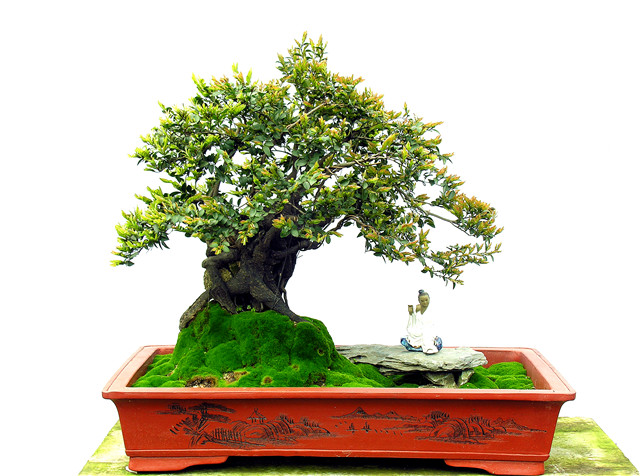
How to grow a black-bone tea bonsai, black-bone tea pictures
Stage of selecting and developing stumps
Black-bone tea grows slowly and is the slowest-growing tree species in Lingnan bonsai, growing even more slowly than boxwood. Therefore, when selecting stumps, special attention should be paid to choosing ones with companion grafting supports, preferably stumps with young branches. If the cut is more than 3 cm, it will be very difficult to develop matching branch supports. Black-bone tea has strong budding ability and roots quickly, so the trunk, supports and roots can basically be cut into place in one go. After the stump is cut, soak it in clean water for 24 hours, then plant it in river sand, place it in semi-shade, and keep the trunk moist; after 20 days, black liquid secretion can be seen at the cut, after a few days buds sprout, and after 60 days new roots can be seen, with an extremely high survival rate.
Management during the branch-building stage
After black-bone tea survives, it can be moved to a sunny and ventilated place, and given dilute fertilizer water to promote strong roots and vigorous branches. After the Autumn Equinox, supports can be fixed according to shaping needs, and all unnecessary branches should be cut off so that nutrients are concentrated on the shaping branches. Once the root system of black-bone tea is strong and vigorous, it likes fertilizer, so the proportion of fertilizer water can be appropriately increased, with water-fertilizer once every 7 days. Apply decomposed farmyard manure on the pot surface for a long time, so that nutrients slowly dissolve each time it is watered, which helps the stump absorb them. Watering should follow the principle of great dryness and great wetness: do not water when not dry, and water thoroughly when watering. Stop fertilizing after Minor Snow, completing the management of one growth cycle. It is worth noting that throughout the entire growth cycle, do not let the phenomenon of slow growth appear due to a shortage of fertilizer water. With such management, in one growth cycle the branch diameter can be cultivated to 0.6 cm, and in two growth cycles it can be cultivated to 1.2 cm, generally able to match the original stump support, which means the first section can be obtained in two years. Black-bone tea is evergreen in all four seasons and sprouts new shoots once each season. Therefore, pruning can be done in all four seasons; each pruning must wait until the new shoots are mature, but spring and autumn are best. Black-bone tea does not easily lose branches, so single-branch pruning can be carried out; after budding, select and keep strong buds, one main and one secondary, and use wire to bend the buds so that the branches grow horizontally. If the new buds are allowed to grow freely, they will all grow upward, and it will be very difficult to achieve the requirement of horizontally spreading branches, which is something to note. Black-bone tea does not have many fibrous roots, so it can be repotted and have its soil changed once every 5 years; even if it is sandy soil from the stump-development period, as long as enough farmyard manure is applied, repotting after 5 years is not too late. Repeat the management of the previous growth cycle each year until the work is basically formed.
Management during the forming stage
Medium-sized stumps generally undergo 5 years of branch-building care, and newly cultivated branches generally already have three sections, so around Qingming they can be repotted and have their soil changed, and placed in an ornamental pot for detailed shaping management. After Qingming, heavily prune the whole stump, remove leaves, lift the stump out, trim the root system, choose a suitable pot, and replant with a screened mixed soil of 3 parts sand and 7 parts clay. After growth returns to normal, return to the previous management. Black-bone tea grows slowly, so a combination of pruning and wiring can be used to speed up the formation of the work. Pruning: heavy pruning before Qingming is best. Wiring: in the evening after fierce sun, when the branches are soft and ripe, wrap the branches with metal wire and bend them according to shaping needs. Pay attention to the rhythmic changes of the branches, the interchange of hardness and softness, and the alternating use of long and short spans, so that the curves of the shaping branches are beautiful. Remove the terminal buds at any time to promote lateral buds, until the tree shape is full and the work is formed.
Care after forming
After the work is formed, it enters the viewing period. To keep the work from deforming, the amount of fertilizer water applied can be reduced, just enough to maintain normal growth of the work. Remove messy buds at any time. Once a year before Qingming, carry out a leaf-changing and brocade-changing treatment, and 30 days later when the new buds spit red is the best viewing time. Black-bone tea is shade-tolerant; after one thorough watering, place it indoors, and it does not need watering for 20 days; when the clay soil turns white, water it thoroughly once again, and it can be placed indoors for 50 days before returning to normal outdoor management, making it one of the tree species kept indoors the longest in Lingnan bonsai. Black-bone tea has relatively few diseases, with only a small amount of leaf-roller damage, which can be sprayed with a 0.2% solution of 80% dichlorvos emulsion.
Banyan tree Ficus microcarpa Banyan tree illustrated guide: how to grow banyan tree / how to propagate banyan tree
Banyan tree profileBanyan tree Ficus microcarpa
Banyan tree cultivation methods and precautions, introduction to banyan tree
Banyan tree (scientific name: Ficus microcarpa), of the family Moraceae, genus Ficus, is a tree native to tropical Asia. The banyan tree is famous for its peculiar tree form, luxuriant branches and leaves, and huge crown. The aerial roots growing on the branches extend downward into the soil to form new trunks called "prop roots." The banyan tree can reach 30 m tall and can extend endlessly in all directions. Its prop roots and branches intertwine together, resembling a dense jungle, and therefore it is called "a single tree forming a forest."
Morphological characteristics of the banyan tree
Banyan tree (small-leaved banyan), tree up to 20-30 m tall, DBH up to 2 m; the crown spreads very widely, with peculiar buttress roots exposed above the ground, up to 3-4 m wide, just like a fence. It has aerial roots, thin and weak, hanging down to the ground; after entering the soil they take root, resembling pillars; the crown is huge, broadly ovate or umbrella-shaped; the bark is grayish brown, the branches and leaves are dense, and the deep shade covers the ground, very spectacular. Leaves are leathery, elliptical or ovate-elliptical, sometimes obovate, 4-10 cm long; the receptacle is solitary or paired in the leaf axils, oblate-obovoid, 5-10 mm in diameter, entire or shallowly wavy, with an obtuse tip and a nearly rounded base, single leaves alternate, the leaf surface deep green, glossy, hairless. Syconia are axillary, nearly spherical, initially milky white, yellow or pale red when ripe; flowering period May-June, fruit diameter about 0.8 cm. Fruit ripening period September-October. The fruit is very small, like little balls one by one, and when ripe turns from green to red. It is the favorite food of small birds.
Large tree, up to 15-25 m tall, DBH up to 50 cm, crown widely spreading; old trees often have rusty-brown aerial roots. Bark dark gray. Leaves thinly leathery, narrowly elliptical, 4-8 cm long, 3-4 cm wide, apex obtuse-acute, base cuneate, surface deep green, dark brown after drying, glossy, entire, basal veins extended, lateral veins 3-10 pairs; petiole 5-10 mm long, hairless; stipules small, lanceolate, about 8 mm long. Fig fruits paired and axillary or borne in the leaf axils of branches that have already dropped their leaves, yellow or slightly red when mature, oblate, 6-8 mm in diameter, without a common peduncle, basal bracts 3, broadly ovate, persistent; male flowers, female flowers and gall flowers all borne in the same fig fruit, with a few short bristles among the flowers; male flowers sessile or stalked, scattered on the inner wall, filaments equal in length to anthers; female flowers similar to gall flowers, tepals 3, broadly ovate, style nearly lateral, stigma short, club-shaped. Achenes ovate. Flowering period May-June.
Ecological habits of the banyan tree
The banyan tree is a shaped landscape that symbolizes vitality, so maintaining the continuation of its life growth has become the inevitable purpose of maintenance and management. It must be watered, fertilized, pruned, and protected against pests and diseases in daily maintenance. Improper humidity and moisture are very harmful to the banyan tree. Feel the condition of the potting soil by hand, and the principle of "see dry, see wet" should be adopted. Do not water frequently, and water thoroughly when watering. Too much watering will cause root rot and make it drop leaves. The banyan tree is relatively difficult to care for in the north, and households should spray more water on the leaf surface to increase the humidity around it. The suitable growth temperature for the banyan tree should not differ too much between day and night; a difference of 10 degrees makes it very easy to drop leaves and die. Usually pay attention to placing it in a place with light and light transmission, and in summer pay attention to appropriate shading. Use loose, well-draining leaf mold soil, usually in the ratio of garden soil; on top of the bonsai it is best to place moss of the same size as the pot, which is first beautiful and second plays a very good role in drainage and ventilation. The banyan tree likes fertilizer during growth, but too many fertilizer applications will cause harm to the growth of the banyan tree. The amount of fertilizer should also differ according to the season. Root damage or rot also easily causes leaf drop, but because the root system grows in the soil it is hard to detect. Root rot caused by long-term failure to repot or improper fertilizer and water is very common; it is best, without injuring the roots, to check the roots and appropriately prune dead roots, weak roots and damaged roots. Dip them in growth agent and then plant them back into the pot. In addition, the roots of the banyan tree easily develop root rot or root nodule disease caused by various bacteria and fungi, so appropriate attention should be paid to spraying medicine for prevention and control. The main pests of the banyan tree are aphids, scale insects, etc. Spray the leaves with omethoate or kill with a 1000-fold solution of 50% phoxim wettable powder. Thin and weak, hanging down to the ground, entering the soil and taking root, resembling pillars; the crown is huge, broadly or umbrella-shaped and dense, the deep shade covering the ground, very spectacular. Leaves leathery, ovate-elliptical, sometimes obovate, 4-10 cm long, the receptacle solitary or paired in the leaf axils, oblate-obovoid, 5-10 mm in diameter, entire or shallowly wavy, apex obtuse-acute, base nearly rounded, single leaves, leaf surface deep green, glossy, hairless. Syconia axillary, nearly spherical, initially milky white, when ripe fruit diameter about 0.8 cm. Fruit ripening period September-October. The fruit is very small, like little balls one by one; using laundry detergent water or 0.1% essential balm water is also very effective. In the peak growth season, pinch and remove buds from the plant, carry out a major pruning in autumn, and do not prune after that, because the plant grows more slowly in winter and it is not suitable to prune in winter. Pruning of the banyan tree should be done by a specialist, cutting off rampant branches, twin branches, diseased and weak branches, crossing branches, etc., so that the whole plant produces a layered beauty. Improper moisture is very harmful to the banyan tree. Feel the condition of the potting soil by hand, and the principle of "see dry, see wet" should be adopted. Do not water frequently, and water thoroughly when watering. Too much watering will cause root rot; the banyan tree is relatively difficult to care for in the north, and households should spray more water on the leaf surface to increase the humidity around it.
Variety classification of the banyan tree
Namely the Bengal banyan (Ficus benghalensis) [1] or the Indian banyan (F. indica). In the tropical and subtropical regions of China, it is not only the small-leaved banyan that is given the name banyan; counting on one's fingers, there are also more than a dozen kinds, such as the hill banyan, willow-leaf banyan, weeping fig, variegated weeping fig, golden weeping fig, long-leaf weeping fig, sacred fig, Indian rubber tree, variegated rubber tree, large-leaf banyan, golden-leaf banyan, etc. These banyan trees are evergreen in all four seasons, graceful in posture, have high ornamental value and good ecological effects, and are widely planted throughout the south.
Organism Vitae [three-domain system]
Domain Eukarya [three-domain system]
Kingdom Plantae [three-domain system]
Phylum Angiospermae [traditional system]
Class Magnoliopsida [Cronquist system]
Subclass Hamamelidae [Cronquist system]
Order Urticales [Cronquist system]
Family Moraceae [Cronquist system]
SubFam. Artocarpoideae [Moraceae of the Takhtajan system]
Trib. Ficeae [Moraceae of the Takhtajan system]
Genus Ficus [Moraceae of the Takhtajan system]
Subgen. Urostigma [Moraceae of the Takhtajan system]
Sect. Conosycea [Moraceae of the Takhtajan system]
Subsect. Benjamina [Moraceae of the Takhtajan system]
Ser. Callophylleae [Moraceae of the Takhtajan system]
Ficus microcarpa [Moraceae of the Takhtajan system]
Distribution range of the banyan tree
The banyan tree mostly grows in tropical rainforest areas with high temperature, abundant rain, a humid climate and sufficient rainfall.
It is mainly distributed in Guangxi, Guangdong, Hainan, Fujian, Ganzhou in Jiangxi, some counties and towns in Yongzhou and Chenzhou in Hunan, Taiwan, China, southern Zhejiang, Yunnan, and Guizhou. It is also distributed in India, Myanmar and Malaysia.
Produced in Taiwan, China, Zhejiang (south), Fujian, Guangdong (and coastal islands), Guangxi, Hubei (cultivated from Wuhan to Shiyan), Guizhou, Yunnan (174-1240 (-1900) m). Also found in Sri Lanka, India, Myanmar, Thailand, Vietnam, Malaysia, the Philippines, Japan (Ryukyu, Kyushu), Papua New Guinea and northern and eastern Australia all the way to the Caroline Islands.
Medicinal or dietary therapeutic value of the banyan tree
The medical information and health dietary therapy information on Huhuawang is for reference only and cannot be used as a basis for diagnosis or medical treatment. Any health problem should be consulted with professional medical personnel, and the treatment of any disease should follow doctor's orders.
Ultimate flower-protecting mission: love yourself, start from reality, and strictly follow doctor's orders. Regarding illness, do not be careless, do not delay, do not give up hope; face it bravely, warm the silent world with love, and care for the flower field in your heart with your heart.
Wild food
The banyan tree is an important source of wild food. In the Xishuangbanna region, the banyan trees used as vegetables mainly include the papaya banyan, apple banyan, thick-skinned banyan, tall banyan, clustered fig banyan, prominent-vein banyan, yellow fruit banyan, etc. Woody wild vegetables are rich in vitamins, minerals, as well as cellulose and bitter principles that help human digestion. The Dai people generally believe that often eating the tender branches and leaves of woody plants can make people healthy and long-lived, and can also keep young girls slender. It is also an important ethnic medicinal plant; among the banyan trees, 9 species are commonly used to treat many kinds of diseases, and the medicinal parts include roots, bark, leaves and tree sap, etc.
Traditional Chinese medicine characteristics
[Nature, flavor and meridian entry]
Leaf: slightly bitter, astringent, cool.
Aerial root: slightly bitter, astringent, cool.
[Functions and indications]
Leaf: clear heat, release the exterior, resolve dampness. Used for influenza, malaria, bronchitis, acute enteritis, bacillary dysentery, whooping cough.
Aerial root: induce sweating, clear heat, promote eruption. Used for high fever due to common cold, tonsillitis, rheumatic bone pain, traumatic injuries.
[Usage and dosage]
Leaf 3-5 qian, aerial root 0.5-1 liang.
[Published books and periodicals]
"National Compilation of Chinese Herbal Medicines", "Compendium of Materia Medica".
[Zhuang medicine] Old banyan (Liucheng language), Gangjian (Tian'e language), Laguxi (Du'an language), Meilei (Tianlin language), Meileiqian (Napo language), Small-leaved banyan (Guiping language): aerial roots are used for irregular menstruation, to treat rheumatism, tendon and vessel discomfort, traumatic injuries, fractures; bark treats swelling and pain from traumatic injuries; leaves treat cough, fractures, "Guangxi Medicine Compilation". [She medicine] Heat-avoiding tree, banyan whiskers: leaves treat night crying, chronic bronchitis, bacillary dysentery; aerial roots treat rheumatic joint pain, traumatic injuries; fruit treats boils and swelling, "She Medicine". [Dong medicine] Shanglongxiu, Sangp liongc xuh, Shanglongfeng (Sangp liongc hongh): roots and leaves mainly treat fractures, white dysentery, "Dong Medicine". [Yao medicine] Jiongsuodan (Jinxiu language): aerial roots treat impotence, infertility, traumatic injuries, fractures, "Guangxi Medicine Compilation". Banyan whiskers (yungh zoucndingx), immortal whiskers: aerial roots are used for cerebral arteriosclerosis, vasculitis, nephritic edema, impotence and infertility; external use treats lumbar muscle strain, traumatic injuries, fractures, burns [80]. [2]
Aerial root (banyan whisker): bitter, astringent, neutral. Dispels wind and clears heat, activates blood and detoxifies. Used for common cold, whooping cough, measles not erupting, tonsillitis, traumatic injuries. Leaf (banyan leaf): bland, cool. Clears heat and drains dampness, activates blood and disperses stasis. Used for cough, dysentery, diarrhea. Bark (banyan bark): used for diarrhea, scabies, hemorrhoids. Fruit (banyan fruit): used for chronic leg ulcers. Gum sap (banyan gum sap): used for eye opacity, red eyes, scrofula, psoriasis.
Cultivation techniques of the banyan tree, banyan tree bonsai
The banyan tree bonsai is a shaped landscape that symbolizes vitality, so maintaining the continuation of its life growth has become the inevitable purpose of maintenance and management. It must be watered, fertilized, pruned, and protected against pests and diseases in daily maintenance.
(1) Humidity and moisture: improper moisture is very harmful to the banyan tree. Feel the condition of the potting soil by hand, and the principle of "see dry, see wet" should be adopted. Do not water frequently, and water thoroughly when watering. Too much watering will cause root rot and make it drop leaves. The banyan tree is relatively difficult to care for in the north, and households should spray more water on the leaf surface to increase the humidity around it.
(2) Temperature: the suitable growth temperature for the banyan tree should not differ too much between day and night; a difference of 10 degrees makes it very easy to drop leaves and die. Usually pay attention to placing it in a place with light and light transmission, and in summer pay attention to appropriate shading.
(3) Growing soil: use loose, well-draining leaf mold soil, usually in the ratio of garden soil: humus soil: sand 2:2:1. On top of the bonsai it is best to place moss of the same size as the pot, which is first beautiful and second plays a very good role in drainage and ventilation.
(4) Fertilizer: the banyan tree likes fertilizer during growth, but too many fertilizer applications will cause harm to the growth of the banyan tree. The amount of fertilizer should also differ according to the season.
(5) Diseases and pests: root damage or rot also easily causes leaf drop, but because the root system grows in the soil it is hard to detect. Root rot caused by long-term failure to repot or improper fertilizer and water is very common; it is best, without injuring the roots, to check the roots and appropriately prune dead roots, weak roots and damaged roots. Dip them in growth agent and then plant them back into the pot. In addition, the roots of the banyan tree easily develop root rot or root nodule disease caused by various bacteria and fungi, so appropriate attention should be paid to spraying medicine for prevention and control.
The main pests of the banyan tree are aphids, red spiders, scale insects, etc. Spray the leaves with 500 PPM omethoate or kill with a 1000-fold solution of 50% phoxim wettable powder. Using laundry detergent water or 0.1% essential balm water is also very effective.
(6) Pruning and care: in the peak growth season, pinch and remove buds from the plant, carry out a major pruning in autumn, and do not prune after that, because the plant grows more slowly in winter and it is not suitable to prune in winter. Pruning of the banyan tree should be done by a specialist, cutting off rampant branches, twin branches, diseased and weak branches, crossing branches, etc., so that the whole plant produces a layered beauty.
The banyan tree bonsai should generally be placed in a ventilated and light-transmitting place, and there should be a certain amount of spatial humidity; insufficient sunlight, poor ventilation, and no certain spatial humidity can easily make the plant turn yellow and dry, leading to the occurrence of pests and diseases, and even death. The banyan tree is mainly distributed in the regions south of southern China, with the main commercial products produced in Zhangzhou, Fujian; it likes acidic soil and is a non-cold-tolerant plant. In northern regions, it generally still needs to enter a greenhouse for maintenance and management in winter.
Banyan tree bonsai cultivation
Many people simply do not know how to grow a banyan tree bonsai, and many people also encounter problems when planting banyan trees, even to the point of death. The banyan tree should be placed in a well-ventilated place. The banyan tree is also easily affected by natural pests such as mites, whiteflies and aphids. Because it is a tropical plant, the banyan tree absolutely needs sufficient light, warmth and humidity. The weeping fig bonsai is loved by growers because it can be woven into shapes. If your banyan tree grows excessively, prune it immediately. New leaves will sprout quickly. [5]
Banyan tree bonsai care
1. Selecting banyan stumps:
Select banyan stumps, choosing old banyan stumps with twisting trunks and ancient, peculiar trunks. When they are dug out, the roots of the tree will suffer damage to varying degrees, so they must be dealt with immediately. Cut and select according to the stump material and cultivation goal. The banyan tree has strong vitality and heals wounds quickly, so stump cutting can be done in one go. Stumps can be pot-planted, bed-planted, or, if conditions permit, ground-planted, and ground planting grows faster, can be pruned more times per year, and forms faster.
2. Choosing the soil for banyan tree bonsai:
The cultivation soil for banyan tree bonsai generally requires loose, breathable, slightly acidic black stone powder mud, river sand, construction stone powder, coal cinder, etc., and these growing soils are relatively easy to obtain.
3. Moisture requirements of banyan tree bonsai:
For banyan tree bonsai cultivation, just cover the roots with growing soil, and for inserting the tree, a depth of about 3 cun is suitable. After pouring settling water, place it in a cool, wind-sheltered place for care; ground-planted ones should be shaded with a cover. Watering can be determined according to weather conditions, keeping the growing soil moist but not waterlogged; too much waterlogging easily causes the roots to turn black and necrotic. After survival, if the banyan tree is waterlogged for a long time, it easily results in only roots growing and no branches or trunk growing. In the dog days, if it is not watered for two or three days, the tree will not die of drought, but once watered, the leaves will wither and drop, affecting growth; therefore, water management should follow "see dry, see wet."
4. Pruning of banyan tree bonsai:
Do not blindly cut branches; first let it sprout. For newly planted old stumps, it is best not to prune in the first year. If there are too many branches, pruning should be carried out between March and April. Cut off a small amount of messy branches each time, and do it in multiple rounds. Once too much is cut, it will affect the growth of the roots and the entire stump.
For a banyan stump to become a banyan bonsai, pruning is a very important process. In the first year, first cultivate its root foundation and nourish its essence, only removing buds in the wrong positions; only in the second year, after the branches have grown thick and become woody, can pruning begin. Pruning is primary and tying is auxiliary; cutting once a year is suitable, and vigorous ones can be cut twice; after the forked branches growing from the shortened branches become thick and strong, cut again. Repeated in this way, if pruning is done properly and skillfully, in less than four years a good bonsai will appear before you.
5. Fertilizing banyan tree bonsai:
The banyan tree is a tree species that likes lots of water and fertilizer and can tolerate both drought and moisture. After the stump enters normal care, use decomposed human and animal manure or rotted cake fertilizer as topdressing, applying it outside the roots once or twice a day. When transplanting or repotting, rotted chicken manure, bean cake, and bone meal can also be mixed into the growing soil as base fertilizer. Sufficient fertilizer will make the branches and trunk grow fast and thick, allow more prunings per year, and achieve the goal of shortening the cultivation period.
6. Light requirements of banyan tree bonsai:
The banyan tree bonsai should generally be placed in a ventilated and light-transmitting place, and there should be a certain amount of spatial humidity; insufficient sunlight, poor ventilation, and no certain spatial humidity can make the plant turn yellow and dry, leading to the occurrence of pests and diseases, and even death.
Landscape uses of the banyan tree
Among the plants of the genus Ficus, 17 species are large trees with buttress roots, 26 species have aerial roots or prop roots, 8 species show the phenomenon of cauliflory, and 24 species are epiphytes at the seedling stage, among which 21 species, as the banyan grows, develop through the strangler plant stage into trees or large trees, even forming a single tree into a forest; these special ecological phenomena constitute landscape scenery. Many banyan trees have spreading crowns and deep shade and have always been traditional courtyard plants, such as the tall banyan, sacred fig, weeping fig, banyan tree, etc. Some species of the genus Ficus have become important ornamental landscape trees, and horticultural varieties with different branch and leaf forms have been bred; the weeping fig and banyan tree already have more than ten horticultural varieties.
Cultural background of the banyan tree: a single tree forming a forest
In the tropical rainforests of Bangladesh, there grows a large banyan tree, lush and verdant, forming a forest. From its branches grow downward-hanging "aerial roots," as many as more than 4,000, which after reaching the ground and entering the soil become "prop roots." In this way, roots and pillars connect, pillars and branches support one another, and branches and leaves spread out, forming the wonder of blotting out the sky and a single tree forming a forest. The projected area of the huge crown actually reached as much as 10,000 sq m, and it once accommodated an army of several thousand people sheltering under the tree from the blazing sun.
By the Tianma River in Huancheng Township, Xinhui District, Guangdong, China, there is also an ancient banyan tree, whose crown covers an area of about 15 mu and can let hundreds of people cool off beneath it.
Banyan trees grow in Taiwan, China, Fujian, Guangdong and southern Zhejiang; banyan trees large and small in fields and by roadsides have all become natural pavilions, good places for farmers and passersby to rest, cool off and take shelter from wind and rain.
The greatest of woody plants
The banyan tree is one of the largest woody plants in the tropical flora, with many important characteristics of tropical rainforests such as buttress roots, prop roots, strangling, and cauliflory. Among the 44 species of banyan trees growing in Xishuangbanna, 17 species have large buttress roots, and 26 species can form various aerial roots or prop roots. The strangling phenomenon is a special phenomenon of plants of the genus Ficus in the tropical rainforests of Southeast Asia; and a single tree forming a forest is the special tropical rainforest landscape formed by the many thick, large prop roots of certain banyan trees during the transition from the strangling stage to an independent large tree.
Banyan culture
Among southern trees, the banyan is a marker. A book says that banyans do not cross Ji; north of Ji'an, they are no longer seen. This is a geographical limit.
The small-leaved banyan is the main variety of banyan in Fuzhou, followed by the hill banyan. The ginseng banyan is a top-choice tree species for making bonsai, with roots as fat as ginseng and as fat as radish.
The banyan tree is a kind of large tree, with a momentum that spreads across the sky and covers the ground. Leaning against the tree, one can set up a shed room; that is a small rural teahouse, with a few bamboo chairs and small tables under the tree, tea bowls and teapots, the sound of the river and the sound of cicadas; it is a long-lost childhood.
The banyan tree looks like a great green mountain. The more the banyan is pruned, the more it can grow; a branch that has not been pruned grows straight, while another branch, having been pruned, grows out from the next fork, slanting east and west, a expanse of deep green.
The banyan tree is most beautiful in its roots, gnarled and intertwined, rising and falling unpredictably; there is no fundamental difference between the roots and the tree. Many kinds of banyan trees have the phenomena of buttress roots, cauliflory, hanging gardens and strangling, with peculiar and majestic scenery, reflecting important characteristics of tropical rainforests; and some kinds are regarded by local ethnic groups as sacred (dragon) trees and Buddha trees, forming a unique ethnic banyan culture.
A banyan tree standing by the Jinbao River actually has a crown circumference of more than seven meters and reaches as high as seventeen meters, with luxuriant branches and leaves, deep shade covering the sky, and the ground it covers is more than one hundred sq m. It is said that this was planted in the Sui Dynasty and has a history of a thousand years so far; although the trunk is old and doddering, gnarled and intertwined, it is still full of vitality. In the film, it was under this tree that Liu Sanjie revealed her feelings to Brother Aniu and tossed the embroidered ball of love. On the opposite bank of the Jinbao River there is a small hill, and the cave in the middle is open through, like a stone gate, through which people can pass freely, hence the name "Chuanyan." Between the banyan tree and Chuanyan there is a ferry crossing, known as "Ancient Banyan Shade Ferry." At the river-facing side of Chuanyan there is a stone quite like a chubby little bear climbing a mountain. So the folk song goes: "Golden hooks hang on the mountaintop, frogs float on the water, little bears run all over the mountain, the ancient banyan accompanies the clear breeze."
The prefect plants banyans
Zhang Boyu (1003-about 1068), courtesy name Gongda, was a native of Jian'an (present-day Jian'ou County). In the second year of Tiansheng of the Northern Song Dynasty (1024), he passed the imperial examination as a jinshi. Later he also passed the shupan bacui examination. In the first year of Qingli (1041), he served as an official of Wu Commandery and concurrently as a prefectural school professor; then, as secretary cheng, he became the magistrate of Taigu. He loved the people and was diligent in government, and widely promoted water conservancy. In the fourth year of Qingli (1044), Fan Zhongyan recommended him to the court for office because of his daring to speak and his honest integrity. In the first year of Huangyou (1049), he was appointed shiyushi. At that time Chen Zhizhong was chancellor, and Boyu said: "The realm is not well governed because there is no true chancellor." Thus he offended Chen Zhizhong and was sent out to govern Taiping Prefecture (present-day Dangtu County, Anhui). Emperor Renzong regretted Boyu's departure and, before he left the capital, bestowed fifty thousand silver coins. During the Zhihe period (1054-1056), Boyu served as deputy governor of Yanzhou. In the eighth year of Jiayou (1063), as duzhi langzhong, he governed Yuezhou (present-day Shaoxing, Zhejiang). Boyu promoted learning and nurtured talent, making great achievements. In the second year of Zhiping (1065), Boyu was transferred to govern Fuzhou, and immediately ordered registered households to dredge ditches seven chi deep and plant banyans for greening. Several years later, "green shade filled the city, and one did not need to open an umbrella in the heat"; Boyu's banyan planting became famous for a time. Boyu was learned and broadly knowledgeable, and his articles were admired by Zeng Gong. He loved wine and was good at poetry, and had the titles "Zhang a Hundred Cups" and "Zhang a Hundred Pieces." He ended his official career as jiaojiao sifeng langzhong. He authored 2 volumes of "Penglaishi," now lost.
City tree of Fuzhou
Fuzhou has especially many banyan trees, so it is called "Banyan City." The fruit of the banyan tree is oblate, borne in the leaf axils, less than 1 cm in diameter, and edible. The seeds have strong germination ability; due to the activities of birds and the influence of wind and rain, they attach to the mother tree, absorb the mother tree's nutrients, and grow many hanging aerial roots that can absorb moisture from the humid air; the prop roots that enter the soil strengthen the large tree's ability to absorb moisture and inorganic salts from the soil. This is the secret of "a single tree forming a forest."
Fuzhou has a long history of planting banyans. According to "Taiping Huanyu Ji," written by Yue Shi of the Song Dynasty (930-1007), "The banyan... is as large as ten arm-spans, does not wither even through winter, and is especially abundant in the prefectural city, hence it is called Banyan City."
Zhang Boyu, the prefect of Fuzhou in the Song Dynasty, organized registered households to plant banyans to prevent drought and flood, presenting the scene of "green shade filling the city, and one did not need to open an umbrella in the heat." The banyan tree thus became one of the features of the ancient city of Fuzhou. The banyan tree has luxuriant leaves like a canopy, is evergreen in all four seasons, and has sturdy branches and trunk; it does not fear cold or heat and stands proudly, symbolizing the pioneering, enterprising and striving spirit of the people of Fuzhou. On February 8, 1985, the twelfth meeting of the Standing Committee of the Eighth Fuzhou Municipal People's Congress, based on the recommendations of the broad masses, decided to name the banyan tree as the city tree. On August 28, 1997, the 34th meeting of the Eighth Fujian Provincial People's Congress passed a resolution adopting the banyan tree as the provincial tree.
City tree of Wenzhou
Among the outstanding ancient trees of Wenzhou, the banyan ranks first. This subtropical evergreen tree is a native tree species with a long cultivation history in this city. Having repeatedly endured typhoons and rainstorms and long vicissitudes, it flourishes without decline. With Wenzhou as the boundary, further north it is very hard to see its beautiful figure. The banyan tree has a large crown and thick trunk, luxuriant branches and leaves, and is evergreen in all four seasons. The aerial roots on old branches hang down; the thin ones sway in the air, and the thick ones take root upon landing, resembling pillars, truly full of interest and thought-provoking. It can dominate one area by the water or on flat ground, and can also stand and spread on cliffs or limestone, and can grow normally even in an environment filled with acid fog. It has the characteristic of absorbing chlorine and resisting sulfur dioxide, is an ideal tree species for landscape greening and beautification in this city, and is also a good material for potted plants and bonsai.
The wood of the banyan tree is tough and smooth, has good fire resistance, and makes a light sound when struck; it is a top-grade material for making chair handles and stair boards. Its aerial roots, bark, leaves and leaf buds can all be used medicinally.
The banyan tree is extremely easy to propagate; it can be seed-sown or propagated by large branch cuttings, with a high survival rate and fast growth. A banyan tree on the top of the East Pagoda of Jiangxin Island has vigorous branches and leaves covering the pagoda tip, with aerial roots hanging inside the pagoda, making a wonder. The 61 ancient banyan trees scattered in urban courtyards, streets, bridgeheads, and beside rivers and roads have already given shade to several generations of people. At the 118 Hospital on the western foot of Haitan Mountain, a large banyan tree in the center of the courtyard shades more than 200 sq m, both regulating fresh air and providing patients with a place to cool off and take walks. A large banyan tree by the river at the Xinqiao street corner can be called the king of trees in Lucheng.
In 1985, after mass selection, discussion and approval by the 14th meeting of the Standing Committee of the Sixth Municipal People's Congress, the banyan tree (small-leaved banyan) was officially named the city tree of Wenzhou on July 10, 1985.
Shaxi banyan
Shaxi Town, Zhangpu County, Fujian Province, is a nationally famous hometown of banyan trees, with decades of history in developing the banyan industry, an annual output value of several hundred million, and products widely sold at home and abroad. Shaxi has a long history of cultivating banyan bonsai, and its bonsai style is unique, absorbing the essence of the Lingnan and Min schools of bonsai; it has the pruning and branch-building and trunk-truncating of Lingnan-school bonsai, and also has hanging, tying and grafting, learning from nature, originating from nature, and surpassing nature in the Shaxi bonsai art style.
City tree of Ganzhou
Ganzhou is in southern Jiangxi, and banyan trees can be seen everywhere. A book says banyans do not cross Ji, and this saying is true. Ganzhou's banyan trees are especially famous on Wenming Avenue.
Banyan tree disease control: causes of yellowing banyan leaves and solutions
Banyan leaves turn yellow mainly due to insufficient sunlight, improper watering, and excessive fertilizing.
Ficus microcarpa likes a sunny, well-lit environment and does not tolerate shade; in semi-shade it can only be enjoyed briefly, so it needs to be kept in good light. Outdoors, watering should keep the soil moist; indoors, it should alternate between wet and dry, because the moisture in the potting soil is affected by temperature, ventilation and humidity, so watering is best done flexibly. Fertilizing should follow the principle of light, frequent applications during the growing season; do not apply too much at once, otherwise fertilizer burn will cause yellowing leaves and withering. It should also be noted that Ficus microcarpa likes high temperatures, with a growing temperature range of 15-35°C, and the best growth occurs between 25-35°C.
Causes of Yellowing Leaves on Ficus microcarpa Bonsai and Solutions
Ficus microcarpa is a strongly sun-loving tree species; with insufficient sunlight it very easily drops its leaves.
The main reasons for leaf drop in Ficus microcarpa bonsai are:
1. Improper watering: When watering Ficus microcarpa, always stick to the principle of not watering until dry, and watering thoroughly when you do. Here "dry" refers to the surface of the potting soil being dry, not the potting soil being completely dried out; of course, even if it does dry out completely, it will not cause much harm to Ficus microcarpa in a short time, because its leaves are thick and small and it has a certain drought tolerance.
2. Improper fertilizing: Ficus microcarpa should be fertilized with light, frequent applications, avoiding high-concentration chemical fertilizers or unfermented, undecomposed organic fertilizers, otherwise fertilizer burn will occur, causing leaf drop in mild cases and death in severe cases.
3. Insufficient light: Ficus microcarpa grows well in a well-lit environment. In the high-temperature period of summer, if 30-50% shade can be provided, the leaf color will appear even more emerald green, but when the temperature is below 32°C it is best not to shade, so as to avoid leaf drop.
4. Caused by pests: The main pests that cause leaf drop in Ficus microcarpa are red spider mites and scale insects. Although thrips also cause damage, this pest only curls leaves and sucks sap, so its harmfulness is somewhat less than the above two, and thrips are also easy to control; simply remove and destroy the curled leaves. Red spider mites are relatively small, and the usual damage site is the underside of the leaves; they are caused by poor ventilation and dry air. The whole plant can be rinsed with plenty of water and then sprayed with acaricides specifically for mites, such as Miejing, Keiman, etc. Scale insects mainly damage the stems, leaf stalks and other parts; they vary in size and color, and in shape may be round, oval, etc. They generally do not move, but they are quite harmful and need timely control. They can be brushed off with a toothbrush or wiped clean with a cloth, or controlled by spraying a 0.2% solution of laundry detergent or essential balm, or by spraying pesticides such as methidathion; all give good results.
5. If dichlorvos is sprayed in the growing environment of Ficus microcarpa, it can also cause leaf drop. In particular, Ficus microcarpa 'Golden Coin' is especially sensitive to dichlorvos.
Ficus microcarpa pictures
Basil Ocimum basilicum Basil illustrated guide: how to grow basil / how to propagate basil
Basil profileBasil Ocimum basilicum
Aliases: Jinbuhuan, St. Joseph's wort, sweet basil, lanxiang, nine-story pagoda
Classification: herbaceous flowering plant
Family and genus: Plantae, Angiosperms, Dicotyledoneae, Lamiales, Lamiaceae, Ocimum
Full bloom period: summer and autumn
Basil is an aromatic plant used both as medicine and food, with a flavor resembling fennel. The whole plant is small, with emerald green leaves, brightly colored flowers and fragrance all around. It is native to tropical Asia, is very sensitive to cold, and grows best in hot and dry environments. It has a strong, pungent, fragrant odor. Most common types have sparse fine hairs over the whole plant; the same species, varieties or cultivars differ slightly in botanical characteristics. It is an upright annual herb 20-80 cm tall, smooth or essentially smooth, and some are perennial plants. Some become beautiful bonsai with a little pruning and can be grown in pots for ornamental display. Basil has the functions of dispersing wind and moving qi, resolving dampness and promoting digestion, invigorating blood and detoxifying. Use...
Basil growing methods and precautions Basil introduction
Basil is an aromatic plant used both as medicine and food, with a flavor resembling fennel. The whole plant is small, with emerald green leaves, brightly colored flowers and fragrance all around. It is native to tropical Asia, is very sensitive to cold, and grows best in hot and dry environments. It has a strong, pungent, fragrant odor. Most common types have sparse fine hairs over the whole plant; the same species, varieties or cultivars differ slightly in botanical characteristics. It is an upright annual herb 20-80 cm tall, smooth or essentially smooth, and some are perennial plants. Some become beautiful bonsai with a little pruning and can be grown in pots for ornamental display.
Basil has the functions of dispersing wind and moving qi, resolving dampness and promoting digestion, invigorating blood and detoxifying. It is used to treat external-contraction headache, food stagnation and qi blockage, stomach duct pain, diarrhea, irregular menstruation, traumatic injuries, snake and insect bites, damp skin sores, urticaria with itching and pain, and other conditions.
Morphological characteristics of basil: stem
Basil has a conical main root and dense fibrous roots growing from it. The stem is upright, bluntly four-angled, slightly grooved above, hairless at the base, covered with recurved fine hairs above, green, often tinged with red, and much branched.
Leaves
The leaves of basil are ovate to ovate-oblong, 2.5-5 cm long and 1-2.5 cm wide, with a slightly blunt or acute tip, a gradually narrowed base, and margins with irregular teeth or nearly entire; both surfaces are nearly hairless, the underside has glandular dots, and there are 3-4 pairs of lateral veins, flat above and more or less obvious below; the leaf stalk is elongated, about 1.5 cm long, nearly flat, more or less narrowly winged toward the leaf base, and covered with fine hairs.
Inflorescence
Basil has a raceme terminal on the stem and branches; all parts are covered with fine hairs. It is usually 10-20 cm long and composed of many whorled cymes with 6 flowers in opposite pairs. The lower whorled cymes are far apart, up to 2 cm from each other, while the upper whorled cymes are close together; the bracts are small, oblanceolate, 5-8 mm long, shorter than the whorled cymes, with a sharp tip, a gradually narrowed base, no stalk, ciliate margins, and often colored; the flower stalk is obvious, about 3 mm long at flowering, elongated at fruiting to about 5 mm, with the tip clearly bent downward.
The calyx is bell-shaped, 4 mm long and 3.5 mm wide, covered with short soft hairs outside, and sparsely soft-hairy inside at the throat; the calyx tube is about 2 mm long; the calyx has 5 teeth in two lips. The upper lip has 3 teeth; the middle tooth is the broadest, 2 mm long and 3 mm wide, nearly round, concave, with a short pointed tip, its margin extending down to the calyx tube; the lateral teeth are broadly ovate, 1.5 mm long, with sharp tips. The lower lip has 2 teeth, lanceolate, 2 mm long, with spiny tips; the margins of the teeth all have cilia. At fruiting the calyx persists and enlarges markedly, up to 8 mm long and 6 mm wide, clearly bent downward, with prominent veins.
Corolla
The corolla of basil is pale purple, or the upper lip white and the lower lip purplish red, extending beyond the calyx, about 6 mm long, covered with fine hairs outside on the lips, hairless inside, with the corolla tube concealed, about 3 mm long, more or less enlarged at the throat; the corolla limb is two-lipped; the upper lip is broad, 3 mm long and 4.5 mm wide, 4-lobed, the lobes nearly equal, nearly round, often wavy and wrinkled; the lower lip is oblong, 3 mm long and 1.2 mm wide, bent downward, entire, and nearly flat.
There are 4 stamens, separate, slightly exceeding the corolla, inserted in the middle of the corolla tube; the filaments are thread-like, and the posterior pair has tooth-like appendages at the base, bearing fine hairs; the anthers are ovate and merge into 1 locule. The style extends above the stamens, with 2 equal shallow lobes at the tip. The disk is flat-topped, with 4 teeth, and the teeth do not exceed the ovary.
The flowering period of basil is usually July-September.
Fruit
The nutlets of basil are ovate-spherical, 2.5 mm long and 1 mm wide, dark brown, with glandular pits, and with 1 white fruit scar at the base.
The fruiting period of basil is September-December.
Ecological habits of basil
Basil likes a warm and humid climate, is not cold-tolerant, tolerates drought, and does not tolerate waterlogging. Well-drained, fertile sandy loam or humus loam is best.
Cultivation techniques of basil: site selection
Basil is a deep-rooted plant, and its roots can penetrate 50-100 cm into the soil, so it is advisable to choose well-drained, fertile, loose sandy loam. Before planting, apply sufficient base fertilizer, level and harrow fine, and make flat beds or raised beds about 130 cm wide.
Seedling raising
Because the frost-free period is relatively short, for open-field cultivation and production, if seeds are to be harvested, seedlings must be raised in a greenhouse or plastic tunnel. If only the tender stems and leaves are to be eaten, seedlings can be raised or direct sowing can be done. Seedling raising is generally carried out by sowing in mid-to-late April.
Put the seeds into a gauze bag, shake off the water vigorously, cover well with a wet towel or gauze, keep warm and moist, and place at about 25°C to promote germination. During germination, rinse once a day with clean water and drain thoroughly. If the amount of seed is large, turn it 1-2 times a day to keep the temperature even and the sprouts uniform. In the early stage of germination, the temperature can be slightly higher to promote sprouting; when the sprouts are about to emerge (when the seeds are about to open), the temperature should be lowered by 3-5°C to make the sprouts thick and uniform. After the sprouts have emerged uniformly, if special weather occurs, the sprouts can be moved to a place at 5-10°C to control their growth and wait for sowing.
Planting time
In the south, sow in March-April; in the north, sow from late April to May. Sowing should be done on a sunny morning. Put nutrient soil into a sowing tray, water thoroughly with hot or warm water, and after the water drains, spread 1 layer of medicated soil, evenly sow the germinated seeds in the tray, cover with 1 cm of medicated soil, and cover with plastic film to keep warm and moist. For drilling, open shallow furrows at a row spacing of about 35 cm; for hole sowing, open shallow holes at a hole spacing of 25 cm, evenly scatter into the furrows or holes, cover with a thin layer of soil, and keep the soil moist; use 0.2-0.3 kg of seed per mu. Seedling transplanting can also be used; in the north, seedlings can be raised in a sunny bed in March, and when the seedlings are 10-15 cm tall, they can be transplanted with soil into the field. After transplanting, firm the soil and water.
Field management
When the seedlings are 6-10 cm tall, thin and fill in the seedlings; for hole sowing, leave 2-3 seedlings per hole; for drilling, leave 1 plant about every 10 cm. Generally cultivate and weed 2 times: the first time 10-20 days after emergence, shallowly hoeing the surface soil; the second time from early May to early June, before the seedlings close the rows. After each cultivation, apply human and livestock manure water. Seedlings are afraid of drought, so water promptly.
Harvesting and processing
The stems and leaves of basil are harvested in July-August; cut the whole plant, remove fine roots and impurities, and sun-dry. When the plants are 20 cm tall and have closed the rows, harvest; select the tender front ends of shoots that have not bolted, 5-10 cm long, and harvest once every 7-15 days. Essential oil extraction is carried out when the inflorescences have fully emerged; in the Hainan area, generally 3-4 harvests can be made in a year. When harvesting, use a sickle to cut the plant 20-25 cm above the ground, avoiding shaking the root system so as not to affect its regenerative capacity, then strengthen fertilizer and water management to promote the regrowth of new stems and leaves. After harvesting, process as soon as possible to avoid the wounds and leaves turning brown and yellow, which affects the quality of the essential oil.
Pest and disease control of basil: pest control
As for pests, the main ones are aphids, Japanese beetles, thrips, leafminers, snails and slugs. For organic cultivation, water can be sprayed to drive away aphids, and Japanese beetles can be picked off by hand and thrown into soapy water. As for slugs and snails, small beer containers can be used to trap and kill them, or copper strips can be tied 5 cm from the base of the plant (10 cm is even better); because the copper strips react with slug mucus, the invading insects retreat.
Disease control
As for diseases, sweet basil cultivars are highly susceptible to the fungal wilt disease Fusarium oxysporum. The pathogen invades through the vascular bundles of the roots, hindering plant growth and causing leaf wilt. The pathogen can lie dormant in the soil for many years. In general field cultivation, fungal-resistant F1 hybrid cultivars such as Nufar can be chosen; Ocimum americanum and clove basil are resistant to fungal wilt. In addition, high humidity and poor drainage also make fungal leaf spot more likely.
Interplanting basil with asparagus, pepper, tomatoes and most vegetables can increase the growth and flavor of these crops, but it must not be interplanted with cabbage and beans. In addition, it should also be kept away from plants of the Rutaceae. Because it has a special odor, it can repel whiteflies and hawk moth larvae. Slugs also do not much like the smell of basil. In organic cultivation in Taiwan, China, basil is also used as a repellent crop to reduce pests.
Herbs contain special odors, and these odors themselves have a repellent effect on some pests, but some pests will still eat the leaves; for example, some basil cultivars may have cutworms, and in this case it is better to spend a little effort to pick them off by hand, or use insect-proof netting to cover and isolate. For disease control, prevention is better than cure. The method is not to use previously cultivated old soil to grow herbs, because the pathogenic bacteria hidden inside will become a source of infection. Another method is to cultivate herbs in a suitable environment or season, so that the plants are strong and can naturally resist disease invasion. Remember that fresh herbs are eaten raw or only briefly heated when used, so if they contain pesticide residues it will have adverse effects on health. Or use diluted detergent.
Cultivar classification of basil
Among Ocimum plants there are many varieties and cultivars, such as spotted-leaf basil, clove basil, Greek basil, German sweet basil, etc.
Sweet basil
It is an annual herb in the genus Ocimum grown for its tender stems and leaves. It is dwarf, the most widely cultivated, and also relatively common in China, forming compact clumps of plants, 25-30 cm tall, with bright green leaves 2.5-2.7 cm long, white flowers, and relatively long flower stalks with many layers.
Spotted-leaf basil
Its plant height and other characteristics are the same; the differences are that the stem is dark purple to brown, the flowers are purple, and the leaves have purple spots.
Clove basil
It has a terminal panicle and a white corolla. Clove basil is a raw material plant for extracting eugenol, used to make perfumes and toilet water, and as a canned-food preservative and spice, and used in dental disinfectants.
Dwarf basil
This cultivar is relatively short, densely grown, and more branched than Sweetbasil; the leaves are very small, the flowers are white, and the seeds are not greatly different from those of other cultivars.
Green basil (Greenbushbasil)
This cultivar has a green plant and is more suitable for growing in flower pots. Because of its fresh, bright emerald green color and special aromatic scent, it is very popular. The flowers are mostly clustered, the whole plant grows close to the ground, and the number of flowers is very large, forming very small flower clusters. The flower color ranges from rose to white, forming a sharp contrast with the dark green color of the leaves. It is mostly used as a garden plant.
Compact bush basil (Compactbushbasil)
The most obvious characteristic of this cultivar is that it can form a large number of branches, and the whole plant is very dense, shaped like a dense, emerald green spherical plant body. It is more suitable as an ornamental plant than ordinary bushbasil and can be grown in flower pots or placed in vases. It is an excellent green herbaceous garden plant.
Lemon basil (O.b.var.citriodorum)
Annual, with white flowers and green leaves; the leaves have a lemon fragrance and are generally used when making sauces and chicken.
Holy basil (O.cimum sanctum)
The base is woody; the flowers are white or pink; the leaves are hairy, with toothed margins, and have a spicy fragrance.
Purple basil (Purple Ruffles)
The stems and leaves are dark purplish red; the leaves fold upward along the midrib and are curled and wrinkled. It is generally used to make infused wines and tonics, and has a aphrodisiac effect.
Purple-red basil (PurpleOpal basil)
The flowers are pink; the stems and leaves are dark purplish red; the leaves have a clove scent. It is generally used as food (the basic raw material for making green sauce) and for processing and extracting essential oil.
Anise basil (Anise)
The stem is black, the veins are purple, the leaves are green, elliptical to ovate, and have an anise scent.
Moroccan-style basil (Morpha)
The stem is purple, the leaves are green, and it has a mixed-spice flavor. It is generally used as a seasoning for Malaysian and Indian dishes.
Cinnamon basil (Cinnamon)
Also called cinnamon basil; the stem is purple, the leaves are green, the leaf surface is smooth, and it has a cinnamon fragrance.
Curly basil (O.b.var.crispum)
Also called lettuce basil. The leaves are huge, green, and wrinkled on the surface. It is generally used as food, and the flower heads can be used to extract essential oil. This cultivar has relatively large, curled, wavy leaves, 5-10 cm long; it is dwarf, with densely clustered flowers, and its flowering period is slightly later than that of other cultivars.
Bush basil (Ocimum basilicum var.minimum)
Also called Greek basil. The plant shape is round and compact, the leaves are small and ovate, and it has a rich, spicy clove scent.
Distribution range of basil
Basil is native to tropical regions of Africa, the Americas and Asia.
In China, basil is mainly distributed in **, Jilin, Hebei, Henan, Zhejiang, Jiangsu, Anhui, Jiangxi, Hubei, Hunan, Guangdong, Guangxi, Fujian, Taiwan, China, Guizhou, Yunnan and Sichuan, mostly cultivated, and in the southern provinces and regions some have escaped and become wild.
Basil also occurs in warm regions from Africa to Asia.
Medicinal or dietary therapeutic value of basil
The medical information and health dietary information on Huahua Network is for reference only and cannot be used as a basis for diagnosis or medical treatment. For any health problem, consult professional medical personnel, and for the treatment of any disease, please follow medical advice.
Ultimate flower-protecting mission: to love yourself, start from practical reality and strictly follow medical advice. For illness, do not be careless, do not delay, do not give up hope; face it bravely, warm the silent world with love, and care for the flower field in your heart with your heart.
The leaves of basil are elliptical and pointed, and the flowers are purple-white. Distilling the leaves and flowers yields a transparent, colorless essential oil whose fragrance is very much like a combination of clove and pine needles. It is a huge family. Different species of basil are named for their characteristics or unique aromas. Much research on basil focuses on spice extraction and component analysis. It is mainly used in Italian, French and Greek cuisine, and is also often used in Eastern Indian and Thai cooking. In China, basil is generally cultivated as a vegetable, and as a new type of specialty vegetable it has great room for development. Basil has special fragrance characteristics (generally giving off a clove-like aroma, and some are slightly minty, slightly sweet or a bit spicy; the fragrance differs by cultivar).
Edible value
The tender leaves can be eaten, and can also be brewed as tea; they have wind-dispelling, aromatic, stomach-strengthening and diaphoretic effects. They can be used as a seasoning for pizza, pasta sauce, sausage, soup, tomato juice, dressing and salad. Many Italian chefs commonly use basil instead of oregano. It is also a commonly used seasoning in Thai cooking. Dried basil can be combined with lavender, mint, marjoram and lemon verbena, 3 tablespoons in total, to make a stress-relieving herbal tea.
Basil is very suitable for pairing with tomatoes; whether for cooking, making soup or making sauce, the flavor is very unique. It can be used as a seasoning for pizza, pasta sauce, sausage, soup, tomato juice, dressing, and salad. Basil can also be mixed with oregano, thyme and sage and added to hot dogs, sausages, sauces or pizza sauce for a very mellow flavor.
Nutritional recipes
Basil stewed chicken
Ingredients: 100 g basil, 1 large chicken leg
Seasonings: 1 teaspoon salt, appropriate amount of rice wine
Method: Soak the basil in water for 10 minutes first, then scrub off the dirt on the outside with a brush; wash the large chicken leg, cut into pieces, and blanch to remove the blood water.
Add 4 bowls of clean water to a pot and bring to a boil, then add the basil and cook for 20 minutes; then add a bowl of water and the chicken leg pieces and bring to a boil, then continue cooking over medium-low heat for 20 minutes; remove the basil.
Add salt and wine to season.
Medicinal effects: Basil is a plant of the Lamiaceae; its root is commonly known as "nine-story pagoda head" and has the effects of being aromatic and stomach-strengthening, dispelling wind and relieving pain, promoting blood circulation and invigorating blood, and promoting development.
This medicinal dish can promote the growth and development of young girls. In addition to stewing with chicken as a tonic, it can also be stewed as a tonic with pork ribs, lean meat or thigh bones and other meats containing large amounts of calcium and protein.
Basil eggplant
Ingredients: 1 eggplant, 4 slices ginger, half a bowl basil, 1 chili pepper
Auxiliary ingredients: 2 tablespoons soy sauce, 1 small teaspoon sugar
Method: Wash the eggplant, remove the stem end, then use a small peeler to peel off the outer skin at intervals so that the eggplant forms a purple-and-white striped pattern, then cut into small inch-long sections and set aside.
Heat half a pot of oil to about 70% hot, put in the eggplant sections and fry until soft, then remove and drain off the oil.
Start another oil pot, add 2 tablespoons of oil, first stir-fry the ginger slices and sliced chili pepper until fragrant, then add soy sauce, sugar, 2 tablespoons of water and the fried soft eggplant sections and stir-fry together for a moment; before removing from the pot, add the washed basil, mix well, and then serve.
Green sauce
Ingredients: 500 g sweet basil leaves, 7-10 cloves garlic peeled, 15 g pine nuts, half a can squid, 250 ml extra virgin olive oil, 1 small teaspoon salt
Method: Put all ingredients into a blender and blend into a paste.
Take an appropriate amount of green sauce and mix well with cooked Italian macaroni; according to preference, Parmesan cheese powder can be added.
Medicinal value
The whole plant is used as medicine; it treats headache, migraine, earache, sinusitis, bronchitis, expectoration, wind-cold and common cold, asthma, hiccups, bloating, stomach pain, gastric spasm, gastrointestinal bloating, indigestion, enteritis and diarrhea, excessive uric acid, muscle soreness, loose skin, chest pain, traumatic injuries, bruises and swelling, rheumatoid arthritis, fever in children, nephritis, snake bites; decocted water is used to wash eczema and dermatitis, facial acne, pimples, epilepsy, irregular menstruation, low milk secretion, breast congestion and inflammation; it stimulates mood, relieves stress, relieves depression and restlessness, is an aphrodisiac, tones the body, is antibacterial, and treats insect bites. It has effects such as relieving summer heat, detoxifying, relieving pain and strengthening the stomach, boosting strength and adding essence, and promoting the blood vessels. The stems and leaves are used in obstetrics to improve blood circulation before childbirth; the seeds are called Guangmingzi and mainly treat eye screens, and have also been tested for contraception.
Dosage and usage: 3-5 qian; for external use, an appropriate amount, applied as a poultice after mashing fresh product, or decocted in water to wash the affected area.
Supplementary medicinal formulas
① Treating cough and hiccups: take four liang of fresh ginger (mashed), add two liang of basil leaves, one qianbi of pepper powder, and four liang of salt and flour; wrap into a baked cake, cook until done, and eat on an empty stomach. (Waitai Miyao)
② Treating ganqi with red ulceration below the nose: basil leaves (burned to ash) two qian, copper green five fen, calomel two zi. Grind the above into a fine powder and mix well; according to the size of the sore, apply dry. (Xiao'er Yao Zheng Zhi Jue, Lanxiang San)
③ Treating venomous snake bites: mash Qiancengta, Maoshexiang, Xuejianchou and Qixingjian and apply. (Lingnan Caiyao Lu)
Pharmacological effects
Dispels wind and moves qi, resolves dampness and aids digestion, invigorates blood, and removes toxins.
Basil
Treats externally contracted headache, abdominal distension and qi stagnation from food, abdominal pain, diarrhea, irregular menstruation, traumatic injuries, snake and insect bites, damp skin sores, and pruritic urticaria.
Qianjin Shizhi: Eliminates retained water and disperses toxic qi.
Jiayou Bencao: Regulates the middle and aids digestion, removes foul qi, and eliminates water qi; suitable for eating raw. It also treats rotten sores at the tooth roots, and using it as ash is very good.
It also stirs wind and triggers beriberi; for those suffering from hiccups, taking half a ge of the juice brings relief; in winter, use the dried form and boil it.
Lingnan Caiyao Lu: Treats venomous snake bites, and can also be used as a poultice for traumatic injuries.
Xiandai Shiyong Zhongyao: It is a good medicine in obstetrics, can make blood circulation good before and after childbirth, and also treats gastric spasm and kidney disease.
Zhongguo Yaozhi Zhi: Has the effect of relieving summer heat and reducing fever.
Nanjing Minjian Yaocao: The leaves decocted in water with Danshen and taken orally can promote menstruation and invigorate blood.
Guangxi Zhongyao Zhi: Releases the exterior and disperses wind-heat.
Treats externally contracted headache, fever and cough, and pruritic skin rashes.
Zhongguo Yaozhi Tujian: The rubbed juice can treat pterygium of the eye.
Guangdong Zhongyao II: Relieves pain and reduces swelling.
Treats wind-toxin sores and rheumatic swelling.
Guangzhou Military Region, Changyong Zhongcaoyao Shouce: Disperses wind and reduces swelling, dissipates blood stasis and relieves pain.
Treats gastrointestinal gas, indigestion, stomach pain, enteritis and diarrhea, externally contracted wind-cold, headache, chest pain, traumatic bruising and swelling, rheumatic arthralgia, and eczema dermatitis.
Chemical constituents of basil: whole-plant constituents
The whole plant contains volatile oil, from which 17 constituents were isolated and identified: eugenol, geraniol, linalool, methyl chavicol, ocimene, 1,8-cineole, limonene, △3-carene, α-pinene, bicyclosesquiphellandrene, 1-epibicyclosesquiphellandrene, eugenol methyl ether, methyl cinnamate, 3-hexen-1-ol, 3-octanone, anethole and furfural. The whole plant contains total flavonoid glycosides 0.6%-1.1%, with the aglycones mainly quercetin and kaempferol, caffeic acid, chlorogenic acid, polyphenolic compounds, rutin, isoquercitrin, and rosmarinic acid.
Leaves contain multiple classes of constituents
Flavonoids: quercetin, isoquercetin, quercetin-3-O-diglucoside, rutin, kaempferol, kaempferol-3-O-rutinoside, eriodictyol, eriodictyol-7-glucoside and 6,8-di-C-glucosylapigenin.
Coumarins: aesculin.
Other constituents: caffeic acid and p-coumaric acid, ursolic acid and β-sitosterol.
The flowers contain ursolic acid, oleanolic acid and β-sitosterol.
Macroscopic identification of basil: macroscopic identification
The stem is square-columnar, of varying length, 1-4 mm in diameter, purple or yellow-purple on the surface, with longitudinal groove lines and soft hairs; hard in texture, when broken
the fracture is fibrous, yellow-white, with white pith in the center. The leaves are mostly fallen or broken; when intact and flattened out, they are ovate or ovate-lanceolate
Basil
in shape, 2.5-5 cm long, 1-2.5 cm wide, blunt or pointed at the tip, gradually narrowed at the base, with irregular teeth or nearly entire at the margin, nearly hairless on both surfaces, with glandular dots beneath; the petiole is about 1.5 cm long and covered with fine pubescence. The false raceme is slightly hairy, the corolla has fallen; the bracts are needle-shaped inversely, the persistent calyx is bell-shaped, yellow-brown, membranous, with reticulate veins, covered with soft hairs outside, and the inner throat is covered with soft hairs. The persistent calyx contains small nutlets. After rubbing and crushing, it has a strong aroma, a pungent taste, and a cooling sensation.
Those with thin stems and no roots are considered superior.
Microscopic identification
Stem cross-section
Square, or round in the lower cross-section. The epidermal cells are in 1 layer, with a cuticle outside, and epidermal or basal residues are also visible. Below the epidermis at the angles there is collenchyma. The vascular bundles are arranged in a ring. Outside the phloem there are phloem fiber bundles, arranged in interrupted rings, and the fiber cell walls are lignified. The cambium forms a continuous ring. The xylem at the angles is wider and thicker; the secondary xylem cells are all lignified. The pith is broad.
Leaf epidermal characteristics
The anticlinal walls of the upper epidermal cells are wavy and curved. The lower epidermal cells are shaped like the upper epidermis; stomata are present on both upper and lower epidermis, mostly of the paracytic type. Non-glandular hairs are straight or curved, 38-1560 μm long, pointed at the tip, with verrucae on the walls. There are two types of glandular hairs: one with a single-celled stalk and a head of 2 (or 1) cells borne together; the other is a scale-like glandular hair, with a single-celled stalk and a head usually of 4 cells.
Uses and effects of basil: refreshing effect
Basil essential oil is extracted from the leaves and flower heads and is a colorless essential oil. Its scent is cool, and it has a strong stimulating effect on the nervous system; when used during fatigue it immediately lifts the spirits, and it is effective for poor concentration, long-term mental distraction, listlessness and doubt; it helps increase memory. It is very sweet and slightly pungent.
To restore a weakened spirit, use basil in a 20:1 ratio with carrier oil and perform a full-body massage, which can quickly restore a weakened mind and spirit.
Pure essential oil aromatherapy: helps concentration, for example for students studying intently. Drop it on a handkerchief and inhale while covering the face, which can quickly relieve headache, especially headache caused by depression.
Combined with lemon balm, it is the famous "happy combination."
Combined with geranium, using the fragrance and effects of the same warm series, it has a fairly strong protective and caring effect, with remarkable results for a traumatized body and mind.
Combined with neroli, it belongs to the finest formula for physical and mental support and care.
Beauty effects
It has a moisturizing effect on dry, dehydrated, aged, rough and wrinkled skin, and can also be used for dark circles and eye bags caused by frequent overtime and long-term computer use. It firms the skin and balances oil secretion. However, when used in excess it can make the skin overly tight or irritate the skin.
Cultural background of basil: historical background
Basil originated in India, West Asia and other places. Indians regard it as a sacred herb, a grace given to humankind by the gods. In India, basil is regarded as a sacred thing, and when swearing in court, one must swear by it. Secondly, in India it is also believed that wearing basil leaves can ward off evil.
Traces of "basil" are often seen in European and American myths and stories. In ancient Roman times, basil was called "basilescus," derived from the meaning of the fire-breathing dragon "basilescus," so legend held that one had to wear basil on the chest to break the spell and defeat this monster. In traditional European and American medicine (folk therapy), basil was used as a remedy for snake venom or poisonous spider bites. It is said that after Jesus Christ was resurrected, basil grew all around his tomb, which not only represents the divinity of basil itself but also emphasizes the toughness of its vitality.
Countries in Central and South America regard basil as an auspicious plant for protecting the safety of family and property; in Mexico, lovers also give basil to each other, representing admiration. The holy water used in Orthodox ceremonies is prepared with basil. The Greek word for basil represents royalty or king, and it is said that the fragrant oil used by the Greek king at religious ceremonies at that time was made from basil essential oil, and thus it was called the "king's fragrant herb." In Romania, basil represents a more romantic meaning: when a boy accepts a sprig of basil from a girl, it means they have officially become engaged to each other.
Basil was introduced to China from India, and "basil" is a transliteration of the Indian word. China already had records of its cultivation and processing in the Northern Wei dynasty's Qimin Yaoshu. Basil has a four-angled stem and many branches; opposite leaves, ovate; flowers in whorls in layers, labiate corolla, white or purple, with leaves bright green or red-purple, flower clusters vivid, and with a fragrant scent, making it an excellent groundcover material for courtyard flower borders and planting in gaps beside tree beds.
Documented records
Bencao Huiyan: Enters the hand and foot taiyin, and hand and foot yangming meridians. Qianjin Shizhi: Bitter, pungent and astringent in taste, warm and neutral, non-toxic.
Qianjin Shizhi: Should not be eaten for a long time, as it astringes the various qi of the nutritive and defensive systems.
Jiayou Bencao: Pungent in taste, warm, slightly toxic.
Jiayou Bencao: Should not be taken in excess; eating too much obstructs the joints, astringes the nutritive and defensive systems, and prevents the blood vessels from flowing.
Gangmu: According to Luo Tianyi, basil is pungent in taste and warm in nature, and can harmonize blood and moisten dryness.
But Zhang Yuxi said that eating too much astringes the nutritive and defensive systems and prevents the blood vessels from flowing; why is that? Also, Li Dongyuan of the Li family treated toothache and bad breath, and used basil in Shen Gong Wan, saying that if unavailable, use ageratum instead; this merely takes advantage of its ability to remove foul qi.
Therefore Yinshan Zhengyao says that eating it with various vegetables, pungent and fragrant in taste, can remove rank odors; this is all the same meaning.
Jiayou Bencao: In the second year of Jiayou (1057), at the very beginning of the establishment of the Bureau for Revising Medical Books, the earliest task undertaken was to revise and edit the Kaibao Bencao. The main participants included Zhang Yuxi, Grand Master of Ceremonies and Direct Academician of the Jixian Academy; Lin Yi, Secretary of the Bureau of Operations and Collator of the Imperial Archives; Zhang Dong, Palace Official and Collator of the Imperial Archives; Su Song, Palace Official and Collator of the Hall of Worthies; medical officials Qin Zongyou and Zhu Youzhang; and Chen Jian, Present Shedder of the Crown Prince, among others. Finally, Gao Baoheng, Assistant Director of the Court of Imperial Entertainments, was responsible for review.
Lingnan Caiyao Lu: written by Xiao Budan of Nanhai, Guangdong
Xiandai Shiyong Zhongyao: edited by Ye Juquan
Nanjing Minjian Yaocao: Zhou Taiyan, 1956
Guangxi Zhongyao Zhi: edited by the Health Department of the Guangxi Zhuang Autonomous Region, 1963
Gangmu: the Lou family medical lineage was passed down through generations, compiled by Li Shizhen, broadly learned and wholly good
Bencao Huiyan: written by Ni Zhumo of the Ming dynasty
Quanzhou Bencao: published by the Quanzhou City Health Bureau, 1962
Fujian Zhongcaoyao: printed and issued by the Fujian Provincial Institute of Materia Medica, 1970
Taiping Shenghui Fang: abbreviated as Shenghui Fang, 100 volumes. Published in the third year of Chunhua
Bencao Biandu: written by Zhang Bingcheng of the Qing dynasty. Published in 1957
Basil image