How to grow Serissa japonica? Detailed guide to cultivation methods and precautions
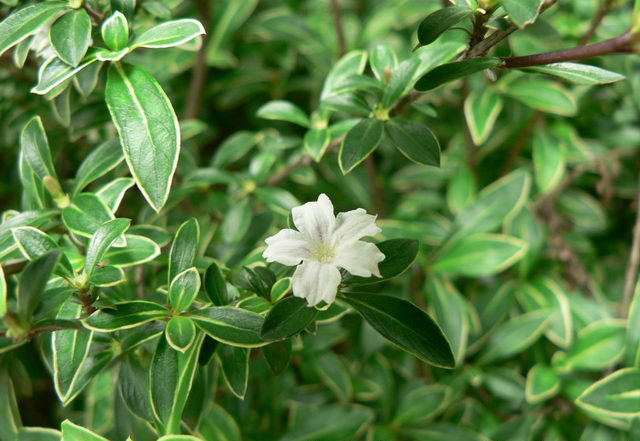
Cultivation methods and precautions for Serissa japonica
Cultivation methods and precautions for Serissa japonica 1: Transplanting and potting
Generally speaking, February to March is the best time for transplanting, though the plum rain season and late autumn are also good seasons. When transplanting, it is best to choose a purple clay pot or a glazed pot, and the pot color should be dark so it can form a sharp contrast with the flower color. The potting soil should be sandy soil, ideally loose, rich in organic matter, and with good drainage and aeration. In addition, for fertilizer selection, it is best to mix pine needle soil, leaf mold, and peat together, and add about 10% rice husk ash.
Cultivation methods and precautions for Serissa japonica 2: Water and fertilizer management
Water and fertilizer management for Serissa japonica should be appropriate; it should not be too dry or too wet, and the moisture in the potting soil should be kept moderate. In winter, the frequency of watering should be reduced, while in summer, water is generally sprayed on the leaves, 1-2 times is fine. In addition, April to May every year is the best period for fertilizing, and it can be watered with a 0.5% phosphorus-potassium fertilizer solution. In winter, an additional topdressing can be applied, and thin organic fertilizer can be watered on, but other than that, no fertilizer should be applied. Concentrated fertilizer is a major taboo.
Cultivation methods and precautions for Serissa japonica 3: Light and temperature requirements
Serissa japonica likes sunlight, warmth, moisture, and ventilation. Therefore, during the growing season, it should be cared for under these conditions. In summer, it should be properly shaded, and must never be placed in direct sunlight. In winter, it should be moved indoors and kept at a certain temperature, for example 5 to 12°C is fine.
Cultivation methods and precautions for Serissa japonica 4: Repotting and pruning
Repotting every other year can make the soil looser and more suitable for the plant's growth. At the same time, removing the old soil and properly pruning the roots can also improve its ornamental value. In winter, shaping and pruning should be carried out, trimming long and short branches, and thinning or thickening branches as needed. This can not only remove messy branches and leaves and improve the ornamental beauty, but also cut off branches and leaves affected by pests and diseases. At the same time, through pinching, bud removal, and branch removal, a certain shape can be maintained, elegant and charming.
Cultivation methods and precautions for Serissa japonica 5: Pest and disease control
Serissa japonica generally has few pests and diseases, though occasionally there may be aphids. At this time, it can be sprayed with essential balm to kill the aphids, but the concentration must not be too high; diluting 500 to 600 times is more appropriate. In addition, root rot sometimes occurs. At this time, use a 800-times solution of root rot spirit or a 600-1000-times solution of 12% copper abietate emulsifiable concentrate to irrigate it, spraying once every few days, three times in a row is enough.
Cultivation methods and precautions for Serissa japonica
Cultivation methods for Serissa japonica
Light
Serissa japonica fears strong light, so daily care requires shading and placing it in a cool place, avoiding direct sunlight, and it can absorb scattered light.
Watering
Keep the potting soil moist all year round.
In summer, when it is hot and dry, in addition to watering every day, it is also necessary to spray the leaves with clean water, or spray the nearby ground, to maintain relative air humidity.
In autumn, as the temperature drops, the amount of watering should be gradually controlled, watering once every 2 to 3 days.
In winter, watering once every 7 to 10 days is enough.
Fertilizing
During the growing season, apply a thin liquid fertilizer once every 10-15 days, or water with fertilizer, that is, mix thin liquid fertilizer into the water each time you water.
Temperature
Serissa japonica prefers a warm climate and can tolerate cold slightly. In winter, when the temperature is relatively low, it needs to be moved indoors for cultivation, and the indoor temperature must not be lower than 0°C. If Serissa japonica freezes, it is extremely easy for it to die.
Soil
Serissa japonica is not strict about soil requirements, and grows best in soil that is loose and has good water permeability and aeration.
Precautions for growing Serissa japonica
Frequent topdressing
In addition to normal fertilizing, foliar topdressing should also be carried out frequently. During the growing season, topdressing can be applied 3 to 4 times, spraying the leaves with a 1% potassium dihydrogen phosphate solution to regulate pH and increase the plant's nutrition.
Avoid exposure to the sun in summer
In summer, the plant should be placed in a cool place. A shade shed with half light transmission can be built with small-hole nylon netting or plastic window screening, which can both maintain ventilation and allow scattered light to be absorbed.
Pay attention to ventilation in summer
If placed indoors for care in summer, ventilation needs to be increased, otherwise the branches will grow leggy, the leaf color will turn yellow, and a large number of lower leaves will fall off.
Repotting is needed in spring
Every year in March, Serissa japonica can be moved outdoors. Before that, it needs to be repotted with leaf mold soil, and hoof and horn pieces should be used at the bottom of the pot as base fertilizer.
How to grow a Serissa japonica bonsai, cultivation methods and precautions for Serissa japonica / water must not be too much
Serissa japonica is probably familiar to many flower lovers. It is currently the most popular bonsai tree and sells very well both domestically and abroad. In daily life, many beginners buy Serissa japonica bonsai from flower markets, but they do not know how to grow them. In response, the editor has carefully compiled the cultivation methods and precautions for Serissa japonica, which are very comprehensive. Those who want to grow it should definitely take a look~
1. How to grow a Serissa japonica bonsai, water must not be applied too much
After buying a Serissa japonica bonsai from a flower market, we can grow it indoors, and we can also grow it indoors. As for how to grow a Serissa japonica bonsai, in terms of light, Serissa japonica does not demand much, but with water and fertilizer you must be careful not to apply too much, otherwise growth will be affected. The specifics are all in the cultivation methods and precautions for Serissa japonica, so let us continue reading.
2. Cultivation methods and precautions for Serissa japonica
1. Soil, slightly acidic
After buying a Serissa japonica bonsai, there is soil inside it. The soil mentioned here is what we need when repotting. Serissa japonica has strong drought tolerance, so it is not strict about soil, but if you want it to grow well, it is best to prepare a slightly acidic growing medium containing humus, loose and fertile, and highly permeable.
2. Light, must be sufficient
In the cultivation methods for Serissa japonica, light is naturally indispensable, but the specific requirements depend on the situation. If grown outdoors, Serissa japonica must be given sufficient light; if grown indoors, it can be placed near a window, and when light is insufficient, use a fluorescent lamp to supplement light.
Precautions: Once light is insufficient, Serissa japonica will grow very loosely, and its appearance will not be so beautiful. In addition, if it is grown outdoors and you want to move it indoors, at this time the environment should be changed gradually; do not move it indoors all at once, and also make sure the indoor location can receive light.
3. Watering, water again only when dry
How to grow a Serissa japonica bonsai - watering is very crucial. It is understood that Serissa japonica likes moisture but hates water accumulation, so we should not water too much or too frequently; just keep the potting soil moist, and water again only when it is dry.
Precautions: When growing outdoors, during the rainy season there must not be water accumulation in the pot, to avoid root rot. In summer when the weather is hot, in addition to watering, spray water on the leaves in the morning and evening to cool them and increase air humidity, so as to benefit its growth.
4. Fertilizing, once a month
After talking about watering, let us talk about fertilizing. In the cultivation methods for Serissa japonica, it has requirements for fertilizer. In winter, we should reduce fertilizing, and from early summer begin to increase the amount, fertilizing once a month.
Precautions: When fertilizing, keep the compost moist to avoid burning the root tips. It likes slightly acidic soil conditions when fertilizing. When Serissa japonica has already lost its leaves, stop fertilizing, or if it does not show new growth points.
5. Temperature, 18-26°C
How to grow a Serissa japonica bonsai - a suitable temperature is very important. It is understood that Serissa japonica likes a warm and damp environment and is not cold-tolerant; the most suitable temperature is 18-26°C. If the room temperature is above 15°C, it can remain evergreen without dropping leaves.
Precautions: Although Serissa japonica has strong adaptability, it also needs protection. If it is outdoors, when the temperature is below 7°C, it must be moved indoors.
3. Precautions for growing Serissa japonica
In the cultivation methods for Serissa japonica above, several points needing attention have already been mentioned, and I believe everyone should have remembered them. However, besides what was mentioned above, there are still three points that flower lovers need to pay attention to, namely pruning, repotting, and pest and disease control. The precautions for growing Serissa japonica are as follows:
1. Pruning
Serissa japonica grows very quickly, so flower lovers need to prune it often to maintain its shape. Every year from the time it drops leaves in winter to before it sprouts in spring, we should give Serissa japonica one shaping and pruning: shorten long branches and leggy branches, thin out overly dense, slender, and weak branches, and cut off diseased and pest-infested branches. During the growing period, pinching, bud removal, and branch removal should also be carried out. The specific operations are introduced in detail in how to prune Serissa japonica, so they will not be repeated here.
2. Repotting
To ensure that Serissa japonica has sufficient nutrients, it needs to be repotted once every 1-2 years, generally in spring from February to March. Remove all the old soil and replace it with clean growing medium: loose, fertile, highly permeable, slightly acidic soil. When repotting, the roots can be properly pruned to form exposed roots and improve ornamental value.
3. Pest and disease control
Serissa japonica bonsai has relatively few pests and diseases, but during the cultivation process, if there is the slightest negligence, aphids, snails, root rot, and the like will still appear, thereby affecting the plant's growth and ultimately leading to a decline in ornamental value. As for what to do specifically, it is introduced in detail in pest and disease control for Serissa japonica, so it will not be repeated here.