Dwarf Gardenia Pictures, Growing Methods and Precautions
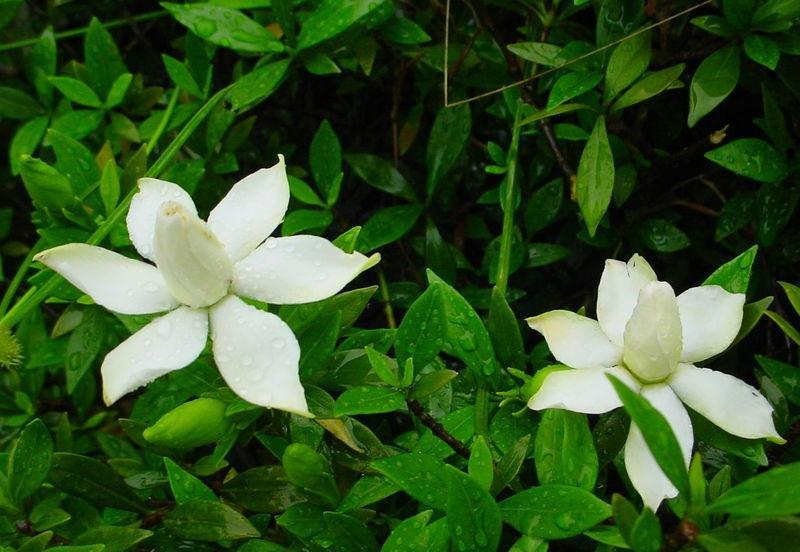
Pictures of the dwarf gardenia, growing methods and precautions for the dwarf gardenia
Growing methods for the dwarf gardenia: sufficient water
Gardenia likes a warm, humid environment with plenty of sunlight, so its water needs and air humidity are also very important. During the growing period of the gardenia, pay attention to appropriately increasing the amount of watering, and also spray some water on the gardenia leaves, which can effectively raise air humidity. At the same time, also note that watering should not be excessive in winter, to prevent root rot; growing methods for the dwarf gardenia: sufficient light time. During the growing period of the gardenia, also pay attention to the appropriate light requirements. Gardenia is a light-loving plant, so it is recommended to pay more attention to increasing light time during spring and autumn, and in summer and winter it is recommended to place it indoors for growing with some light, to avoid temperatures that are too high or too low during the growing period; growing methods for the dwarf gardenia: appropriate fertilization to supplement the nutrients needed for growth. Gardenia also has very high nutrient requirements. In order to meet the gardenia's fertilizer needs during the growing period, it is recommended that during the vigorous growth period of the gardenia, apply fertilizers such as bean cake, sesame paste residue, and peanut bran once every half month, which also helps the flowers bloom more and more vigorously; for potted plants, the soil is preferably prepared with 40% garden soil, 15% coarse sand, 30% barnyard manure soil, and 15% leaf mold. During the seedling stage of the gardenia, pay attention to watering, keep the potting soil moist, and frequently apply dilute decomposed fertilizer. For watering, rainwater or fermented rice washing water is best. During the growing period, if you water once every 10-15 days with 0.2% ferrous sulfate water or alum fertilizer water (the two can be used alternately), it can prevent the soil from becoming alkaline, and at the same time supplement iron for the soil to prevent the gardenia leaves from turning yellow. In summer, the gardenia should be sprayed once on the leaf surface in the morning and evening every day to increase air humidity and promote glossy leaves. For potted gardenia, after flowering in August, water only with clear water and control the amount of watering. Before Cold Dew in October, move it indoors and place it in a sunny spot. In winter, strictly control watering, but you can often spray the leaf surface with clear water. From May to July each year, when the vigorous growth period of the gardenia is about to end, prune the plant by removing the top shoots to promote the sprouting of branches, so that the plant shape will be beautiful and it will bloom more in the future.
Gardenia is mostly propagated by cuttings and layering, and can also be propagated by division and sowing, but these are rarely used. Cuttings can be divided into spring cuttings and autumn cuttings. Spring cuttings are carried out in mid-to-late February; autumn cuttings are carried out from late September to late October. For cuttings, select 2-3 year old branches, cut them into 10-12 cm segments, keep the top two leaves and cut each in half, then insert them obliquely into the cutting bed, leaving only one node above the soil surface. Pay attention to shading and maintaining a certain humidity. Generally, they can take root in 1 month, and can be transplanted after 1 year. In the south, water cuttings are also used for propagation, that is, inserting the cuttings into a round disk woven from reed stems, letting it float on the water surface so that the lower part takes root in the water, and then transplanting and cultivating. Layering can be carried out around Qingming in April or during the plum rain season. Select a vigorous one-year-old branch from a three-year-old mother plant, pull it to the ground, and notch the part of the branch that will enter the soil. If the notched part can be dipped in 200 ppm powdered indoleacetic acid, then covered with soil and pressed firm, rooting will be easier. Generally, after rooting in about a month, it can be separated from the mother plant, and in the spring of the following year it can be transplanted with soil.
Growing methods for the dwarf gardenia: pay attention to pruning
During the growing period, gardenia branches can easily overlap and become too dense for ventilation. Therefore, during this period, pruning the branches appropriately can also effectively promote growth. Cut off other branches sprouting from root suckers.
Growing methods for the dwarf gardenia: soil requirements
Gardenia likes to grow in acidic soil, so when choosing soil for gardenia, pay attention to selecting acidic soil for cultivation, and also note that the soil pH value is preferably controlled between 4.0-6.5. Therefore, the choice of soil is also very important for cultivation needs; growing methods for the dwarf gardenia: suitable growth temperature requirements
According to the gardenia's growth temperature requirements, the best growth temperature is 16°C-18°C. However, note that temperatures that are too high or too low are both unfavorable to the gardenia's growth needs, so in summer and winter it is recommended to choose a well-ventilated indoor space for cultivation. This is also something growers should pay attention to.
Precautions for growing the dwarf gardenia
(1) Gardenia likes fertilizer, but fears concentrated fertilizer. Generally, before flower buds appear, apply 2 rounds of cake fertilizer water rich in phosphorus and potassium. After the buds appear, stop fertilizing. If too much fertilizer is applied, it can easily burn the roots and cause bud drop. During the growing period, apply decomposed cake fertilizer water or manure water once every half month, and add 1%-2% ferrous sulfate to prevent soil alkalization.
(2) Gardenia likes semi-shade and fears direct strong light, requiring about 50% shade. If exposed to the sun, the leaves will turn yellow, whiten, and even fall off, so in summer it must be placed in a shaded spot or a place with scattered light for care. Let it receive light in the morning and evening to avoid yellowing leaves.
The flower language of gardenia
The flower language of gardenia is "eternal love, a lifetime of waiting and joy." In legend, the flower language of gardenia is waiting love. The flower language of gardenia: joy. If you like this flower, you have a heart of gratitude and repay kindness. You treat others sincerely, and as long as others are slightly kind to you, you repay them with heartfelt thanks. This is because you have a pure and innocent heart and do not understand the dangers of human nature, and your sincerity keeps you often joyful, while forgiving others also fills you with joy.
Medicinal value
The fruit of the gardenia is used as medicine. It mainly treats high fever from febrile disease, restlessness and insomnia, toothache from excess fire, mouth and tongue sores, nosebleeds, vomiting blood, conjunctivitis, sores and swellings, icteric infectious hepatitis, favism, and blood in the urine; for external use, it treats bleeding from trauma and sprains and contusions. The root used as medicine mainly treats infectious hepatitis, bruises and injuries, and wind-fire toothache.
[Harvesting and processing of gardenia]:
From September to November, pick the fruits, remove impurities such as fruit stems, steam them briefly in a rice steamer or boil them briefly in boiling water (alum may be added), then take them out and dry them in the sun. The fruits are not easy to dry, so they should be turned frequently to ensure good ventilation and prevent mildew and spoilage. The roots are dug in summer and autumn, washed clean, and dried in the sun.
Gardenia begins to bloom and bear fruit after 2-3 years of cultivation. The fruits begin to mature from November to December. When the peel turns yellow-green, they can be harvested. Choose a sunny day for picking, and the harvested gardenia can be dried in the sun or oven-dried promptly.
[Nature, flavor, and meridian tropism]: Cold in nature, sweet and bitter in flavor; enters the lung and liver meridians.
[Efficacy and indications]: Clears the lungs and stops cough, cools blood and stops bleeding. Mainly treats lung-heat cough, nosebleeds, phlegm, swelling and toxicity, and other conditions.
[Nutritional components]: Gardenia contains triterpene components, gardenic acid A, B, and gardenic acid. In addition, it also contains carbohydrates, protein, crude fiber, and various vitamins.
Ornamental value
Dwarf gardenia
The dwarf gardenia's leaves remain evergreen through all four seasons, and its flowers are fragrant and elegantly simple. Green leaves and white flowers make it especially clear, beautiful, and lovely. It is suitable for placement in front of steps, by ponds, and along roadsides, and can also be used as a flower hedge or for potted ornament. The flowers can also be used in flower arrangements and as personal decoration.
Gardenia has luxuriant branches and leaves, beautiful flowers, and a rich fragrance. It is an excellent landscaping material for courtyards, and can also be used for potted plants, bonsai, and cut flowers. The fruit peel is used as a yellow dye, and the wood is hard and fine, making it a good material for carving.
Introduction
1. Clears heat and cools blood. Gardenia is bitter and cold, can enter the blood aspect and clear pathogenic heat. It is an auxiliary therapeutic food for conditions such as sores and swellings, intestinal wind and dysentery, and reckless movement of hot blood.
2. Resolves phlegm and stops cough. The active components of gardenia can inhibit bacterial growth, release phlegm and clear the airway, and have the effect of resolving phlegm and stopping cough. It can be used as a dietary remedy for those with cough caused by accumulated hot phlegm.
3. Relaxes the intestines and promotes bowel movement, prevents cancer. Gardenia contains cellulose, which can promote large intestine peristalsis, help with defecation, and prevent the onset of hemorrhoids and the occurrence of rectal tumors.
Precautions
Gardenia is bitter and cold, so those with diarrhea due to spleen deficiency or insufficient kidney yang should eat it cautiously.
Collapse selected prescriptions
① To treat wind-cold, excess phlegm and excess fire in the lungs, and lung-heat cough: three gardenia flowers. Boil with a little honey and take. ("Dian Nan Ben Cao") ② To treat unstoppable nosebleeds: several gardenia flowers, roast dry and grind into powder, blow into the nose. ("Dian Nan Ben Cao") Besides ornamental use, its flowers, fruits, leaves, and roots can be used as medicine. Gardenia contains gardenoside, dehydroxylated gardenoside, paederoside methyl ester, and a small amount of shanzhiside. It has effects such as clearing heat and promoting urination, cooling blood and detoxifying, treating jaundice, painful and difficult urination with blood, red and swollen painful eyes, fire-toxin sores, and lowering blood pressure.
If you encounter the following conditions, you might as well use gardenia for treatment.
High fever from a cold: 60 grams of gardenia root, 30 grams of Shanmazi root, 60 grams of the second-layer bark of Yajiaocun, and 30 grams of Honghuapo root. Decoct and take; the effect is very good.
Icteric hepatitis: Use 30-60 grams of gardenia root, cook with lean meat and eat. In about half a month, the jaundice can subside.
Dysentery: Stew gardenia root with rock sugar and take; the effect is very good. Take continuously for 7 days to see results.
Festering sores: Extract juice from gardenia leaves and apply it to the red and swollen sore area. The effect is noticeable in 7-10 days.
Hoarse voice: 5-7 gardenia flowers, brew in boiling water, and drink as tea.
Stomachache: 7-9 gardenia fruits, stir-fried until scorched, add an appropriate amount of ginger, decoct in water and take; 30 grams of gardenia root and 20 grams of rock sugar, stew and take.
Nosebleeds: Roast gardenia flowers dry, grind into fine powder, take a little each time and blow into the nasal cavity, then press with sterilized cotton. 10 grams each of gardenia flowers and sophora flowers, decoct in water for 15 minutes, and drink as tea.
High fever from a cold: 60 grams of gardenia root, 30 grams of Shanmazi root, 60 grams of the second-layer bark of Yajiaocun, and 30 grams of Honghuapo root. Decoct and take; the effect is very good.
Icteric hepatitis: Use 30-60 grams of gardenia root, cook with lean meat and eat. In about half a month, the jaundice can subside.
Dysentery: Stew gardenia root with rock sugar and take; the effect is very good. Take continuously for 7 days to see results.
Red, swollen, and painful eyes: Use 9 grams each of gardenia leaves and chrysanthemum flowers, and 6 grams each of Scutellaria baicalensis, gentian, and licorice. Decoct in water and take continuously for 15 days; the effect is very good.
High blood pressure: Brew gardenia leaves as tea and drink; it has the effect of lowering blood pressure.
Festering sores: Extract juice from gardenia leaves and apply it to the red and swollen sore area. The effect is noticeable in 7-10 days.
Bronchitis: 10 grams of gardenia and 30 grams of fresh gardenia root, decoct in water and take.
Hoarse voice: 5-7 gardenia flowers, brew in boiling water, and drink as tea.
Lung-heat cough: Boil 3 eggs, remove the shells, then cook together with 30 grams of gardenia flowers for half an hour, and eat in 3 portions daily; marinate 15 grams of gardenia flowers with 30 grams of white sugar for half a day, then take a little each time and brew as tea.
Red and swollen boils: 12 grams each of gardenia, dandelion, and honeysuckle. Decoct in water, 1 dose daily, taken in 3 portions.
[Gardenia love decoding]:
From spring to early summer, you can see the white flowers of the gardenia. Its elegant fragrance makes her presence impossible to ignore.
[Basic personality]: You are like the fragrant pure white gardenia blooming in the dark night, with a strong sense of femininity everywhere. You do not like getting close to crowds and value your own space. Although you have a passionate and cheerful side, you still make people feel a bit lonely. You are easily unsettled by small things and may even be hurt. However, you are the kind of person who becomes braver the more setbacks you face.
[Love tendency]: People of the gardenia type have clear likes and dislikes. When choosing a partner, you will not care about the other person's appearance or status, but rely entirely on your own feelings. As long as you fall for someone, your mind will keep thinking about their every move, and everything else is thrown to the back of your mind. At first glance you are an open person, but in love you are quite conservative. You are not good at talking about romance. Your ideal partner is a sincere boy you can trust each other with, and then you slowly cultivate feelings together. This pure love of yours cannot tolerate betrayal.
[Beware of the flower's thorns]: You always care about the opinions of friends around you, and even a careless remark from others can hurt you. Your excessive demands on yourself only create unnecessary pressure. Do not be too neurotic; please always keep a calm heart.
[Flower language]: The flower language of gardenia is--"eternal love and promise." A very beautiful[1].
Flower divination: You have a heart of gratitude and repay kindness, and you treat others sincerely. As long as others are slightly kind to you, you repay them with heartfelt thanks. This is because you have a pure and innocent heart and do not understand the dangers of human nature, and your sincerity keeps you often joyful, while forgiving others also fills you with joy.
[Flower motto]: Sometimes you need to express your likes and dislikes.
There is also an explanation that the flower language of gardenia is--"eternal love and promise." A very beautiful sustenance. The general idea is that because this flower begins to form buds in winter and does not bloom until near the summer solstice, the longer the budding period, the longer its fresh fragrance lasts; the leaves of the gardenia tree also remain emerald green and do not wither through years of wind, frost, snow, and rain. Thus, although its blooming seems casual, it has also undergone long effort and persistence. Perhaps the growth habit of the gardenia is more in line with this flower language. It is not only an expression of love; beneath its plain, lasting, warm, and refined appearance lies the essence of a beautiful, resilient, and mellow life.
Growing methods and precautions for the dwarf gardenia
The dwarf gardenia is a common flowering plant for us. Its flowers are pure white and beautiful, and it gives off a rich, fresh fragrance, so it is loved by many friends. The flower language of the dwarf gardenia is "eternal love, a lifetime of waiting and joy," which complements its beautiful appearance. The dwarf gardenia is not only suitable as a courtyard flower, but also suitable for growing on an indoor balcony. When it blooms, its fragrance can be smelled from far away. Moreover, growing it is not particularly complicated. It can adapt to harsh environments, and as long as sufficient light and water are ensured, it can grow and bloom quickly.
Growing methods for the dwarf gardenia
Sufficient water
Gardenia likes a warm, humid environment with plenty of sunlight, so its water needs and air humidity are also very important. During the growing period of the gardenia, pay attention to appropriately increasing the amount of watering, and also spray some water on the gardenia leaves, which can effectively raise air humidity. At the same time, also note that watering should not be excessive in winter, to prevent root rot;
Sufficient light time
During the growing period of the gardenia, also pay attention to the appropriate light requirements. Gardenia is a light-loving plant, so it is recommended to pay more attention to increasing light time during spring and autumn, and in summer and winter it is recommended to place it indoors for growing with some light, to avoid temperatures that are too high or too low during the growing period;
Appropriate fertilization
Supplement the nutrients needed for growth. Gardenia also has very high nutrient requirements. In order to meet the gardenia's fertilizer needs during the growing period, it is recommended that during the vigorous growth period of the gardenia, apply fertilizers such as bean cake, sesame paste residue, and peanut bran once every half month, which also helps the flowers bloom more and more vigorously;
Pay attention to pruning
During the growing period, gardenia branches can easily overlap and become too dense for ventilation. Therefore, during this period, pruning the branches appropriately can also effectively promote growth. Cut off other branches sprouting from root suckers.
Soil requirements
Gardenia likes to grow in acidic soil, so when choosing soil for gardenia, pay attention to selecting acidic soil for cultivation, and also note that the soil pH value is preferably controlled between 4.0-6.5. Therefore, the choice of soil is also very important for cultivation needs;
Suitable growth temperature requirements
According to the gardenia's growth temperature requirements, the best growth temperature is 16°C-18°C. However, note that temperatures that are too high or too low are both unfavorable to the gardenia's growth needs, so in summer and winter it is recommended to choose a well-ventilated indoor space for cultivation. This is also something growers should pay attention to.
Precautions for growing the dwarf gardenia
(1) Gardenia likes fertilizer, but fears concentrated fertilizer. Generally, before flower buds appear, apply 2 rounds of cake fertilizer water rich in phosphorus and potassium. After the buds appear, stop fertilizing. If too much fertilizer is applied, it can easily burn the roots and cause bud drop.
(2) Gardenia likes semi-shade and fears direct strong light, requiring about 50% shade. If exposed to the sun, the leaves will turn yellow, whiten, and even fall off, so in summer it must be placed in a shaded spot or a place with scattered light for care. Let it receive light in the morning and evening to avoid yellowing leaves.
The flowers of the dwarf gardenia are relatively dense. If grown properly, the flowering period is relatively long, and the flowers will also be numerous and large. Gardenia likes a warm environment, so air humidity and temperature must be ensured. It is best to place it in a sunny place, but avoid exposure to harsh sun. In summer, it is best to move it to a cool place. The branches of the dwarf gardenia grow relatively quickly, so reasonable pruning can also promote flower density. Master the above knowledge, and you will certainly be able to grow a dwarf gardenia full of fresh fragrance.
How to grow the dwarf gardenia: growing methods for the dwarf gardenia
The dwarf gardenia has very high ornamental value. It can be planted in clumps or arranged at forest edges, in front of courtyards, at courtyard corners, and along roadsides. It can also be used for balcony greening, potted flowers, cut flowers, or bonsai. So how do you grow the dwarf gardenia? Below let us take a look at the growing methods for the dwarf gardenia!
Growth habits of the dwarf gardenia
The dwarf gardenia is a typical acidic flowering plant. It likes warm and humid climates and is not cold-resistant. It likes sunlight but cannot withstand intense sunlight. It is suitable for growing in loose, fertile, well-drained, slightly clayey acidic soil. In Northeast China, North China, and Northwest China, it can only be grown as a potted greenhouse flower. It is resistant to sulfur dioxide and can absorb sulfur to purify the atmosphere.
Propagation methods for the dwarf gardenia
1. Sowing: The dwarf gardenia is mainly propagated by seeds, mostly in spring, but the seeds germinate slowly. After sowing, they germinate in about 1 year, and bloom after 3-4 years. In the north, potted plants rarely produce seeds.
2. Cuttings: In the north, from October to November in a greenhouse; in the south, cuttings can be taken anytime from April to the beginning of autumn, but the survival rate is highest between summer and autumn. Select healthy 2-year-old branches for cuttings. When the rooted seedlings begin to grow, transplant them or pot them individually. They can bloom after 2 years.
3. Layering: In April, select vigorous branches from a 3-year-old mother plant for layering. If there is a three-forked branch, it can be layered at the fork, and three seedlings can be obtained at one time. Generally, they root after 20-30 days, can be separated from the mother plant in June, and by the following spring can be planted separately or potted individually.
Growing methods for the dwarf gardenia
1. Soil: The dwarf gardenia should preferably use acidic potting soil, with a suitable pH value of 5 to 6. For cultivation soil, you can choose leaf mold, peat soil, or composted sawdust plus half garden soil. Do not use old wall soil or coal cinders.
2. Watering: Water the dwarf gardenia whenever the surface of the potting soil looks dry. In the evening, you can use a spray bottle to sprinkle water on the leaf surface. For plants that grow too vigorously with relatively long internodes, do not water in the evening; water again after the sun comes out in the morning.
3. Fertilizing: Add 3% decomposed cake fertilizer to the dwarf gardenia's growing soil as a base fertilizer. During the growing season, water once a week with alum fertilizer water made by fermenting cake fertilizer plus ferrous sulfate. During the bud stage, water once to twice with a 0.1% potassium dihydrogen phosphate aqueous solution. Stop fertilizing when the temperature is above 35°C in summer and below 15°C in autumn.
4. Light: The dwarf gardenia likes sunlight but cannot withstand intense sunlight. It can also grow in semi-shade for a long time, but it must maintain 60% light all day to meet its growth needs.
5. Repotting: For household potted dwarf gardenia, repot when the crown width reaches about 28 cm. If repotting, plant it into the new pot with the soil ball. Usually, changing the soil in March of spring is better.
6. Pruning: For the dwarf gardenia, select and retain three main branches according to the tree shape. Always cut off other branches sprouting from root suckers. Remember not to cut back the branch tips in spring, otherwise it will not bloom that year.
7. Overwintering: In the north, the root system of the dwarf gardenia will be damaged after the severe winter and will only recover in spring, so the potted flowers should be wrapped with insulation materials such as foam plastic around the pot to protect the root system, and placed in a leeward, sunny place to overwinter.