A Detailed Guide to the Benefits and Cultivation Methods of Snake Plant
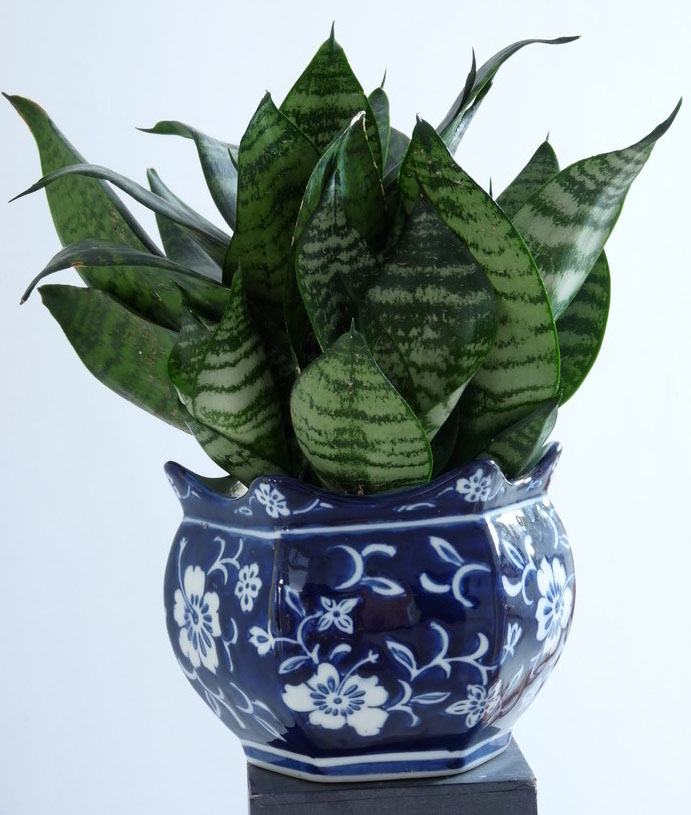
The Benefits of Snake Plant and How to Cultivate It
Snake Plant is native to western Africa. It is drought-tolerant, loves sunlight and warmth, and also tolerates shade. It dislikes waterlogging and grows robustly in well-drained sandy loam. It grows quickly in spring and summer, so more organic liquid fertilizer should be applied. In late autumn and winter, it is best to keep the potting soil slightly dry. It is not tolerant of severe cold; bring it indoors in late autumn or early winter. As long as the indoor temperature stays above 18°C, it will grow normally in winter without going dormant, and will bloom from January to February. It can safely overwinter at no less than 10°C. During the growing season, whether maintained indoors or outdoors, it should not be placed in shaded areas or under strong direct sunlight for extended periods; otherwise, the yellow margins will narrow and fade. During the growing season, the growing point of the sword-shaped leaves curls and closes, appearing dark brown, and unfurls during dormancy. Beginners often mistake this for dried tips and cut them off. Once the apical growing point is damaged, growth stops.
Mature Snake Plants can bloom every year and are fragrant, but they are primarily grown for their foliage. These plants are drought-tolerant, moisture-tolerant, and shade-tolerant, able to adapt to various harsh environments. They are suitable for garden landscaping or pot cultivation and are premium indoor foliage plants.
Key Cultivation Points
[Planting]: This plant is highly adaptable and can be managed with relatively extensive care. For pot cultivation, use 3 parts fertile garden soil, 1 part coal cinder, and add a small amount of soybean cake crumbs or poultry manure as base fertilizer.
[Fertilizing]: Do not over-fertilize. During the peak growing season, apply fertilizer 1-2 times per month, in small amounts. If only nitrogen fertilizer is applied over the long term, the patterns on the leaves will become dull, so a compound fertilizer is generally used. Alternatively, you can evenly bury 3 holes of cooked soybeans in the soil around the pot edge, with 7-10 beans per hole, being careful not to let them touch the roots. Stop fertilizing from November to March of the following year.
[Light]: Potted Snake Plants should not be kept in dark places for extended periods; they should regularly receive diffused light, otherwise the leaves will darken and lose vitality. However, they should not be suddenly moved into direct sunlight; they should first adapt in a dimly lit area.
[Growth Habits]: Highly adaptable, it prefers warm and humid conditions, tolerates drought, and enjoys light while also tolerating shade. It is not demanding about soil, with well-drained sandy loam being optimal. Its optimal growth temperature is 20-30°C, and its overwintering temperature is 10°C. Snake Plant can be propagated by division and cuttings.
[Propagation]: Snake Plant can be propagated by division and cuttings.
[Soil]: It is not demanding about soil and can grow normally even in a very small volume of soil. It prefers loose sandy soil and humus soil, and tolerates drought and poor soil. It grows robustly, and even when the pot is full of roots, its growth is not inhibited. Generally, repot every two years in spring, and standard compost can be used when repotting.
[Temperature]: It prefers warm temperatures. Its suitable temperature is 18-27°C, and it stops growing below 13°C. In winter, the temperature should not stay below 10°C for extended periods, otherwise the base of the plant will rot, causing the entire plant to die.
[Watering]: Should be moderate, not excessively wet. Snake Plant is a desert plant and can withstand harsh environments and prolonged drought.
If watered too frequently, the leaves turn white and the color of the patterns fades. From spring to autumn, it grows vigorously and should be watered thoroughly. During winter dormancy, watering should be controlled to keep the soil dry, and water should be kept from entering the leaf rosette. When using plastic pots or other decorative flower pots with poor drainage, absolutely avoid water accumulation to prevent rot that causes the leaves to fold over.
1. Division: Suitable for all varieties of Snake Plant. Generally done in conjunction with spring repotting. The method is to cut overly dense leaf clusters into several clumps, each clump having leaves as well as a section of rhizome and a sucker, and pot them separately.
2. Cuttings: Only suitable for varieties whose leaves lack golden yellow margins or silver veins; otherwise, the yellow and white patterns on the leaves will disappear, turning them into ordinary Snake Plant varieties. The method is to select healthy and plump leaves, cut them into 5-6 cm lengths, insert them into sandy soil or vermiculite, with half exposed above the soil surface, keep slightly moist, and roots will form in about one month.
3. Note: Young plants propagated by leaf cuttings from golden-margined and variegated varieties will be green seedlings, with the golden margins and patterns disappearing, reducing their ornamental value. Therefore, these varieties are not suitable for leaf cutting propagation and can only be propagated by division.
[Cultivation]: For potted Snake Plant, a mix of equal parts leaf mold and garden soil with a small amount of decomposed base fertilizer can be used as the growing medium. It grows well under conditions of ample light. Apart from avoiding direct harsh sunlight in midsummer, it should receive plenty of sunlight in other seasons; if placed in a too-dim indoor location for too long, the leaves will darken and lack vitality.
In addition, if kept indoors for a long time, it should not be suddenly moved directly into sunlight; it should first be moved to a brighter location to allow it to adapt before being exposed to sunlight, to avoid scorching the leaves. Watering should be moderate, following the principle of preferring dry over wet. Regularly wipe dust off the leaf surface with clean water to keep the leaves clean and glossy. In spring, when new plants sprout from the root crown, water more appropriately to keep the potting soil moist; in the hot summer season, also keep the potting soil regularly moist; after late autumn, control the amount of watering and keep the potting soil relatively dry to enhance cold resistance.
It has low fertilizer requirements. During the growing season, apply diluted liquid fertilizer 1-2 times per month to ensure the leaves remain verdant and thick.
A Guide to Cultivating Golden-Margined Snake Plant (Sansevieria trifasciata): Growth Habits and Benefits
Snake Plant is one of the most ornamental flowering plants among Sansevieria varieties and is also one of the most common Sansevieria cultivars. It is often used for decorating offices, living rooms, studies, and courtyards. Golden-Margined Snake Plant is a foliage plant that can purify the indoor environment. It can absorb harmful indoor gases and purify the air, playing a helpful role in human health. So, do you know the growth habits, cultivation methods, and benefits of Golden-Margined Snake Plant? Today, the editors will give you a detailed introduction.
Growth Habits
Golden-Margined Snake Plant is highly adaptable. It prefers warm and humid conditions, tolerates drought, and enjoys light while also tolerating shade. It is not demanding about soil, with well-drained sandy loam being preferable. Its optimal growth temperature is 20-30°C, and its overwintering temperature is 10°C. It has strong adaptability to the environment and is a tenacious plant. It is widely cultivated and used and is a common indoor potted foliage plant. It is suitable for decorating study rooms, living rooms, and office spaces, and can be enjoyed for a long time.
Cultivation Methods for Golden-Margined Snake Plant
For potted Snake Plant, a mix of equal parts leaf mold and garden soil with a small amount of decomposed base fertilizer can be used as the growing medium. Snake Plant grows well under conditions of ample light. Apart from avoiding direct harsh sunlight in midsummer, it should receive plenty of sunlight in other seasons; if placed in a too-dim indoor location for too long, the leaves will darken and lack vitality. In addition, if kept indoors for a long time, Snake Plant should not be suddenly moved directly into sunlight; it should first be moved to a brighter location to allow it to adapt before being exposed to sunlight, to avoid scorching the leaves. Watering Snake Plant should be moderate, following the principle of preferring dry over wet. Regularly wipe dust off the leaf surface with clean water to keep the leaves clean and glossy.
In spring, when new plants sprout from the root crown of Snake Plant, water more appropriately to keep the potting soil moist; in the hot summer season, also keep the potting soil regularly moist; after late autumn, control the amount of watering for Snake Plant and keep the potting soil relatively dry to enhance cold resistance. Snake Plant has low fertilizer requirements. During the growing season, apply diluted liquid fertilizer 1-2 times per month to ensure the leaves remain verdant and thick.
Snake Plant is highly adaptable. It prefers warm and humid conditions, tolerates drought, and enjoys light while also tolerating shade. It is not demanding about soil, with well-drained sandy loam being preferable. Its optimal growth temperature is 20-30°C, and its overwintering temperature is 10°C.
Benefits of Golden-Margined Snake Plant
Golden-Margined Snake Plant is a foliage plant that can purify the indoor environment. Scientists at NASA have found through research that Golden-Margined Snake Plant can release oxygen while absorbing carbon dioxide, increasing the concentration of negative ions in indoor air. When a television or computer is turned on indoors, the negative ions that are very beneficial to human health rapidly decrease, while the stomata on the fleshy stems of Golden-Margined Snake Plant close during the day and open at night, releasing negative ions. In a 15-square-meter room, placing 2-3 pots of Golden-Margined Snake Plant can absorb over 80% of harmful gases indoors.
The above is all the content I have learned about Snake Plant today. I hope fellow plant enthusiasts will find this article helpful. If you want to learn more about Snake Plant, please continue to follow Duorou Huapu, and we will provide you with more related knowledge!
The Benefits of Snake Plant: What Are the Benefits of Sansevieria? What Advantages Does It Have? How to Grow It?
Snake Plant (scientific name: Sansevieria trifasciata Prain), also known as Tiger Skin Plant, Jinlan, Qiansuilan, Tiger Tail Palm, Yellow Tail Orchid, or Mother-in-Law's Tongue, is a perennial herbaceous foliage plant of the Sansevieria genus in the Liliaceae family. Its remarkable functions make it an excellent ornamental plant for homes and offices. So what exactly are the benefits of Snake Plant?
Its remarkable functions include:
1. Purifying Air
Research shows that Snake Plant can absorb some harmful indoor gases and can effectively remove harmful substances such as sulfur dioxide, chlorine, ether, ethylene, carbon monoxide, and nitrogen peroxide. Placing a Snake Plant at home not only serves an ornamental purpose but also releases oxygen at night (other plants absorb oxygen at night). The ample oxygen during sleep improves sleep quality, so Snake Plant is very beneficial to human health. This effect is especially noticeable in newly renovated homes or after newly purchased furniture.
2. Medicinal Effects
Chemical Composition: Contains abamagenin.
Nature and Flavor: "Luchuan Materia Medica": "Cool in nature, sour in flavor."
Functions and Indications: Clears heat and detoxifies. Treats colds, bronchitis, bruises, and sores.
①"Luchuan Materia Medica": "Detoxifies, reduces inflammation. Treats bruises, sores, and snake bites."
②"Guangxi Chinese Herbal Medicine": "Clears heat and detoxifies, removes necrotic tissue and promotes tissue regeneration. Treats colds and cough, bronchitis, bruises, carbuncles, toxic swellings, and venomous snake bites."
Snake Plant Cultivation Techniques
One: Light.Potted Snake Plant has low light requirements; relatively ample light is sufficient. Snake Plant grows well under conditions of ample light. Apart from avoiding direct harsh sunlight in midsummer, it should receive plenty of sunlight in other seasons; if placed in a too-dim indoor location for too long, the leaves will darken and lack vitality.
Two: Soil.Snake Plant is highly adaptable and not demanding about soil. It can be managed with relatively extensive care. It prefers loose sandy soil and humus soil, and tolerates drought and poor soil. Generally, repot every two years in spring.
Three: Temperature.Snake Plant is highly adaptable. Its optimal growth temperature is 20-30°C, and its overwintering temperature is 10°C. In winter, the temperature should not stay below 10°C for extended periods, otherwise the base of the plant will rot, causing the entire plant to die.
Four: Water.Watering should be moderate, following the principle of preferring dry over wet. Regularly wipe dust off the leaf surface with clean water to keep the leaves clean and glossy. In spring, when new plants sprout from the root crown, water more appropriately to keep the potting soil moist; in the hot summer season, also keep the potting soil regularly moist; after late autumn, control the amount of watering and keep the potting soil relatively dry to enhance cold resistance. During winter dormancy, watering should be controlled to keep the soil dry, and water should be kept from entering the leaf rosette. Absolutely avoid water accumulation to prevent rot that causes the leaves to fold over.
Five: Fertilizing.Snake Plant has low fertilizer requirements. If only nitrogen fertilizer is applied over the long term, the patterns on the leaves will become dull, so a compound fertilizer is generally used. Do not over-fertilize. During the peak growing season, apply fertilizer 1-2 times per month, in small amounts. Standard compost can be used when repotting, and during the growing season, apply diluted liquid fertilizer 1-2 times per month to ensure the leaves remain verdant and thick. Stop fertilizing from November to March of the following year.
Before mastering cultivation and management techniques, I personally think one should not be too hasty. Pay attention to observation, and only treat the specific problem when it actually arises. Take it step by step; Snake Plant itself has strong adaptability to the environment.