What to Do When Pink Anthurium Leaves Turn Yellow? Detailed Guide to Growing Methods and Precautions
Pink anthurium is extremely popular. Its flowers are pink and very delicate and shy, like a refined young lady. But pink anthurium is not easy to grow well. People always end up with yellow leaves and it easily dies. How exactly should you grow pink anthurium to keep it healthy?
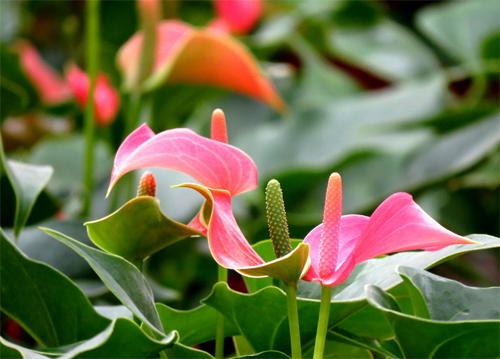
What to do when pink anthurium leaves turn yellow?
1. Pay attention to light: partial shade or scattered light is sufficient; in winter, full sun exposure is fine.
2. Too much water in the vase: just barely submerge the roots. If the roots are suspended on a net rack, add water to only about 2/3 of the root depth; there is no need to submerge them completely.
3. Lack of fertilizer in the water: if no fertilizer water is added for a long time and only plain water is used, leaves will turn yellow due to nutrient deficiency.
4. Unsuitable water: it is best to use rainwater or purified water. Tap water needs to be left to sit for 2-3 days to remove chlorine before use.
5. Not changing the water often enough: especially when summer temperatures are high, be sure to change the water once every 2-3 days; in winter, once every 2-3 weeks is fine.
Pink anthurium growing methods and precautions:
1. When potting, the flower pot should not be too large; it should suit the size of the plant. If too large, the soil will not dry for a long time after watering, which damages the roots.
2. Do not let water accumulate in the pot. Keep the soil moist, and do not water too frequently.
3. When it is cold in winter, bring it indoors. When it is too hot in summer, do not place it in sunlight.
4. Do not water at night in winter, because the temperature difference between day and night is large. Watering at night, as the temperature drops, may freeze and damage the rhizome.
5. Repotting must be done in a timely manner to avoid affecting plant growth. If switching to a ceramic pot, the new pot needs to be soaked in water for one or two days before use.
6. Avoid damaging the roots when repotting.
Is pink anthurium toxic?
Pink anthurium is a type of red anthurium. The flowers of red anthurium have mild toxicity, but there is no problem as long as they are not accidentally eaten. Wash your hands every time after pruning branches and leaves. Its toxicity mainly comes from the sap; with a little extra care, there is no problem. Red anthurium belongs to the Araceae family, and most plants in this family are toxic, but as long as you do not come into overly close contact with it, there is no problem. Red anthurium can be kept at home; it has mild toxicity, so it is best placed outdoors.
Pink anthurium hydroponic growing methods:
Growth habits: It prefers environments with high air humidity and muggy heat; it likes shade and warmth. In an environment where daytime temperatures do not exceed 28°C and nighttime temperatures do not drop below 20°C, it can bloom well year-round. Above 35°C it will suffer sunscald, below 14°C growth is affected, and it can overwinter safely at no lower than 5°C. Continuous low temperatures below 0°C will freeze the plant to death. It requires air humidity of 80%. Soilless cultivation is most suitable for its healthy growth.
Growing medium:
Temperature: The optimal growing temperature is 20-28°C. The maximum temperature should not exceed 35°C, and the minimum temperature is 14°C. Below 10°C, frost damage may occur at any time.
Humidity: The optimal relative air humidity is 70-80%, and it should not be lower than 50%.
Light: The optimal light intensity is 10000-20000 Lux.
Placement: Indoor potted plants should be placed in a bright spot with some scattered light. Be very careful not to place pink anthurium in an environment with strong direct sunlight.
The flower language of pink anthurium:
The flower language of pink anthurium carries the beautiful meaning of "passionate, bold, and joyful," representing a "fiery, cheerful heart," and it is frequently used for festive ceremonies, business opening celebrations, meeting guests, and other touching occasions.
Being able to grow pink anthurium beautifully at home is also a way to make people feel great. Pink anthurium is slightly toxic, so it must not be eaten casually.
What to Do When Pink Anthurium Leaves Turn Yellow_ Growing Methods and Precautions for Pink Anthurium
The original name of pink anthurium is Pink Champion. It belongs to the Araceae family, tribe Anthurieae, genus Anthurium, and is a perennial evergreen herbaceous flowering plant with excellent ornamental value. The flower shape of pink anthurium is very unique, like a spathe. The flower colors are very bright and vivid, giving a very gorgeous and clean impression. The flowers and leaves alternate together, and the colors are very rich. The flower colors are also varied. Its flowering period is very long. If pink anthurium is grown hydroponically, the flowering period can reach 2-4 months. It is a precious flowering plant with great development prospects. Pink anthurium can be grown hydroponically or in soil, but if grown hydroponically, some shading treatment is needed. Generally, exposure to light once a month is enough for normal growth. However, many people also encounter problems when growing pink anthurium, such as what to do when pink anthurium leaves turn yellow, as well as the growing methods and precautions for pink anthurium. Let us take a look together below.
[Growth Habits of Pink Anthurium]
Pink anthurium is a perennial epiphytic green herbaceous flowering plant, native to the tropical rainforest region of southwestern Colombia in South America, and is now distributed in Africa, Asia, Europe, the Americas, and other regions. It generally suits high-temperature, high-humidity environments, where light reaching the ground is relatively sparse. It also likes to grow in loose, fertile soil. Pink anthurium is suitable for growing at temperatures of 20-28°C. The temperature should not exceed 35°C or fall below 14°C, otherwise it will be unfavorable for the growth of pink anthurium. The suitable humidity for pink anthurium is 70-80%, but humidity should not be lower than 50%, otherwise the leaves will be relatively rough and look lusterless, thereby reducing ornamental value. The most suitable light for pink anthurium is 10000-20000 lux. In any season, the plant must not undergo direct photosynthesis; appropriate weak-light cultivation should be used so that the leaves are not scorched, which would affect its growth.
[Growing Methods for Pink Anthurium]
The propagation method often used for pink anthurium is division. When repotting an old plant, cut off side shoots with three or four leaves that have aerial roots, and then plant them. Its propagation methods include hydroponics and soil-cultured branching, and it is suitable as an indoor potted plant.
Method One: Soil Culture
1. Soil: Pink anthurium is suitable for growing in loose, fertile, well-aerated soil. You can mix leaf mold, peat soil, perlite, coal cinder, and base fertilizer together to make fertile soil. Drainage measures should be done at the bottom of the pot; tiles or bricks can be used for drainage.
2. Watering: Pink anthurium likes to grow in a moist environment and is afraid of drought. When growing it, keep the potting soil moist. Generally, water once every one or two days, but do not let water accumulate, otherwise the roots cannot breathe and will be damaged. In winter, water less to avoid root rot. Slightly acidic water is best. When the climate is dry, reduce air humidity or spray water on the leaves.
3. Light: Division plants are relatively shade-tolerant, so they should be placed in a shaded area and given appropriate sunlight. They are suitable for growing under weak light, which makes them more ornamental.
4. Temperature: Pink anthurium likes to grow in a warm environment and is afraid of cold. In summer, protect it from high-temperature attack, and in winter prevent frost damage and cracking. The suitable temperature is 19-25°C, and it should not be lower than 13°C, otherwise the plant will enter a dormant state. Place it in a ventilated area for growing.
5. Fertilizing: Pink anthurium likes to grow in fertile soil. During the growing period, fertilize appropriately. You can apply liquid fertilizer, nitrogen fertilizer, potassium fertilizer, phosphorus fertilizer, and so on. Generally, fertilize once in the morning or once in the evening, and it will grow better this way.
Method Two: Hydroponics
Pink anthurium is a plant with a very strong water affinity, so hydroponics is relatively simple, very clean, and has excellent ornamental value. Its roots have a very strong respiration capacity. If placed directly in water, it will have difficulty breathing, which is harmful to the roots. It is best to put in some ceramsite as a medium, which is more beneficial to plant growth. Its roots are fleshy, and leaves will grow from the roots. Using fixed orchids and stones for cultivation is more beneficial for growing small leaves. If there is more space, it will be even easier for small leaves to grow. During hydroponics, trim off old roots, residual roots, and so on, which is more beneficial for growth. You can add some nutrient solution to it, which is more beneficial for growth.
[Precautions for Pink Anthurium]
1. Precautions for soil culture: When potting, the flower pot should not be too large, otherwise after watering the soil will remain moist for a long time, causing very obvious damage to the roots. Water must not accumulate in the potting soil, and watering must not be excessive; keeping the potting soil moist is best. In winter, place it indoors to overwinter safely, and in summer do not place it under sunlight for growing. Reduce watering in winter, especially do not water at night, otherwise the roots will be frostbitten. The time for repotting should be very short, otherwise it will have a certain impact on plant growth, and damage to the roots should also be avoided.
2. Precautions for hydroponics: When growing hydroponically, use ceramic containers for cultivation, as they are less likely to receive direct sunlight. At the beginning, do not add nutrient solution; just add rooting powder. The container for hydroponic pink anthurium should be somewhat larger, preferably wider at the top and narrower at the bottom.
[What to Do When Pink Anthurium Leaves Turn Yellow]
Pink anthurium is relatively easy to grow, but compared with spider plants and pothos it is somewhat more complicated. If you follow the growing methods I mentioned, then the situation of pink anthurium leaves turning yellow will not occur. The growing methods for pink anthurium are relatively easy; as long as you grow it carefully, it can grow very luxuriantly. It has excellent ornamental value, especially when hydroponic pink anthurium is chosen.
More related information: The benefits of lucky bamboo What do red roses represent The flower language of purple tulips What is Solomon's seal Blue rose pictures
Growing Methods and Precautions for Pink Anthurium: What to Do When Pink Anthurium Leaves Turn Yellow
The proper name of pink anthurium is Pink Champion. It is a perennial evergreen herbaceous flower of the Araceae family, tribe Anthurieae, genus Anthurium. The flowers of pink anthurium are unique, and the spathe is bright and gorgeous, rich in color, highly varied, and long-lasting. A single flower can last 2-4 months in hydroponics. It is a famous and superior flowering plant with great development prospects. It can be grown hydroponically or in soil. In hydroponics, avoid sunlight; seeing sunlight once a month is enough.
Hydroponic Pink Anthurium
Growing Methods and Precautions for Pink Anthurium
1. When potting, the flower pot should not be too large; it should suit the size of the plant. If too large, the soil will not dry for a long time after watering, which damages the roots.
2. Do not let water accumulate in the pot. Keep the soil moist, and do not water too frequently.
3. When it is cold in winter, bring it indoors. When it is too hot in summer, do not place it in sunlight.
4. Do not water at night in winter, because the temperature difference between day and night is large. Watering at night, as the temperature drops, may freeze and damage the rhizome.
5. Repotting must be done in a timely manner to avoid affecting plant growth. If switching to a ceramic pot, the new pot needs to be soaked in water for one or two days before use.
6. Avoid damaging the roots when repotting.
Is Pink Anthurium Toxic?
Pink anthurium is a type of red anthurium. The flowers of red anthurium have mild toxicity, but there is no problem as long as they are not accidentally eaten. Wash your hands every time after pruning branches and leaves. Its toxicity mainly comes from the sap; with a little extra care, there is no problem. Red anthurium belongs to the Araceae family, and most plants in this family are toxic, but as long as you do not come into overly close contact with it, there is no problem. Red anthurium can be kept at home; it has mild toxicity, so it is best placed outdoors.
What to Do When Pink Anthurium Leaves Turn Yellow
1. Pay attention to light: partial shade or scattered light is sufficient; in winter, full sun exposure is fine.
2. Too much water in the vase: just barely submerge the roots. If the roots are suspended on a net rack, add water to only about 2/3 of the root depth; there is no need to submerge them completely.
3. Lack of fertilizer in the water: if no fertilizer water is added for a long time and only plain water is used, leaves will turn yellow due to nutrient deficiency.
4. Unsuitable water: it is best to use rainwater or purified water. Tap water needs to be left to sit for 2-3 days to remove chlorine before use.
5. Not changing the water often enough: especially when summer temperatures are high, be sure to change the water once every 2-3 days; in winter, once every 2-3 weeks is fine.
The Flower Language of Pink Anthurium
The flower language of pink anthurium carries the beautiful meaning of "passionate, bold, and joyful," representing a "fiery, cheerful heart," and it is frequently used for festive ceremonies, business opening celebrations, meeting guests, and other touching occasions.
Hydroponic Pink Anthurium
Growth habits: It prefers environments with high air humidity and muggy heat; it likes shade and warmth. In an environment where daytime temperatures do not exceed 28°C and nighttime temperatures do not drop below 20°C, it can bloom well year-round. Above 35°C it will suffer sunscald, below 14°C growth is affected, and it can overwinter safely at no lower than 5°C. Continuous low temperatures below 0°C will freeze the plant to death. It requires air humidity of 80%. Soilless cultivation is most suitable for its healthy growth.
Growing medium:
Temperature: The optimal growing temperature is 20-28°C. The maximum temperature should not exceed 35°C, and the minimum temperature is 14°C. Below 10°C, frost damage may occur at any time.
Humidity: The optimal relative air humidity is 70-80%, and it should not be lower than 50%.
Light: The optimal light intensity is 10000-20000 Lux.
Placement: Indoor potted plants should be placed in a bright spot with some scattered light. Be very careful not to place pink anthurium in an environment with strong direct sunlight.