What to do when hydroponic lucky bamboo leaves turn yellow? Master the correct hydroponic method
When it comes to lucky bamboo, everyone knows it attracts wealth. Lucky bamboo is also very easy to grow. As long as you have a container with water in it, you can just put the lucky bamboo in the water and it will live. That is how easy lucky bamboo is to grow. But there is one problem: lucky bamboo always develops yellow leaves while it is being grown. What should you pay attention to during hydroponic lucky bamboo growing? Let's take a look together with Women's Network:
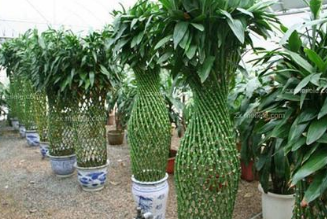
What to do when soil-grown lucky bamboo leaves turn yellow?
First, overwatering
Overwatering lucky bamboo is one of the most common causes. Common symptoms include: young leaves turning dull yellow and losing their luster, while old leaves show no obvious change, and new shoots shrivel and stop growing. In this case, just take the plant out of the pot, let it dry in a cool place, and then put it back in the pot.
Second, underwatering
The yellowing caused by underwatering lucky bamboo is completely different from the yellowing caused by lack of water. Yellowing due to water shortage mainly shows as withered leaf tips or edges, but new leaves grow normally. In this case, you only need to water directly, but make sure to water thoroughly.
Third, strong sun exposure
Lucky bamboo is a shade-loving plant. If strong light shines directly on it, it can also cause yellowing, specifically shown by withered leaf tips or edges. At this time, just move it to a shaded place.
Fourth, lack of light
Plant growth cannot be separated from light. If lucky bamboo is placed in a concealed place for a long time, the leaves cannot get enough sunlight, cannot form chlorophyll, and will turn yellow and then fall off. At this time, just place it in the sunlight.
Fifth, overfertilizing
This is a very common cause. Overfertilizing can also easily cause yellowing of flowers and plants. It mainly shows as dry brown tips on new leaves, and the leaf surface generally appears thick and lusterless, with an uneven, unrelaxed texture, while old leaves turn scorched yellow and fall off. At this time, fertilization should be stopped immediately, and the plant should be rinsed with clean water.
Sixth, insufficient fertilizer
Insufficient fertilizer leads to inadequate nutrients, so insufficient fertilizer can also cause yellow leaves. It mainly shows as young leaves fading in color, appearing yellow or pale green rather than green; old leaves generally show no major change at this time. Then you should check the potting soil. If there is dry, compacted soil, you need to change the soil. When fertilizing, pay attention to applying thin fertilizer frequently and watering with some alum water at the right time. One thing here requires special attention: another important cause of yellow leaves is iron deficiency. At this time, you can put some ferrous sulfate in water and pour it into the soil. Some people also find a few rusty iron nails, put them in water for a few days, and then use it. This method is actually also feasible.
Seventh, being adjacent to televisions and other appliances
If lucky bamboo is placed close to televisions, air conditioners and other electrical appliances, it will easily cause yellowing of leaf edges and so on. At this time, you only need to move it away and place it in a suitable place, and it can grow very well.
Eighth, improper shaping
Lucky bamboo tends to grow in clusters, so when changing pots and adding soil, pay attention to pruning old and damaged fibrous roots and thinning out excess stems and leaves, so as to avoid excessive consumption of nutrients and to protect the roots and leaves. If attention is not paid to shaping, it can also easily cause yellow leaves.
What to do when hydroponic lucky bamboo leaves turn yellow?
Compared with soil growing, most of the reasons for hydroponics are the same, with a few differences, mainly as follows:
First, water quality. For water growing, water is the foundation of lucky bamboo growth, and naturally it is also an important aspect causing yellow leaves. At this time, mainly check whether its root system is fresh. If the root system has rotted, cut off the rotted roots and replace the water with cooled boiled water.
Second, lighting. This also includes two aspects:
a. Too little light. It cannot get enough sunlight and cannot form chlorophyll, which naturally also causes yellow leaves.
b. Too much light. Lucky bamboo is not suitable for strong light exposure. Strong light exposure will cause yellow leaves.
For the above two situations, you should first cut off the yellow leaves and also cut off the rotted roots, then place it in an environment with suitable temperature and diffused light, and it can grow well again.
Third, fertilizing. This also mainly includes two aspects:
a. Overfertilizing. Overfertilizing can also easily cause yellowing of flowers and plants. It mainly shows as dry brown tips on new leaves, and the leaf surface generally appears thick and lusterless, with an uneven, unrelaxed texture, while old leaves turn scorched yellow and fall off. At this time, the water should be replaced.
b. Insufficient fertilizer. It mainly shows as young leaves fading in color, appearing yellow or pale green rather than green; old leaves generally show no major change at this time. Then you only need to add an appropriate amount of fertilizer.
Fourth, being adjacent to televisions, refrigerators and other appliances
As with soil growing, at this time you only need to move it away and place it in a suitable place, and it can grow very well.
Fifth, improper shaping
Lucky bamboo tends to grow in clusters, so when changing pots and adding soil, pay attention to pruning old and damaged fibrous roots and thinning out excess stems and leaves, so as to avoid excessive consumption of nutrients and to protect the roots and leaves. If attention is not paid to shaping, it can also easily cause yellow leaves.
These are the reasons for yellowing in soil-grown and water-grown lucky bamboo. Now most people in cities prefer hydroponics. Let's look at the precautions for hydroponic lucky bamboo:
One, sun shading. Building a shade shed means covering with a shade net. Around the rice field, use wooden posts or cement stakes to build a frame. The wooden posts should be 2.4 m high and buried 0.4 m deep. If calculated at four wooden posts (or cement posts) per 20 sq m, about 30-35 wooden posts are needed per mu. Tie the top of the shed tightly with iron wire or nylon rope. Then, at 10 bundles of plastic shade net per mu (width 1.5 m/100 m, 55 yuan/bundle), cover it for shade, and tie it securely all around with nylon rope.
Two, reasonable dense planting. When preparing the land, the bed surface height should be 15-20 cm, the bed surface width 120-150 cm, and the bed ditch 25 cm. Apply 30 loads of fully decomposed farmyard manure per mu, level it thoroughly, then insert the seedlings. The planting spacing is 8×5 cun or 6×5 cun, and more than 15,000-20,000 plants can be planted per mu. Generally, do not plant too densely. The planting depth is best at 2.5-3.5 cm (that is, for seedlings with 4 nodes, insert 2 nodes), maintaining appropriate space for ventilation and light transmission.
Three, scientific fertilization. Lucky bamboo can grow on sloping land and semi-dry paddy fields. To accelerate its growth, shorten the production cycle, and improve economic benefits:
1. Apply sufficient base fertilizer: when inserting and planting, apply Jinzhi Yuye as base fertilizer (rich in nitrogen, phosphorus, potassium, calcium, magnesium, iron, zinc, copper, etc.), then insert and plant.
2. Apply seedling fertilizer appropriately: 20 days after planting, the plant begins to send out new roots. You can apply one round of manure water at 30-40 loads/mu. After 30-40 days, depending on the growth of the seedlings, apply one round of seedling-promoting fertilizer, generally mainly compound fertilizer, at 15-20 kg of compound fertilizer per mu. After application, cultivate the soil. When the plant grows to 35-45 cm tall, its nutrient needs also increase, and this is the stage when the plant begins vigorous growth. Therefore, topdressing at this stage should be heavy: 25-30 kg of compound fertilizer per mu and 10-15 kg of urea are appropriate. At the same time, foliar fertilizer can be sprayed in combination, using plant growth regulators such as Xinzhi Su or Pen Shi Bao, to promote balanced growth, lush leaves and thick stems, and improve stress resistance.
These are the lucky bamboo cultivation methods. The precautions have also been mentioned. Pay attention to pest prevention, watering should be appropriate, otherwise the roots are easily damaged. In summer, water more to avoid drying out. Growing lucky bamboo requires patience, and you need to observe the changes in the lucky bamboo so that you can grow it well.
What to do when hydroponic lucky bamboo leaves turn yellow: hydroponic lucky bamboo cultivation methods
Because lucky bamboo has a very good symbolic meaning and can purify the air when placed indoors, many people grow it at home. Lucky bamboo is divided into soil culture and hydroponics. When growing hydroponic lucky bamboo, yellow leaves easily appear. How should we grow it well? Next, let's talk about what to do when hydroponic lucky bamboo leaves turn yellow, and hydroponic lucky bamboo cultivation methods.
What to do when hydroponic lucky bamboo leaves turn yellow
First, newly bought lucky bamboo leaves turn yellow.
This is mainly because the lucky bamboo has not yet grown roots. Without roots, nutrients naturally cannot keep up, so it is bound to turn yellow, and adding nutrient solution is also useless. Patiently wait about 1 month. Touch the stem. As long as the stem is still hard, just cut off the yellow leaves and soak it in a clear glass bottle, and it will soon grow leaves.
Second, the growing season is not right.
The most suitable time for water culture in a bottle is April-September, because during this period it is easiest to root and survive. Lucky bamboo is relatively cold-tolerant. Its suitable growing temperature is 20-28°C, and it can tolerate a low temperature of 2-3°C. If the temperature is too low, find a way to raise it.
Third, poor water quality.
Deteriorated water quality or growing it in tap water can both cause yellow leaves. It is best to grow lucky bamboo with cooled boiled water or purified water.
Fourth, too little light.
Lucky bamboo cannot get enough sunlight, photosynthesis cannot proceed, and chlorophyll cannot form, causing yellow leaves. Move the lucky bamboo to a balcony or another place with better light, but try to avoid direct sunlight.
Fifth, too much light.
If lucky bamboo is placed under strong light for a long time, strong light exposure causes yellow leaves. Move the lucky bamboo to a balcony or another place with better light, but try to avoid direct sunlight. In summer, it can be moved indoors, and ordinary light is enough for healthy growth.
Sixth, overfertilizing.
It mainly shows as dry brown tips on new leaves, and the leaf surface appears thick and lusterless, with an uneven, unrelaxed texture, while old leaves turn scorched yellow and fall off. Stop fertilizing immediately, rinse the roots with clean water, and change the water.
Seventh, insufficient fertilizer.
This causes insufficient nutrients. It mainly shows as young leaves fading in color, appearing yellow or pale green rather than green; old leaves change little. Apply thin fertilizer frequently, and add monopotassium phosphate after changing the water every 2 weeks.
Eighth, lack of iron.
Add a small amount of ferrous sulfate, dissolved in water, into the growing bottle (be sure to use only a small amount). Or find a few rusty iron nails, put them in water for a few days, and then add the water to the growing bottle.
Ninth, low temperature.
In the cold winter, if the indoor temperature is low, lucky bamboo leaves will also turn yellow and fall off. Move it to a warmer room.
Tenth, too close to electrical appliances.
Being too close to televisions, air conditioners, heaters or other electrical appliances shows as yellowing of leaf edges and so on. Move it away, a little farther from televisions, air conditioners, heaters or other electrical appliances.
Hydroponic lucky bamboo cultivation methods
1. Pay attention to pruning the roots when first inserting. When first inserting, remove the leaves at the base so as not to affect bamboo growth. The specific amount depends on the size of your vase; just remove the leaves below the mouth of the bottle. In addition, use scissors or a knife to cut off a small part of the root at an angle, so that the bamboo can better absorb water. Make the cut as smooth as possible.
2. Water volume control and choice of water. Water reaching one third of the vase is enough; do not exceed two thirds. Before rooting, change the water once every 3 days. After rooting, do not change the water again; just add water directly to the vase. When the weather is dry and stuffy, spray water on the leaf surface. It is best to use well water or purified water. If using tap water, it is best to store it for one day before use.
3. Maintain indoor temperature. Lucky bamboo is suitable for growing between 16°C and 26°C. Cold easily causes the plant to die. In winter, do not place it on balconies, beside windows, or in other colder places, and never let the water freeze. Take anti-freezing measures when necessary.
4. Ensure sufficient light. Hydroponic lucky bamboo is generally placed indoors. Although its demand for sunlight is not high, if it cannot receive any sunlight at all, the leaves will also wither and yellow and grow poorly. So place it in a bright, ventilated environment as much as possible so it can fully receive light.
5. Fertilize once a month. For hydroponically grown plants, we generally ignore fertilizing, but actually that is not the case. Fertilizing can make the plant grow better. Hydroponic lucky bamboo only needs fertilizing once a month. You can go to a flower market to choose professional fertilizer, or add a few drops of dissolved vitamin C1 when adding water.
The above are the reasons and solutions for yellow leaves in hydroponic lucky bamboo, as well as hydroponic lucky bamboo cultivation methods. We hope this can help everyone. For more home knowledge, please follow.
What to do when water-grown lucky bamboo leaves turn yellow: what to do when water-grown lucky bamboo leaves turn yellow
●▂●More wonderful content ?Wintersweet
?What is wall clothing
?What to do when pothos leaves turn yellow
?What is the flower language of cornflower
If you want to learn more information, please click to enter"""Soft furnishing design
......................................................................................................
Lucky bamboo symbolizes great fortune and prosperity. People take the auspicious meaning of lucky bamboo and plant it at home. There are 4 common lucky bamboo varieties, namely golden-heart lucky bamboo, silver-heart lucky bamboo, silver-edge lucky bamboo, and golden-edge lucky bamboo. Usually lucky bamboo has two cultivation methods, soil culture and hydroponics. Hydroponics has a more beautiful appearance and is more convenient to cultivate, so many households choose hydroponics. During the growing process, the problem easily encountered is what to do when water-grown lucky bamboo leaves turn yellow.
There are many situations in which lucky bamboo leaves turn yellow, but they are nothing more than the three aspects of water, light, and fertilization. Since the question is how to solve yellow leaves in water-grown lucky bamboo, naturally first consider whether the water amount is suitable. Too much or too little water can cause yellow leaves. Overwatering causes new leaves to turn dull yellow and lusterless, old leaves remain normal with no change, branches and stems are yellow-green, and new leaves and tender buds grow poorly. This is caused by overwatering. At this time, take the lucky bamboo out and place it in a ventilated, cool place. After it has dried appropriately, put it back in the pot, and note that the amount of water in the pot should not be too much.
Yellowing caused by lack of water is different from yellowing caused by overwatering. Lack of water causes old leaves to wither and yellow from bottom to top and then fall off, but the growth of new leaves is less affected and they can almost grow normally. At this time, pay attention to watering promptly, and make sure to water enough and water thoroughly. If it is not a water amount problem, then you need to consider whether it is a light problem. Both sun exposure and insufficient light can also cause yellow leaves.
Lucky bamboo is a shade-loving plant. Direct strong sunlight easily causes its leaf tips and leaf edges to wither and turn yellow. When yellow spots appear on the sun-facing part of the leaves, it should be moved promptly to a cool, ventilated place. That lucky bamboo likes shade does not mean it does not need sunlight. Being in a cool, shaded environment for a long time and not getting enough light can also cause yellow leaves and lead to leaf fall. At this time, just move it promptly to a place with suitable light. The problems that cause yellow leaves in water-grown lucky bamboo are diverse. For example, overfertilizing or underfertilizing can also cause yellow leaves.
Summary:When encountering the problem of what to do when water-grown lucky bamboo leaves turn yellow, you cannot analyze only one cause unilaterally. You should analyze from multiple angles. Sometimes an incorrect placement location affects both light and water evaporation, thereby affecting the water amount. Furthermore, you should judge the specific cause according to the type of yellow color and the yellowing part of the leaves, and do not handle it arbitrarily, otherwise the problem of what to do when water-grown lucky bamboo leaves turn yellow cannot be solved at all.
▓ Recommended reading
?Growing sunflowers ?Couple accessories ?Types of combs ?Meaning of four-leaf clover ?Green Light Forest cross-stitch
?Aloe for acne ?White balsam ?Aquarium fish tank ?Activated carbon crafts ?How to grow Phalaenopsis orchids