How to grow Alocasia macrorrhizos (giant taro) in water and what to watch out for, and how to deal with root rot?
Alocasia macrorrhizos is loved by many people, and it can be grown either in water or in soil. When grown in water, the leaves often lose their green color and even turn a bit yellow - why is that? The worst part is when the roots rot, which makes worms grow in the water. Let's take a look at how to grow Alocasia macrorrhizos and how to deal with root rot during water culture:
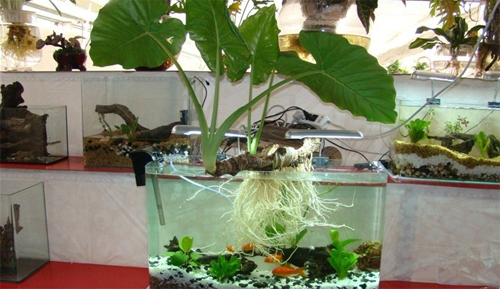
Water culture method for Alocasia macrorrhizos:
1. Choose a well-grown Alocasia macrorrhizos free of pests and diseases as the mother plant material for water culture. Clean off the old and dead leaves on the stem, keeping just two or three new leaves; if none of the leaves look good, you can also keep only the topmost petiole. Loosen the potting soil, take the plant out of the pot, then rinse the whole plant clean. It must not carry any soil, because for one thing it easily pollutes the water, and for another it carries pathogens that easily cause root rot.
2. After rinsing the mother plant clean, cut off all the soil-grown root systems from the base, then carefully check the stem for rot and pest damage; you can use a small knife to dig out the softened or rotted parts of the stem until you reach the woody part, removing the rotted material or pests. After pruning, secure the plant according to its size and shape with a net pot of the appropriate size. Soak the whole net pot in a 3%-5% thiophanate-methyl solution or carbendazim solution to disinfect for 5-10 minutes; then put it in a shady place to dry.
3. Plant the dried mother plant together with the net pot in a perlite rooting bed. By controlling the moisture, nutrients, temperature and light of the bed, initial roots (the original water roots) will grow in about 10-15 days.
4. When the initial roots have grown to 2-3 cm long, they can be moved to an induction pool for inducing water roots. At this stage, adjusting the dissolved oxygen content and EC value in the water is very important and determines the success of the induction, and the nutrient solution ratio also needs to be adjusted appropriately. Once the water roots have grown to a certain number and length, which shows the plant has adapted to growing in water, it can be put in a bottle for still water culture.
Nutrient solution composition table for water-cultured Alocasia macrorrhizos: (content in mg/L)
1. Macronutrients: calcium nitrate 495, potassium nitrate 202, ammonium nitrate 40, magnesium sulfate 245, monopotassium phosphate 136, calcium sulfate 86,
2. Micronutrients: boric acid 3, manganese sulfate 1.5, zinc sulfate 0.2, copper sulfate 0.1, ammonium molybdate 0.03, chelated iron 20
Care and management of water-cultured Alocasia macrorrhizos:
1. Water use and water changes:
Water use: choose unpolluted water with a pH value of 6-6.5. If using tap water, let it sit for more than 1 day before use so the chlorine in the water can evaporate.
Water changes: in summer, change the water once a week; in spring and autumn, during the period of vigorous growth, although more oxygen is consumed, the dissolved oxygen content in the water is relatively more plentiful than in summer, so in these seasons you can change the water once every 10-12 days; in winter you can change the water once every 20 days. If conditions allow, appropriately shortening the interval between water changes is beneficial to the plant's growth.
Water change method: when changing the water, gently rinse the plant's roots and remove the mucus from the roots, and at the same time cut off the aged roots and rotted roots, and remove the yellow and withered leaves that appear on the plant. When changing the water, clean the algae and scale off the container. Then add fresh water to the container, but it is best not to pour it all in at once; it is better to stir it for a while. When changing the water and topping it up as usual, do not pour too much water into the water culture container; keep the water level 2-5 cm below the base of the plant's stem.
2. Keep the air in the growing environment circulating: for rooms with water-cultured flowers, open the doors and windows often to keep the indoor air fresh, so as to increase the dissolved oxygen content in the water in the water culture container, which is good for the healthy growth of the water-cultured plant.
3. Foliar feeding: choose easily soluble fertilizers such as urea and monopotassium phosphate for foliar feeding. The suitable concentrations are: urea 0.1%, monopotassium phosphate 0.15%, ferrous sulfate 0.1%.
4. Pruning the root system: when the roots grow too long and too dense, you need to appropriately cut off the old roots and shorten the long roots, so as to promote the sprouting of new roots and enhance root vitality. In addition, if the plant's roots rot, promptly cut off the rotted roots clean, and change the water once every 1-2 days, until the plant sprouts new roots and only then return to normal care.
How to deal with root rot in water-cultured Alocasia macrorrhizos:
1. At the beginning of water culture, soak the plant in a 1% potassium permanganate aqueous solution for 1 hour; this can disinfect and sterilize, and promote new root growth;
2. In daily care, besides changing the water, you can add 0.2% potassium permanganate solution at 1/5 of the water volume in the container. This both prevents the growth of algae in the water and has a sterilizing and root-rot-preventing effect, while also providing the plant with manganese and potassium nutrients to promote healthy growth.
Alocasia macrorrhizos itself is very suitable for growing in the south. The north is very cold, so how should Alocasia macrorrhizos be grown in winter?
Do not add nutrient solution at first; wait until it has been grown for some time and has adapted to the water culture environment before adding it. Do not let the water cover all the roots; just up to half of the roots is enough, and change the water every three or four days. How to grow it also depends on the temperature in your city. If the temperature is low, change the water after more days. Specifically:
1. Plant: Alocasia macrorrhizos
2. Medium: white pebbles, vermiculite, perlite
3. Method:
a. First wash the pebbles clean to remove the initial impurities (the purpose is for good looks and to keep the bottle stable)
b. Mix vermiculite and perlite at a ratio of 2:1, then soak and wash them
Growing flowers and plants requires patience, and also not being too attached to them, looking at them every day and caring for them every day; just tending to them at intervals is enough, no need to tend to them every day.
How to grow Alocasia macrorrhizos in water and what to watch out for
Writing a good article on how to grow Alocasia macrorrhizos in water and what to watch out for is definitely not an easy task, because water culture of Alocasia macrorrhizos looks simple but actually requires growers to master many little tricks.
There are two situations with water-cultured Alocasia macrorrhizos: one is a water-cultured potted plant bought directly, and the other is an originally soil-grown Alocasia macrorrhizos that the grower wants to convert to water culture. Since the growing method and precautions are the same, there are only some differences in the early stage, so growers can just skip ahead as needed.
Note: the sap in the rhizome of Alocasia macrorrhizos is toxic, so when handling the rhizome, it is best to wear gloves or take other protective measures.
When converting from soil culture to water culture, first carefully take the plant out of the pot, then gently remove the soil. You can find a basin and soak the Alocasia macrorrhizos roots in it, which makes the soil easier to clean off. During the process, be careful not to damage the roots, and at the same time cut off rotted roots and already aged roots. If the rhizome has wounds, first put it in a shady place to dry for 1-3 days, and after the wounds are dry, soak it in water; after 2-3 days new roots can be seen emerging.
Water culture of Alocasia macrorrhizos does not mean putting the whole rhizome into the water; rather, part of the rhizome should be exposed, so that it can be grown for a long time. In the early stage of water culture, change the water once every 2-3 days, and the water depth should preferably submerge 2/3 of the root system (you can even leave the stem part entirely exposed to the air, with only the roots in the water); after 1 week new roots will grow.
Precautions:
1. Because the stem tissue of Alocasia macrorrhizos is relatively loose, poor water quality easily leads to contamination and causes root rot and stem rot. Therefore, keep the water clean, and at the same time, when changing the water, also wash the mucus off the tubers and roots, and cut off rotted roots.
2. Do not expose it to direct sunlight; it is best to grow it in diffused light. Direct sunlight will, for one thing, scorch the leaves, and for another, water-cultured plants are not suited to direct sunlight, otherwise green algae will grow on the roots.
3. Do not fertilize casually. Many growers wonder whether a water-cultured Alocasia macrorrhizos will lack nutrients if it is not given some nutrient solution. The amount must be controlled, and as far as the editor knows, many liquid fertilizers are fake (be sure to buy fertilizer from legitimate manufacturers).
To sum up, water culture of Alocasia macrorrhizos is relatively easy, but growers should pay attention to the cleanliness of the rhizome and also to the cleanliness of the water, otherwise it will cause root rot.
How to grow Alocasia macrorrhizos in water; what to do if water-cultured Alocasia macrorrhizos has root rot
Nowadays many people like to choose plants when decorating their homes, and more and more people choose water-cultured plants. Water-cultured plants are not only relatively simple to grow but also more distinctive. Do you understand water-cultured plants and know how to grow water-cultured Alocasia macrorrhizos? Let's take a look together at how to grow water-cultured Alocasia macrorrhizos!
Growing environment for water-cultured Alocasia macrorrhizos
1. Temperature: Alocasia macrorrhizos is an understory plant of tropical rainforests, so its growth requires high humidity, and diffused light is best. It is a shade-tolerant plant that likes a semi-shady environment, and should be placed in an environment that is both shaded and ventilated. In summer when temperatures are high, as long as the soil is kept moist, water is sprayed frequently, and it is shaded, it can still grow normally. Indoor room temperature in winter must not be too low.
2. Humidity: water-cultured Alocasia macrorrhizos especially likes moisture. During the growing season, not only must the potting soil be moist, but the air humidity must also be no lower than 60%. In summer when temperatures are high, spraying water should be increased to create a relatively cool and humid environment for it. If placed in an indoor air-conditioned hall, both the potting soil must be kept moist and the leaves must be sprayed with water from time to time.
3. Fertilizer: it relatively likes fertilizer. From March to October, apply liquid fertilizer once every half month, and the proportion of nitrogen can be appropriately increased. If a little ferrous sulfate can be added, so much the better; then the leaves will grow as big as lotus leaves and be smooth and lovely. Fertilizing should stop when the temperature is below 15°C.
How to grow water-cultured Alocasia macrorrhizos
1. To convert a soil-grown plant into a water-cultured plant, wash the roots carefully and try not to damage the tubers and roots, and at the same time cut off rotted roots and already aged roots. If the tuber has no roots, first put it in a shady place to dry for 2-3 days, and after the wounds are dry, soak it in water; after 2-3 days new roots can be seen emerging.
2. Note that in the early stage of water culture, change the water once every 2-3 days, and the water depth should preferably submerge 2/3 of the root system. After a week new roots will grow, and after 3 weeks, once the water-cultured plant has adapted to the water culture environment, switch to nutrient solution culture. After that, change the nutrient solution about once a month.
3. Because the stem tissue of Alocasia macrorrhizos is relatively loose, poor water quality easily leads to contamination and causes root rot and stem rot. Therefore, keep the water in the bottle clean, and at the same time, when changing the water or nutrient solution, also wash the mucus off the tubers and roots, and cut off rotted roots.
4. In hot summer, increase the frequency of water changes, and the air humidity is required to be no lower than 60%. Spray water frequently to create a relatively cool and humid environment for it. In winter, to keep its leaves dark green, generally spray warm water once a week.
5. It is enough for the water level to submerge 2/3 of the root system; often clean the inner wall of the container to prevent the growth of algae.
6. The sap in the stems and leaves of Alocasia macrorrhizos is toxic, so pay attention during care and management: it must not be put in the mouth, and contact with the skin will cause itching and redness and swelling. Rinse promptly with water, or wear plastic gloves when handling it to be safer.
How does water-cultured Alocasia macrorrhizos get through the winter?
Alocasia macrorrhizos is originally a southern plant. Generally, as long as the winter temperature in the south is not below 5°C, Alocasia macrorrhizos will be fine. If the weather is too cold, it can be placed in a warm place indoors. However, water-cultured flowers generally do not have very good resistance. If you want Alocasia macrorrhizos to get through the winter without worry, it is best to plant it in soil.
What to do if water-cultured Alocasia macrorrhizos has root rot?
With water-cultured Alocasia macrorrhizos, do not put the rhizome in the water; instead put the roots in the water. In addition, some roots should be left so they can come into contact with the air, which helps the roots breathe. The rhizome of Alocasia macrorrhizos is outside, and half of the roots it grows are in the water while half are in the air, which is good for root respiration.
For water-grown Alocasia macrorrhizos that has already rotted at the roots, growers should cut off the rotted parts, then if conditions permit, disinfect them with something like potassium permanganate; plant ash also works. After disinfecting, dry the wounds in a cool place, then plant in soil, and after the plant returns to normal (has rooted), grow it in water again. If it is directly grown in water after cutting the roots, it is still prone to root rot. Growers can weigh whether to plant in soil first and then grow in water, or to continue growing it in water.