Cymbidium sinense (Chinese Cymbidium) Home Cultivation Methods, Precautions and Price Guide
Cymbidium sinense is one of the easier plants to grow at home, but do you know whether it prefers sunlight or cool, damp shade? How do you best grow Cymbidium sinense at home? What precautions should you take, and is it expensive - how much does one plant cost? Let's take a look at this plant together:
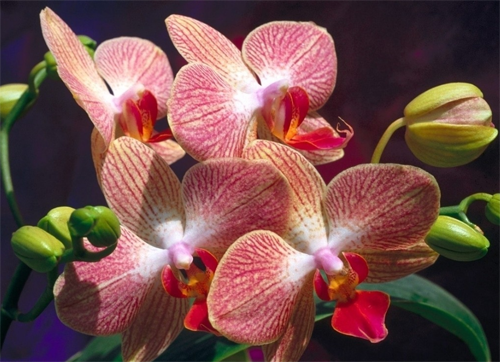
Cultivation Methods for Cymbidium sinense:
1. Growth habits: Cymbidium sinense prefers shade and dislikes strong light; it likes warmth and dislikes severe cold; it likes moisture and dislikes dryness; it likes fertilizer and dislikes turbidity.
2. Soil: Cymbidium sinense prefers a slightly moist soil environment and should not be subjected to drought. The water used should preferably be soft water.
3. Fertilizing: Cymbidium sinense does not need much fertilizer; the plant can grow well even without base fertilizer. Apply dilute liquid fertilizer once each in spring and autumn every year, and stop topdressing during the dormant period.
4. Light: In summer, Cymbidium sinense should be shaded, but the plant should still receive some appropriate direct sunlight; otherwise it will grow poorly and develop badly. However, make sure the plant receives sunlight before 10 a.m. each day and avoid direct sunlight at noon and in the afternoon, as this is not good for the plant's normal growth.
5. Environment: Cymbidium sinense likes an environment with circulating air. When ventilating under conditions of relatively low humidity, it is best to spray water at the same time; this helps increase air humidity and prevents the leaf tips from drying.
6. Temperature: Cymbidium sinense likes warmth, with the best temperature range being 16°C to 28°C.
7. Pest and disease control: When exposed to too much sunlight in summer, the plant is prone to sunscald. Its symptoms are yellow spots appearing on the leaf surface, which then gradually turn black; in severe cases the entire leaf dries up and dies. The control method is to avoid prolonged direct sunlight and to provide timely shading. In balcony cultivation, Cymbidium sinense is prone to root rot and is often attacked by pests such as scale insects.
Precautions for Growing Cymbidium sinense
1. Placement location:
Cymbidium sinense grows best on east-facing and west-facing balconies; on south-facing balconies, avoid places with overly strong sunlight. Since it is moderate in height, it can be placed on balconies of various sizes. During its vigorous growth stage, place the plant in a spot that receives at least 1 to 2 hours of diffused sunlight per day. In summer, keep the environment ventilated. Slightly low temperatures in winter do no harm.
2. Propagation method
Division propagation is the main method, usually carried out in March each spring. Since the seedlings are directly planted in place, the propagation medium should be acidic loam rich in humus, and the pot used is the same pot used for final planting. Use large plants that have already been grown for 3 to 5 years as propagation material. Do not water for several days before dividing, because when the roots and leaves of the plant are well supplied with water they are more brittle, while when water is lacking they wilt and soften; this makes them less easily damaged and easier to handle. The sowing method can also be used for raising seedlings.
3. Planting years
Cymbidium sinense is a perennial plant; it grows very slowly and the plant does not easily age. Its best ornamental period can last 5 to 7 years or even longer after the seedlings are planted in place. Without repotting, continuous cultivation should not exceed 2 years.
The flowers and leaves of Chinese Cymbidium sinense are elegant in form, with a refined flower posture and a delicate, far-reaching fragrance. It enjoys the reputation of "the fragrance of kings" and "the gentleman among flowers." It can be said to have a uniquely charming appeal, and it is only natural that it makes you want to try growing it yourself.
Cymbidium sinense prices:
Flowering plants generally cost around 50 yuan; if the flower color and flower form are good, and the overall plant proportions are also good, the price can reach 300-400 yuan;
For ordinary Cymbidium sinense, counted per shoot, it may cost about 5 yuan each. A pot generally has 4 to 5 shoots, or more, so that adds up to several dozen yuan. In addition, the variety is also very important, as are growth vigor, flowering condition, and so on; each specific case must be analyzed individually.
Cymbidium sinense flower language:
The flower language of Cymbidium sinense is gentleness and quietness, eternal youth, symbolizing indifference to fame and wealth and refined elegance.
Watering method for Cymbidium sinense:
Water can enter the center of the buds in a clean water supply. In a dry environment, this can supplement the water lost from the leaves under high temperature and dryness, helping leaf growth; however, in a humid environment, water entering the bud center tends to stay wet for a long time without drying and can breed disease, so ventilation should be strengthened. Therefore, environments differ, and management methods differ accordingly.
Although Cymbidium sinense is easy to grow, there are still many precautions to note. If it is not grown well, the leaves will turn yellow and look unattractive, and all day long it will look as if it is about to die. If the leaves of Cymbidium sinense turn yellow and withered, you need to consider watering and sun exposure.
Home Cultivation Methods and Precautions for Cymbidium sinense
Orchids have a long history of cultivation in China. Since ancient times, those who grew orchids, praised orchids, painted orchids, and wrote about orchids have come and gone, leaving behind a large number of precious varieties and calligraphic treasures. Today, there are also very many orchid varieties grown by people, such as spider plant, clivia, Cymbidium sinense, and so on. What the editor wants to talk about here is the cultivation method for Cymbidium sinense.What is Cymbidium sinense:
Cymbidium sinense is also known as Baosui Lan (New Year orchid), and is native to China, Vietnam and Myanmar. The leaves are clustered on oval pseudobulbs, and the leaf blades are sword-shaped. Dark green, with gloss. The flower stems usually rise above the leaves and in the wild can reach 80 to 100 cm, with 7 to 17 flowers, small bracts, nectar glands at the base, lanceolate sepals, light brown, with 5 purple-brown veins; the petals are short and broad, the lip is not obviously three-lobed, and the tip droops and curls backward. The flowering period is from January to March, with very many varieties, and a few bloom in autumn. In the Chinese orchid family, Cymbidium sinense, with its own unique appearance and refreshing fragrance, has enjoyed the favor of countless orchid growers and orchid lovers for generations. Because Cymbidium sinense reaches its full flowering period around the Spring Festival, it carries an auspicious meaning in our traditional culture.Cymbidium sinense
Cultivation Methods for Cymbidium sinense:
1. Growing medium preparation:
The soil requirement for Cymbidium sinense is slightly acidic soil rich in humus. You can choose a growing medium that is loose, breathable, drains well, retains fertilizer, and has a pH value of 5.5 to 6.5, such as: leaf mold from the forest, coarse river sand, sawdust, charcoal powder, rotten tree bark, crushed brick pieces, rice husks, sphagnum moss, spent edible mushroom substrate, etc.
2. Orchid pot selection:
Common orchid pots include clay pots, ceramic pots, glazed pots, and plastic pots, which are suitable for the ground as well as balconies, rooftops and indoors. Home orchid growing is mainly ornamental, so it is best to use purple clay pots or plastic pots. Special purple clay pots for orchids are mostly tall-stemmed and trumpet-shaped, with many holes along the bottom edge, draining well and breathing well, and with distinctive shapes. Plastic pots are deep, have many holes, are lightweight, neat, inexpensive, easy to move, and reduce the load on floors.
3. Light:
Orchids like a semi-shaded environment and dislike dryness. Winter sunlight is weak and spring sunlight is soft, which is suitable for orchid growth, so full sunlight can be accepted. From early summer to mid-autumn, the light duration is long and the light intensity is strong, which is unfavorable for orchid growth and requires shading. It is best to place them in tree shade or under eaves, or in places where sunlight can be seen in the morning and evening but cannot be seen after 9 a.m., or where there is skylight but no direct sunlight.Cymbidium sinense
4. Temperature:
For orchids to root, sprout and grow normally, the suitable temperature is 20°C to 28°C. Below 20°C growth is slow; above 25°C growth is rapid; at 30°C they are forced into dormancy. A daytime temperature of 10°C to 16°C and a nighttime temperature of 5°C to 10°C constitute the winter dormancy period. Cymbidium sinense can tolerate a low-temperature limit of minus 2°C. Home-grown orchids are mostly overwintered indoors, and no heating measures are needed in winter or spring for them to safely pass through the severe cold period. If overwintering in a courtyard or on the leeward side of a balcony, a temporary greenhouse can be built with plastic film.
5. Humidity:
The air humidity needed for growing orchids is 60%-80% during the growth period, and no less than 50% during winter dormancy; different orchid species also have different requirements for air humidity. In spring, temperatures are low and water evaporates slowly, so spraying is generally used, which can both increase the air humidity indoors or in the orchid shed and wash the orchid leaves, making them fresh and green.
6. Fertilizing:
Fertilizing Cymbidium sinense should be "light rather than concentrated," generally starting in late spring and stopping in late autumn. When fertilizing, the temperature should preferably be 18°C to 25°C, and fertilizing is not suitable on cloudy or rainy days. As for fertilizer types, either organic or inorganic fertilizer is acceptable. During the growing season, fertilize once a week. In autumn and winter, Cymbidium sinense grows slowly, so fertilizer should be reduced to once every 20 days. After fertilizing, spray a small amount of clean water to prevent the fertilizer liquid from staining the leaves. Fertilizing must be done on a clear evening; fertilizing on cloudy days risks root rot.Cymbidium sinense
7. Pest and disease control:
When exposed to too much sunlight in summer, the plant is prone to sunscald. Its symptoms are yellow spots appearing on the leaf surface, which then gradually turn black; in severe cases the entire leaf dries up and dies. The control method is to avoid prolonged direct sunlight and to provide timely shading. In balcony cultivation, Cymbidium sinense is prone to root rot and is often attacked by pests such as scale insects and ants.
Propagation Methods for Cymbidium sinense:
Division propagation is the main method, usually carried out in March each spring. Since the seedlings are directly planted in place, the propagation medium should be acidic loam rich in humus, and the pot used is the same pot used for final planting. Use large plants that have already been grown for 3 to 5 years as propagation material. Do not water for several days before dividing, because when the roots and leaves of the plant are well supplied with water they are more brittle, while when water is lacking they wilt and soften; this makes them less easily damaged and easier to handle. The sowing method can also be used for raising seedlings.Cymbidium sinense
The above is an introduction to the cultivation methods and precautions for Cymbidium sinense. Through the content above, we hope it will help everyone understand and recognize Cymbidium sinense, and we also hope everyone can grow their own Cymbidium sinense well at home, letting it thrive and add color to our spring.
Home Cultivation Methods for Cymbidium sinense; Cultivation Methods and Precautions for Cymbidium sinense
Orchids have a long history of cultivation in China. Since ancient times, those who grew orchids, praised orchids, painted orchids, and wrote about orchids have come and gone, leaving behind a large number of precious varieties and calligraphic treasures. Today, there are also very many orchid varieties grown by people, such as spider plant, clivia, Cymbidium sinense, and so on. What the editor wants to talk about here is the home cultivation methods for Cymbidium sinense, as well as its cultivation methods and precautions.
What is Cymbidium sinense
Cymbidium sinense is also known as Baosui Lan (New Year orchid), and is native to China, Vietnam and Myanmar. The leaves are clustered on oval pseudobulbs, and the leaf blades are sword-shaped. Dark green, with gloss. The flower stems usually rise above the leaves and in the wild can reach 80 to 100 cm, with 7 to 17 flowers, small bracts, nectar glands at the base, lanceolate sepals, light brown, with 5 purple-brown veins; the petals are short and broad, the lip is not obviously three-lobed, and the tip droops and curls backward. The flowering period is from January to March, with very many varieties, and a few bloom in autumn. In the Chinese orchid family, Cymbidium sinense, with its own unique appearance and refreshing fragrance, has enjoyed the favor of countless orchid growers and orchid lovers for generations. Because Cymbidium sinense reaches its full flowering period around the Spring Festival, it carries an auspicious meaning in our traditional culture.
Propagation Methods for Cymbidium sinense
Division propagation is the main method, usually carried out in March each spring. Since the seedlings are directly planted in place, the propagation medium should be acidic loam rich in humus, and the pot used is the same pot used for final planting. Use large plants that have already been grown for 3 to 5 years as propagation material. Do not water for several days before dividing, because when the roots and leaves of the plant are well supplied with water they are more brittle, while when water is lacking they wilt and soften; this makes them less easily damaged and easier to handle. The sowing method can also be used for raising seedlings.
The above is an introduction to the cultivation methods and precautions for Cymbidium sinense. Through the content above, we hope it will help everyone understand and recognize Cymbidium sinense, and we also hope everyone can grow their own Cymbidium sinense well at home, letting it thrive and add color to our spring.
Home Cultivation Methods for Cymbidium sinense
1. Growing medium preparation:
The soil requirement for Cymbidium sinense is slightly acidic soil rich in humus. You can choose a growing medium that is loose, breathable, drains well, retains fertilizer, and has a pH value of 5.5 to 6.5, such as: leaf mold from the forest, coarse river sand, sawdust, charcoal powder, rotten tree bark, crushed brick pieces, rice husks, sphagnum moss, spent edible mushroom substrate, etc.
2. Orchid pot selection:
Common orchid pots include clay pots, ceramic pots, glazed pots, and plastic pots, which are suitable for the ground as well as balconies, rooftops and indoors. Home orchid growing is mainly ornamental, so it is best to use purple clay pots or plastic pots. Special purple clay pots for orchids are mostly tall-stemmed and trumpet-shaped, with many holes along the bottom edge, draining well and breathing well, and with distinctive shapes. Plastic pots are deep, have many holes, are lightweight, neat, inexpensive, easy to move, and reduce the load on floors.
3. Light:
Orchids like a semi-shaded environment and dislike dryness. Winter sunlight is weak and spring sunlight is soft, which is suitable for orchid growth, so full sunlight can be accepted. From early summer to mid-autumn, the light duration is long and the light intensity is strong, which is unfavorable for orchid growth and requires shading. It is best to place them in tree shade or under eaves, or in places where sunlight can be seen in the morning and evening but cannot be seen after 9 a.m., or where there is skylight but no direct sunlight.
4. Temperature:
For orchids to root, sprout and grow normally, the suitable temperature is 20°C to 28°C. Below 20°C growth is slow; above 25°C growth is rapid; at 30°C they are forced into dormancy. A daytime temperature of 10°C to 16°C and a nighttime temperature of 5°C to 10°C constitute the winter dormancy period. Cymbidium sinense can tolerate a low-temperature limit of minus 2°C. Home-grown orchids are mostly overwintered indoors, and no heating measures are needed in winter or spring for them to safely pass through the severe cold period. If overwintering in a courtyard or on the leeward side of a balcony, a temporary greenhouse can be built with plastic film.
5. Humidity:
The air humidity needed for growing orchids is 60%—80% during the growth period, and no less than 50% during winter dormancy; different orchid species also have different requirements for air humidity. In spring, temperatures are low and water evaporates slowly, so spraying is generally used, which can both increase the air humidity indoors or in the orchid shed and wash the orchid leaves, making them fresh and green.
6. Fertilizing:
Fertilizing Cymbidium sinense should be "light rather than concentrated," generally starting in late spring and stopping in late autumn. When fertilizing, the temperature should preferably be 18°C—25°C, and fertilizing is not suitable on cloudy or rainy days. As for fertilizer types, either organic or inorganic fertilizer is acceptable. During the growing season, fertilize once a week. In autumn and winter, Cymbidium sinense grows slowly, so fertilizer should be reduced to once every 20 days. After fertilizing, spray a small amount of clean water to prevent the fertilizer liquid from staining the leaves. Fertilizing must be done on a clear evening; fertilizing on cloudy days risks root rot.
Disease Control for Cymbidium sinense
1. Mold disease
Also known as white silk disease. It mostly occurs in the moldy rainy season. At first, white mycelium is produced on the soil surface and at the base of the leaves, causing the pseudobulbs to rot.
Control method: Remove the infected soil and spray with a 500-fold dilution of quintozene powder.
2. Black spot disease
Also known as anthracnose. It often occurs in hot, rainy summers. At first, brown spots appear on the leaves, then enlarge and increase in number, becoming black spots. It mostly harms new shoots, and in severe cases the whole plant dies.
Control method: Pull out diseased plants, strengthen ventilation, and reduce humidity; use a 600-fold dilution of 65% zineb powder or an 800-fold dilution of 50% carbendazim for control. Apply once every half month, for 3 consecutive times. When humidity is relatively high and ventilation is poor, scale insect damage often occurs. Scale insects are commonly called orchid lice and are very difficult to eradicate. A 500-800 fold dilution of 20% omethoate emulsifiable concentrate can be used for control.
3. Soft rot
In the cultivation process of Cymbidium sinense, soft rot is relatively common and serious, and in severe cases can even cause total death.
Control method: Strengthen quarantine
To prevent soft rot from being introduced from other places, when transporting orchid seedlings, orchid plants and other propagation materials or finished materials, they must undergo quarantine, and only after obtaining a plant quarantine certificate issued by the quarantine department may they be transported.
Precautions for Growing Cymbidium sinense
1. Choose disease-free propagation material
Since pathogenic bacteria can spread through diseased plants, when propagating orchid plants (mostly by division), healthy disease-free orchid plants must be selected as mother plants. Diseased plants should be destroyed immediately, and tools such as scissors should be disinfected, in order to cultivate disease-free seedlings. Orchid farms with the conditions should preferably establish a system of self-propagation and self-breeding of healthy seedlings, and try as much as possible to avoid buying seedlings from other orchid farms, so as to ensure that the seedlings are disease-free.
2. Seedling disinfection
In order to reduce and avoid the spread of bacteria carried by seedlings, seedlings should be disinfected during division propagation of orchid plants. Disinfection method: When the quantity is small, use a brush dipped in 70% thiophanate-methyl powder to apply directly to the cut. When the quantity is large, spray the cuts and roots with a 500-fold dilution of 70% thiophanate-methyl, let them dry for half a day, and then plant.
3. Use disposable growing medium and pots
The soft rot pathogen of Cymbidium sinense can spread through cultivation substrates and so on. Therefore, when planting Cymbidium sinense, it is advocated to use disposable growing medium, and it is not advocated to use the traditional orchid growing medium of pond mud. Once old growing medium has been used, it should not be used again, nor should old and new medium be mixed for growing orchids, so as to avoid spreading pathogens. In order to prevent pathogens from spreading through pots, choose new pots. If you are unwilling to discard valuable pots, they should also be placed in the sun for a period of exposure, and then disinfected with chemicals before use.
4. Change the division time
Change spring division to autumn division. Traditionally, division is mostly carried out in spring, but because spring has a lot of rain and high humidity, the cuts formed during division are susceptible to infection by pathogens. At the same time, because spring temperatures are relatively low, the cuts heal more slowly, thus increasing the chance of pathogen infection. In autumn, however, the temperature is around 25°C-30°C, the cuts heal faster, and autumn humidity is lower, so there are fewer opportunities for pathogen infection.
5. Strengthen fertilizer and water management
Applying 8 grams per pot of enzyme bacteria in spring can effectively reduce soft rot disease. In winter and spring, 3 grams per pot of Osmocote and Aoluifeng slow-release fertilizer can also be applied, with fertilizer efficiency lasting up to half a year. After division, do not water immediately, so as to avoid infection of the cuts by pathogens; water again 2-3 days after division. In daily water management, keeping the substrate moist is sufficient. Especially during the high-incidence period of soft rot from April to July, do not water heavily. If the weather is dry, you can maintain air humidity by sprinkling water on the leaves, ground and air.
6. Maintain good orchid farm hygiene
In the daily management of the orchid farm, promptly clean up fallen leaves, dead leaves and orchid plant residues, and handle them in a centralized way to reduce pathogen attachment. If diseased plants are found, destroy them immediately to reduce sources of infection, and at the same time disinfect the entire orchid farm. In addition, in spring, 50 kg per mu of slaked lime powder can be applied 1-2 times, directly scattered over the entire orchid garden; lime powder can have a disinfecting effect and will not burn orchid leaves or orchid plants.
Improve environmental conditions: Orchids like cool shade, tolerate drought, are suited to ventilation, and dislike pollution. Diffused light is beneficial to orchid growth, while strong direct light is not beneficial to orchid growth. A closed site and poor ventilation will hinder orchid growth and make them prone to pests and diseases. Therefore, around the orchid shed at a height of 1 m above the ground, ventilation openings should be made, with ventilation methods being natural ventilation and fan-assisted ventilation. In the Guangdong region, from winter and spring to early summer (November to May of the following year), cover with a shade net with a shading rate of 75%-85%; from June to October, double-layer shade nets are needed.
7. Rational use of pesticides
On the basis of fully understanding pesticide performance and methods of use, prescribe the right medicine according to the type of pathogen, and use suitable pesticide types or formulations. Orchid soft rot is mainly prevented. Within 3 months after orchid division, from April to August, and after heavy summer rains, pay special attention to pesticide use, applying once about every 15 days. You can choose agents such as a 300-fold dilution of Dasheng, a 300-fold dilution of Miebingwei, and an 800-fold dilution of 70% thiophanate-methyl, and be careful to alternate their use.