How to Grow and Care for Calla Lilies and Precautions: Can They Be Placed in the Bedroom?
Calla lilies are a plant that everyone quite likes; they look beautiful, and a single flower is like a person's palm, tender and smooth. So what are the methods for growing calla lilies? Can they be placed in the bedroom? Will they affect people's health:
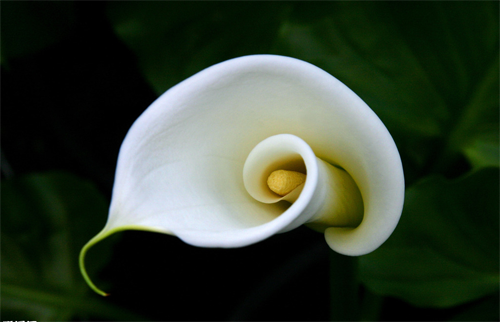
Methods for growing calla lilies:
1. Soil: For growing calla lilies, the potting soil should preferably be a sandy, acidic soil with good aeration and drainage. It is best to place a layer of coarse sand grains at the bottom of the pot to benefit the growth of the calla lily, then mix in one third garden soil and leaf mold, and add a small amount of organic fertilizer. The pot used for planting calla lilies is best a shallow pot.
2. Temperature: Calla lilies like a semi-shaded environment; avoid placing them under strong light. The optimal temperature for calla lily growth is 22-30 degrees. When the temperature falls below 20 degrees, the growth rate of the calla lily will slow down, and it may even stop growing. Calla lilies like a warm, humid environment, so when overwintering, special attention should be paid to keeping the calla lily warm.
3. Watering: Similar to other potted soil plants, watering calla lilies depends on how dry the potting soil is. Before watering, first check the condition of the potting soil. Usually you can spray water on the surface of the potting soil and on the flowers to keep the potting soil moist. During the growth period, calla lilies like sufficient moisture, so water the leaf surfaces and the ground frequently, and pay attention to keeping the leaf surfaces clean.
4. Fertilizing: Phosphorus and potassium fertilizers are suitable fertilizers for calla lilies. Fertile soil is good for the growth of calla lilies, so apply thin fertilizer frequently to ensure the potting soil has enough nutrients. For those who want to save seeds, it is suggested that after the calla lily sets fruit, spray the calla lily with potassium dihydrogen phosphate solution once every 10 days, at a concentration of 0.1% to 0.2%.
5. Light: From the calla lily's own characteristics, during its growth process the calla lily relatively likes a warm, shade-avoiding environment, but note that calla lilies at different growth stages have different requirements for light. During the growth stage, the calla lily is relatively shade-tolerant. When it is in the vigorous growth period, it needs abundant light conditions. Especially when flowering. For the light and temperature care of calla lilies, note that the calla lily is relatively tolerant of shade in the initial growth stage; in the vigorous growth stage it requires sufficient light; and at the flowering stage it needs even more sufficient light. During the flowering period, if there is insufficient light, it is easy for the buds to turn green or to remain in bud without blooming.
6. Propagation: Calla lilies can be propagated by seeds; at a room temperature of 20 degrees the seeds will germinate. They can also be propagated by corms. When the calla lily enters the dormant period, the small bulbs around the plant can be peeled off and replanted. After about 2-3 years they can bloom. After sprouting, move them to a shaded shed with scattered light for care, being careful not to expose them to direct sunlight, and also not to shade them completely. Calla lilies prefer semi-shade and humid air. In summer, if measures such as cooling, increasing humidity and preventing strong light exposure are not taken, yellowing of leaf color or wilting is most likely to occur.
7. Pest and disease control: When ventilation is poor during the growing season, calla lilies are most prone to aphid damage. When pests occur, spray 40% omethoate emulsifiable concentrate at 1500-2000 times dilution for control, and pay attention to improving ventilation conditions.
Precautions for growing calla lilies:
1. Fertilize in appropriate amounts: During the growth period, fertilize the calla lily once every 20 days. Use decomposed soybean cake water as the fertilizer. In the peak growth season, apply more thin fertilizer, once every 10 days. Apply nitrogen, phosphorus and potassium fertilizer solution to the calla lily. Be sure to avoid pouring fertilizer water in from the leaf sheaths, which will cause the calla lily to rot. Too little fertilizer may cause the leaves to turn yellow from malnutrition. Too much fertilizer will also cause yellow leaves on the calla lily. After fertilizing, rinse with clean water.
2. Planting season for calla lilies: Calla lilies enter the dormant period in June-July, at which time the corms around the mature plant can be removed to grow new potted plants. The most suitable season for growing them is August-September. Division propagation must be done in autumn, otherwise it will be difficult for them to bloom that year; even if they bloom, the flowering period will be late.
3. When do calla lilies bloom: February-April is the season when calla lilies bloom. Note that sufficient light must be given for them to produce pure, healthy flowers.
4. Calla lilies in the dormant period: After the flowering period ends, calla lilies will enter the dormant period. At this time, reduce the amount of watering, especially after May when the plant begins to wither and turn yellow. Pay attention to ventilation and keep it dry to prevent the tubers from rotting. When the plant is completely dormant, the tubers can be taken out, dried and stored, then planted again in autumn.
5. Toxicity of calla lilies: Calla lily flowers are toxic, containing large amounts of calcium oxalate crystals and alkaloids; accidental ingestion can cause symptoms of poisoning such as drowsiness. This species is recorded as a non-toxic plant in the Chinese Plant Atlas Database; its toxic parts are the tubers, spathe and spadix. Chewing a small piece of the tuber can cause swelling and pain of the tongue and throat. At the same time, calla lilies can be used medicinally, having the effect of clearing heat and detoxifying. To treat burns, take an appropriate amount of fresh calla lily tubers and mash them for external application. To prevent tetanus, apply mashed calla lily tubers externally to the wound. Calla lilies are toxic, and internal use is contraindicated.
Can calla lilies be placed in the bedroom?
Although calla lilies are toxic, placing them indoors will not produce toxic gas, so they have no impact on our health. They can be safely placed in the bedroom for viewing.
Calla lily prices:
Most calla lilies sold on Taobao and Paipai are mainly corms, priced at around 10 yuan. There are white calla lilies and colored calla lilies.
That is all for the methods of growing calla lilies; during the growing process, be sure to pay attention to changes in the calla lilies.
Can calla lilies be placed in the bedroom? Methods for growing and precautions for calla lilies, can calla lilies be placed in the bedroom?
Calla lily, also known as arrowhead and water taro, is a bulbous flower of the Araceae family, genus Zantedeschia. Its natural flowering period runs from November until June of the following year, with the entire flowering period reaching 6 to 7 months, and it is right in the peak flower-using season. Because the calla lily's leaves are emerald green and its bracts are white and large, just like a horse's hoof, with a peculiar shape, it is an important cut flower at home and abroad, and one of the newly emerging flowers in recent years. As a fresh cut flower, market demand is relatively large, with broad prospects.
After years of exploration and experimentation, the author has summarized a set of comprehensive management techniques for calla lilies
Calla lilies originate from southern Africa. They like warm, shady and humid environments, and need appropriate light during the growth period, especially after flowering, when sufficient sunlight is needed, otherwise the spathe will appear green. The suitable growth temperature is: from October to March of the following year, the temperature is 13-19°C; from March to October it is 19-25°C. It is not cold-tolerant and requires a minimum temperature no lower than 10°C. In China it is mostly grown as a potted plant, and moved indoors during the Frost's Descent period to protect it from the cold. It is not drought-tolerant; growing in a dry environment, it easily shows yellowing and withering of leaves. The flowering period requires more water. It is suitable for loose, fertile, well-drained sandy loam soil.
Calla lilies are potted flowers grown both for foliage and flowers, and are also important cut flower material. When potting, choose well-drained sandy loam soil and apply sufficient base fertilizer. The base fertilizer is best fully decomposed cake fertilizer or pig manure. After the first flowering in early spring (or in autumn), dig out the sprouting bulbs around the rhizome of the mother plant and plant them separately in pots. After planting, water thoroughly and place in a shaded spot, keeping the potting soil moist. After sprouting, move to under a shade shed in a spot with scattered light for care, being careful not to expose them to direct sunlight, and also not to shade them completely. In addition to applying base fertilizer before planting, during the growth period apply liquid fertilizer once every 20 days or so. The fertilizer can be decomposed cake fertilizer water; in the peak growth season, additionally apply a thin liquid fertilizer mixed with nitrogen, phosphorus and potassium once every 10 days or so. When fertilizing, never pour the fertilizer water into the leaf sheaths, to avoid causing rot.
In addition, during the growth period frequent watering is needed, and in the morning and evening spray water on the ground around the flowerpot to increase humidity. It is best to wipe the leaf surfaces with a water-soaked sponge every 5-7 days to keep the leaves fresh and clean. When the leaves are lush, thin them out in time to facilitate the emergence of flower stalks. Calla lilies begin to bloom at the Spring Festival, with March-April being the peak flowering period. After the flowers fade, promptly cut off the spent flowers and scapes to avoid consuming nutrients. The flowers can continue until May. From after May to July, they enter the dormant period; water less, and as much as possible create a relatively dry environment for them. After all the leaves have withered and turned yellow, take out the corms and store them in a ventilated, cool place, then plant them in pots again in autumn.
If you do not let the calla lily go dormant, in late June you can move it to a fully shaded place with excellent ventilation for care. Spray water on the ground 2-3 times every noon and afternoon to lower the temperature; when the daytime temperature does not exceed 30°C, the calla lily can still continue to bloom. Generally before the Cold Dew solar term in October, move the calla lily indoors, control watering, and keep the room temperature no lower than 10°C. Once a week, wash the leaf surfaces with shallow water close to room temperature to keep the leaves fresh and green. If the air is dry, spray water around the flowers to increase humidity. In winter, pay attention to increasing light. To promote early-spring flowering, water with thin fertilizer water 1-2 times in December.
Precautions for growing calla lilies
Disease control. The main disease harming flower stalks and leaves is gray mold, which can be controlled by spraying 500-800 times dilution of 50% carbendazim, or 600-800 times dilution of 75% chlorothalonil. These two pesticides can be applied alternately at intervals. Taro mosaic virus should also be prevented; plants infected with this virus have mosaic-like leaves, with leaves shrinking, deforming and curling. If such diseased plants are found, they should be immediately pulled up and deeply buried or burned, and the tubers of such plants must never be used for propagation.
Storing tubers. After flowering in spring, when the temperature is relatively high in summer, fertilization and watering should be controlled. At this time the leaves turn yellow and enter the dormant period. After the leaves wither and turn yellow, the tubers can be taken out and spread out to air for 1-2 days, or stored in the pot in a cool, ventilated room, and planted again in autumn for care and management.
Whether calla lilies can be placed in the bedroom
Netizens are very concerned about the topic of whether calla lilies can be placed indoors. Their toxic parts are the tubers, spathe and spadix, so from a health perspective it is normal to have some worries. Can they be placed there after all? Let's analyze it below
From netizens' answers, 83% of netizens think they can, while only 17% think they cannot. One netizen who has grown them for six years believes that although the flowers of the calla lily contain large amounts of calcium oxalate crystals and alkaloids, and accidental ingestion causes symptoms of coma and poisoning, placing them indoors will not release toxic gas. It is recommended to place them somewhere children cannot reach, to prevent accidental ingestion.
In fact, calla lilies are suitable for growing in the bedroom. The bedroom is a place for people to sleep and rest, and it is appropriate to create a beautiful and quiet atmosphere. With small to medium-sized, elegant and graceful plants, such as asparagus fern, spider plant, duck tongue grass, English ivy, pothos, cordyline, caladium, and thornless succulents such as gem flower, squirrel palm, aloe, etc. In addition, orchids, wintersweet, silver willow, winter jasmine, calla lily, phalaenopsis, clivia, maidenhair fern, etc. are all suitable for growing in the south. Fragrant flowers such as jasmine and gardenia can also be placed in the bedroom at night in summer, and moved outdoors during the day to receive sunlight. Placing a pot of fresh, elegant and refined calla lilies is undoubtedly a very ideal choice.
Methods for growing and precautions for calla lilies, can calla lilies be placed in the bedroom?
Calla lily, also known as arrowhead and water taro, is a bulbous flower of the Araceae family, genus Zantedeschia. Its natural flowering period runs from November until June of the following year, with the entire flowering period reaching 6 to 7 months, and it is right in the peak flower-using season. Because the calla lily's leaves are emerald green and its bracts are white and large, just like a horse's hoof, with a peculiar shape, it is an important cut flower at home and abroad, and one of the newly emerging flowers in recent years. As a fresh cut flower, market demand is relatively large, with broad prospects.
After years of exploration and experimentation, the author has summarized a set of comprehensive management techniques for calla lilies
Calla lilies originate from southern Africa. They like warm, shady and humid environments, and need appropriate light during the growth period, especially after flowering, when sufficient sunlight is needed, otherwise the spathe will appear green. The suitable growth temperature is: from October to March of the following year, the temperature is 13-19°C; from March to October it is 19-25°C. It is not cold-tolerant and requires a minimum temperature no lower than 10°C. In China it is mostly grown as a potted plant, and moved indoors during the Frost's Descent period to protect it from the cold. It is not drought-tolerant; growing in a dry environment, it easily shows yellowing and withering of leaves. The flowering period requires more water. It is suitable for loose, fertile, well-drained sandy loam soil.
Calla lilies are potted flowers grown both for foliage and flowers, and are also important cut flower material. When potting, choose well-drained sandy loam soil and apply sufficient base fertilizer. The base fertilizer is best fully decomposed cake fertilizer or pig manure. After the first flowering in early spring (or in autumn), dig out the sprouting bulbs around the rhizome of the mother plant and plant them separately in pots. After planting, water thoroughly and place in a shaded spot, keeping the potting soil moist. After sprouting, move to under a shade shed in a spot with scattered light for care, being careful not to expose them to direct sunlight, and also not to shade them completely. In addition to applying base fertilizer before planting, during the growth period apply liquid fertilizer once every 20 days or so. The fertilizer can be decomposed cake fertilizer water; in the peak growth season, additionally apply a thin liquid fertilizer mixed with nitrogen, phosphorus and potassium once every 10 days or so. When fertilizing, never pour the fertilizer water into the leaf sheaths, to avoid causing rot.
In addition, during the growth period frequent watering is needed, and in the morning and evening spray water on the ground around the flowerpot to increase humidity. It is best to wipe the leaf surfaces with a water-soaked sponge every 5-7 days to keep the leaves fresh and clean. When the leaves are lush, thin them out in time to facilitate the emergence of flower stalks. Calla lilies begin to bloom at the Spring Festival, with March-April being the peak flowering period. After the flowers fade, promptly cut off the spent flowers and scapes to avoid consuming nutrients. The flowers can continue until May. From after May to July, they enter the dormant period; water less, and as much as possible create a relatively dry environment for them. After all the leaves have withered and turned yellow, take out the corms and store them in a ventilated, cool place, then plant them in pots again in autumn.
If you do not let the calla lily go dormant, in late June you can move it to a fully shaded place with excellent ventilation for care. Spray water on the ground 2-3 times every noon and afternoon to lower the temperature; when the daytime temperature does not exceed 30°C, the calla lily can still continue to bloom. Generally before the Cold Dew solar term in October, move the calla lily indoors, control watering, and keep the room temperature no lower than 10°C. Once a week, wash the leaf surfaces with shallow water close to room temperature to keep the leaves fresh and green. If the air is dry, spray water around the flowers to increase humidity. In winter, pay attention to increasing light. To promote early-spring flowering, water with thin fertilizer water 1-2 times in December.
Precautions for growing calla lilies
Disease control. The main disease harming flower stalks and leaves is gray mold, which can be controlled by spraying 500-800 times dilution of 50% carbendazim, or 600-800 times dilution of 75% chlorothalonil. These two pesticides can be applied alternately at intervals. Taro mosaic virus should also be prevented; plants infected with this virus have mosaic-like leaves, with leaves shrinking, deforming and curling. If such diseased plants are found, they should be immediately pulled up and deeply buried or burned, and the tubers of such plants must never be used for propagation.
Storing tubers. After flowering in spring, when the temperature is relatively high in summer, fertilization and watering should be controlled. At this time the leaves turn yellow and enter the dormant period. After the leaves wither and turn yellow, the tubers can be taken out and spread out to air for 1-2 days, or stored in the pot in a cool, ventilated room, and planted again in autumn for care and management.
Whether calla lilies can be placed in the bedroom
Netizens are very concerned about the topic of whether calla lilies can be placed indoors. Their toxic parts are the tubers, spathe and spadix, so from a health perspective it is normal to have some worries. Can they be placed there after all? Let's analyze it below
From netizens' answers, 83% of netizens think they can, while only 17% think they cannot. One netizen who has grown them for six years believes that although the flowers of the calla lily contain large amounts of calcium oxalate crystals and alkaloids, and accidental ingestion causes symptoms of coma and poisoning, placing them indoors will not release toxic gas. It is recommended to place them somewhere children cannot reach, to prevent accidental ingestion.
In fact, calla lilies are suitable for growing in the bedroom. The bedroom is a place for people to sleep and rest, and it is appropriate to create a beautiful and quiet atmosphere. With small to medium-sized, elegant and graceful plants, such as asparagus fern, spider plant, duck tongue grass, English ivy, pothos, cordyline, caladium, and thornless succulents such as gem flower, squirrel palm, aloe, etc. In addition, orchids, wintersweet, silver willow, winter jasmine, calla lily, phalaenopsis, clivia, maidenhair fern, etc. are all suitable for growing in the south. Fragrant flowers such as jasmine and gardenia can also be placed in the bedroom at night in summer, and moved outdoors during the day to receive sunlight. Placing a pot of fresh, elegant and refined calla lilies is undoubtedly a very ideal choice.