How to grow hyacinth in water? Solutions for yellowing leaves
Hyacinth blooms are very beautiful. The flower is just one long spike, but it looks very abundant. How should hyacinth be grown in water properly? What points should be noted? What should be done when the leaves turn yellow during growing? Let's solve these problems together with Women's Web:
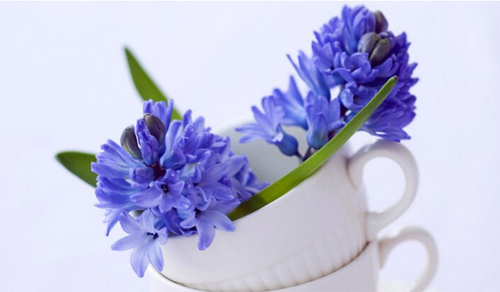
How to grow hyacinth in water:
Step 1: In December, place the bulb in a wide-mouthed glass bottle with a grid, and add a little charcoal to help disinfect and prevent rot. The water level should not touch the bottom of the bulb. Then place it in a dark place and cover the bottle with black cloth. Room temperature 5-10°C. Because darkness helps the hyacinth root. After more than 20 days like this, the roots will sprout in a completely dark environment. At this time, take it outside to receive sunlight. At first, expose it to 1-2 hours of light per day, then gradually increase to 7-8 hours.
Step 2: After the root system has grown fully, move it to a bright place without direct sunlight, keep the temperature above 10°C, change the water once every 2-3 days, and keep the water clean. Let the water reach the roots; there is no need to water or fertilize.
Step 3: After the leaves grow, gradually increase light. After buds appear, it can receive direct sunlight, but be careful to frequently change the direction of light so that the leaves and flower stems grow strong and upright, and do not lean to one side. Gradually raise the temperature to about 20°C, and change the water once every 3-4 days until the flowers fade.
Step 4: After the hyacinth flowers fade, cut off the flower stem, take out the bulb and plant it in a pot so that the bulb can become plump. When the leaves wither, dig out the bulb and store it well. In autumn, it can be planted again in a pot to restore its vigor. If the bulb is stored well, it can still bloom the next year, but the flowers will be smaller and the flower stem will also shrink. This is mainly because the bulb has degenerated. Therefore, for hyacinth cultivation, it is better to buy new bulbs after one year of planting.
Precautions for hydroponic hyacinth:
1. The hyacinth bulbs many people buy already have roots in the flower shop, so the step of covering the bulb in darkness to sprout can be omitted.
2. There should be 1cm-2cm of space between the water surface and the bottom of the bulb. Never let the water cover the bottom of the bulb.
3. During the shading period, the temperature is best kept at 9-10 degrees, so the roots will grow very quickly.
4. If the phenomenon of "shrinking neck" appears, you can appropriately spray water on the leaves.
5. When flowering, the temperature is best kept above 17 degrees.
What to do if hyacinth leaves turn yellow?
1. Water-yellow: leaf yellowing caused by long-term watering, shown as young leaves being dull yellow without luster, while old leaves show no obvious change, roots are thin and yellow-green, and new shoots shrink and stop growing.
Treatment method: Watering should be restricted. In severe cases, remove the plant from the pot, place it in a cool place to dry the soil, and then repot it.
2. Drought-yellow: leaf yellowing caused by lack of water or too little watering. Old leaves wither, yellow and fall from bottom to top, but new leaves generally grow normally.
Treatment method: Appropriately increase the amount and frequency of watering.
3. Fertilizer-yellow: due to excessive fertilization or too high concentration, the tips of new leaves appear dry brown, and the tips of old leaves dry, scorch, turn yellow and fall off. Generally, although the leaf surface is thick and glossy, it is mostly uneven.
Treatment method: Stop fertilizing or rinse away the fertilizer with clean water.
4. Nutrient-deficiency yellow: potted flowers are given only water and no fertilizer for a long time, or are not repotted for many years. The roots become tangled into a mass, and the plant cannot obtain nutrients, causing leaves to turn yellow.
Treatment method: Repot in time, and usually apply thin fertilizer frequently.
5. Scorch-yellow: shade-loving and moisture-loving potted flowers and foliage plants, such as spider plant, Rohdea japonica, Aspidistra, and Calathea, etc., if exposed to strong direct sunlight, often develop yellow leaf tips.
Treatment method: Place the hyacinth in a cool, ventilated place.
6. Alkaline-yellow: acid-loving flowers, such as rhododendron, gardenia, camellia, osmanthus, and Michelia alba, etc., if the potting soil or water quality is alkaline, often cause leaves to turn from green to yellow, or even fall off.
Treatment method: In addition to using acidic nutrient soil for cultivation, you can spray with alum fertilizer water or a 0.2%-0.5% ferrous sulfate aqueous solution, which can change the leaves from yellow to green.
7. Hot-humid yellow: yellowing of some flowers that cannot tolerate high temperature and high humidity, caused by hot summer, poor ventilation, and improper shading. For example, fuchsia and rhododendron show this phenomenon in a stuffy, hot and humid environment.
Treatment method: Pay attention to ventilation and cooling, and the potting soil must not be too warm.
8. Albinism-yellow: when flowers are kept in insufficient light for a long time, the chlorophyll in the leaves decreases, making the green color of the leaves gradually disappear and showing albinism.
Treatment method: Move the plant to a place with sufficient sunlight so that the leaves slowly turn green.
These are the hydroponic methods for hyacinth and the treatment methods for yellowing leaves. Growing flowers still requires careful care.
How to grow hyacinth in water, detailed steps for hydroponic hyacinth
Hyacinth is a common flower in offices. It blooms beautifully and is easy to grow, so many people like to cultivate hyacinth, and hydroponic hyacinth is clean and beautiful, which has also won the affection of many flower lovers.
Growth habits of hyacinth
Hyacinth is a perennial herbaceous bulbous plant. The bulb is spherical or flattened spherical, with a membranous outer skin. The outer skin is purple-blue or white, etc. The color of the skin is positively correlated with the flower color. Hyacinth likes a sunny and relatively moist growing environment. Soil cultivation, potting, and hydroponics are all possible.
Hyacinth roots in autumn, new shoots emerge from the soil in early spring, blooms in March, fruit ripens in late May, and the aboveground part withers in early June and enters dormancy. Flower bud differentiation is carried out during the dormant period. The suitable temperature for differentiation is about 25°C, and the differentiation process lasts about 1 month. After flower bud differentiation and before elongation growth, there must be a low-temperature stage of about two months, and the temperature must not exceed 13°C.
How to grow hyacinth in water
Hydroponic hyacinth requires 1-2cm of space between the water level and the bottom plate of the bulb, so that the root system can breathe. It is strictly forbidden to fill the water so that it covers the bottom of the bulb. In December, place the bulb in a wide-mouthed glass bottle with a grid, and add a little charcoal to help prevent rot and disinfect. The bulb only needs to be soaked to the bottom of the bulb. Then place it in a dark place and cover the bottle with black cloth. After about 20 days of sprouting in a completely dark environment, put it outside to receive sunlight. At first, expose it to 1-2 hours of light per day, then gradually increase to 7-8 hours. In most cases, under good weather conditions, it will bloom by the Spring Festival.
Steps for hydroponic hyacinth
1. First remove the old withered roots of the hyacinth, otherwise it will cause the root disc to absorb water and rot the bulb.
2. Soak in water for 40 minutes.
3. Pour clean water into the vase, with the water surface 2-5 mm away from the root disc of the bulb (do not soak the whole bulb in water, to ensure the roots can breathe freely). As the root system grows, gradually lower the water surface to promote neat downward growth of the roots.
4. Change the water about once a week. When changing the water, just pull the hyacinth bulb partly out of the hydroponic bottle, avoiding breaking the root system.
Hydroponic hyacinth needs attention to light
Too weak light will lead to weak hyacinth plants, overly long stems, small buds, early fading of flowers, yellowing leaves, etc. An incandescent lamp can be used at about 1 meter away for supplemental light; but too strong light can also cause scorching of hyacinth leaves and petals or shorten the flowering period.
In hyacinth cultivation, in addition to light, temperature should also be noted: if the temperature is too high, even above 35°C, flower bud differentiation will be inhibited, abnormal growth will occur, and the rate of blind flowers will increase; if the temperature is too low, the flower buds will suffer frost damage.
Seeing once is better than hearing a hundred times. Hurry and plant a pot of hyacinth yourself. Exchange hyacinth cultivation experience with flower lovers at Fengqiao Ju.
Hyacinth Hyacinthus orientalis L Hyacinth illustrated guide: how to grow hyacinth / how to propagate hyacinth
Hyacinth profileHyacinth Hyacinthus orientalis L
Aliases: foreign narcissus, western narcissus, five-color narcissus, fashionable brocade
Classification: bulbous flower
Family and genus: Plantae, Angiosperms, Monocotyledons, Asparagales, Hyacinthaceae, Hyacinthus
Full bloom period: spring
Hyacinth is a perennial herbaceous plant in the genus Hyacinthus of the family Hyacinthaceae, with bulbs. It originally belonged to the Liliaceae family, and has now been elevated to the type genus of the new family Hyacinthaceae, while hyacinth has also been moved from the original Liliales to the newly established Asparagales. Its flowers are rich in color, including red, blue, white and many other colors. The cultivation method is mainly bulb division propagation. After long-term hybridization and propagation cultivation, hyacinth has gradually produced some special double-flowered varieties. Hyacinth is native to the Mediterranean and South Africa. Its scientific name comes from the beautiful youth Hyacinthus in Greek mythology, who was favored by the sun god Apollo and accidentally killed by the discus he threw...
Hyacinth cultivation methods and precautions Introduction to hyacinth
Hyacinth is a perennial herbaceous plant in the genus Hyacinthus of the family Hyacinthaceae, with bulbs. It originally belonged to the Liliaceae family, and has now been elevated to the type genus of the new family Hyacinthaceae, while hyacinth has also been moved from the original Liliales to the newly established Asparagales. Its flowers are rich in color, including red, blue, white and many other colors. The cultivation method is mainly bulb division propagation. After long-term hybridization and propagation cultivation, hyacinth has gradually produced some special double-flowered varieties. Hyacinth is native to the Mediterranean and South Africa. Its scientific name comes from the beautiful youth Hyacinthus in Greek mythology, who was favored by the sun god Apollo and accidentally killed by the discus he threw. Its flower language is: sorrowful love, eternal remembrance, etc.
In Greek mythology, the beautiful youth Hyacinthus (κινθο), who was favored by the sun god Apollo (Απλλων) and accidentally killed by the discus he threw, was killed by a scheme of Zephyrus, the god of the west wind. From the pool of Hyacinthus's blood grew a beautiful flower, and Apollo named this flower after the youth - hyacinth υκινθο (Hyacinthus orientalis).
It is native to the eastern coast of the Mediterranean in southern Europe and the region of the Anatolian Peninsula. It is currently the most fragrant variety among the flowering plants discovered. There are extremely many cultivated varieties. At present, the Netherlands has the most in the world, and like tulips, it is an extremely important foreign trade commodity. It is cultivated in various places in China. And light blue is the ancestor of all hyacinth colors.
There are about 130 horticultural varieties of hyacinth worldwide, mainly divided into two categories: "Dutch type" and "Roman type". The former belongs to the authentic variety, and the vast majority of each plant grows only 1 flower stem, with a robust posture and larger flowers. The latter are mostly mutated hybrids, and each plant can bear two or three flower stems, with a weaker posture and finer flowers. Most consumers prefer to buy Dutch hyacinth.
Morphological characteristics of hyacinth
Perennial bulbous herbaceous plant, bulb ovate, with a membranous outer skin, the color of the skin is positively correlated with the flower color. Before blooming, it looks like garlic. Leaves 4-8, narrowly lanceolate, fleshy, with concave grooves on the surface, green and glossy. Flower stem fleshy, 15 cm-45 cm long, raceme terminal, 10-20 small flowers densely borne on the upper part, horizontal or drooping, funnel-shaped, perianth tubular, upper part four-lobed, recurved, in colors such as purple, rose red, pink, yellow, white, blue, etc., fragrant, capsule. Natural flowering period March-April. There are more than 2,000 horticultural varieties. According to their flower colors, they are roughly divided into seven series: blue, pink, white, purple, yellow, scarlet, and red.
Ecological habits of hyacinth
Native to the Mediterranean coast and the region of Anatolia, it likes a sunny and relatively moist environment, and requires well-drained and fertile sandy loam. It is relatively cold-tolerant. In areas where winter is relatively warm, it roots in autumn, new shoots emerge from the soil in early spring, blooms in March, fruit ripens in late May, and the aboveground part withers in early June and enters dormancy. Flower bud differentiation is carried out during the dormant period. The suitable temperature for differentiation is about 25°C, and the differentiation process lasts about 1 month. After flower bud differentiation and before elongation growth, there must be a low-temperature stage of about two months, and the temperature must not exceed 13°C. The flower buds of commercial bulbs have already differentiated. Aliases: foreign narcissus, western narcissus, five-color narcissus, fashionable brocade.
Family and genus: Hyacinthaceae (Liliaceae), Hyacinthus.
Hyacinth is native to Europe, Africa and other places, so it is also called foreign narcissus. Like Chinese narcissus, it belongs to the Liliaceae family and is a perennial bulbous herbaceous plant. The flowers come in red, yellow, white, blue, purple and other colors, so it is also called "five-color narcissus". The flowering period is March-April. Ground planting, potting, and hydroponics are all possible.
Hyacinth likes sunlight and is cold-tolerant. It is suitable for growing in a cool and moist environment and in loose, fertile sandy soil, and dislikes waterlogging.
Variety classification of hyacinth Common varieties
Pink-flowered Anna Marie (AnnaMarie) ---- early-flowering variety,
Lady Derby (LadyDerby) ---- mid-season variety, Anna Marie
Marconi (Marconi) ---- late-flowering variety,
Pink Pearl (PinkPearl) ---- early-flowering variety,
Fondante (Fondante), Queen of the Pinks (QueenofthePinks) ---- late-flowering varieties.
Red-flowered Amsterdam (Amsterdam), Jan Bos (JanBos) ---- very early-flowering varieties.
White-flowered Carnegie (Carnegie) ---- late-flowering variety,
L'Innocence (LInnocence) ---- early-flowering variety,
White Pearl (WhitePearl) ---- early-flowering variety.
Blue-flowered Atlantic (Atlantic), Blue Giant (BlueGiant) large-flowered ---- early-flowering variety,
Blue Jacket (BlueJacket) ---- late-flowering variety,
Blue Star (BlueStar) and Delft Blue (DelftBlue) ---- early-flowering varieties. City of Haarlem
Dark blue-flowered Marie (Marie) ---- late-flowering variety,
Ostara (Ostara) ---- early-flowering variety.
Purple-flowered Amethyst (Amethyst) ---- late-flowering variety,
Lisa (Lisa) ---- early-flowering variety,
Violet Pearl (VioletPearl). Orange-flowered Gipsy Queen (GipsyQueen). Yellow-flowered City of Haarlem (CityofHaarlem) ---- late-flowering variety.
Other varieties
In addition to the common varieties above, there are some other hyacinth varieties that are rarely cultivated in China:
Red-flowered Vuurbaak (Vuurbaak) ---- late-flowering variety,
Red Magic (Red Magic) with a white center ---- late-flowering variety,
Red Rocket (Red Rocket) ---- mid-season variety,
Mulberry Rose (Mulberry Rose) ---- late-flowering variety,
Pink-flowered Candy Cane (Candy Cane)
After long-term hybridization and propagation cultivation, hyacinth has gradually produced some special double-flowered varieties, which are basically not cultivated in China. Common varieties include:
Pink-flowered Rosette (Rosette)
Rose of Naples (Rose of Naples)
Pink Royale (Pink Royale)
Red-flowered Hollyhock (Hollyhock)
Red Diamond (Red Diamond)
Light pink-flowered Annabelle (Annabelle), Chestnut Flower (Chestnut Flower)
Light blue-flowered General Kohler (General Kohler)
Dark blue-flowered Isabelle (Isabelle), Double King Codro (Double King Codro)
Blue-flowered Dreadnought (Dreadnought)
White-flowered Ben Nevis (Ben Nevis)
And the now basically extinct light pink L'Honneur-D'Amsterdam and yellow Yellow Ophir (Yellow Ophir)
Hyacinth cultivation techniques Selection and cultivation
When selecting bulbs, pay attention to choosing ones with bright skin color, firm texture, and no disease spots or insect holes. Usually, the color of the seed coat can basically determine what color flower it will produce. For example, if the outer skin is purple-red, it will produce purple-red flowers; if it is white, it will produce white flowers. However, some varieties developed through hybridization have more complex colors, and sometimes they cannot be clearly distinguished, so it is better to ask the seller clearly before purchasing. After buying the bulb, in order to break its dormancy period, first put it in the lowest compartment of the refrigerator for cold storage for about one month, so that it can bloom smoothly later. But when taking it out of the refrigerator, it is best to move it to a cool place for seven or eight days before planting.
Cultivation
Many people grow hyacinth in a specially made glass bottle shaped like a gourd. Above, you can appreciate the hyacinth flower cluster, and below, you can see a bundle of thick white roots of the hyacinth. This scene of both flowers and roots flourishing together is difficult to see in hyacinth flowers and plants except for orchids. Hyacinth is also called foreign narcissus or multicolored narcissus. Hyacinth is relatively tolerant of low cold, but afraid of heat. Hyacinth likes a cool, humid, and sunny environment. Hyacinth is suitable for growing in well-drained sandy loam, and grows poorly in heavily clayey soil.
During the growing period, it needs continuous watering. If left in the soil, after the flowering period, cut off the flower stem and let the leaves wither naturally. Topdressing is needed every year. However, some varieties will produce fewer and fewer flowers after being planted for several years; if they are to be stored after the flowering period, they need to be pulled out. After the leaves dry naturally, cut off the leaves, preferably put them in a breathable bag with wood shavings, and place them in a dry, ventilated, and cool place.
Hyacinth likes a cool, humid, and sunny environment. It is relatively tolerant of low cold, but afraid of heat. It is suitable for growing in well-drained sandy loam, and grows poorly in heavily clayey soil. Hyacinth bulbs can bloom only after growing to 19 cm. It blooms every year in March-April.
It can also be grown in water like narcissus. For hydroponic hyacinth, in December, place the bulb in a wide-mouthed glass bottle with a grid, and add a little charcoal to help prevent rot and disinfect. The bulb only needs to be soaked to the bottom of the bulb. Then place it in a dark place and cover the bottle with black cloth. After about 20 days of sprouting in a completely dark environment, put it outside to receive sunlight. At first, expose it to 1-2 hours of light per day, then gradually increase to 7-8 hours. In most cases, under good weather conditions, it will bloom by the Spring Festival. After hyacinth blooms, if the bulb is stored well, it can still bloom the next year, but the flowers will be smaller and the flower stem will also shrink. This is mainly because the bulb has degenerated. Therefore, for hyacinth cultivation, it is better to buy new bulbs after one year of planting.
Scientific cultivation of grape hyacinth
Grape hyacinth flowers are like strings of purple grapes, very beautiful. It is highly cold-tolerant and can overwinter in the open field even in North China. In cultivation, attention should be paid to:
① The culture soil should preferably be well-drained, deep, and fertile sandy loam.
② Propagate with daughter bulbs. Every 2-3 years, dig up the mother plant and take well-grown daughter bulbs as propagation material. Planting can be done in September-October, and it can bloom in April of the following year.
③ Apply sufficient base fertilizer before planting. During the growing period, apply 1-2 times of liquid fertilizer with relatively complete nutrients, and pay attention to watering to promote growth. After the flowers fade, reduce watering and apply 1-2 times of liquid fertilizer, which is beneficial to the growth of underground bulbs. In summer, grape hyacinth is in the dormant period, so stop fertilizing and control watering to prevent root rot. In winter, cut off the aboveground part and water thoroughly to let it overwinter.
Cut flower production
1. Introduction
Many treatment methods for hyacinth cut flower production are similar to those for potted hyacinth. The following description of hyacinth cut flower production only discusses the differences between these two methods.
2. Cultivation Steps
The best container for planting bulbs is a tray or box 16-18 cm deep. This depth is important because it ensures a planting depth of about 8 cm for the bulbs. Then, as the plants grow taller, the leaves can grow more densely around the stem. The distance between boxes in the rooting room should be somewhat greater than for potted hyacinths, because cut-flower varieties require a longer cold period and the shoots will grow taller.
The planting medium is best made up of sand or a potting soil or garden soil with a high sand content.
The planting density of cut-flower hyacinths is shown in Table 4:
3. Moving Indoors
The biggest difference between potted hyacinths and cut-flower hyacinths lies in the length of the cold period. Cut-flower hyacinths require long stems, and reaching this standard requires a longer cold period. A long cold period makes the stems longer. Table 5 provides the cold period required for cut-flower hyacinths.
After the recommended cold treatment has ended, the bulbs in the boxes must be moved out of the rooting room or the outdoor soil. If the bulbs are moved out of outdoor soil, the ground must be covered with plastic film for 24 hours after planting. This prevents the leaf tips from drying out. Water immediately after planting.
4. Greenhouse Climate
Throughout the cultivation period, the suitable growing temperature for cut-flower hyacinths in the greenhouse is 18-20°C, as only then can the flower stems grow longer. The greenhouse cultivation period takes roughly 20 to 10 days, depending mainly on the planting depth and the temperature of the growing medium during the greenhouse period.
Water regularly during the growing period to keep the moisture of the growing medium at a normal level. If the growing medium consists wholly or partly of sand, careful management can prevent it from drying out, and you must never forget to check the moisture content regularly.
5. Water Seepage and Hollow Stems
When the inflorescence begins to colour and the florets separate from the flower stem, the cut-flower hyacinths are ready for harvest. The flowers are lifted out of the box together with the bulbs. Then the most important thing is to place the hyacinths as quickly as possible in a cold store kept at a constant 2°C, so that the product can be kept at a low temperature during packaging.
Next comes the processing of the bulbs: the outermost layer of scales near the stem must be removed, and this can be done by hand or mechanically with a "hyacinth bulb cutting machine". Keeping the root plate at the base of the stem allows the flowers to open more beautifully in the vase and extends vase life. It is important that neither retailers nor customers cut off the root plate at the base of the stem.
After the bulbs have been trimmed, an important task is to wash the stems with water, which prevents bacteria from multiplying and provides a clean product. Then grade them according to stem length so that every bunch has stems of the same length. Unlike other flowers, hyacinths cannot be cut again to reach a certain length, because doing so would cut off the root plate at the base. After grading, hyacinths are tied into bunches of 5 stems. Store dry (for at most 3 days). To improve quality, they can also be placed in clean water, and if possible a small piece of chloramine T can be added per 4 litres of water.
If the flowers must be stored, they can only be stored short-term (at most 3 days) in a cold store at 2°C. Finally, two points for consumers to note:
- Do not cut off the root plate at the very base,
- Rinse the flower stems clean with water before placing them in a clean vase.
Growing Methods
I. Ecological Habits of the Hyacinth
The hyacinth prefers a warm, humid winter and a cool, slightly dry summer, in a sunny or semi-shaded environment. It likes fertiliser and prefers a fertile, well-drained sandy loam, and dislikes soil that is too wet or heavy and sticky.[3]
The hyacinth bulb has the habit of summer dormancy. It roots in autumn and winter, sprouts new shoots in early spring, flowers in March, and the above-ground plant withers in early June, when the underground part begins dormancy and grows again by February.
II. Soil Cultivation Methods for Hyacinths
1. For the growing medium, a mixed substrate of peat and perlite can be chosen;
2. Select healthy, robust bulbs and plant them in loose growing medium;
3. The top 1/3 of the bulb must be left exposed above the potting soil, which is more favourable for bulb growth;
4. Keep the potting soil moist and place the pot in a sunny spot. Note that the temperature for forcing is generally around 5-10°C. During cultivation, the light and water needed for the hyacinth's normal growth and development must be ensured.
III. Water Cultivation Methods for Hyacinths
Around December, place the bulbs in a wide-mouthed glass jar with a constricted neck, and add a little charcoal to help prevent rot and to disinfect;
The hyacinth bulb only needs to be soaked up to its base. Then place it in a dark place and cover the jar with black cloth. After about 20 days, once it has sprouted in a completely dark environment, move it outdoors to receive sunlight.
At first, give 1-2 hours of light per day, then gradually increase to 7-8 hours. Hyacinths generally flower in spring. If the bulb is stored well, it can still flower the following year, but the flowers will be smaller and the flower scape will also shrink. This is mainly because the bulb has degenerated. Therefore, for hyacinth cultivation it is better to buy new bulbs after one year of planting.
Ecological Characteristics of Artificial Cultivation
The hyacinth prefers a warm, humid winter and a cool, slightly dry summer, in a sunny or semi-shaded environment. It likes fertiliser and prefers a fertile, well-drained sandy loam, and dislikes soil that is too wet or heavy and sticky.
The hyacinth bulb has the habit of summer dormancy. It roots in autumn and winter, sprouts new shoots in early spring, flowers in March, and the plant withers in early June.
Planting and Spread
The Netherlands is the main production area for hyacinths. In the 18th century, hyacinth cultivation was very popular, and more than two thousand varieties were recorded at the time. By 1596, Britain was already using hyacinths for garden cultivation.
From the 18th century onwards, they were widely cultivated in Europe and breeding had already begun. To this day, the Netherlands, France, Britain and Germany have turned hyacinth production into an industry. Among them, the Netherlands has the largest production volume and sells its products worldwide.
In 1995, the output value of hyacinth pot flowers was 12.2 million US dollars, ranking nineteenth in Dutch pot flower production. The Dutch company Phytonova is a major base for hyacinth breeding, production and trade. To this day, hyacinths have been widely cultivated around the world, and demand has risen year by year. Cultivation of hyacinths in China began at the end of the 19th century, mainly in large coastal cities, and was not widespread.
From the 1950s onwards, only a small amount was cultivated in botanical gardens and parks around the country, for flowerbed display. It was not until after the 1980s that hyacinths developed considerably across the country, widely used in spring flower exhibitions and potted plant sales. To this day, hyacinth cultivation has begun to enter homes and public places for indoor decoration and display, and demand is increasing year by year. However, China has not yet been able to propagate its own stock and still needs to introduce it from abroad.
Potted hyacinths prefer a warm, humid winter and a cool, slightly dry summer, in a sunny or semi-shaded environment. They like fertiliser and prefer a fertile, well-drained sandy loam, and dislike soil that is too wet or heavy and sticky. During the growth of the hyacinth, the root system grows best when the bulb is at a low temperature of 2-6°C. The suitable temperature for bud break is 5-10°C, the suitable temperature for leaf growth is 5-12°C, and 15-18°C is most favourable for the bud and flowering stage. The storage temperature of the bulb is 20-28°C, with 25°C being the most suitable and ideal for flower bud differentiation. It can tolerate short periods of frost.
Cultivation Techniques
For pot cultivation, choose a loose, well-drained soil and apply plenty of base fertiliser. In October, plant the bulbs in the pot, 1 bulb per small pot or 3-4 bulbs per large pot, then cover with soil. The planting depth is 5-8 cm. After planting, keep the soil moist and pay attention to applying extra phosphorus and potassium fertiliser. After about 120 days they will flower; apply fertiliser once before and once after flowering. After the plant withers in June, dig out the bulbs, dry them and store them indoors at a temperature not exceeding 28°C.
For hyacinths, a well-drained, not-too-dry sandy loam is preferable, neutral to slightly alkaline. Apply plenty of base fertiliser before planting. For field cultivation, avoid continuous cropping. Cultivation methods include open-field cultivation, pot cultivation, forcing cultivation and water culture.
Open-Field Cultivation
This is best done from October to November, and choosing well-drained soil is the most important condition. Apply plenty of base fertiliser before planting, add a thin layer of sand on top, then arrange the bulbs with a spacing of 15 cm-18 cm and cover with 5 cm-8 cm of soil. Also cover with straw to keep the soil loose and moist. Generally no other management is done before flowering. After flowering, if the seeds are not to be collected, the flower stems should be cut off to promote bulb development, and the cut should be made as high up the flower stem as possible. In early June the bulbs can be dug out, spread out, graded and stored in a cold store; the summer temperature should not exceed 28°C.
Pot Cultivation
Use a mixture of loam, leaf mould and fine sand as the growing medium. Generally, plant 1 bulb in a pot with a 10 cm diameter, or 2-3 bulbs in a pot with a 15 cm diameter, then bury the pot in the ground and cover it with 10 cm-15 cm of soil. After 7-8 weeks, when the shoots have grown to more than 10 cm, remove the covering soil to let the sunlight reach them. Planting is generally done from October to November, and they flower in March.
Water Culture
Water culture of hyacinths requires a gap of 1-2 cm between the water level and the base plate of the bulb, so that the roots can breathe air. It is strictly forbidden to fill the water so high that it submerges the bottom of the bulb. In December, place the bulbs in a wide-mouthed glass jar with a constricted neck and add a little charcoal to help disinfect and prevent rot. The hyacinth bulb only needs to be soaked up to its base. Then place it in a dark place and cover the jar with black cloth. If growing in clean water, change the water once every 7 days; if growing in a hydroponic nutrient solution, replace the nutrient solution every 10-15 days depending on how cloudy it becomes. Either way, keep the water in the jar clean. The hyacinth can be grown in a specially made gourd-shaped glass jar, and in the upper section its flower cluster can be admired.
During water culture of the hyacinth, do not place it in direct sunlight before the bulb sprouts. After sprouting, place it in a bright, airy position with sunlight to favour its growth. At first give one or two hours of light per day, then gradually increase to seven or eight hours. If the weather does not change much, it may flower by the Spring Festival, and in the lower section a bunch of sturdy white roots can be seen. This scene of flowers and roots flourishing together is hard to find in other flowers and plants apart from orchids.
Key Points for Water Culture of Hyacinths:
1. There must be a gap of 2-3 mm between the bulb and the water surface.
2. During the shading period, the temperature is best kept at 9-10 degrees, so the roots will grow very quickly.
3. At flowering time, the temperature is best kept above 17 degrees.
Hyacinths can be forced in water culture just like Chinese narcissus. Select large, plump bulbs, place them in a shallow basin and fix them in place with pebbles, then pour in clean water, with the amount of water limited so that it does not touch the base of the bulb. Place in a dark, cool spot at a room temperature of 5-10°C. Darkness helps rooting, and roots can grow in about 1 month. Once the roots have grown fully, move to a bright place without direct sunlight, keep the temperature at 10-13°C, and change the water once every 2-3 days to keep it clean. After the leaves have grown, gradually increase the light; after the buds appear, direct sunlight can be given, but be careful to regularly change the direction of the light so that the leaves and flower stems grow sturdy and upright and do not lean to one side. Gradually raise the temperature to around 20°C, and change the water once every 3-4 days until the flowers fade. Then cut off the flower stems, take out the bulbs and plant them in a pot so that the bulbs can plump up. When the leaves wither, dig out the bulbs and store them well; in autumn they can be planted in a pot again so that they regain vigour, and they should no longer be grown in water.
Forcing Cultivation
After late July, treat the bulbs at a low temperature of 8°C for 70-75 days, then pot them in early October and cultivate them in a greenhouse, and they can be made to flower at the end of the year. Because the forcing sensitivity of cultivated varieties varies greatly, varieties suitable for forcing should be chosen when carrying out forcing cultivation.
Four Essentials of Cultivation: Bulb Selection
The nutrients needed for a hyacinth to flower come mainly from the nutrients stored in the scales and leaves of the bulb. As long as you choose bulbs with undamaged skins, fleshy scales that are not excessively shrunken, and that are fairly hard, heavy and plump, they will produce abundant, beautiful flowers.
Soil Requirements
The soil is required to be fertile, high in organic matter and with good crumb structure, at a pH of 6-7. The growing medium can be mixed in the ratio of leaf mould 5 : garden soil 3 : coarse sand 1.5 : bone meal 0.5. Before planting, chemical agents such as formalin can be used: at a soil temperature of 10-15°C, apply the agent to the soil surface and immediately cover with plastic film; after 3 days of warm weather, remove the film, let it air for 1 day, then plant, keeping the soil moist.
Light
The hyacinth needs only more than 5000 Lx to maintain normal physiological activity. Too weak light will lead to spindly plants, overly long stems, small buds, early fading of flowers and yellowing leaves; an incandescent lamp can be used to supplement light from about 1 metre away. But too strong light can also cause scorching of leaves and petals or shorten the flowering period.
Temperature and Humidity Regulation
If the temperature is too high, even above 35°C, flower bud differentiation will be inhibited, growth will become deformed and the rate of blind flowers will increase; if the temperature is too low, the flower buds will suffer frost damage.
Soil humidity should be kept between 60-70%. If too high, root respiration is inhibited and the roots rot easily; if too low, the above-ground parts wilt and may even die. Air humidity should be kept at around 80%, and humidity can be increased by misting or sprinkling water on the ground, or reduced by measures such as ventilation.
Propagation Methods of the Hyacinth
Bulb division propagation is the main method; seed propagation is used in breeding, and bulbs can also be used for propagation. After the mother bulb is planted for 1 year, it produces 1-2 daughter bulbs, and some varieties can produce more than ten daughter bulbs. These can be used for bulb division propagation; daughter bulbs require 3 years to flower. For seed propagation, sow in autumn; they only germinate in February of the following year, and seedlings take 4-5 years to flower.
Bulb Division Propagation
In June, after digging up the bulbs, separate the large bulbs from the daughter bulbs. "Large bulbs planted in autumn can flower in early spring the following year, while daughter bulbs need 3 years of cultivation before they flower. Because the natural bulb division rate of the hyacinth is low, generally a mother plant can only produce 1-2 daughter bulbs after one year of planting. To increase the propagation coefficient, the large bulbs can be subjected to a scoring operation during the summer dormancy period to stimulate them to produce daughter bulbs.
The method is as follows: in August, when the flower buds have already formed, first scoop out part of the base plate at the bottom of the bulb evenly, so that the wound at the base plate is concave, then make one vertical and one horizontal cut from bottom to top, forming a cross-shaped cut, deep enough to reach the bud core inside the bulb. At this point a sticky liquid will flow out; apply 0.1% mercuric chloride solution to disinfect it, then expose it to the hot sun for 1-2 hours, and spread it flat indoors. First keep the room temperature at around 21°C so that callus tissue forms; when the base of the scales swells, gradually raise the temperature to 30°C with a relative humidity of 85%, and in about three months many small bulbs will form. The small bulbs induced in this way take 3-4 years of cultivation to flower.
Seed Propagation
This is mostly used when breeding new varieties. Sow in autumn in the growing medium of a cold frame, cover with 1 cm of soil, and they germinate in late January to early February of the following year. The small bulbs grown from seedlings flower after 4-5 years. Under ordinary storage conditions, the seeds can remain viable for 3 years.
Disease Control in Hyacinths
Rot fungi harm the seedlings and bulbs, mosaic flower disease harms the flowers, and stem nematode disease harms the above-ground parts. When storing bulbs, remove injured or diseased bulbs, and keep the storage room ventilated.
Disease control in hyacinths should be based on strengthened management, following the principles of active prevention and integrated control. Because the hyacinth's growing period in the greenhouse is relatively short, diseases are the main problem. Common hyacinth diseases include sprout rot, soft rot, sclerotinia disease and viral disease. Strictly disinfect the growing medium before planting, clean and disinfect the bulbs, and during the growing period spray once every 7 d with 1000 times dilute Tuzet or chlorothalonil, used alternately, which can suppress the spread of pathogens to a certain extent. Strictly control the amount of watering, strengthen ventilation management, control the relative air humidity in the environment, and promptly remove any centrally infected plants; this can greatly reduce the disease incidence.
Grey Mould
At the early stage of the disease, the tips of infected leaves change colour, and the leaves shrivel and rot. Under cold, wet conditions, the flowers also rot. At the later stage, a grey mould layer and black sclerotia are produced on the diseased parts. The pathogen overwinters as sclerotia in diseased plant debris and in the soil; when conditions are suitable it produces conidia, which spread with wind and rain to cause infection and damage. Low temperature and high humidity favour the occurrence of the disease.
Control Methods
① Reduce sources of infection: promptly remove diseased flowers and leaves and destroy them in a centralised way.
② Chemical control: at the early stage of the disease, spray with 1:1:100 Bordeaux mixture, or 65% zineb wettable powder at 500-800 times dilution, or 50% benomyl wettable powder at 1000 times dilution, or Banxiuqing at 800-**** times dilution.
Root Nodule Disease
Hyacinth root swelling disease, also known as root nodule disease. The root system is normal when it first appears, but after extending to a certain degree it produces small white nodules; growth weakens, and sometimes the florets dry and rot, affecting growth and development, and in severe cases the whole plant dies.
Control Methods:
(1) During the storage period, carry out strict disinfection and sterilisation, pay attention to strengthening ventilation, check frequently and turn frequently, and promptly pick out any diseased plants and burn them in a centralised way.
(2) Strictly carry out soil disinfection and sterilisation, do not practise continuous cropping, and do not reuse growing soil.
(3) Promptly remove diseased plants found during cultivation, and disinfect and de-insect the soil.
(4) Strict quarantine, so that diseased bulbs and diseased plants do not enter the nursery.
Uses and Functions of the Hyacinth: Wedding Flowers
In Britain, the blue hyacinth has always been an indispensable part of the bride's bouquet or corsage at weddings, representing the purity of the newlyweds and the hope of bringing happiness.
Cultural Background and Legends of the Hyacinth
According to the legend, the handsome young man Hyacinthus and the sun god Apollo were good friends, and the west wind god Zephyrus was also very fond of Hyacinthus and was often jealous about it, but Hyacinthus always preferred Apollo and often played together with him. One day, when they were happily throwing the discus on the grassland, Zephyrus, hiding in the bushes, happened to see them, felt very unhappy, and wanted to play a trick on them.
When Apollo threw the discus towards Hyacinthus, the jealous west wind god secretly blew hard from the side, and the heavy discus struck Hyacinthus on the forehead. In an instant the blood flowed like a column, and the handsome youth thus breathed his last. In his alarm, Apollo, heartbroken, lifted up his lifeless friend and sighed "Ai! Ai!" and saw blood constantly gushing from Hyacinthus's wound, falling to the ground and flowing into the grass.
Before long, strings of purple flowers appeared among the grass. To express his apology, Apollo took the name of the beautiful youth as the flower's name, which we translate directly as "hyacinth". Since then, the purple hyacinth has been regarded by later generations as the spokesman for "jealousy"; in Greek, Ai and Aei (meaning "forever") are synonymous, so the hyacinth also symbolises "eternal remembrance", and no wonder Europeans and Americans often carve hyacinth patterns on the tombstones of their loved ones, to show "eternal remembrance".
The Language of Hyacinths
The flower language and symbolic meaning of the hyacinth: as long as you light the fire of life, you can share a rich life.[10]
In the past, many gardeners successively bred new varieties of garden hyacinths, probably because hyacinth flowers are particularly eye-catching? Its flower language is - attention.
The blue hyacinth is the ancestor of all hyacinths, so its flower language is - life.
Hyacinth flower language: victory, competition, joy, love, happiness, deep affection, admiration, stubbornness, life, complacency, eternal remembrance.
Purple hyacinth: sadness, jealousy, melancholic love (if you gain my love, you will surely be happy), apology (I am sorry, please forgive me), regret.
Lilac hyacinth: gentle temperament, romantic feelings. Sadness.
White hyacinth: tranquil, quiet love (love that dares not be expressed), secret love.
Red hyacinth: thank you, love that moves me (your love fills my heart).
Peach-pink hyacinth: passion.
Blue hyacinth: constancy, chastity, as happy as seeing you, noble and rich.
Dark blue hyacinth: somewhat melancholic because of love.
Yellow hyacinth: happiness, perfection, very happy to be with you.
Pink hyacinth: admiration, romance.
January 4
Birthday flower: White Hyacinth (Hyacinth)
Flower language: playing at life.
Flower divination: You give people a fresh, gentle feeling; you seem easy-going and lively on the outside, but in private you have your own principles and are quite competitive. You will not easily go along with others' opinions, you act with strong opinions of your own, and you are skilled at interpersonal relationships. Do not play around too much; a careless remark can bring you fatal hurt.
Flower motto: Love is everywhere, it is just a question of how much you can grab at hand.
January 16
Birthday flower: Yellow Hyacinth
Flower language: competition. Native to the Mediterranean, the hyacinth
The hyacinth, native to the Mediterranean
Flower divination: You have an enterprising personality and constantly spur yourself on, striving for progress. You handle matters with plans and strategy, calmly meeting the challenge, and you are a very good leader. But on the path of love, you cannot be so rigid; being first does not necessarily bring benefits, and an occasional concession will make your partner feel that you are more warm-hearted.
Flower motto: You have an enterprising side and also an emotional side; lilac flowers will always make your heart tremble.
February 6
Birthday flower: Blue Hyacinth (Blue hyacinth)
Flower language: Life
The blue hyacinth is one of the most beloved potted plants among Europeans. Through continuous breeding improvements, hyacinths in white, yellow and other colors have appeared, but the original variety is blue. In other words, the blue hyacinth is the ancestor of all hyacinths, and so its flower language is - Life. Those born under the blessing of this flower have lives brimming with vitality. Naturally, they also attract plenty of attention from the opposite sex, and their romantic fortunes are quite good!
April 6
Birthday flower: Common Hyacinth
Flower language: Rest
The "lily of the valley" or "lily among thorns" mentioned in the Bible may actually be the hyacinth. Native to the Middle East, it blooms freely across deserts and wastelands, bringing warmth and comfort to weary travelers. Therefore, its flower language is - Rest. Those born under the blessing of this flower are broad-minded and can bring spiritual comfort to those who come into contact with them. Sometimes a lover also needs to lean on your shoulder and rest for a moment; at such times, please comfort them well.
November 8
Birthday flower: Common Hyacinth
Flower language: Stubborn
This flower was chosen to honor a Christian martyr of the 4th century who defied the emperor's orders and refused to carve portraits of pagans. He was a stonemason, so the hyacinth is also called the "flower of stonemasons." The spirit it represents is one of holding firmly and stubbornly to one's own beliefs. Therefore, the hyacinth's flower language is - Stubborn. Those born under the blessing of this flower cling to their own beliefs and aesthetic views, even in matters of love. Once they fall for someone, even if those around them try to dissuade them, they will charge ahead without regard for anything else. For someone like you, it is essential to choose an honest partner carefully!
Colorful Hyacinths
November 9
Birthday flower: Common Hyacinth
Flower language: Attention
In the past, many horticulturists successively cultivated new varieties of garden hyacinths, probably because hyacinth flowers are especially eye-catching. Therefore, its flower language is - Attention. Those born under the blessing of this flower, whether for better or worse, are quite attention-grabbing - this is probably because of your generous nature. However, you may find it hard to develop a truly genuine romance. If you want to set aside a storybook-style love, you must slightly conceal your naturally generous personality in order to test whether the feelings are truly real!
November 12
Birthday flower: Common Hyacinth
Flower language: Moral. The hyacinth was dedicated to a saintly monk of the 4th century who, in order to build a monastery in Turkey, wrote many treatises on elevating moral standards. Therefore, the hyacinth's flower language is - Moral. Those born under the blessing of this flower are fastidious and moral people. Although they have refined taste, they must be especially careful when it comes to love! If you do not date much when young, once you fall madly in love it is easy to get hurt. To prevent such an unfortunate outcome, dating more is also a necessary part of life. [11]
Joy, competition, bet, game, sorrow, sorrowful love, eternal remembrance
Hyacinth Photo Gallery
Hyacinth Photo Gallery (16 photos) In addition, hyacinths of different colors have different flower languages [12]:
White: cute in a reserved way, humble love, pure and light, love that dares not be expressed, secret crush, lively and adorable.
Yellow: represents thank you, I am very happy. Happy because you are here.
Red: Your love fills my heart, I accept your sincerity. Thank you.
Blue: noble and rich. Represents melancholy love.
Purple: sorrowful, melancholic love. Jealousy, apology, regret. (With my love, you will surely be happy and joyful)
Lilac: gentle temperament, romantic feelings.
Pink: admiration, romantic, represents elegant and light fragrance.
Peach pink: represents passion, hoping to win someone's heart.
The hyacinth's flower language is "As long as you light the fire of life, you can share in a bountiful life."
These words perfectly capture the hyacinth's beautiful appearance and inner meaning.
After the hyacinth's blooming season ends, if you want it to bloom again, you need to cut off the withered flowers from before. Therefore, the hyacinth also represents -- reborn love. Forget past sorrows and begin a brand-new love.
Hyacinth Pictures