How to Grow Potted Gardenias: Care Methods, Precautions and Propagation Tips
A gardenia planted in the ground and one grown in a pot are not the same. A gardenia in the ground needs no care once it has taken hold, but a potted gardenia needs management all the time. Come with WomensNet to see how to grow potted gardenias, and what the propagation methods for gardenias are?
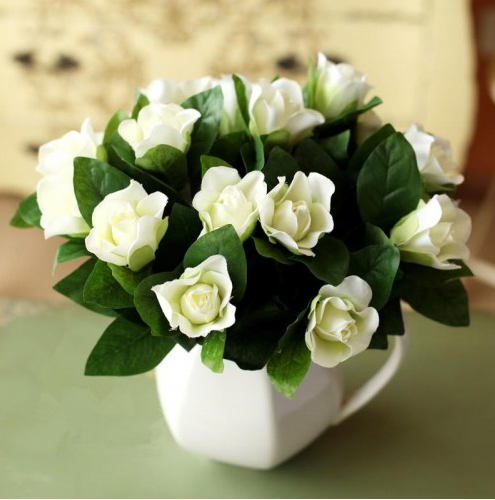
How to grow potted gardenias and the precautions:
Step one: Choose a suitable potting soil
Choose a suitable potting soil. The gardenia is an acid-loving flower, with a suitable pH of 5 to 6. If the soil acidity is unsuitable, all future care will yield half the result with twice the effort. For the growing medium you can choose leaf mold, peat soil, or composted sawdust plus half garden soil. Avoid old wall soil and coal cinder; the commercially sold clivia soil is more convenient and practical.
Step two: Fertilize reasonably
Fertilize reasonably. The gardenia loves fertilizer. You can add 3% decomposed cake fertilizer to the growing soil as a base fertilizer. During the growing season, water once a week with alum fertilizer water made by composting cake fertilizer plus ferrous sulfate, or use 0.1% humic acid complete-nutrition organic liquid fertilizer. At the bud stage, water once to twice with a 0.1% potassium dihydrogen phosphate aqueous solution, which can make the flowers larger and the fragrance richer. Stop fertilizing during the hottest summer period when the temperature is above 35°C and in autumn when it is below 15°C.
Step three: Water scientifically
Water scientifically. The gardenia loves moist soil and relatively high air humidity. During the growing period from April to September, keep the potting soil moist. Water whenever the surface of the potting soil looks dry, and in the evening you can use a spray bottle to sprinkle water on the leaves. If it dries out completely and wilts, it will be bad for growth. For plants that grow too vigorously with longer internodes, do not water in the evening; water again after the sun comes up in the morning. In northern regions with alkaline water, tap water should be left to stand for two days before use. Every three to five days, water thoroughly once with an aqueous solution containing 0.5 g citric acid and 1 g ferrous sulfate per liter, which can make the leaves glossy and emerald green.
Step four: Give it plenty of sun
Give it plenty of sun. The gardenia loves light. It can also grow in semi-shade for a long time, but the flowering branches will be longer and the flowers fewer. Apart from the need for shade from the strong midday sun from July to August and during the winter dormant period, it generally needs to be kept in the sun for care, so that it can have abundant flowers and lush leaves.
Step five: A good winter dormancy
A good winter dormancy. In the Qinling area of China, gardenias can overwinter outdoors, but after a harsh winter the roots of potted gardenias will be damaged and recovery in spring will be slow. Overwintering indoors with heating avoids frost damage, but with insufficient light the plant grows weak and spindly, most of the young buds formed in autumn drop off, and flowering the next year is late. A better approach is to put the potted plant in a cold room at around 5°C to let it go dormant, or wrap the flowerpot well with foam plastic or other insulating material to protect the root system, and place it in a wind-sheltered, sunny spot to overwinter; then recovery in spring is fast and flowering is early.
Step six: Prune appropriately
Prune appropriately. For large-flowered gardenia seedlings, pinch off the growing tip at a height of 20 cm on the main trunk, keep 3 to 4 branches, and when the branches have 2 pairs of leaves, pinch off the growing tips again to encourage branching, after which they can be left to grow. Small-leaved gardenias do not need tip pinching. After flowering each year, prune lightly, cutting out inner branches and diseased or weak branches, and shorten individual leggy branches. When the crown of a large-flowered gardenia becomes too large after 4 to 5 years, you can do a heavy pruning after flowering, generally leaving 2 pairs of leaves on the upper branches and cutting them back; after the buds sprout, remove the inward-growing buds and the buds at the lower part of the main trunk, and the plant shape will become more compact and attractive. Remember that gardenias must not be cut back at the branch tips in spring, otherwise they will not bloom that year.
Step seven: Repot and change the soil at the right time
Repot and change the soil at the right time. Grow seedlings in small pots and gradually move them into larger pots. When the crown width is 2 to 3 times the diameter of the pot rim, it is time to repot. You can repot at any time during the growing season. After turning the plant out of the pot, plant it with its root ball into a new pot, with a diameter about 5 cm larger than the original pot being suitable. For home potted plants, once the pot reaches about 28 cm, generally do not repot anymore, only change the potting soil. It is better to change the soil in March in spring. After turning the plant out of the pot, cut off some old roots, shake off half of the old soil, plant it into the pot with new soil and then water thoroughly, place it in a warm semi-shade spot, and when new buds begin to sprout, keep it in the sun for care.
How to grow large-leaved gardenias
When caring for large-leaved gardenias in the north, the climate, soil and other conditions are often unsuitable for their growth and development, causing the leaves of large-leaved gardenias to turn yellow or even the whole plant to die. For this reason, when caring for large-leaved gardenias in the north, you must master the following points well.
Large-leaved gardenias have relatively strict soil requirements and grow well in acidic soil with a pH of 5-6, while northern soil is generally neutral or alkaline. In such soil, due to the hydrolysis of iron salts, water-insoluble ferric hydroxide is formed, which cannot be absorbed by the plant, causing severe iron deficiency in the plant. Although iron is not a component of chlorophyll, it is a necessary condition for the formation of chlorophyll, so iron deficiency is equivalent to blocking the synthesis of chlorophyll, thus preventing photosynthesis from proceeding normally, which is the main cause of the plant starving to death.
In addition, iron is also a component of certain oxidase enzymes and plays an important role in respiration. If iron is deficient, it will affect the plant's normal physiological activities. To solve iron deficiency, watering with "alum fertilizer water" can achieve good results. Besides this, you can also mix a small amount of black alum powder into the potting soil, using an amount equal to 0.5% of the weight of the potting soil, and during the growing season water once every 10-15 days with 0.5%-1.0% black alum water, which can also ensure the gardenia's iron requirement and enable it to grow and develop normally.
Northern soil is mostly neutral or slightly alkaline, resulting in a lack of iron in the soil that the plant can use, which is one of the main reasons for leaves turning yellow. For this reason, when growing large-leaved gardenias, choose a fertile acidic growing soil. Generally, you can mix 4 parts leaf mold, 4 parts garden soil and 2 parts sandy soil. Then mix in 1-2 g of sulfur powder per kilogram of growing soil. For watering large-leaved gardenias, it is best to use rainwater or fermented rice-washing water. During the growing period, water once every 10-15 days with 0.2% ferrous sulfate water or apply alum fertilizer water once every 10-15 days (the two can be alternated). This can both prevent the soil from becoming alkaline and promptly replenish iron in the soil, thereby preventing the leaves from turning yellow.
Gardenias love moisture. Besides usually needing to keep the potting soil moist at all times, you must also always pay attention to increasing air humidity. This is because the northern climate differs from the south: northern spring is dry and often has dry winds, summer has high light intensity and hot weather, and winter is cold and dry. Therefore, in spring and summer, spray the leaves with clean water and also sprinkle water on the nearby ground every morning and evening to increase air humidity. In winter, water less, but still spray and wash the branches and leaves regularly to keep the leaf surface clean.
Large-leaved gardenias love light but fear harsh exposure to strong sun. If exposed to the sun, the leaves turn yellow, then white, until they fall off. Therefore, in summer they must be kept under a shade shed or in a place with scattered light, letting them get some sunlight in the early morning and evening, so as to avoid the leaves turning yellow.
Large-leaved gardenias are not cold-tolerant, so pay attention to bringing them indoors and taking them outdoors at the appropriate times. Generally, bring them indoors in mid-October, place them in a sunny spot, and keep the room temperature at 10°C-12°C, which is suitable. The following spring, do not take them outdoors too early; usually late April is best for taking them outdoors. If you can achieve the above four points, large-leaved gardenias can not only settle down in the north, but also have green leaves, abundant flowers and a rich fragrance.
How gardenias propagate:
Layering propagation
Although layering is also convenient, if the plant is too large and the lower branches have already become woody, layering will be a bit troublesome, because if pressed too heavily it breaks easily, and if too lightly it does not root easily. The best method is to select a 2-year-old branch in April, about 20-25 cm long, press and bury it in the soil, keep it moist, and it will root in about 30 days; separate it from the mother plant in summer and plant it separately the following spring.
Cutting propagation
Cutting propagation is the most convenient method with a relatively high survival rate. You only need to cut a branch of about 15 cm (with more than three nodes) during the plum rain season, then remove the bottom leaves, keep the topmost new bud and one or two mature leaves, cutting each in half, or leaving none.
Mature leaves are also fine, as long as the leaves of the new bud are not too small. Then insert it into the seedbed, keep it moist, and it will root in 10-12 days.
That is all for the introduction to potted gardenias. With potted gardenias you must pay attention and watch the changes in the soil, otherwise they die easily, and potted gardenias are also a bit expensive.
How to Grow Potted Gardenias: Gardenia Care Methods and Precautions
The gardenia is a common houseplant, evergreen all year round, with fragrant and elegantly simple flowers, exceptionally clear and lovely, and is a houseplant that many people like to grow. So how do you grow a potted gardenia at home? Below is a detailed introduction to the gardenia's care methods and precautions.
Introduction to the gardenia
The gardenia, also known as zhizi, is native to China and is mainly distributed in Sichuan, Jiangsu, Zhejiang, Anhui, Jiangxi, Guangdong, Yunnan, Fujian, Taiwan, China, Hunan and other places. The gardenia's leaves are evergreen all year round, and its flowers are fragrant and elegantly simple, with green leaves and white flowers, exceptionally clear and lovely. It is suitable for planting in front of steps, by ponds and along roadsides, and grows well whether planted in the ground or in pots in patios, courtyards and under tree shade. It can also be used as a flower hedge and for potted display, and the flowers can also be used in flower arrangements and worn as decoration. The gardenia loves a warm, humid and sunny environment, is relatively cold-tolerant, tolerant of semi-shade, fears waterlogging, and requires loose, fertile and acidic sandy loam.
How to grow potted gardenias
One: Gardenia propagation methods
Cutting method
Gardenia branches root very easily. In the warm south, cuttings are usually taken from March to October, while in the north they are usually taken from May to June. Cut healthy, mature branches and insert them into a sand bed; as long as they are kept moist regularly, they root and survive very easily. Water cuttings are far better than soil cuttings, with a survival rate close to 100%. Do this from April to July: cut the cuttings, keep only the top 2 leaves and the top bud, and insert them into a container filled with clean water, changing the water regularly to prevent the cut end from rotting, and they will begin to root after 3 weeks.
Layering method
This is generally done around Qingming in April or during the plum rain season. In April, select a 1-year-old healthy branch from a 3-year-old mother plant, 25-30 cm long, for layering; pull it down to the ground, and wound the part of the branch that goes into the soil. If you can dip the wounded part in 200 ppm powdered naphthalene acetic acid and then cover it with soil and press it firm, it will root even more easily. If there is a three-forked branch, then at the fork you can get three seedlings at once. Generally, it roots after 20-30 days; after rooting in June it can be separated from the mother plant, and by the following spring it can be planted separately with soil or potted individually.
For transplanting seedlings or potting, spring is best, carried out during the plum rain season, and a soil ball is needed. During the growing period, keep the soil moist; water more during the flowering period and midsummer. Fertilize once a month, and add one extra application of phosphorus and potassium fertilizer before flowering. In early spring of the following year, prune and shape it, and promptly cut out dead branches and leggy branches.
Sowing method
Generally choose plump, dark-red ripe fruits, dry them in the shell in the sun or in the shade to use as seed. Before sowing, use scissors to cut open the fruit skin of the seeds, dig out the seeds, rub them apart in hot water, remove floating seeds or impurities, then scoop out the sunken, plump seeds, spread them on a bamboo mat, and place them in a ventilated spot to dry off excess moisture. Generally choose a sunny hillside or soil plot with deep, loose, fertile sandy loam for sowing; you can use field edges and corners for planting, or intercrop or relay-crop with legumes. Before planting, plow the land 1-1.5 chi deep, remove stumps of miscellaneous trees, and make beds with a bed surface width of 4-5 chi (the distance can be larger if the soil is good, otherwise smaller), with a bed height of 6 cun. You can apply farmyard manure, green manure or human and livestock manure water as a base fertilizer, for example applying 20-30 loads of human excrement and urine per mu. After the soil dries, shallowly rake the clods, and level the bed surface. On the bed surface, open sowing furrows at a row spacing of 6-7 cun, with a furrow depth of about 1 cun, ready for sowing.
Gardenias can be sown in spring or autumn, generally mostly in spring. Spring sowing is done around Yushui, and autumn sowing around Qiufen. When sowing, mix the seeds with plant ash and sow them evenly in the sowing furrows, then cover and level the sowing furrows with fine soil or burnt soil, cover with grass and sprinkle water, and keep the soil moist regularly to help seedlings emerge, using 4-6 jin of seed per mu. After seedlings emerge, pay attention to removing the covering grass in time. During the seedling stage, weed regularly, being careful not to damage the seedling roots. After weeding, all need a light topdressing of human excrement and urine water. After one year of raising seedlings, they can be transplanted. If transport is relatively far, it is best to coat the roots with yellow mud slurry, cover with grass to retain moisture, plant one plant per hole, then cover with soil, press firm and sprinkle water. After planting, cultivate and weed and topdress once each in spring and summer every year, applying human and livestock manure, barnyard manure, compost, cake fertilizer, etc., all of which are fine. Before flowering in summer, it is better to apply fertilizer with a higher phosphorus and potassium content. Fertilizing is generally done after weeding and loosening the soil.
Two: How to grow potted gardenias
1. Choosing the soil
The gardenia is an acid-loving flower, with a suitable pH of 5 to 6. If the soil acidity is unsuitable, all future care will yield half the result with twice the effort. For the growing medium you can choose leaf mold, peat soil, or composted sawdust plus half garden soil. Avoid old wall soil and coal cinder; the commercially sold clivia soil is more convenient and practical. If the soil and water-fertilizer contain alkali, the plant cannot absorb iron, thereby affecting the formation of chlorophyll and causing branches to wither, leaves to scorch, and even death.
2. Propagation methods
Cuttings and layering are commonly used. For cuttings, during the plum rain season use softwood shoots 15 centimeters long, insert them into a seedbed, and they root in 10-12 days. For layering, in April select a 2-year-old branch, 20-25 cm long, press and bury it in the soil, keep it moist, and it roots in about 30 days; separate it from the mother plant in summer and plant it separately the following spring. For transplanting seedlings or potting, spring is best, carried out during the plum rain season, and a soil ball is needed. During the growing period, keep the soil moist; water more during the flowering period and midsummer. Fertilize once a month, and add one extra application of phosphorus and potassium fertilizer before flowering. In early spring of the following year, prune and shape it, and promptly cut out dead branches and leggy branches. Related recommendation: Gardenia propagation methods
3. Potting up
For potting up a potted gardenia, around April is suitable, and choose loose, slightly acidic soil for the potting soil. After planting, water thoroughly, place it in a semi-shade spot outdoors, and usually pay attention to watering and spraying the leaves. After about 15 days, once it has settled into the pot, move on to normal care.
Daily care and precautions for potted gardenias
1. Watering
How to water gardenias
The gardenia loves moist soil and relatively high air humidity. During the growing period from April to September, keep the potting soil moist. Water whenever the surface of the potting soil looks dry, and in the evening you can use a spray bottle to sprinkle water on the leaves. If it dries out completely and wilts, it will be bad for growth. For plants that grow too vigorously with longer internodes, do not water in the evening; water again after the sun comes up in the morning. In northern regions with alkaline water, tap water should be left to stand for two days before use. Every three to five days, water thoroughly once with an aqueous solution containing 0.5 g citric acid and 1 g ferrous sulfate per liter, which can make the leaves glossy and emerald green.
2. Fertilizing
In May, topdress in time, applying 1-2 times a nitrogen-phosphorus combined fertilizer. At the same time, note that the potting soil must not be too wet, and avoid poor drainage or waterlogging after rain, otherwise it will cause leaf drop or bud rot so that no flowers open. The gardenia loves fertilizer, and it is best to apply decomposed fertilizers such as soybean cake, sesame paste residue and peanut bran; after fermentation and decomposition they can become acidic, but you must apply light fertilizer frequently, and strictly avoid heavy fertilizer and raw fertilizer; do not fertilize during the winter dormancy period. For plants grown for less than three years, strictly avoid applying human excrement and urine. Applying too much nitrogen fertilizer will cause thick branches and large, dark green leaves, but no flowers. When phosphorus and potassium fertilizer is lacking, it will also fail to bloom or the buds will wither and drop off.
3. Light
The gardenia loves cool shade and must not be exposed to harsh sun, but people often mistakenly think that gardenias require full shade, causing mistakes in cultivation. In fact, while paying attention to providing a cool, shaded environment, you should maintain 60% light all day to meet its growth needs. In summer and autumn, prevent harsh sun exposure, so as to avoid the leaves turning yellow and withering and affecting the display. Starting in April, apply a light fertilizer once every 10-15 days, and once there are flower buds, do not water too much. This flower fears waterlogging; once waterlogged, the leaf edges turn black.
4. Humidity
It loves moisture. If the air humidity is below 70%, it will directly affect flower bud differentiation and the growth of the flower buds, but too much moisture will cause root rot, branch withering, and yellow leaves dropping off. Besides normal watering, you should regularly spray clean water on the leaves and the nearby ground to appropriately increase air humidity. Once there are flower buds, do not water too much, otherwise the buds will drop. Apply phosphorus and potassium fertilizer and thin the buds to prevent bud drop. Generally, when you see the soil is dry, tap the clay pot with your hand (like tapping a watermelon); if you hear a hollow "dong" sound, then water, watering until water leaks out from the bottom. The water for watering the flowers is tap water drawn the day before and left to stand for a day and a night, with some decomposed upper-layer fertilizer water mixed in, made from rice-washing water, lemon peel, crushed bones, eggs, soybean milk, etc. mixed together; it smells a little bad, but after watering it disperses after a while. Or leave the rice-washing water for a few days until it turns sour, then water it on the roots.
5. Temperature
Loves warmth: 18°C to 22°C during the growing period, 5°C to 10°C during the overwintering period, and below -10°C it is prone to freezing damage.
6. Pot placement
The gardenia loves semi-shade, and potted plants should be placed in a semi-shade spot for care, and must not be exposed to harsh summer sun. In winter, provide appropriate frost protection and warmth, and place it in a south-facing, wind-sheltered, warm balcony or warm shed to overwinter.
7. Prune at the right time
Gardenias need timely pruning
Gardenias have strong sprouting ability and easily develop overlapping branches, which are too dense for ventilation and disperse nutrients. When shaping, select and keep three main branches according to the tree shape, and be sure to cut out the other branches sprouting from root suckers at any time. After the flowers fade, the branches should be cut back promptly to encourage new branches to sprout below the cut. When the new branches grow three nodes, pinch off the tips to prevent blind growth.
8. Repot and change the soil at the right time
Grow seedlings in small pots and gradually move them into larger pots. When the crown width is 2 to 3 times the diameter of the pot rim, it is time to repot. You can repot at any time during the growing season. After turning the plant out of the pot, plant it with its root ball into a new pot, with a diameter about 5 cm larger than the original pot being suitable. For home potted plants, once the pot reaches about 28 cm, generally do not repot anymore, only change the potting soil. It is better to change the soil in March in spring. After turning the plant out of the pot, cut off some old roots, shake off half of the old soil, plant it into the pot with new soil and then water thoroughly, place it in a warm semi-shade spot, and when new buds begin to sprout, keep it in the sun for care.
9. Winter dormancy
In the Qinling area of China, gardenias can overwinter outdoors, but after a harsh winter the roots of potted gardenias will be damaged and recovery in spring will be slow. Overwintering indoors with heating avoids frost damage, but with insufficient light the plant grows weak and spindly, most of the young buds formed in autumn drop off, and flowering the next year is late. A better approach is to put the potted plant in a cold room at around 5°C to let it go dormant, or wrap the flowerpot well with foam plastic or other insulating material to protect the root system, and place it in a wind-sheltered, sunny spot to overwinter; then recovery in spring is fast and flowering is early.
10. Prevent yellowing disease
There are four causes: ① Iron deficiency. Soil containing too much lime, alkali, phosphorus, manganese, etc. will all affect the plant's absorption of iron and affect chlorophyll formation, causing the veins of young leaves to lose green, spreading across the whole leaf. You can apply 1/500 ferrous sulfate water or 0.2% black alum water once every 10 days. ② Magnesium deficiency. Acidic red loam and too much potassium or ammonium are all prone to causing magnesium deficiency, causing the veins of the lower old leaves to lose green and turn yellow. You can spray with a 1% to 2% magnesium sulfate solution, but excessive magnesium application will cause calcium deficiency and hinder the development of the xylem in roots and stems. ③ Potting soil too wet or too dry. ④ Harsh sun exposure in summer.
11. Pests and diseases
Leaf spot disease and yellowing disease commonly occur. For leaf spot disease, spray with 65% zineb wettable powder at 600 times dilution. Regularly add 0.1% ferrous sulfate solution to the watering water to prevent and treat yellowing disease. Pests include slug moths, scale insects and whiteflies. Use 2.5% deltamethrin EC at 3000 times dilution to kill slug moths, and 40% omethoate EC at 1500 times dilution to kill scale insects and whiteflies.
Gardenia Care Methods and Precautions: How to Grow Gardenias
The gardenia is a famous fragrant flower. When the gardenia season arrives, vendors selling gardenias can be seen everywhere on the streets, and many people like to put them in vases for display. In fact, if you want to keep the gardenia's fragrance for a long time, why not grow it yourself? Nowadays gardenias can also be grown entirely as bonsai, so what are the gardenia's care methods and precautions? Next, the Weather Network editor teaches you how to grow gardenias.
Gardenia care methods and precautions:
Top1 Choose a suitable potting soil
Growing any bonsai flower has requirements for the potting soil. The gardenia suits acidic soil, with a pH of 5 to 6 being optimal. If the first step of choosing the soil is unsuitable, then wanting to change the potting soil later will be more troublesome.
For growing gardenias, generally choose leaf mold and peat soil plus ordinary garden soil. Coal cinder must not be used. The most convenient option is to buy special clivia soil, which is equally suitable for gardenias.
Top2 Light requirements
The gardenia is a sun-loving plant and must not be grown entirely as an indoor plant. In particular, during the growing season the gardenia must have sufficient light; for example, in spring and autumn you can move the gardenia pot to a sunny place. Of course, in summer when the sun is scorching, provide shade at noon to prevent it from being scorched to death by harsh sun.
Top3 Temperature needs
The gardenia actually adapts well to environmental growth, but the optimal growing temperature is between 18°C and 22°C. Below minus 10°C it is prone to freezing damage. The southern weather is very suitable for gardenia growth.
In summer, you can move the gardenia under tree shade with good ventilation, high air humidity and filtered light for shelter.
In winter, you can place the gardenia outdoors in a spot with good sun exposure and just let it grow naturally; the grower does not need to worry too much.
Potted gardenia
Top4 Water needs
The gardenia loves a humid environment and must have sufficient water during the growing period. Each watering should be thorough. In summer when the weather is dry, we can spray water on the leaves 2 to 3 times a day to increase the humidity of the surrounding air. But for gardenias at the bud stage, watering requires extra attention and should not be too much, so as to avoid the buds dropping.
Top5 Nutrient and fertilizer needs
The gardenia loves fertilizer, but note to apply light fertilizer frequently and not to apply too much fertilizer at once or fertilizer that is too concentrated. To ensure that the fertilization process does not damage the slight acidity of the soil, we can mix the pre-prepared ferrous sulfate into the fertilizer liquid. In the four months of the gardenia's peak growing season, you can topdress once every half month.
Gardenia bonsai
Top6 Pruning
During the gardenia's growth, branches easily overlap, which easily leads to poor ventilation and dispersed nutrients, which is not good for the gardenia's healthy growth, so cut off some branches according to real-time needs.
Afterwards, each year after the gardenia has bloomed, you can prune it lightly, cutting off weak and diseased branches and leaves, which helps the gardenia absorb sufficient nutrients.
Other precautions for growing gardenias
1. Gardenia propagation methods are the cutting method, the layering method and the division method.
2. Pay attention to pest and disease control for gardenias. Generally gardenias are prone to yellowing disease; in addition, leaf spot disease, canker disease, etc. occur from time to time, so we should pay more attention. Gardenias are also easily attacked by a pest called the Ma's whitefly. If you encounter it, you can consult professionals for pest control.
3. Gardenias are very sensitive to water, so use a clay pot with good air permeability as the pot, so that watering the gardenia will not cause waterlogging, which leads to yellowing and dropping of leaves, and in severe cases can even cause the plant to die.
4. As for the cutting time for gardenias, April in the first half of the year and August to September in the second half are best; these two periods are the best seasons for gardenia propagation.
5. Fertilizing is not suitable before or after gardenia cuttings; at this time they only need to grow naturally, and even natural fertilizer, urea, chemical fertilizer, etc. are all unsuitable.
In fact, growing gardenias is not difficult. As long as you follow the above gardenia care methods and precautions step by step, you will not make too many mistakes, and moreover its vitality is very strong; for example, wild gardenias still grow healthily in the natural environment. As long as we do the things we should do, we can sit back and wait for the gardenia's fragrance to drift everywhere next year.
You may also like
Clivia Care Methods and Precautions: How to Grow Clivias
Pothos Care Methods and Precautions: How to Grow Pothos