How to grow gardenias, precautions, and flowering time
Gardenias are very beautiful when they grow tall, white, and look so pure at first glance. The scent of gardenias is also very fragrant, a delicate fragrance. How do you grow gardenias? Why do they die after you've been growing them for a while? What causes this? When do gardenias usually bloom? Let's take a look together with Women's Net:
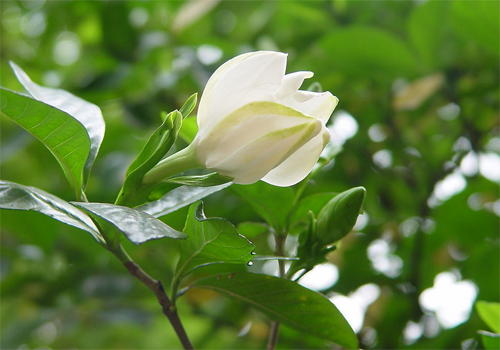
How to grow gardenias and precautions:
I. How to grow gardenias
1. Soil: Gardenias prefer acidic soil. They are an indicator plant for acidic soil, so a slightly acidic soil environment is the key to whether gardenias grow well or poorly. Generally, for cultivating gardenias, it is best to choose a fertile, loose, well-draining acidic potting soil, with the soil pH controlled between 4.0-6.5. For example, mixing thoroughly composted pine sawdust into the soil also works quite well.
2. Temperature: The most suitable temperature for gardenia growth is 18°C-22°C. For overwintering, 5-10°C is suitable. Below -10°C, they are prone to frost damage. Both too-low and too-high temperatures are extremely unfavorable for growth. In summer, gardenias should be placed in a well-ventilated, humid, and lightly shaded open woodland or shaded shed for care. In winter, they should be placed in a sunny spot with temperatures not below 0°C, allowing them to enter natural dormancy. Too-high temperatures will affect flowering the following year.
3. Water: Gardenias prefer moisture, and watering should be moderately increased during the growing season. Each watering should be done after the potting soil turns pale, and it must be watered thoroughly in one go. In the hot summer, spray water on the leaves 2-3 times a day to increase air humidity and help the plant cool down. After gardenias form buds, they should not be watered too much, to avoid bud drop. In winter, it is better to keep watering on the dry side to prevent waterlogging and root rot.
4. Fertilizer: Gardenias prefer fertilizer. To meet the fertilizer needs during the growing season and maintain a slightly acidic soil environment, ferrous sulfate can be mixed into the fertilizer solution in advance for fermentation. After April, during the peak growing season, apply fertilizer once every half month. When fertilizing, it is best to dilute with plenty of water to prevent burning the flowers. Fertilization must follow the principle of applying thin fertilizer frequently. Never apply concentrated or raw fertilizer. Stop fertilizing during the winter dormancy period.
5. Timely pruning: Gardenias have extremely strong sprouting ability and tend to have overlapping branches, leading to poor ventilation and dispersed nutrients, so timely pruning is important. Pruning should select and retain three main branches based on the tree shape, and other branches sprouting from root suckers should be cut off at any time. After gardenia flowers fade, branches should be cut back promptly to encourage new branch growth. When new branches of gardenias grow three nodes, pinch the tips immediately to prevent uncontrolled growth.
6. Pest and disease control: Gardenias are most prone to chlorosis and leaf spot disease. Attention should be paid to prevention and control during regular care, and if they occur, corresponding measures should be taken for treatment. Common pests include slug moths, scale insects, and whiteflies. If there are only a few pests, they can be wiped off with a damp cloth. If there are too many, insecticide should be sprayed. Regular sterilization and disinfection should also be practiced.
II. Precautions for growing gardenias
(1) After winter begins, first let the gardenias go through dormancy by keeping them cold for 1 month, then move them indoors, and use methods such as heating and supplemental lighting to maintain room temperature above 18°C. This can encourage gardenias to bloom in winter and spring, and they can be widely used as material for various bouquets.
(2) After planting, water promptly to settle the roots, and maintain relatively high air and soil humidity, but do not allow waterlogging to avoid root rot. Before budding and flowering, strengthen fertilizer and water management, following the principle of thin and frequent application.
(3) Plant spacing depends on the purpose for which the gardenias are being grown. Generally, for cut flowers and public display, the planting pits should be about 50cm deep and 50cm wide, and planting during the dormancy period is best. If planting must be done during the growing season, it is best to keep the soil ball intact to ensure survival.
(4) Open-field cultivation of gardenias has strong adaptability, and cultivation management is relatively extensive, making success easy. Choose a sunny location that is not prone to direct sunlight or scorching exposure, with fertile, loose, well-draining acidic to slightly acidic soil. Technical requirements such as land preparation, bed formation, and base fertilizer application are the same as for other flowers.
(5) Shaping and pruning of gardenias are mostly done in early spring. After each new shoot flush, pinch the tips so that one branch divides into three, forming a canopy quickly with many flowering branches. At the same time, cut out overly dense inner water sprouts. When each season's flowers are about to fade, promptly remove the spent flowers, which helps flower bud differentiation for the next season, resulting in more and better blooms.
III. Precautions for repotting gardenias
1. Gardenias prefer a warm and humid environment, with an optimal growth temperature above 18°C. For open-field cultivation, choose soil at least 30cm deep, rich in organic matter loam, which is best. Drainage must be good, and waterlogging that does not recede must be avoided. For container planting, mix 25 grams of soilless medium into the soil to increase the potting soil's aeration, and repot and refresh the soil once a year. The pot size should be changed according to the plant. Spring or autumn is more suitable for this.
2. Gardenias grow quickly and have vigorous root systems, and are extremely well adapted to southern environments. If grown in a pot for 2-3 years, the roots will have filled the pot and begun to age. At this point, if repotting and soil replacement are not done, it will affect the plant's growth, and the aged roots will have reduced ability to absorb water and nutrients. Because the medium is filled with roots, its water retention will also decrease. If, in addition, the plant is not properly pruned and allowed to grow freely, and then encounters strong sunlight and high-temperature dryness, it is very easy for the plant to die from water loss through transpiration exceeding root water uptake. Therefore, for many potted plants, attention must be paid to repotting at least once every two years, with annual pruning to maintain renewed growth.
IV. When do gardenias bloom:
The flowering period is from March to July. Different places have different flowering times, but the blooming times all fall within this range.
Gardenias are very beautiful and relatively easy to grow, but when repotting, be sure not to kill the flowers.
How to grow gardenias and precautions: What to do if gardenias don't bloom
Legend has it that gardenias represent waiting love, making people yearn for it yet remain reserved. Gardenias are an important ornamental garden plant, with pure white, fragrant flowers. How to grow gardenias and the precautions are what beginners who grow gardenias want to know. So the editors at wed114 Wedding Net have listed some precautions for growing gardenias, to let everyone know why some gardenias won't bloom.
How to grow gardenias
Reason one: Unsuitable lighting
Gardenias do not like strong light, but they cannot do without light. In summer, gardenias prefer semi-shade, and in winter they should be cared for indoors in a spot with ample light. Too-strong or too-weak light will both affect gardenia flowering.
How to grow gardenias
Reason two: Severe pests and diseases
When pests and diseases are severe, the gardenia plant is damaged, and flower buds are attacked by pests and diseases and drop off. Therefore, attention should be paid to pest prevention during the growing process.
How to grow gardenias
Reason three: No pruning for a long time
Gardenia branches become messy. Long branches grow vigorously, and pest-damaged branches also consume large amounts of nutrients. When branches are too dense, the leaves cannot all carry out photosynthesis, and instead consume nutrients. This also causes gardenias not to bloom.
How to grow gardenias
Reason four: Improper water and fertilizer
During the gardenia growing period, excessive water and fertilizer cause the plant to grow leggy, and reproductive growth does not get enough nutrients, affecting flower bud formation, leading to no flowering or very few flowers. Even if it can bloom, it is prone to flower and bud drop. Applying too much nitrogen fertilizer while lacking phosphorus and potassium fertilizer will affect flower bud formation. Therefore, during the flower bud differentiation period, pay attention to applying more flower fertilizer containing phosphorus and potassium.
How to grow gardenias
Reason five: High soil salinity and alkalinity
Gardenias prefer slightly acidic soil. Northern soil has relatively high salt content, so the soil tends to be alkaline. Growing them in this way will also cause the plant to become chlorotic, ultimately affecting flowering. Therefore, before planting, the soil can be acidified. This is better and more beneficial for gardenia growth.
How to grow gardenias: How to grow gardenias and precautions
Gardenia, also known as yellow gardenia, white gardenia, etc., is an evergreen shrub or small tree in the Rubiaceae family, native to central China and now widely cultivated in various places.
To grow gardenias at home, you must understand their physiological characteristics well so that the leaves, flowers, and fruit are all beautiful and their ornamental value is enhanced.
Soil. Gardenias prefer to grow in acidic soil containing more humus. You can mix 4 parts leaf mold, 4 parts vegetable garden soil, 1 part soybean meal (composted), and 1 part river sand. Water permeability and aeration should be good. Add 0.5% black alum or sulfur and mix thoroughly before use.
Temperature. 20-25°C is the optimal temperature for gardenia growth and development, and the suitable flowering temperature is 26-28°C. Plants cultivated for 4-5 years can endure short periods of -3°C. Below -5°C, they suffer frost damage: leaves turn black and drop off, and young tender branches freeze to death. For indoor winter care, maintaining 6-10°C is suitable, and it must not go below 0°C. If room temperature is above 15°C, open the south-facing doors and windows for appropriate ventilation to lower the temperature. Otherwise, it is prone to sprouting, and once low temperatures occur, it will be damaged, which is extremely unfavorable for growth and flowering the following year.
Light. Gardenias prefer ample light, especially in spring and autumn. They should receive more than 8 hours of sunlight daily, otherwise it is unfavorable for their growth and development and winter survival. In summer, avoid strong midday sun exposure, otherwise the leaves will turn yellow. Place them in a spot with diffused light for care, with a light transmittance of 40-50% being suitable. In winter, place them indoors in a spot with direct south-facing sunlight.
Fertilizing. Gardenias are not particularly fertilizer-loving flowers, but because they grow vigorously and are limited by the finite nutrients in the potting soil, they need reasonable fertilizer supplementation during the growing season. Apply composted human waste or cake fertilizer once every 10 days or so. Stop watering 1 day before fertilizing, and water thoroughly once on the day of fertilizing. Stop fertilizing from mid-September. For mature plants, apply additional sesame paste residue once each in mid-June and mid-August, 0.5-1 liang each time, crushed and thoroughly mixed with the surface soil.
Watering. Gardenias like plenty of water; some people call them "water gardenias." In spring, because of frequent and strong winds, dry air, and scarce rainfall, water once every 3 days, and sprinkle water around the potted flowers every morning and evening to increase air humidity. After the dog days of summer begin, the weather is hot. Water less in the morning and water thoroughly after 2 p.m. In summer, soft water is suitable for irrigation, because hard water contains more calcium and magnesium salts, which are very unfavorable for gardenia growth; in mild cases, branches and leaves turn yellow, and in severe cases, they quickly die. To overcome the alkalinity of soil and water quality, water with alum fertilizer water once a week during the growing season to keep gardenia branches and leaves deep green. In winter, watering should be controlled: do not water unless dry. Long-term excessive moisture easily causes root rot and death.
Pinching. To regulate and control gardenia growth, make the plant shape graceful, and promote flowering, when vigorous spring growth is about to stop, pinch off the tips of new branches to encourage the axillary buds at the base of the branches to plump up and flower buds to form.
Precautions for gardenias
Gardenias are often prone to chlorosis with yellowing leaves. Chlorosis is caused by many factors, so different measures must be taken for prevention and treatment. Chlorosis caused by fertilizer deficiency: This kind of chlorosis starts from the old leaves at the lower part of the plant and gradually spreads to the new leaves. Nitrogen deficiency: simple leaf yellowing, with new leaves small and brittle. Potassium deficiency: old leaves change from green to brown. Phosphorus deficiency: old leaves become purplish-red or dark red. For all the above situations, apply composted human waste or cake fertilizer. Chlorosis caused by iron deficiency: This kind of chlorosis appears on new leaves. At first, the leaves are pale yellow or white, while the veins remain green. In severe cases, the veins also turn yellow or white, and eventually the leaves dry up and die. For this situation, spray a 0.2%-0.5% ferrous sulfate aqueous solution for prevention and treatment. Chlorosis caused by magnesium deficiency: This kind of chlorosis starts from old leaves and gradually develops toward new leaves. The veins remain green. In severe cases, the leaves drop off and the plant dies. For this situation, spray a 0.7%-0.8% boron-magnesium fertilizer for prevention and treatment. Overwatering, freezing, and other factors can also cause yellow leaves, so special attention must be paid during the care process
Key points for growing gardenias
China has a long history of cultivating gardenias. From the 17th to the 18th century, gardenias were introduced to Europe, arousing widespread interest among local horticulturists and flower enthusiasts, and in the early 19th century they were introduced to the United States. Through continuous breeding, many new gardenia varieties have appeared, such as double-flowered winter-blooming types, potted types that bloom in all four seasons, varieties specifically for cut flowers, and single- and double-flowered varieties with yellow and white variegated patterns on the leaves.
Gardenia plants are 1 to 2 meters tall, with pale yellow roots and many-branched stems. Leaves are simple, opposite, with a few in whorls of three, leathery, glossy, oblong-elliptic, and entire. Stipules are membranous, usually 2 fused into a tube, surrounding the branchlets. Flowers are large, white, with short pedicels, fragrant, solitary at branch tips or in leaf axils. The calyx is green, cylindrical, gradually narrowing at the base, with several lobes at the tip, the tube and lobes nearly equal in length. After opening, the corolla is salverform, usually with 6 petals, sometimes 5 or 7. The capsule is obovate or elliptical, golden yellow or orange-red when ripe, with 5 to 8 winged longitudinal ridges, and 5 to 8 narrow lanceolate persistent calyx lobes at the apex, nearly equal in length to the fruit body. Seeds are numerous, flat-round, yellow-white. The flowering period is from May to June, and the fruit ripening period is from November to December.
Gardenias prefer humid air and a warm climate, and grow well in well-draining, loose, fertile acidic soil. They are relatively shade-tolerant but poor in cold tolerance. At -12°C, the leaves freeze and drop off. In North China, they are often cultivated in greenhouses. Both sprouting ability and suckering ability are strong, and they tolerate pruning.
Propagation is usually done by cuttings, layering, and sowing. Cuttings are taken during the plum rain season, when air humidity is high and the temperature is 20°C to 25°C, which favors rooting of the cuttings. For cuttings, use vigorous young shoots of the current year, cut into 15cm-long segments, retain 2 to 3 upper leaves, and insert them into a seedbed of loose, permeable sandy soil, with 2/3 of the cutting inserted into the soil, and provide appropriate shade; the survival rate is high. Layering is done in early April. Select vigorous 2- to 3-year-old branches and press them into the soil. Roots can form in about 1 month. In mid-to-late June, separate them from the mother plant and transplant them to a seedbed for management and cultivation. For sowing and seedling raising, spring sowing is suitable, but seedlings grown from seed flower relatively late.
Transplanting seedlings should be done during the plum rain season. When planting, the plant should keep its soil ball, and choose fertile, loose, moist land for planting. During high summer temperatures, water frequently to increase humidity. Before flowering, apply more composted fertilizer water, such as 10% concentration human waste or soybean cake water, around the roots, which can promote lush leaves, large flowers, and a rich fragrance. After autumn begins, apply less or no fertilizer, hence the saying "do not fertilize past autumn," to avoid leggy branches and leaves that are prone to frost damage. If gardenia leaves are found to be yellowing, apply alum fertilizer water (containing 1% ferrous sulfate), which can turn the leaves bright green again. For potted gardenias, prepare a fertile, loose, acidic culture soil rich in humus. During the growing season, keep water sufficient, which can promote budding and flowering. After Frost's Descent, move them indoors for winter. In the rainy season, if aphids or horned wax scales are found damaging the leaves, spray 1000x dimethoate solution for control.
Gardenia is a commonly used traditional Chinese medicine, with the fruit used medicinally. It has the functions of purging fire and relieving restlessness, clearing heat and draining dampness, and cooling blood and detoxifying. Its fruit can also be used to make dye.