Clivia Year-Round Care Methods and Market Price Explained
Clivia has always been a popular houseplant. Clivia requires different care methods in different seasons. How should Clivia be cared for in each season? How much does one Clivia plant sell for? Let's take a look together with Women's Web:
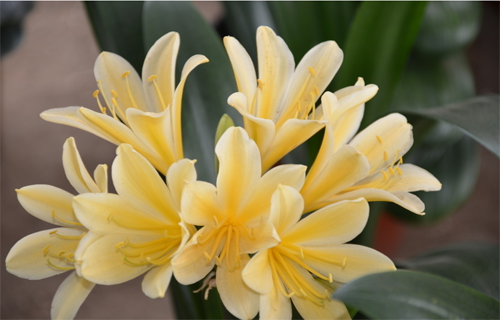
Clivia year-round care methods:
Spring: avoid wind
In early spring, after Clivia has gone through winter dormancy, its root system begins to revive. Due to a lack of nutrient supply, once exposed to wind and sun, the leaves will show dehydration, causing their glossiness to fade and their firmness and thickness to decrease; in severe cases, yellowing and rotting of leaves may even occur. Therefore, at this time even more attention should be paid: Clivia is drought-tolerant but not moisture-tolerant, so keeping the potted plant generally moist is enough; too much watering easily causes root rot. Before the flower stalk emerges and blooms, avoid spraying water. Apply fully decomposed liquid fertilizer once a week or once every half month, but follow the principle of "light fertilizer applied frequently," and strictly avoid concentrated or raw fertilizer to prevent leaf scorch and root rot.
Summer: avoid direct sun
Clivia is not strict about light requirements; it likes semi-shade but fears direct light. Because summer air and soil temperatures are relatively high, the root system is prone to disturbance, and unbalanced nutrient uptake can lead to phenomena such as stem elongation and leaf stretching. In addition, strong sunlight greatly increases transpiration; if watering is improper, the leaf color will become dull and scorched yellow or even wilted. Therefore, the requirements for cultivation in midsummer are:
Shade the light. It is best to place the potted plant under a shade canopy or tree shade, and avoid direct sunlight at noon.
Lower the temperature. In addition to placing the potted plant in a cool, ventilated location, also spray water frequently to cool it down, ideally controlling the temperature below 25°C and the humidity at 60-70%.
Reduce fertilizer. When Clivia is at 25°C, fertilizer should be appropriately reduced or stopped; too much fertilizer will burn the fleshy roots.
Watering. When the potting soil is semi-dry, it should be watered, but water thoroughly when watering. Never let water run into the leaves, to avoid rotten heart disease.
Autumn: avoid rain and water spraying
In early autumn, the climate gradually turns cooler. During periods of continuous autumn rain, mature Clivia has more opportunities for stalk cutting, seed setting, and stalk emergence and flowering. If it is exposed to rain or overwatered at this time, root rot, stalk rot, and heart rot may occur.
Therefore, when the stalk emerges and blooms, avoid spraying water. About every half month, water once with decomposed cake fertilizer water (1:3). When watering, prevent water from soaking into the center of the leaf rosette, and do not let rainwater pour into the leaf rosette either, to avoid rotten core. In severe cases, the entire plant may rot and die.
Winter: avoid low temperature and dryness
In winter, when Clivia is exposed to low temperatures below 5°C, the potting soil must be kept at about 70% moisture so that it will not be frostbitten due to dryness. If the moisture is less than 20%, it is prone to dry freezing and death. Before frost descent, the indoor plant should be placed in a sunny spot indoors, with attention to freeze protection and warmth. About every half month, rotate the potted plant 180° to help the leaves grow neatly and beautifully.
When the indoor temperature in winter is 6-7°C, it can overwinter safely. Apply fermented cake fertilizer once a month, and water with liquid fertilizer about every 10 days (nitrogen fertilizer should not be applied too much). Three months before flowering, apply liquid fertilizer mainly based on phosphorus and potassium fertilizer to promote stalk emergence and flowering.
In winter, Clivia enters its dormant period, and water evaporation is relatively reduced. Keeping the potting soil moist is enough, but it is better to keep it on the drier side. Strictly avoid frequent water cutoff, water accumulation, or half-watering. Otherwise, it can also cause scorched leaves or root rot.
Throughout the year-round care of Clivia, the potted plant should often be sprayed with clean water, and after spraying it is best to wipe it dry with a fine cloth. This can both increase the glossiness of the leaves and enhance their ornamental value.
ps: When watering, adhere to the principle of watering as soon as the soil is half dry, and water thoroughly when watering. But do not water as soon as the surface soil looks dry. Otherwise, if the potting soil remains wet for a long time, it is very easy to cause root rot and yellow leaves. When watering, be very careful not to let water run into the leaf heart, to avoid rotten heart disease and cause "beheading."
Clivia prices:
Clivia has many varieties. Clivia seedlings (5——30), flowering Clivia (50+), high-quality Clivia (for Clivia, it depends on the variety; better ones can cost several thousand, while ordinary prices are between 50 and 150, or higher). The price of Clivia is determined by its quality. To judge whether a Clivia is good or bad, it can be identified from four aspects: glossiness, fineness, firmness, and thickness.
1. Glossiness refers to the degree of reflection on the leaf surface, in order: oily glossy, glossy, shiny, slightly shiny, not shiny.
2. Fineness refers to the degree of smoothness and delicacy on the leaf surface, in order: fine, relatively fine, average fineness, relatively rough, rough.
3. Firmness refers to the overall degree of resistance to bending of the leaf, or the degree to which it would rather break than bend, in order: strong, relatively strong, relatively weak, weak.
4. Thickness refers to the thickness of the leaf flesh in cross-section. The smaller the difference in thickness between the leaf edge and the middle, the better, in order: 2.2mm, 2mm, 1.8mm, 1.6mm, below 1.4mm.
Depending on the season, Clivia requires careful adjustment of temperature and watering to make it more beautiful. Growing plants still requires a great deal of patience.
Taboos for Clivia year-round care
Clivia spring care - avoid wind
In spring, Clivia sprouts and grows, and at this time root growth gradually accelerates. But in spring, one point should be noted: due to insufficient nutrients, after being exposed to wind, the leaves of Clivia will show dehydration and their ornamental value will be reduced.
Therefore, in spring, Clivia should avoid being exposed to wind, which could cause adverse effects.
Clivia summer care - avoid direct sun
In summer, Clivia is relatively afraid of direct sun, because although Clivia itself does not have high light requirements, it prefers a semi-shaded environment.
In summer, light and temperature are always high, which accelerates the evaporation of water from Clivia and causes it to lose water. If watering is improper at this time, yellowing leaves will appear.
Therefore, in summer, Clivia should preferably be shaded and cooled, maintain relatively high air humidity, and attention should be paid to reducing fertilization.
Clivia autumn care - avoid rain and water spraying
In autumn, the temperature gradually drops, and there is relatively more rain at this time. Therefore, when cultivating Clivia, attention should be paid to avoiding rain, not watering too much, and especially avoiding water spraying, to prevent root rot and heart rot.
At this time, attention should be paid to preventing water from entering the center of the Clivia leaf rosette, to avoid rotten core.
Clivia winter care - avoid low temperature and dryness
In winter, the climate is characterized by being relatively dry and having relatively low temperatures, so at this time attention should be paid to avoiding low temperature and dryness, and preventing it from dying from dryness or freezing.
In winter, maintain the temperature and place it in a sunny spot indoors for care. Keep the potting soil on the drier side, but avoid cutting off water.
Clivia year-round care tips
1. Clivia spring cultivation: pay attention to wind.
In early spring, after Clivia has gone through winter dormancy, its root system begins to revive. Due to a lack of nutrient supply, once exposed to wind and sun, the leaves will show dehydration, causing their glossiness to fade and their firmness and thickness to decrease; in severe cases, yellowing and rotting of leaves may even occur.
Therefore, at this time even more attention should be paid: Clivia is drought-tolerant but not moisture-tolerant, so keeping the potted plant generally moist is enough; too much watering easily causes root rot. Before the flower stalk emerges and blooms, avoid spraying water. Apply fully decomposed liquid fertilizer once a week or once every half month, but follow the principle of "light fertilizer applied frequently," and strictly avoid concentrated or raw fertilizer to prevent leaf scorch and root rot.
2. Six major protections for Clivia summer cultivation
1. Prevent direct sunlight, do not expose to strong sun
In summer, Clivia should be shaded from strong light all day. Using the slanting sunlight in the early morning to sun it for a while each day is enough to satisfy photosynthesis.
2. Prevent high temperature, do not let it dry out
The suitable temperature for Clivia in summer is 18°C--25°C. It is best to place it in an air-conditioned room, and a shaded, ventilated balcony is also fine. When watering, it is best to use tap water that has been left in the sun for two or three days, and water once after 6 p.m. every day. Do not let the potting soil become too dry or too wet.
3. Prevent leggy growth, do not fertilize
Summer is the dormant period for Clivia, so stop fertilizing, water moderately, and controlling humidity are effective measures. If too much fertilizer has been applied to the potting soil or the fertilizer effect is strong, remove the upper layer of soil from the flowerpot, mix in 1/3-2/3 sand evenly, and put it back into the pot. This not only reduces fertilizer effectiveness but also helps lower the temperature.
4. Prevent dust pollution, do not water with dirty water
The leaf surface of Clivia should be kept clean. Once a week, dip a fine gauze cloth in clean water, wring it dry, and gently wipe once. Watering with dirty water will cause roots and leaves to rot and turn yellow.
5. Prevent soil compaction, do not use clay (loess) in the pot
Clivia is suited to cultivation in loose, breathable, water-permeable, fertile humus soil with a pH of around 7.0.
6. Prevent disease, do not let it get infected
When changing soil or wiping leaves, movements should be gentle to prevent roots and leaves from being injured and exuding sap, which can trigger infection and cause decay.
3. Clivia autumn cultivation: pay attention to rain and water spraying.
In early autumn, the climate gradually turns cooler. During periods of continuous autumn rain, mature Clivia has more opportunities for stalk cutting, seed setting, and stalk emergence and flowering. If it is exposed to rain or overwatered at this time, root rot, stalk rot, and heart rot may occur.
Therefore, when the stalk emerges and blooms, avoid spraying water. About every half month, water once with decomposed cake fertilizer water (1:3). When watering, prevent water from soaking into the center of the leaf rosette, and do not let rainwater pour into the leaf rosette either, to avoid rotten core. In severe cases, the entire plant may even rot and die.
4. Clivia winter cultivation: pay attention to low temperature and dryness.
In winter, when Clivia is exposed to low temperatures below 5°C, the potting soil must be kept at about 70% moisture so that it will not be frostbitten due to dryness. If the moisture is less than 20%, it is prone to dry freezing and death.
Before frost descent, the indoor plant should be placed in a sunny spot indoors, with attention to freeze protection and warmth. About every half month, the potted plant can be rotated 180 degrees to help the leaves grow neatly and beautifully.
When the indoor temperature in winter is kept at 6-7°C, it can overwinter safely. Apply fermented cake fertilizer once a month, and water with liquid fertilizer about every 10 days. Note that nitrogen fertilizer should not be applied too much. Three months before flowering, apply liquid fertilizer mainly based on phosphorus and potassium fertilizer, which can promote stalk emergence and flowering.